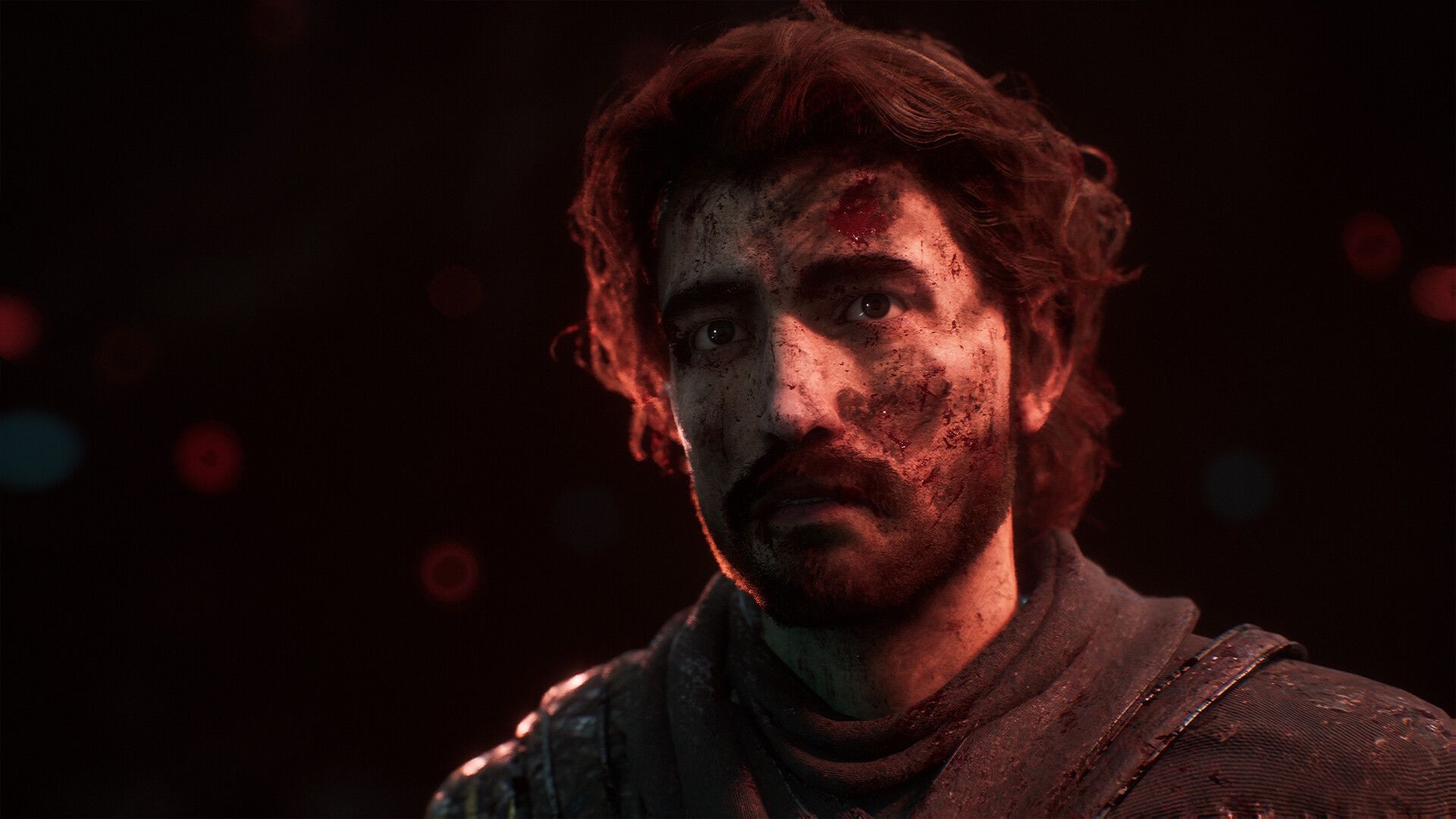
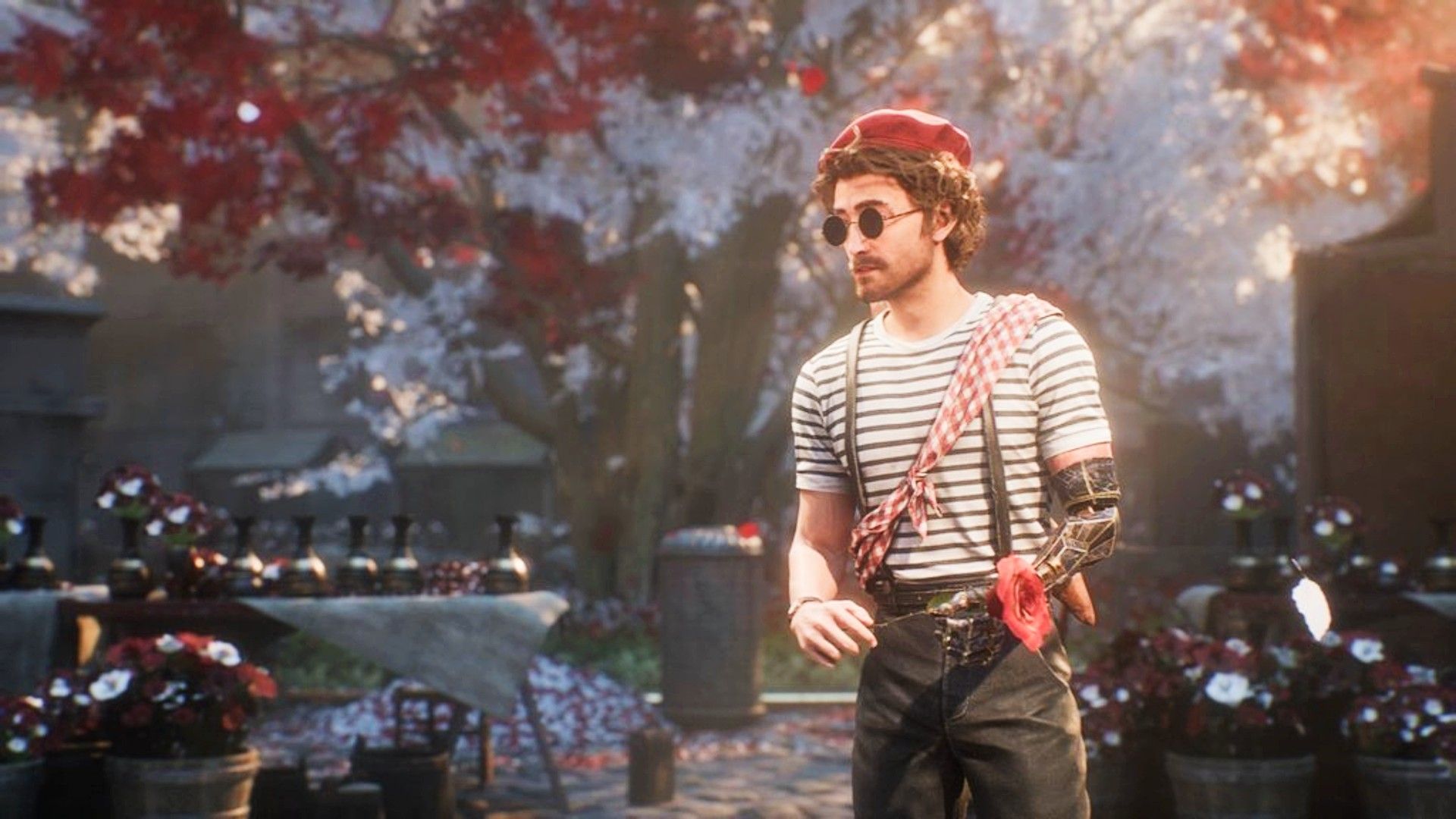
The Saros gameplay trailer, premiered during the September 24 State of Play livestream, makes it clear that Housemarque is carrying forward familiar DNA from its 2021 sci‑fi roguelike Returnal. This time the studio channels different inspirations to strand protagonist Arjun Devraj in an alien, bullet‑hell loop — and the trailer hints at an explicit debt to the 19th‑century weird fiction collection The King in Yellow.
Arjun appears trapped on Carcosa, a cityscape of looming towers and hostile, alien machinery beneath a sky washed in a peculiar yellow light. The planet conceals unfathomable perils: the trailer briefly reveals a massive, six‑armed humanoid clutching spheres of fire in each hand, its head crowned in gold while additional hands obscure its eyes. The imagery is at once alarming and intriguing, evoking the same unsettling tone Housemarque established with Returnal. Though plot details remain scarce, the team has clearly left narrative breadcrumbs for players to follow.
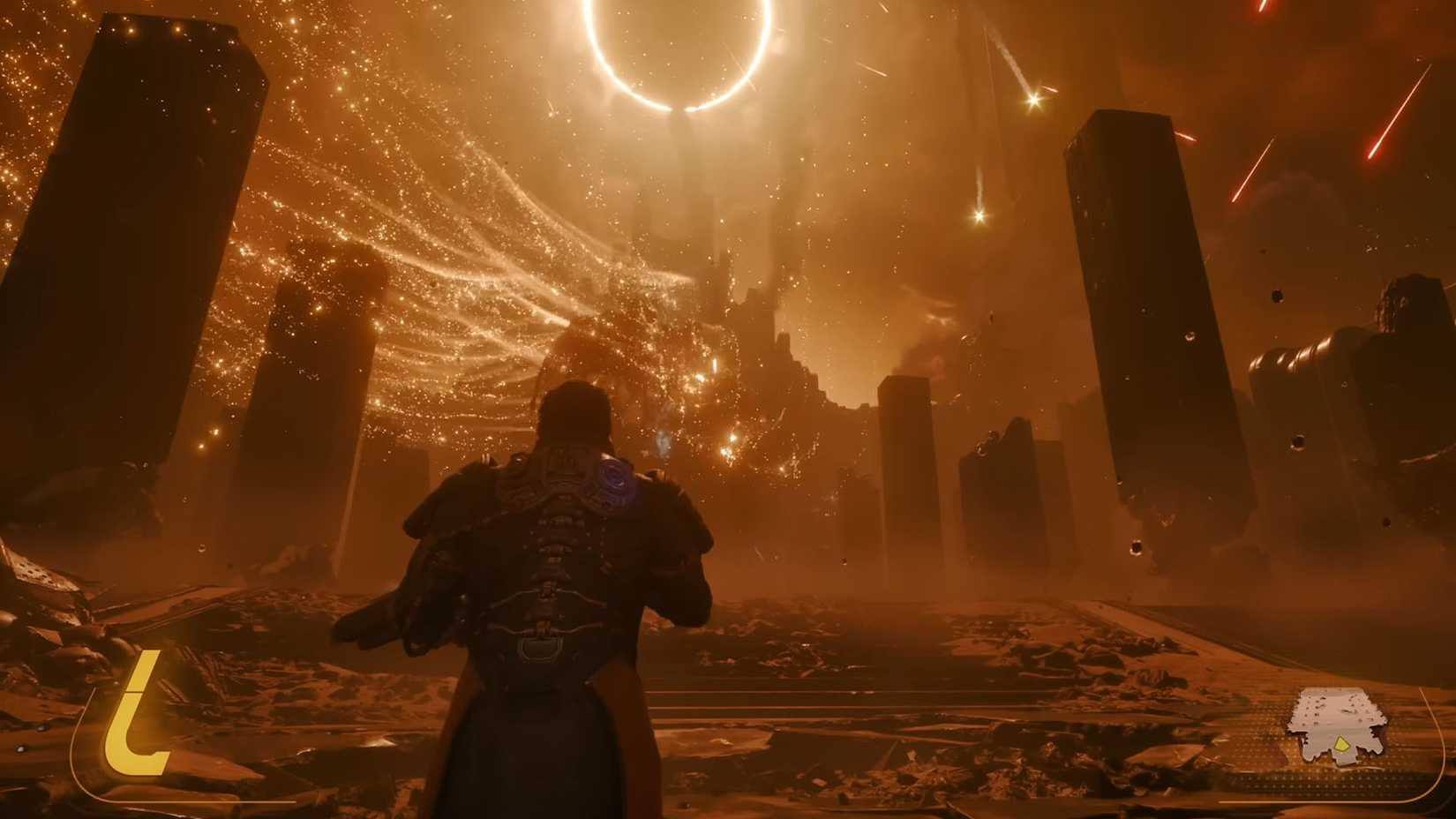 Image: Housemarque/Sony
The name “Carcosa” will ring a bell for many. It turned up prominently in the first season of True Detective and has been folded into the wider Cthulhu‑adjacent mythos through later writers like August Derleth. But Carcosa’s original provenance lies with Robert W. Chambers, whose 1895 collection The King in Yellow introduced the haunted city and a web of related symbols.
Chambers’s book — a loose sequence of ten short stories — interweaves four pieces that reference a fictional play titled “The King in Yellow.” Within those tales, characters who encounter the play’s second act suffer maddening consequences. Chambers rarely explains the play directly; instead, he scatters oblique references — names, talismans, and fragmentary recollections — letting the absence of explanation deepen the dread and preserve an atmosphere of uncanny mystery.
One proximate description survives in the book’s prefatory stage directions and a lyric labeled “Cassilda’s Song,” which evokes a land with twin suns, strange moons, and black stars overhead — a shore where the King’s presence is felt. Chambers’s reticence about specifics is intentional: the unknown is the mechanism that sustains the stories’ psychological horror.
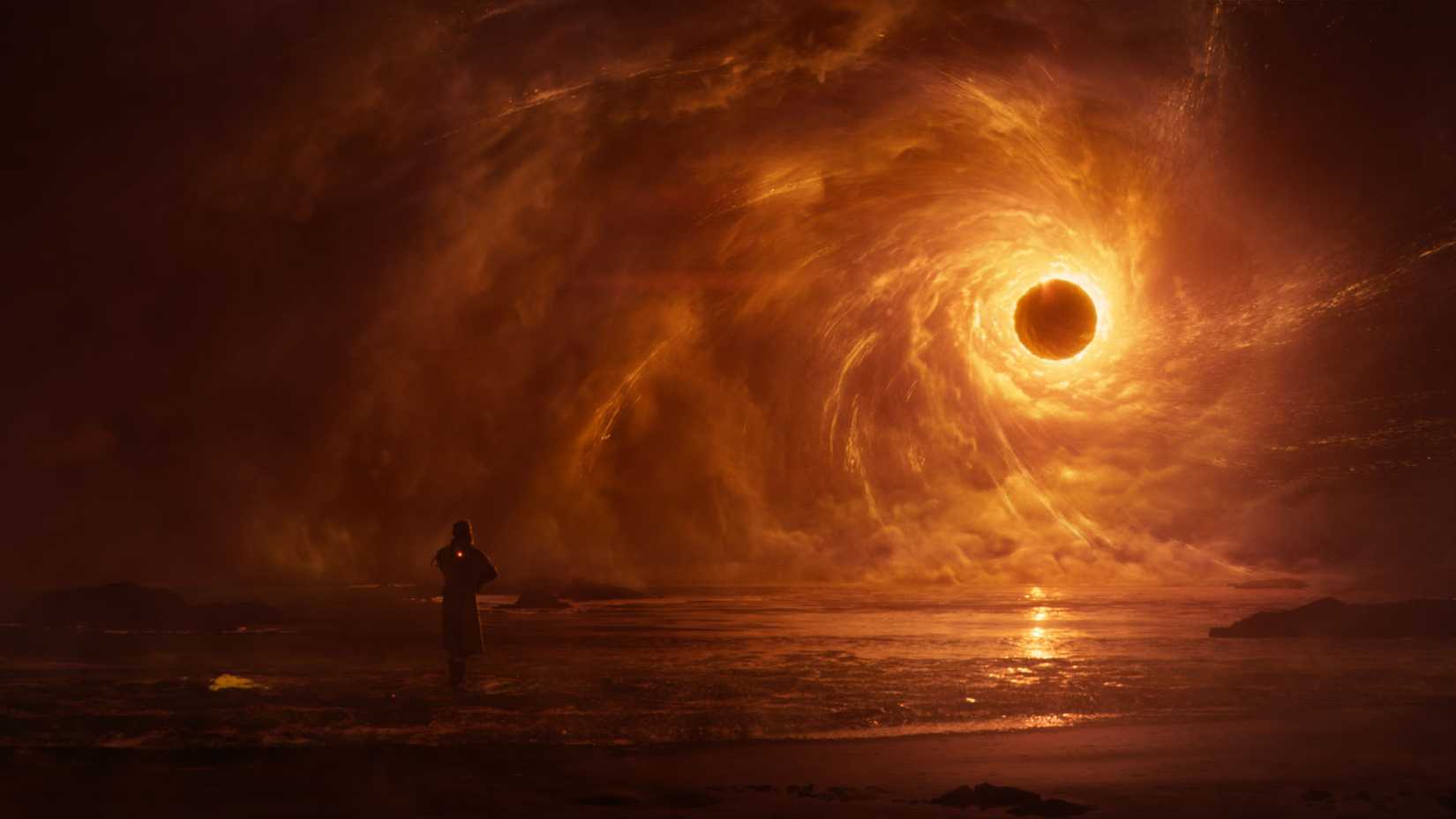 Image: Housemarque/Sony
The parallels between Saros and Chambers’s symbolism extend beyond nomenclature. The Saros announcement trailer, shown at Sony’s February 2025 State of Play, depicts Arjun washed ashore, wearing a yellow medallion embossed with a sun‑like glyph. An eclipse — a “black star” in Chambersian terms — occurs, and an enormous, many‑limbed humanoid rises from the sea, crowned in a ringed headdress. Those visual cues map cleanly onto motifs from The King in Yellow.
That said, these echoes don’t necessarily make Saros a direct adaptation. Chambers’s fragments function as powerful metaphors — particularly his persistent use of yellow as an emblem of decay, moral rot, and psychological collapse, a reading highlighted by later commentators. By invoking that palette and those ideas, Housemarque may be signaling that Carcosa is less a foreign world and more an inward landscape: an externalization of Arjun’s own obsessions and losses.
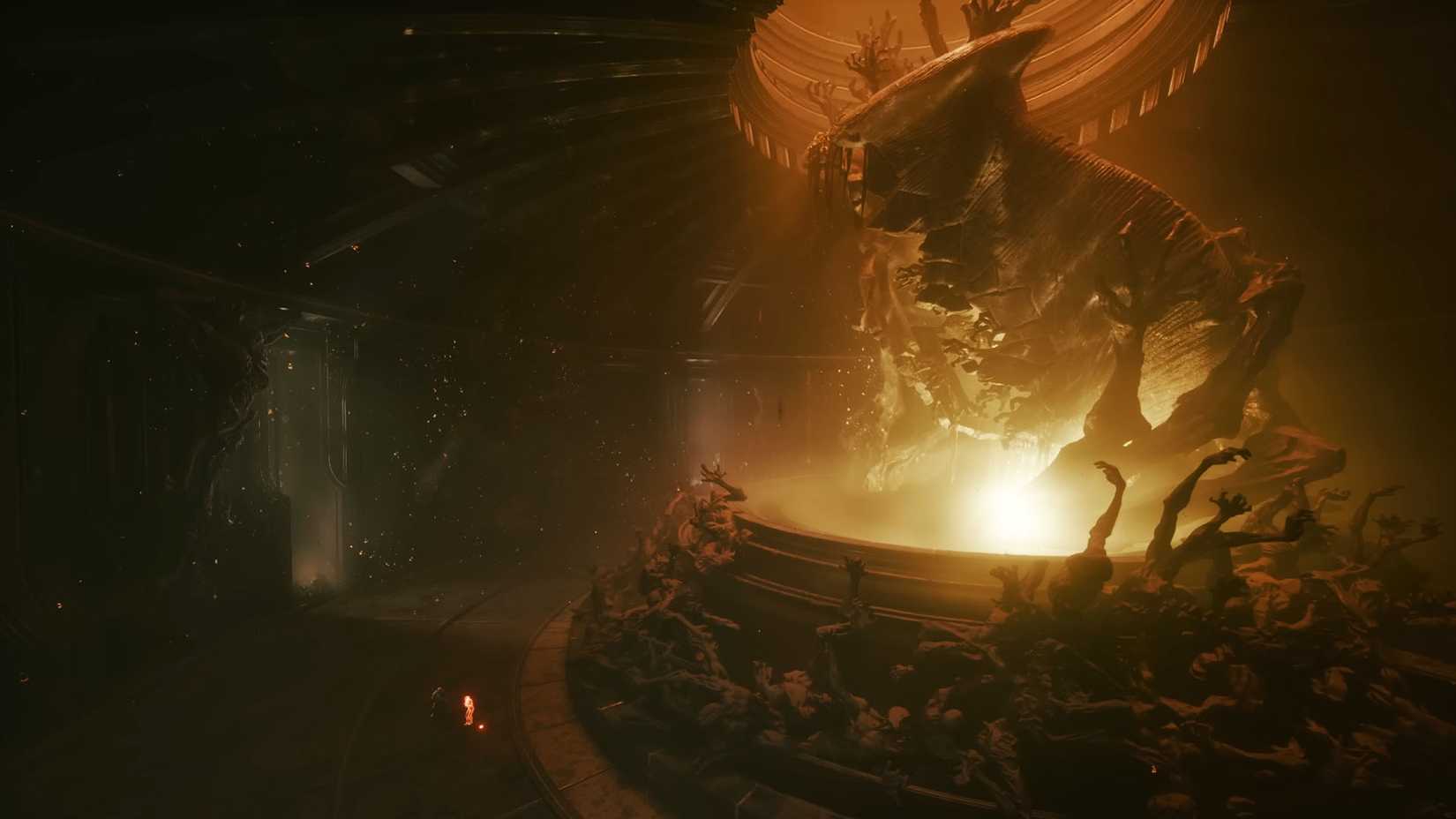 Image: Housemarque/Sony
Chambers likely borrowed the name “Carcosa” from Ambrose Bierce’s 1886 story “An Inhabitant of Carcosa,” and in both literary lineages the city is tied to estrangement and the longing to return to some lost belonging. In the trailers we hear Arjun address an unseen companion, promising to find them — a refrain that reframes each death and resurrection as part of a personal, obsessive quest. Who does he seek across this lethal, looping landscape?
Definitive answers are months away. Perhaps Saros will be, at its surface, a visceral shooter set on an alien world; but given what Housemarque achieved with Returnal — using cosmic horror to mirror an astronaut’s inner turmoil — it’s reasonable to expect a narrative with layered, psychological intent. Whatever form it ultimately takes, Carcosa seems poised to be more than a backdrop: it may be a mirror.
Source: Polygon