Fifteen Years of Insidious: The Makeup Artist Behind ‘Black Within Blackness’ Looks Back
For over a decade, Joseph Bishara carved out a career as a film composer, scoring underground horror titles such as The Convent and The Gravedancers. However, in 2011, his career took a theatrical turn when he stepped in front of the camera to portray one of modern horror’s most enduring nightmares.
Bishara first crossed paths with acclaimed director James Wan while handling the music for a separate project. Wan, however, saw a monstrous potential in the composer’s physical frame. Recalling the discovery in a 2019 interview with Fangoria, Wan explained that he was searching for an actor who was exceptionally “lean, thin and bald.” He eventually approached the musician with a peculiar proposition: “Joe, if we make this movie, would you be interested in playing a demonic creature?”
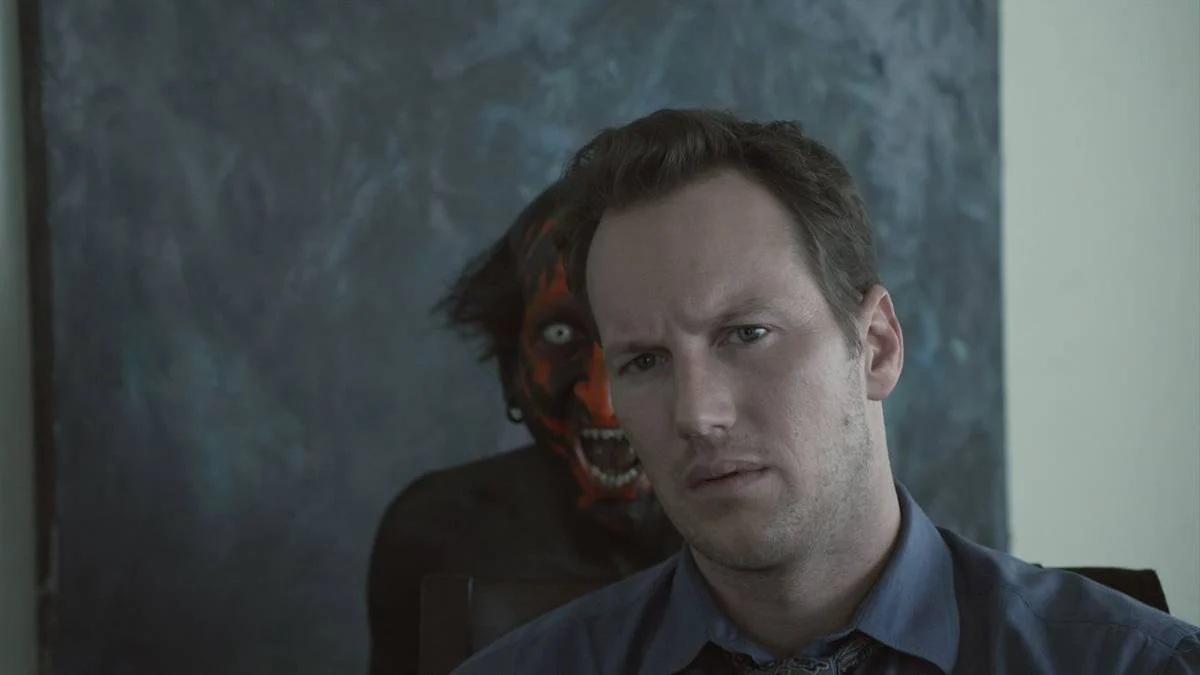
Bishara accepted the challenge, manifesting as the terrifying antagonist known to fans as “The Red-Faced Demon” or “The Man with Fire on His Face.” Yet, during production, Wan used a more descriptive working title: “The Lipstick-Face Demon.”
According to Justin Raleigh, the lead makeup effects artist for Insidious, the moniker was more than just a nickname—it was the character’s core concept.
James was aiming for an aesthetic that was anything but subtle.
“The idea was that this entity is essentially a void, a presence of pure blackness,” Raleigh tells Polygon. “To create a terrifying persona for the children he hunts, he literally paints a face onto his own darkness. The name Lipstick-Face Demon stems from the lore that he is applying pigment to himself to craft his frightening appearance.”
The vision proved remarkably effective. Insidious birthed a massive franchise that remains a staple of the genre. Marking the 15th anniversary of this seminal indie horror hit, Raleigh detailed the intricate process of transforming Bishara into a cinematic icon.
Sculpting the Lipstick-Face Demon
As one of Blumhouse’s early ventures, Insidious operated on a shoestring budget of roughly $1.5 million. This financial constraint ruled out expensive, full-body animatronic suits. Raleigh opted for a minimalist strategy: “We leaned into a heavy application of body paint over Joseph Bishara,” he explains.
However, “minimalist” didn’t mean simple. The process involved taking full body casts and engineering complex prosthetics for the lower body. “Joseph wore custom-made footwear, almost like fetish shoes, with integrated ankle bracers to force his feet into a digitigrade, hoof-like stance,” Raleigh notes. “A built-in hoof was surrounded by a thick fur wrap that transitioned into the body paint.”
The skin texture was achieved through a base of black paint layered with blue, gray, and yellow splatters to add depth and dimension. Hand-applied hair covered his legs, extending to his torso. Raleigh also crafted specialized, jewelry-inspired finger extensions that allowed the demon to produce the unsettling sharpening sound heard in the film.

To preserve Bishara’s expressive features, the facial work was limited to a prosthetic nose and carefully mapped paint. Achieving the “pop” of the red against a black background required a technical workaround: a stencil was airbrushed first to mark the red zones, allowing the vibrant color to stay bright without being muddied by the underlying black paint.
Despite the name, actual lipstick proved impractical. “Standard lipsticks lacked the durability needed under hot studio lights; they would simply melt,” Raleigh reveals. “We eventually used a heavy, cream-based makeup that provided a thicker, more textured finish.” The look was finalized with yellow contact lenses, jagged dental veneers, and a blackish-purple mouth stain created with cake dye. The transformation took approximately two and a half hours each day.
A Genuine Terror on Set
The makeup was so convincing that it caused legitimate distress for the film’s young star, Ty Simpkins. “He was absolutely terrified of Joe,” Raleigh remembers. “We tried everything to humanize the process. James would have Ty sit in the makeup chair and watch the application from start to finish, hoping he’d realize it was just a costume. It would work for a while, but then Joe would perform a jump scare for a take, and all that progress would vanish into tears.”
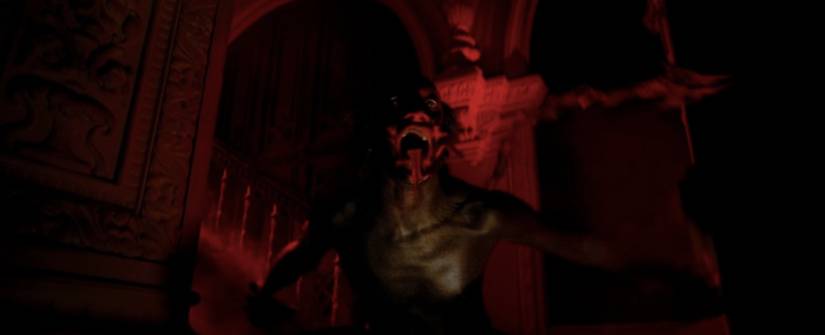
Raleigh describes Bishara as being incredibly gracious, constantly trying to put Simpkins at ease by removing his lenses, teeth, and claws between takes. “I even gave Ty a brush and let him help with the touch-ups,” Raleigh says. “But as soon as the camera rolled and Joe lunged out of the shadows, the fear returned instantly. Managing that emotional toll was one of the toughest parts of the shoot.”
The Demon’s Enduring Legacy
That visceral on-set fear translated into a global phenomenon. Insidious grossed over $100 million, a staggering return on investment. Yet, the character’s unique look didn’t escape comparisons to a certain Sith Lord from Star Wars.
“I’ve definitely heard the Darth Maul comparisons,” Raleigh admits. “But it’s fundamentally different—it’s not a tattoo or a fixed pattern; it’s hand-applied paint. I understand why people make the link with the bald head and the red-and-black palette, but the intent was always something more primal.”
The Darth Maul comparisons have followed us for years.
Comparisons aside, the character has become a cornerstone of the Insidious mythos. Across four sequels, the Lipstick-Face Demon has remained a constant threat, moving from a cameo in Chapter 2 to the primary antagonist in The Red Door. With Insidious: The Bleeding World on the horizon, fans expect Bishara—who continues to score the films—to once again step back into the black and red paint that defined a generation of horror.
Source: Polygon
Related articles
 Spider-Man: Brand New Day is $1.5 Million Away From Another Historic Record After Seven Weeks
 New Gundam Anime Directed by Ghost in the Shell: Stand Alone Complex Director to Release in April 2027
 Hit Roguelike Absolum Ported to Android and iOS
 Christopher Nolan’s The Odyssey Becomes Universal’s Highest-Grossing Film in History
 James McAvoy Shares Advice for the New Professor X in the X-Men Reboot
 Ranma 1/2 Season 3 Receives New Trailer Featuring Opening and Ending Themes
 Xbox Head Asha Sharma Spends Hours Each Month Answering Player Inquiries
 Annihilation Battles Mode Returning to Ace Combat 8: Wings of Theve