
F1 Drivers Criticize New ‘Mario Kart’ Boost Taking the Sport by Storm
While instantaneous acceleration is a staple of arcade racers, Formula 1’s elite are finding the real-world equivalent increasingly problematic. The sport’s 2026 technical overhaul introduced a feature that top-tier drivers are likening to a “mushroom” from Mario Kart—a controversial mechanical shift that may have contributed to a harrowing high-speed collision at the Japanese Grand Prix.
Far from an accidental glitch, this speed boost is a fundamental pillar of the new racing strategy. The FIA’s 2026 regulations were designed to modernize the grid, specifically to meet Net Zero sustainability targets by 2030. For a global sport grappling with the massive carbon footprint of its logistics and fuel consumption, this transition represents a radical engineering pivot.
To reduce reliance on traditional fossil fuels, the latest generation of power units utilizes a 50/50 split between internal combustion and battery-derived electrical power. This requires drivers to constantly manage energy cycles: harvesting power through regenerative braking and tactical lift-off, then deploying that stored energy to maintain pace. However, the method of deployment is what has the paddock talking.
Drivers now have access to a literal “boost” button on their steering wheels. This allows them to dump their accumulated electrical reserves in a single surge of speed. Ferrari’s Charles Leclerc was among the first to call out the gamified nature of the system, remarking over team radio during the Australian Grand Prix, “This is like a mushroom in Mario Kart.”
Whether used for clinical overtakes or desperate defense, the boost has fundamentally altered the rhythm of wheel-to-wheel combat—and the feedback has been far from glowing.
The Artificiality of the Grid
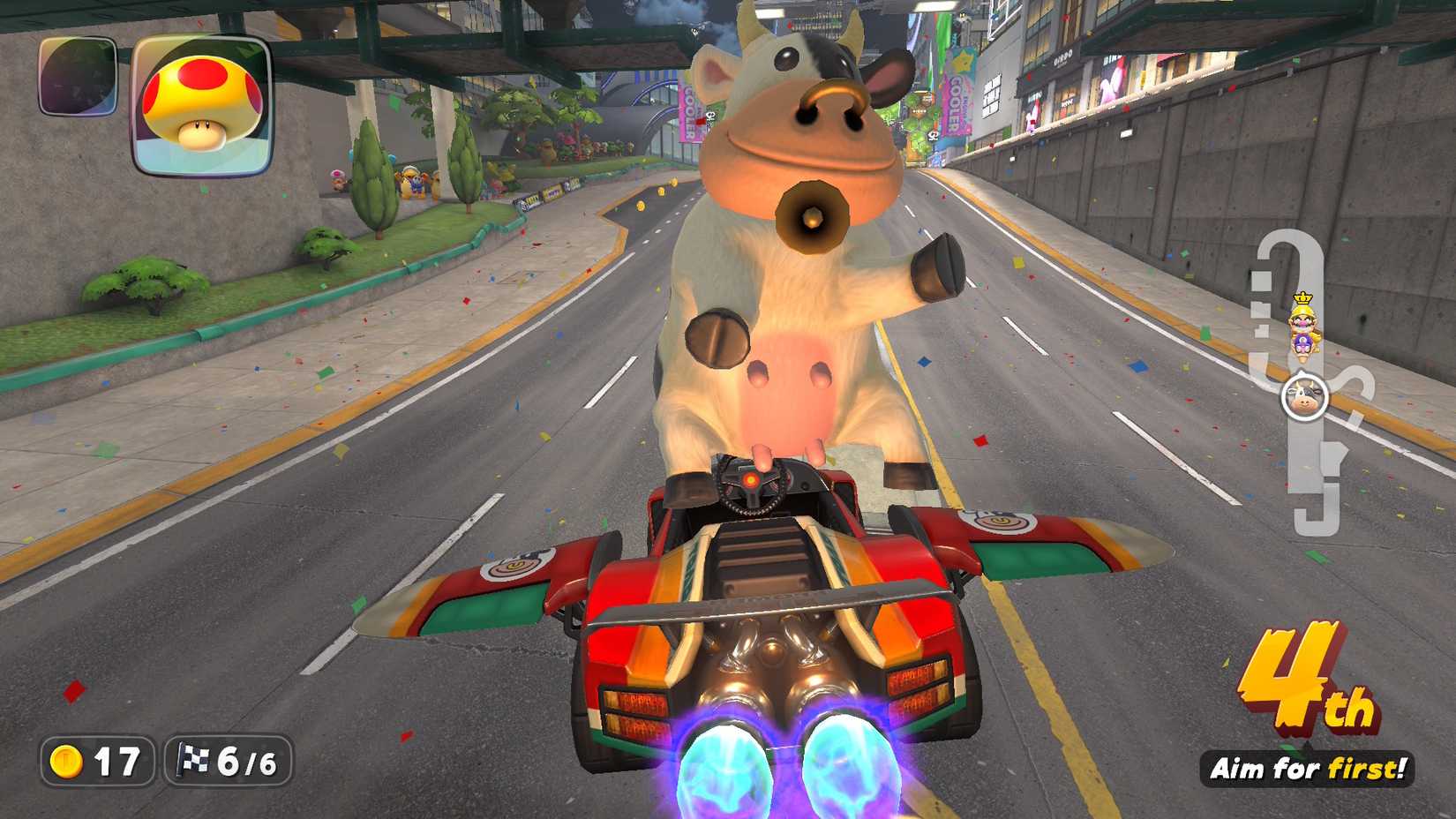
“To be honest, it feels very artificial,” Sergio Perez told Sky Sports’ Martin Brundle. “You pull off an overtake, only to be immediately repassed because of the boost differential. It’s pure Mario Kart.”
The frustration stems from a lack of consistent power. During the season-opening weekend in Melbourne, fans witnessed a see-saw battle between Lewis Hamilton and George Russell. While the frequent lead changes appeared exciting on the surface, the reality was a mechanical “tit-for-tat.” Drivers are finding that a successful attack often leaves them “battery-bankrupt,” making them sitting ducks for a counter-attack on the following straight.
Reigning champion Max Verstappen has been the most scathing critic of this new era. “I’ve traded my simulator for a Nintendo Switch,” he told reporters ahead of the Shanghai Grand Prix. “The mushrooms are easy enough to find; it’s the blue shells that are the problem.”
Verstappen’s sarcasm carries weight. As a prominent figure in the sim-racing world and the sport’s current dominant force, his threats to leave F1 carry genuine substance. With his GT3 debut behind him and a scheduled appearance at the Nurburgring 24 Hours this May, the Dutchman seems increasingly interested in disciplines where the racing is decided by talent rather than power-ups.
The Safety Threshold
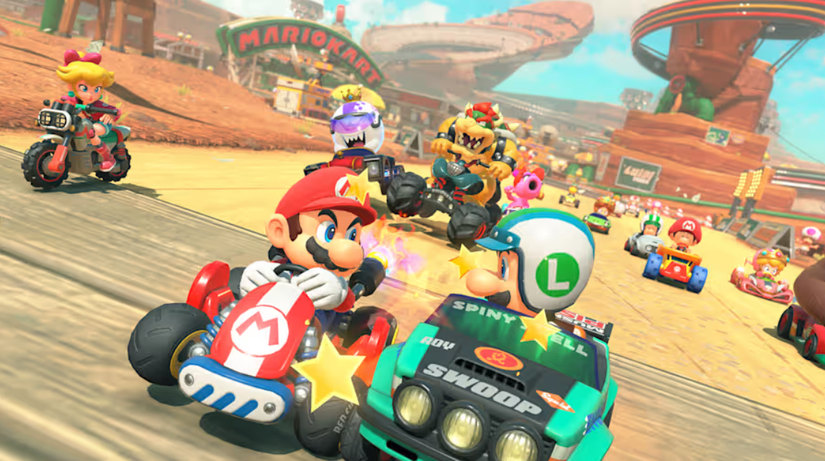
“I see exactly what you meant about the mushroom,” Oscar Piastri remarked to Leclerc following a chaotic Japanese Grand Prix on March 29. The drivers were reviewing the disturbing crash involving Haas rookie Ollie Bearman.
Analysis revealed that Bearman was closing in on Franco Colapinto, who was in a heavy “harvesting” phase. When Bearman engaged his boost, the closing speed surged by an astronomical 45 KPH. Caught off guard by the massive delta, Bearman attempted a desperate evasive maneuver, clipped the grass, and slammed into the tire barriers with a force of 50Gs.
“The overspeed was massive—50 KPH more than the car ahead,” Bearman noted after being cleared by the medical center. “It’s a side of these regulations we have to navigate, but carrying that much excess speed into a narrow corridor is incredibly dangerous.”
Verstappen used the incident to sharpen his critique, suggesting that if the FIA is truly concerned with driver welfare, the regulations must change. “You have one driver effectively standing still with no power and another hitting a ‘mushroom bolt.’ If we care about safety, let’s actually fix the mechanics that cause these 50G impacts.”
While the FIA’s investigation cleared both drivers of wrongdoing, Haas team principal Ayao Komatsu admitted the steep learning curve is a factor. “He’s never experienced that kind of speed differential before,” Komatsu explained.
With races in Saudi Arabia and Bahrain currently off the calendar, the sport has entered an unplanned hiatus. The FIA has confirmed it will use this time to hold emergency meetings to evaluate the 2026 framework and determine if the “Mario Kart” era needs a serious reality check.
Source: Polygon
Related articles
 Sony Reveals PlayStation Plus Free Games Lineup for October
 Disco Elysium Co-Creator Reveals Red Rooster, a Physics-Focused RPG
 Cozy SnowRunner Alternative Over the Hill Released on Steam
 First Look at Xbox Nano Controller, Microsoft’s Smallest Gamepad
 Steam Releases Co-Op PvE Extraction Shooter Set in Anomalous Zones
 GTA Co-Creator Explains Why Rockstar Canceled Spy Action Game Agent
 Blizzard Restricts Real-Money Traders From WoW: Forever Economy
 Retro Shooter Warhammer 40,000: Boltgun 2 Released on Steam and Consoles