
Beyond Romance: This Dating Sim Deconstruction Is Ending Asexual Erasure in Gaming
In the modern gaming landscape, complex romance systems often serve as a primary draw for players. Titles like Baldur’s Gate 3 allow fans to immerse themselves in high-stakes fantasies where flirting with charismatic companions is as central to the experience as the combat itself. For many, dedication to these digital courtships eventually culminates in explicit intimate encounters—a form of narrative wish fulfillment that has spawned massive communities dedicated to adult fan art and transformative fiction.
However, for individuals like Lucy Blundell, these mechanics can feel more exclusionary than engaging. Blundell, the developer behind acclaimed visual novels One Night Stand and Videoverse, identifies as gray-asexual—a specific identity within the broader asexual spectrum. For her, games that treat sexual conquest as the ultimate objective of a relationship often miss the mark. Bridging this gap in understanding is difficult, primarily because asexuality remains one of the most frequently misinterpreted and underrepresented identities in popular media.
Blundell is seeking to rectify this lack of visibility. Her latest project, unveiled on International Asexuality Day, is titled Ace & Aro: Heart-to-Heart. While it may initially resemble a traditional dating simulator, it is actually a focused visual novel centered on a community meetup for asexual and aromantic individuals. Speaking with Polygon, Blundell discussed her motivation for the project and her desire to authentically portray a demographic that is typically sidelined in gaming narratives.
“The core goal of this game is to foster a sense of genuine acceptance,” Blundell explained.

To those familiar with her previous work, this new direction might seem unexpected. Her 2016 breakout, One Night Stand, begins in the immediate aftermath of a casual sexual encounter. Yet, Blundell views it as a deconstruction of the experience rather than a celebration of the act itself, which aligns closely with her asexual perspective.
“I describe it as a game centered on sex that features no sex at all,” she noted. “It explores the auxiliary moments and social nuances that usually go unmentioned.”
While Blundell now recognizes One Night Stand as being told through an asexual lens, she was still navigating her own identity during its development. For years, she grappled with feelings of being “different,” noticing that while she engaged in sexual relationships, she lacked the innate drive she saw in her peers. A turning point came through an unexpected medium: an animated series.
“I was 30 and watching BoJack Horseman when the character Todd Chavez came out as asexual,” Blundell shared. “It was my first time seeing a positive, relatable representation of that identity. Seeing his discomfort was a revelation—I realized that was exactly how I felt. Initially, I was in denial because I had always treated sex as a societal hurdle I simply had to clear, but that representation finally clicked.”

The scarcity of such representation makes this kind of self-discovery difficult. In video games, asexual characters are exceedingly rare, with The Outer Worlds’ Parvati being one of the few high-profile examples. This void often leads to the misconception that asexuality is a monolith of total abstinence. In reality, the “gray-ace” label describes a spectrum where individuals may enjoy intimacy but experience sexual attraction differently or less frequently than others. Similarly, aromanticism is often unfairly reduced to a trope of the “emotionless villain.” These stigmas are precisely what Blundell aims to dismantle with Ace & Aro: Heart-to-Heart.
“There is a massive range of experiences. Some asexual people are sex-positive and enjoy discussing it, while others are sex-repulsed and prefer to avoid the topic entirely,” Blundell explained. “Aromanticism is even more misunderstood; media often equates a lack of romantic drive with a lack of empathy or humanity. I want to show that these are just normal people living their lives.”
“As a creator, I feel a responsibility to be part of the solution.”
Traditional game design often struggles to accommodate these identities. For players on the asexual spectrum, “player-sexual” mechanics—where every companion relentlessly pursues the protagonist—can feel suffocating. In Baldur’s Gate 3, for instance, the narrative often funnels characters toward sexual climaxes, leaving little room for those who desire deep emotional platonic bonds without the pressure of physical escalation.
“Mass Effect offered some of the more meaningful romance options I’ve experienced,” Blundell said. “I found the sniping scene with Garrus far more impactful than any sexual encounter. When a relationship is treated as a ‘mission accomplished’ screen once you reach the bedroom, it feels hollow. As I’ve grown to understand my own identity, I find myself gravitating toward the friendship paths in games because they feel more authentic.”
This raises the question: what does an inclusive dating sim actually look like? Blundell has spent years pondering this, even during the early stages of her career when she attempted to develop a more traditional romance game.
“I wanted to create something that broke away from the usual tropes,” she said. “I crave romance, but I want a version of it that emphasizes being present for one another—acts of kindness, shared activities, and non-sexual physical affection. It’s about those quiet moments of connection.”

Blundell began exploring these themes in her 2023 title, Videoverse, a visual novel about an online community reminiscent of Nintendo’s Miiverse. While the game features a central relationship between characters Emmett and Vivi, Blundell intentionally included an asexual narrative path. Despite this, she felt there was more work to be done for the community.
“I realized that even with Videoverse, I had defaulted to a somewhat traditional romance structure,” she admitted. “I felt a strong urge to make something specifically for ace and aro players—the kind of content I’m always searching for myself.”
The result is Ace & Aro: Heart-to-Heart, a bite-sized experience set within a “barcade.” Players interact with five distinct characters, each offering a unique perspective on the asexual and aromantic spectrums. By presenting these as personal stories rather than clinical definitions, the game provides a “slice-of-life” look at a community rarely seen in gaming.
“Many people don’t have access to real-world meetups due to geography or other barriers,” Blundell said. “I wanted to simulate that environment where you can learn through conversation. You see how different people arrived at their identities—some knew since childhood, while others figured it out much later in life.”

Though the game includes a romanceable character, the focus remains on modeling non-sexual intimacy. Engaging in arcade minigames with a companion serves as a meaningful interaction, proving that shared experiences can be just as significant as physical ones. Blundell hopes the game serves as both a mirror for a-spec players and an educational tool for others. The game even allows players to specify if they are new to these concepts, facilitating a welcoming environment for learning.
“It’s about recognizing the validity of different relationship dynamics,” Blundell concluded. “Society often insists that sex is a prerequisite for a happy, successful partnership, but I completely disagree. Every bond is unique, and it’s time we opened our minds to that reality.”
Source: Polygon
Related articles
 Sony Lawyers Target Hacked PS5 Consoles as Unofficial Game Store Shuts Down
 Battlefield 6 Accused of Using AI for Battle Pass Cosmetics
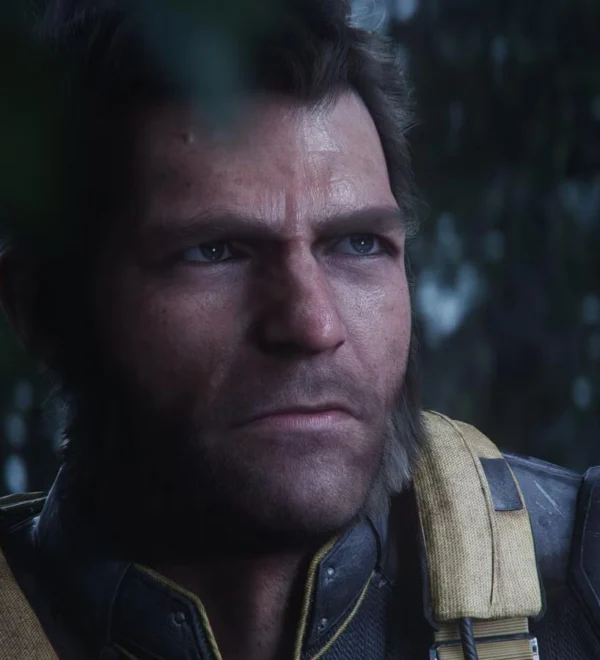 Analysts Estimate Marvel’s Wolverine Revenue at Nearly $193 Million
 Xbox is paying players to launch Gears of War: E-Day
 Modern Warfare 4 Will Reportedly Not Include a Platinum Trophy on PlayStation
 Sony Pulls Its Own Games From PS Store in Select Regions
 Marvel Series VisionQuest Resolves Major MCU Canon Issues
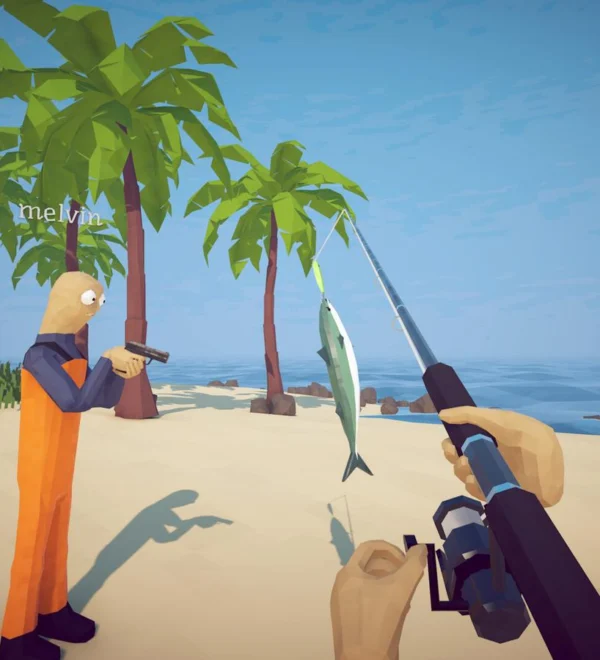 How to Fish Reaches 10 Million Players as Developers Prepare Major Update and Console Ports