All PS5 Consoles Will Eventually Need Repairs Due to Liquid Metal Degradation, Expert Says
Regardless of the console’s orientation.
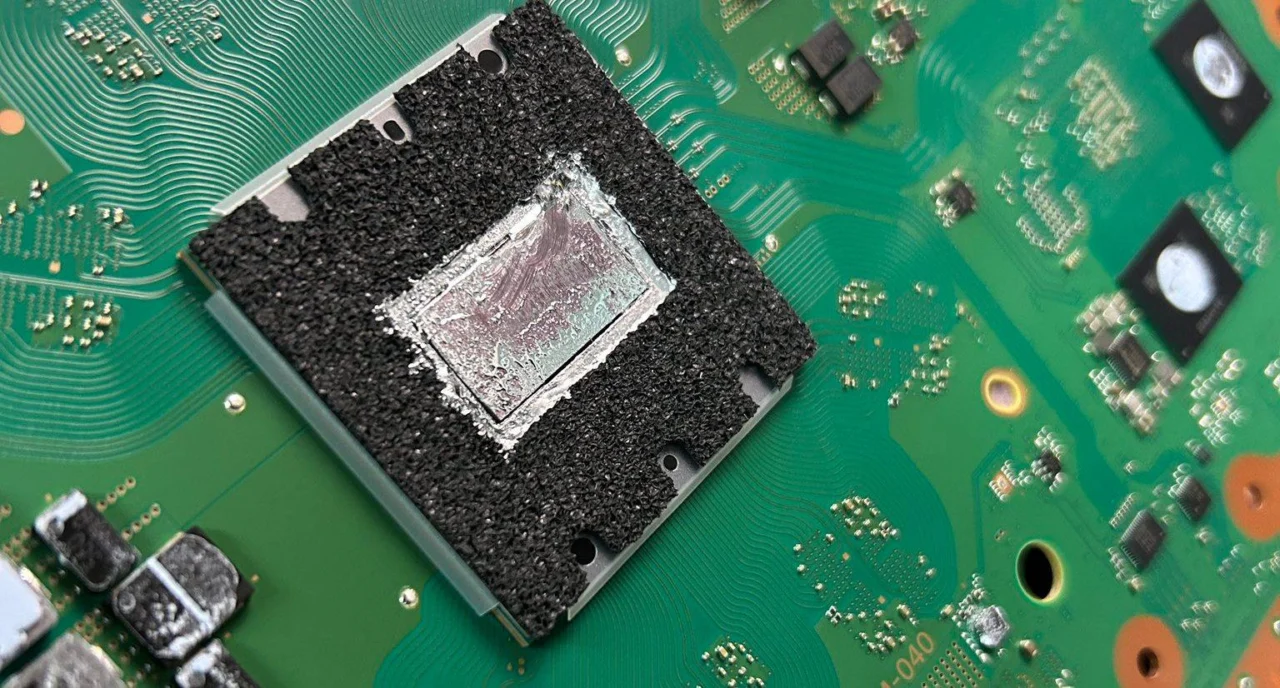
For the PlayStation 5, Sony employed liquid metal in the cooling assembly to enable peak performance without overheating under heavy loads. However, this solution has shown vulnerabilities: over time the liquid metal can migrate and leave dry, oxidized patches on critical components, which may lead to malfunctions and thermal issues.
Although Sony introduced refinements in the PlayStation 5 Pro and some later revisions of the standard model (for example, CFI-2100 and CFI-2116) — adding fins and grooves to the heatsink to better retain the material — the problem has not been fully eliminated.
Service technician and modder Modyfikator89 disassembled a PS5 Slim CFI-2016 less than 1.5 years old that had been kept upright since purchase. The APU die showed dried, oxidized remnants of liquid metal that had clumped and lost thermal conductivity. The issue stems not from the console’s position but from the application quality and degradation over time and with temperature.

Source: iXBT.games
Related articles
 South Dakota DLC Coming to American Truck Simulator With Trailer and Release Date
 Code Vein II to Add New Mode and Bosses From Mask of Idris
 Cosplayer portrays Xanta from The Blood of Dawnwalker
 Jane Schoenbrun Wants to Direct New A Nightmare on Elm Street Movie
 Dan Stevens Hopes to Retain Cruelty and Satire of Original RoboCop
 The 8 Biggest Manhunter Theories in Lanterns
 Ridley Scott Says Prometheus Revived the Alien Franchise
 John Boyega Details How Tom Cruise Helped Him Get Star Wars Role