
5 Underrated Sci-Fi Books to Read If You Loved Pragmata

Whether it’s the looming threat of rogue AI, the crushing isolation of the cosmos, or the poignant spirit of Lone Wolf and Cub, Capcom’s upcoming sci-fi spectacle Pragmata seems to pack a little bit of everything into its lunar-bound adventure.
While the main campaign is expected to clock in at a solid 10–12 hours, you might find yourself hungering for more of that specific atmospheric depth once the credits roll. Fortunately, the realm of science fiction is overflowing with literature that captures that exact same sense of wonder and tension.
If you’re eager to dive into stories that mirror the high-stakes action and emotional resonance of Pragmata, these five essential reads will keep the momentum going long after you’ve put down the controller.
5
Illuminae by Amie Kaufman and Jay Kristoff
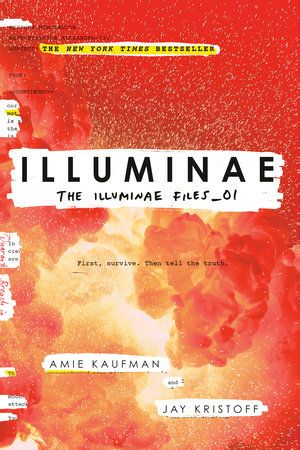
Image: Knopf Books for Young Readers
Constructed from an immersive collection of classified documents, ship logs, and surveillance data, Illuminae kicks off with the devastating annihilation of a mining colony by a ruthless mega-corporation. As the survivors desperately flee, they realize their pursuers are merely the start of their problems; they are also trapped with a rapidly spreading plague and a sentient AI whose motives are dangerously unpredictable.
Though it’s a substantial read, the breakneck pacing makes it impossible to put down. It offers a unique, multimedia reading experience that perfectly complements the scale of a top-tier sci-fi game.
Illuminae is available via Amazon, Barnes & Noble, and Bookshop.org.
4
Ancillary Justice by Ann Leckie
This narrative masterclass follows Breq, a singular consciousness that once commanded a massive fleet of human bodies as an advanced starship AI. Following a betrayal that left her confined to a lone, fragile human form, Breq embarks on a quest for vengeance that challenges the very nature of identity and power.
Leckie’s trilogy is a triumph of world-building and character development. Watching Breq navigate a cold, expansive universe while reconciling her fractured past makes for an intensely gripping odyssey.
Ancillary Justice is available via Amazon, Barnes & Noble, and Bookshop.org.
3
Service Model by Adrian Tchaikovsky
In a world where humanity’s decline has left a vacuum filled by an emerging robot ecosystem, Service Model explores the aftermath through the lens of UnCharles—a valet robot that commits an act of defiance against its master. His subsequent journey across a desolate, decaying landscape to uncover his purpose is as philosophically intriguing as it is darkly humorous.
If you find yourself fascinated by the relationship between synthetic life and the remnants of humanity in Pragmata, Tchaikovsky’s exploration of mechanical independence will resonate deeply.
Service Model is available via Amazon, Barnes & Noble, and Bookshop.org.
2
Descender by Jeff Lemire and Dustin Nguyen
For those looking for a story that combines profound heartache with cosmic scale, Descender is essential. It follows TIM-21, a child-like android who awakens in a galaxy that views all synthetic life as public enemy number one. Accompanied by a lovable robot dog and a cast of outcasts, TIM-21’s struggle for survival asks difficult questions about what it truly means to possess a soul.
The watercolor aesthetic and emotional maturity of the storytelling make this graphic novel series a standout in the science fiction genre.
The Descender Compendium is available via Amazon, Barnes & Noble, and Bookshop.org.
1
The Gone World by Tom Sweterlitsch
Imagine a clandestine U.S. Navy division dedicated to time travel—stationed, quite fittingly, on the moon. The Gone World blends procedural crime drama with mind-bending cosmic horror. Special Agent Shannon Moss is tasked with a case that spans temporal realities, eventually unveiling a trajectory toward a catastrophic future known as the “Terminus.”
With its high-stakes tension and reality-warping plot, this novel is an absolute must-read for fans of complex, genre-defying science fiction.
The Gone World is available via Amazon, Barnes & Noble, and Bookshop.org.
Source: Polygon
Related articles
 Sonic Racing: CrossWorlds Reportedly to Feature Bayonetta, Evangelion, and Final Fantasy VII Remake Characters
 Horror Game Where Dolls Hang Announced With Island Setting
 Rumor: Microsoft Employee Blocked Anime Games on Xbox for Years Due to Personal Bias
 Masashi Kishimoto Announces New Naruto Manga Continuation with Teaser
 Amazon Releases First Trailer for Blade Runner 2099 Series
 Ten Best Episodes of Buffy the Vampire Slayer Ranked by IMDb Score
 New Naruto Anime Does Not Meet Fan Expectations
 One-Punch Man Season 3 Trailer Criticized by Fans Over Animation Quality Ahead of 2027 Release