
Welcome to Derry Is Quietly Undermining Another Stephen King Classic

It was always clear that It: Welcome to Derry would nod to director Andy Muschietti’s film adaptations, but the HBO series is revealing deeper overlaps with Stephen King’s broader fictional world. Chief among them: a younger Dick Hallorann—previously introduced in The Shining—turns up in the series. What might at first read as a clever Easter egg has implications that ripple through the timelines of King’s novels.
Muschietti’s films advance the novel’s chronology by roughly 31 years, relocating the Losers’ childhood from 1958 to 1989 and the adults’ timeline from 1985 to 2016. If the same shift applies to The Shining, the novel’s winter at the Overlook—originally set around 1975–1977—would be pushed into the mid-2000s. That adjustment alters details that are central to the story’s atmosphere and, arguably, its emotional and thematic potency.
 Photo: Brooke Palmer/HBO
One immediate consequence of relocating The Shining to the 2000s is the near-ubiquity of high-speed internet. It’s hard to imagine an isolated resort like the Overlook lacking Wi‑Fi in that era. Social platforms that reshaped everyday life—MySpace, the public opening of Facebook, YouTube’s rapid ascent after Google’s 2006 acquisition, and the rise of Twitter—made online connection commonplace by the mid-to-late 2000s. Those changes undercut the novel’s crucial element: enforced isolation.
Jack Torrance—whichever actor portrays him—was written as a writer and, not incidentally, someone prone to self-absorption. In a more connected era, he’d be far likelier to broadcast his thoughts and grievances, and Wendy would have far greater ability to reach out for help long before a full breakdown.
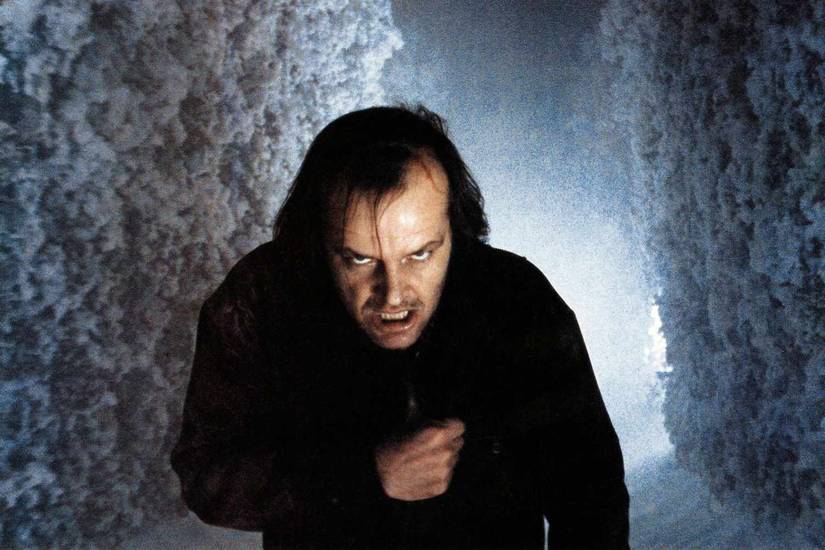 Image: Warner Bros.
Shifting decades also reshuffles generational identities. In King’s original, Jack and Wendy were born in 1945 and 1946, making them, respectively, a trailing member of the Silent Generation and an early Baby Boomer. Pushing the timeline forward reassigns them as Generation X, while their son Danny—born in the novel in 1972—would instead be a child of the 2000s and part of Gen Z.
That generational move alters the texture of Danny’s childhood. A Danny born in 2003 would grow up with constant online access and digital entertainment, a different context for the imaginative isolation that in the book helps manifest Tony and the eerie visions tied to the Overlook. It’s impossible to know how the psychic phenomena would appear against that backdrop, but the dynamic certainly feels altered when creative solitude gives way to perpetual connectivity.
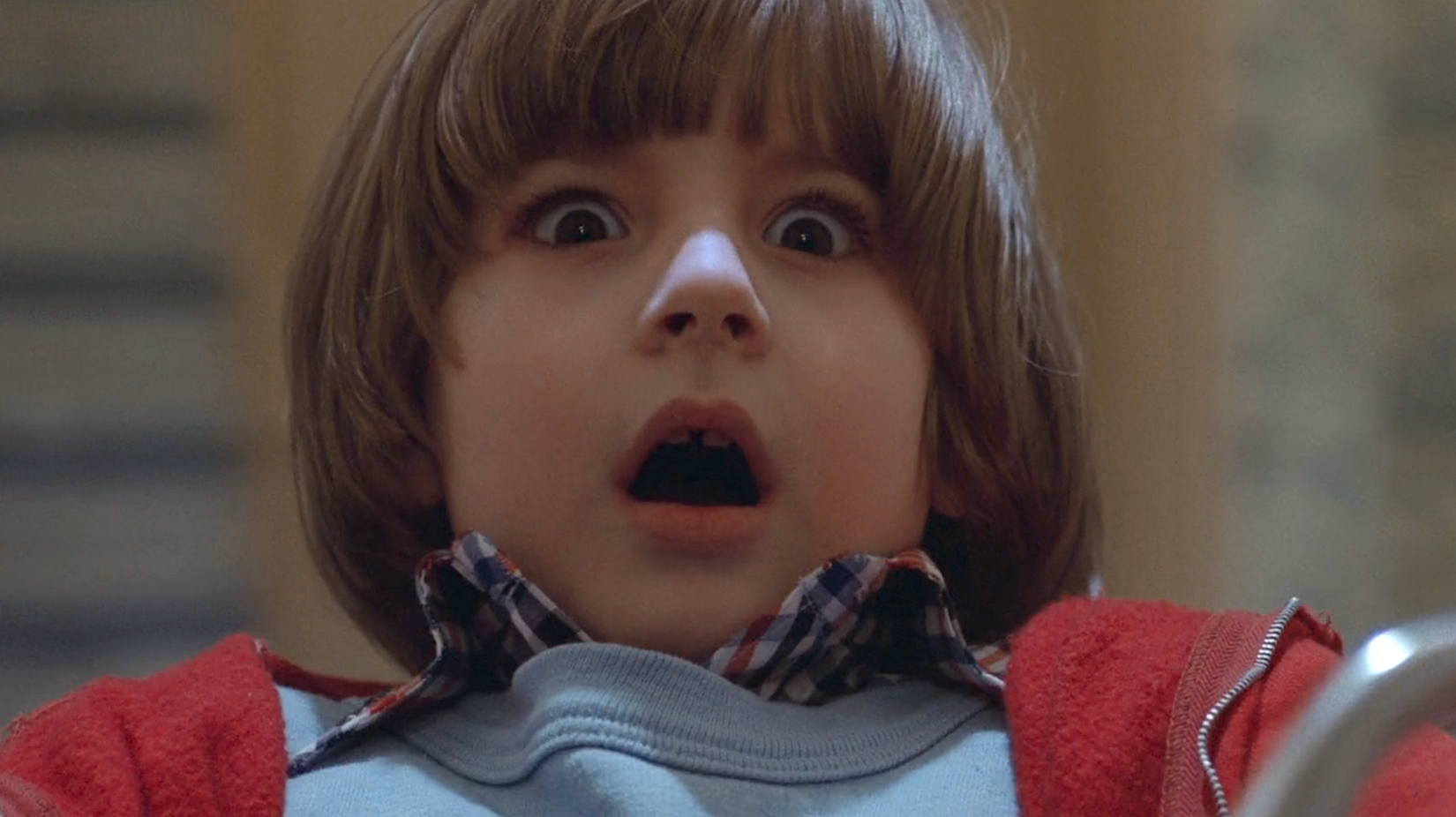 Image: Warner Bros./Max
Even if a modern Danny still wrestled with trauma and mood disorders—issues research has shown can be prevalent among younger generations—the nature of his isolation and the cultural responses around mental health would be different, and that would change how his story reads and how other characters react.
Most importantly, the menace of The Shining comes from the family’s enforced seclusion: no easy way to call for help, no quick rescue when Jack unravels. If the Overlook’s occupants can simply text or call local authorities, much of the narrative pressure dissipates. The supernatural horror can remain, and Jack’s violence would still be tragic, but the dread born of helplessness—central to the novel—loses some of its force when modern communication undercuts the family’s isolation.
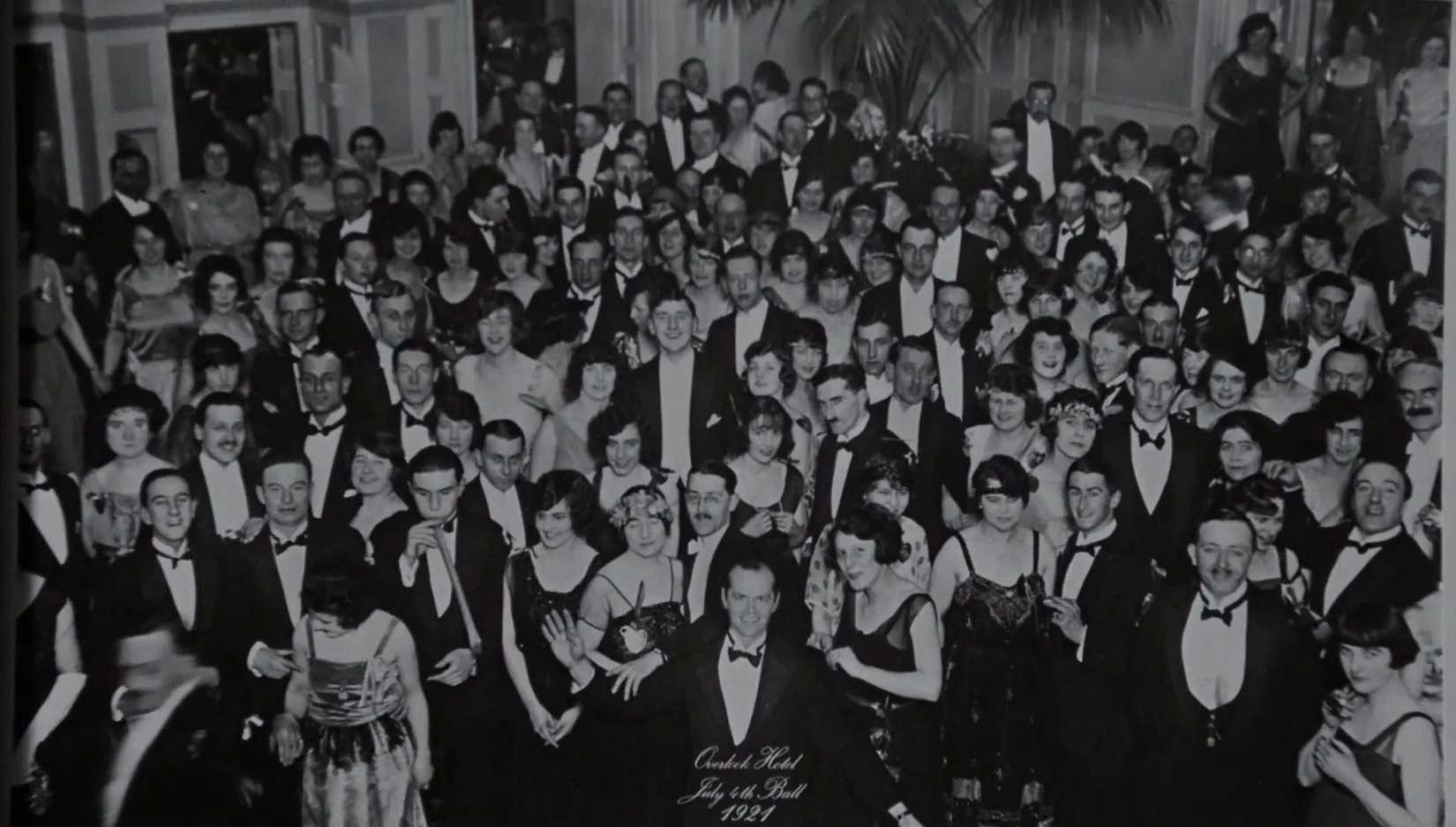 Image: Warner Bros. Pictures via movie-screencaps.com
Relocating The Shining to the 2000s doesn’t inherently ruin the story—it can still deliver supernatural chills and family tragedy—but it undeniably changes the conditions that make the original so claustrophobic and psychologically harrowing. Once connectivity becomes an easy escape hatch, the novel’s slow-burn dread is harder to sustain.
It: Welcome to Derry episodes 1 and 2 are streaming on HBO Max; new installments premiere weekly on Sundays.
Source: Polygon
Related articles
 Robert Pattinson Responds to Chris Hansen’s Complaints About the Movie “Primetime”
 Ryan Reynolds’ “Mayday” receives positive reviews from critics
 Michael Keaton to Direct Western Starring Morgan Freeman
 “Daddy’s Daughters” wedding sequel to be released in 2027
 Halle Berry and Colin Firth to Star in New Rom-Com
 Netflix Begins Filming New Dan Brown Adaptation
 Spider-Noir series canceled after first season
 Actors cast as Dobby and Tom Riddle for Harry Potter season two