Say Goodbye to the Century’s Scariest, Most Satisfying Movie Franchise Leaving Netflix This Month
Horror has always acted as a mirror for the collective anxieties of its time. While the 1980s and ’90s were dominated by slashers and home invasions that turned suburban normalcy into a hunting ground, the 2000s pivoted toward a much bleaker aesthetic: pure nihilism. Though this era of “torture porn” faced significant backlash from purists who loathed the wave of grim remakes and sadistic narratives, there is an undeniably visceral, cathartic quality to the relentless hopelessness defining these films.
The Saw franchise serves as the quintessential relic of this cinematic shift. Masterminded by genre luminaries James Wan and Leigh Whannell, the series centers on the victims of John Kramer—a brilliant engineer grappling with a terminal diagnosis. Operating under the moniker “Jigsaw,” Kramer forces his subjects into elaborate, stomach-turning death traps, delivering his twisted moral lessons via a haunting, tricycle-riding puppet. If you want a refresher, the first seven films are currently streaming on Netflix, but you’ll need to move fast: the franchise is scheduled to leave the platform on July 19.

There is no room for redemption or upbeat endings in the world of *Saw*, yet it became a massive cultural touchstone. For many in the 2000s, the annual *Saw* theatrical release was a grim ritual, blending genuine revulsion with morbid curiosity. While the quality of the writing and acting arguably waned as the series progressed and the plot twists grew increasingly desperate, there is a strange, guilt-free satisfaction in simply surrendering to the chaotic, grand-guignol spectacle of it all.
Beyond the carnage, the series is a showcase for depraved ingenuity. Kramer’s background as a mechanical engineer allows for an endless supply of horrific contraptions—such as the iconic needle pit, which forces a victim to scavenge through thousands of rusted hypodermic syringes to locate a hidden key. It is a testament to the franchise’s dedication to making the mundane seem lethal.
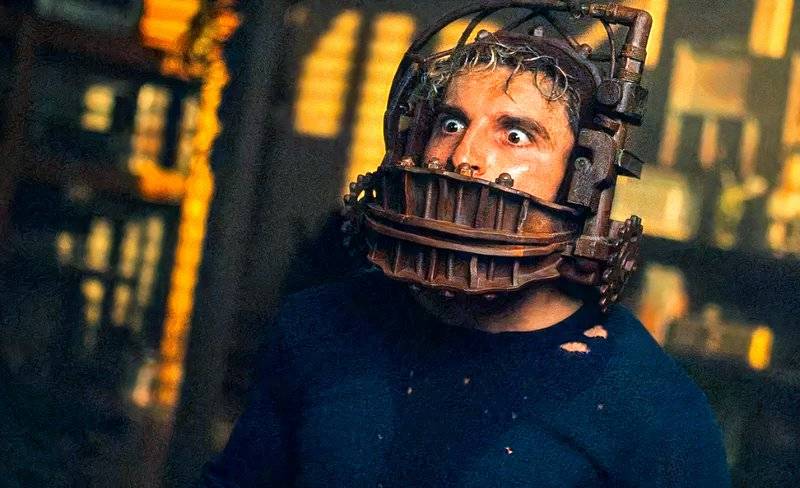
Then, of course, there is the original “game”: two men chained to opposite sides of a decrepit bathroom, armed only with handsaws. Jigsaw’s catalog of torture is vast and imaginative, from the “Reverse Bear Trap”—a metal headpiece rigged to snap a victim’s jaw—to the “Knife Chair,” a device that forces a desperate soul to crawl through a gauntlet of blades to secure their freedom.
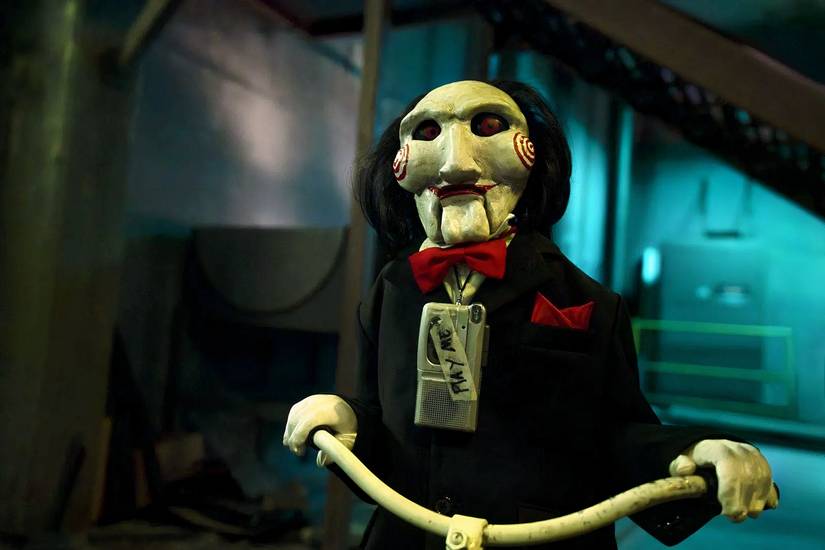
A horror series is only as memorable as its antagonist, and Jigsaw is a masterclass in screen presence. Tobin Bell’s icy, measured performance remains the franchise’s backbone; even when his character is deceased, his philosophy continues to loom over the narrative. His signature line, “Most people are so ungrateful to be alive. But not you. Not anymore. Game over,” is absurdly melodramatic, yet Bell delivers it with such chilling conviction that it has become an immortal piece of genre dialogue.
Two decades later, the *Saw* legacy persists. While Wan and Whannell have returned to guide the franchise toward new horizons, the specific zeitgeist that fueled the series’ initial, unapologetically grim rise has largely passed. Modern horror often leans into high-concept themes and psychological trauma, inviting the audience to engage in deep analytical debate. *Saw*, by contrast, has never cared for heavy-handed metaphors. It presents brutality plainly and unapologetically, serving as a fascinating time capsule of an era where horror was, above all else, designed to shock.
Source: Polygon
Related articles
 Modern Warfare Actor Barry Sloane Reacts to New Captain Price Meme
 Bloodstained: The Scarlet Engagement Delayed to 2027
 Every Potential Side Activity Spotted in the GTA VI Extended Look
 New Grand Theft Auto VI Trailer Delivers In-Depth Look at Gameplay, Story, and Side Activities
 Chinese WWII Shooter The Defiant Gets New Trailer
 GTA 6’s Relationship System Will Let Players Friendzone Jason and Lucia
 New GTA 6 Previews Reveal More Details Following Netflix Stream
 GTA 6 Introduces New Reputation System