
Battlefield 6: Anti-Cheat Update — Season 1
Battlefield 6 has officially launched — and what a remarkable debut. During the record-breaking launch period and the weeks that followed, players worldwide completed millions of matches while conversation around cheating and our responses to it remained a major focus.
In a previous Javelin update we explained how we quantify cheating with the Match Infection Rate (MIR) — our estimate of the probability that at least one cheater affected a particular match. Put simply, MIR approximates the chance you would encounter a cheater while playing. We prefer MIR over raw enforcement totals because it measures whether we’re protecting your play experience, not just how many accounts we block after the fact. That way we can prioritize preventing cheaters from impacting matches in the first place.
We’re proud to report that approximately 98% of matches were clean and free from cheater impact during the week after launch, giving an average Match Infection Rate (MIR) of about 2%. In other words, the vast majority of players experienced a level playing field.
A quick look back: what we learned in the Open Beta
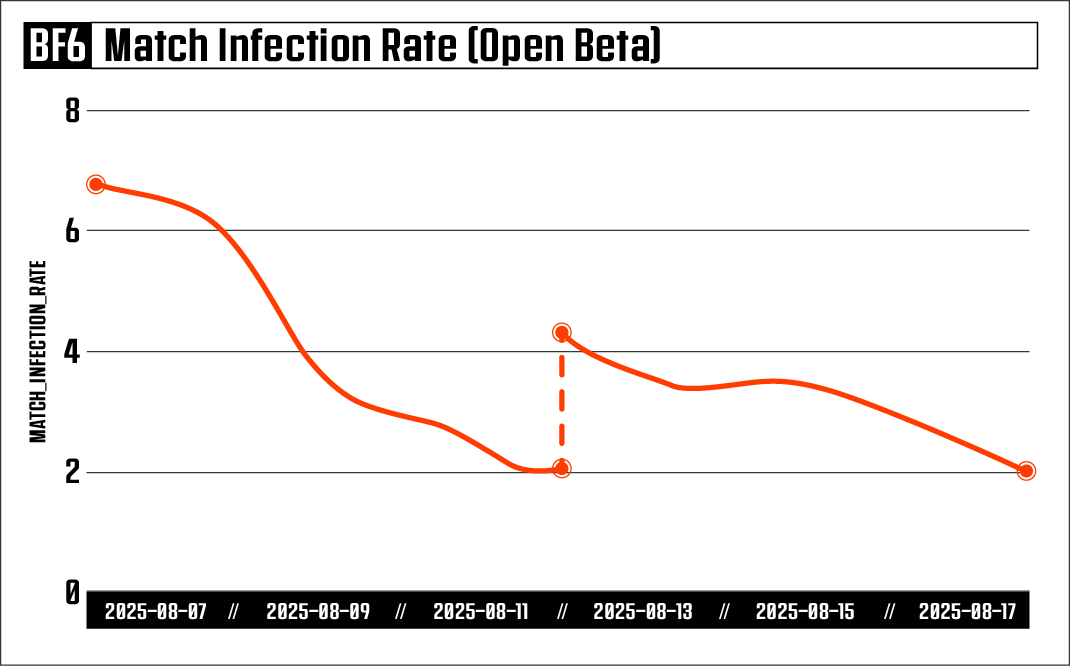
The Open Beta gave us essential data to fine-tune detection systems, operational workflows, and compatibility checks. We applied those learnings at launch, which directly improved stability and the anti-cheat posture you’ve seen in-game.
Highlights from Open Beta:
- We blocked more than 1.2 million cheat attempts, removing tens of thousands of accounts — including some who were brazenly live-streaming their cheats in real time.
- Fair matches rose substantially — from 93.1% at the start of testing to nearly 98% by the final day.
- Secure Boot adoption climbed from 62.5% to 92.5%. Thank you to everyone who enabled it quickly; that adoption let us lean on Secure Boot during launch with greater confidence. Eligible players who enabled it should have received an in-game tank decal as a token of thanks.
Since launch: month one results & impact
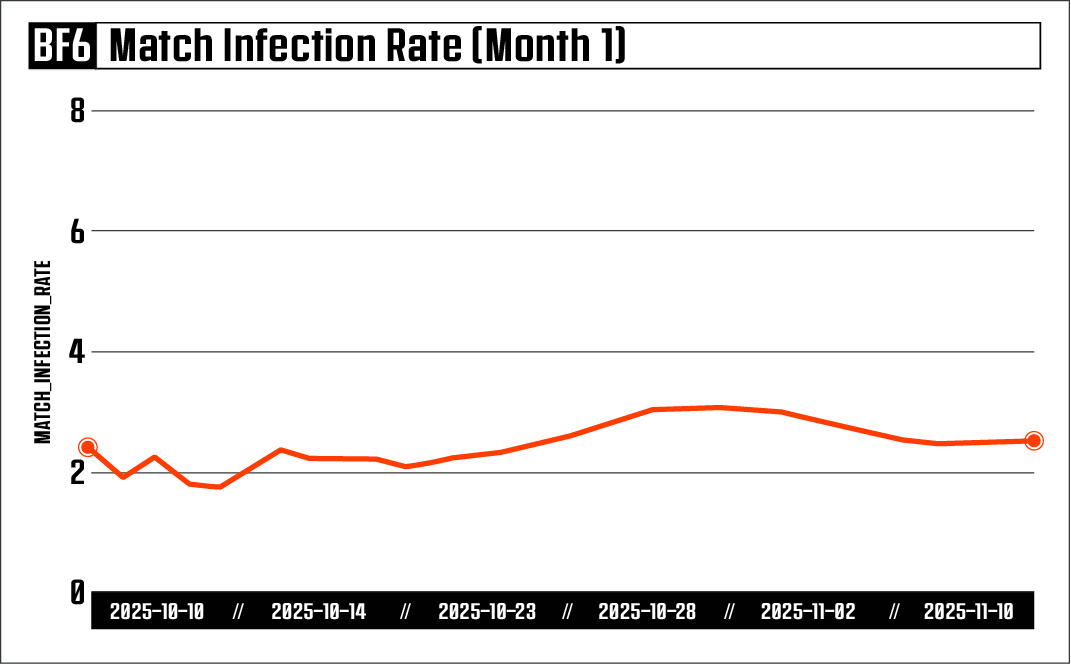
Over launch weekend, EA Javelin Anticheat prevented more than 367,000 cheat attempts — a lower weekend total than comparable Open Beta weekends but consistent with the set of cheat developers we’re actively tracking. That figure has grown to 2.39 million cheat attempts blocked to date.
Across our PC player base, only about 1.5% of users still report issues activating Secure Boot. Thanks to player feedback, Fan Care support, and contributions from community volunteers, we continue working through remaining edge cases. Secure Boot is not a cure-all, but it raises the cost of cheating and enables other detections to work more effectively. Attempts to bypass protections often generate indicators that help us trace and dismantle cheat ecosystems rather than letting them operate unnoticed.
We currently track 190 cheat-related programs, hardware solutions, vendors, and reseller communities. Since launch, 183 of them (96.3%) have experienced feature failures, received detection notices, experienced downtime, or taken their cheats offline entirely. While clips of alleged undetected cheating still circulate, those creators are far more likely to be already flagged or under investigation — the disruption to the cheat community is real and encouraging. That said, malicious actors will keep testing, and we remain vigilant with layered defenses to protect matches.
What’s next
Our anti-cheat work is ongoing. Here are the priorities we’re pursuing now:
-
Broaden OS security support.
- Beyond Secure Boot, features like TPM 2.0, HVCI, and VBS are included in Battlefield 6 system recommendations. These OS-level protections improve overall security posture and reduce the likelihood of disruptions once enforcement is required.
-
Address cheating hardware.
- You may have seen mockups and screenshots about hardware bans — while some are fan-created, the core point stands: using known cheating hardware violates our rules. We will enforce against hardware-based cheating where supported by reliable detection.
- We’re enhancing detection methods in collaboration with platform partners to reduce the impact of illicit devices across ecosystems.
- For players who rely on specialized controllers for accessibility, we recommend first-party options such as the Xbox Adaptive Controller and the PlayStation Access Controller (US).
-
Improve reporting flows.
- We’ve heard that reporting suspected cheats can be awkward depending on mode. We’re redesigning reporting flows and the in-game UI so players can submit clear, contextual reports that help our teams act faster and more accurately.
-
Upgrade internal analyst tools.
- Better tooling increases the speed and precision of validation, investigations, and threat monitoring — letting our teams respond more rapidly to new cheat developers and tactics.
-
Classified improvements.
- Multiple teams are building additional anti-cheat features across Javelin, the game client, servers, and platform integrations. We’ll announce details once those measures are fully tested and ready to deploy, to avoid tipping off bad actors.
The road ahead
Cheat developers will continue to evolve, and we will too. Fair play matters to us as developers and as players, and we’ve been preparing for this fight for a long time. You can help: please report accounts you suspect of cheating via the in-game reporting tools — those reports capture additional telemetry, surface accounts for investigation, and improve our ability to measure how cheating affects the player experience.
Keep it fair out there — we’ll see you on the Battlefield.
Related articles
 Battlefield 6 – Anticheat Metrics – July
 Battlefield 6 – Community Update – Tidal Strike
 Battlefield 6 EA Play Rewards
 BATTLEFIELD 6 UPDATE 1.4.2.5
 Battlefield 6 Season 4: Anti-Cheat Update
 Battlefield Community Survey: Top Gun Edition
 In Case You Missed It: Season 4 – Top Gun Has Officially Launched!
 Unleash Your Inner Top Gun in the Battlefield 6 Free Trial