
The Best Sci-Fi Movie of 2026 Was Inspired by Tom Cruise and The Terminator

Screenwriter Matthew Robinson vividly recalls presenting his latest project to longtime collaborator Doug Liman, the visionary behind action staples like The Bourne Identity and Mr. & Mrs. Smith. Having previously refined the script for Liman’s sci-fi epic Edge of Tomorrow, Robinson was now offering the director a spiritual successor titled Good Luck, Have Fun, Don’t Die.
“It’s essentially Edge of Tomorrow 2,” Liman remarked upon reading it. Robinson didn’t disagree. While he remains optimistic about an official sequel to the Tom Cruise hit—telling us, “I’ll champion any version of that sequel, mine or otherwise”—Good Luck serves as a thrilling placeholder.
Set for a February 13 release, the film features Sam Rockwell as a disheveled stranger who crashes into a Los Angeles diner, claiming he has traveled from a desolate future to prevent an AI-driven apocalypse. This nameless protagonist is trapped in a relentless temporal loop, destined to replay his mission until humanity is saved. Under the direction of Gore Verbinski (known for The Ring and Pirates of the Caribbean), the narrative follows one specific cycle while weaving in the rich backstories of an ensemble cast that includes Juno Temple, Michael Peña, Zazie Beetz, and Haley Lu Richardson.
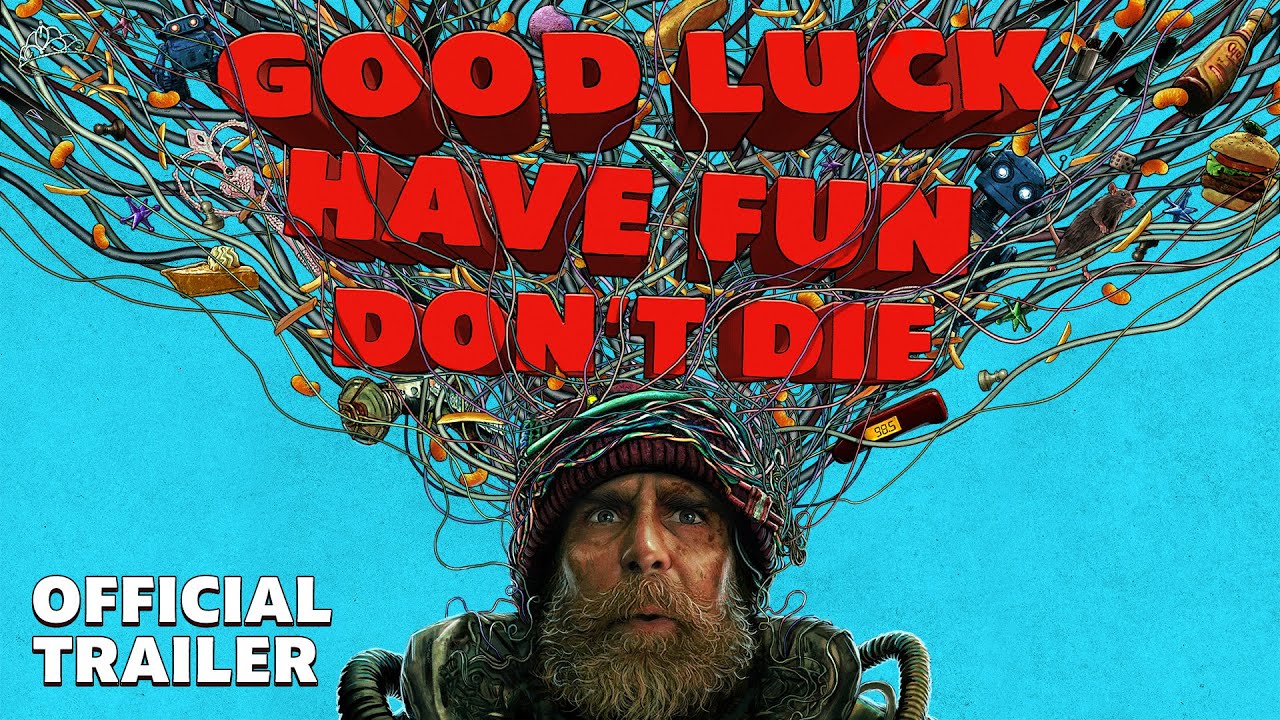
Drawing stylistic cues from The Terminator and Terry Gilliam’s 12 Monkeys, the film also leans into the dystopian unease of Black Mirror. In a recent conversation, Robinson embraced these parallels. “I’m not interested in hiding my influences,” he explains. “I want the audience to see those connections clearly.”
Ahead of the premiere, Robinson sat down with Polygon to discuss the script’s evolution, Verbinski’s chaotic visual contributions, and the provocative subplot that nearly stalled the production.

Polygon: What was the initial spark for this narrative?
Matthew Robinson: It began as a collection of fragmented ideas about our relationship with technology. One thread involving Michael Peña and Zazie Beetz—focused on substitute teachers in a school where students were becoming drone-like conformists—was originally a TV pilot. I wanted to flip the Breakfast Club dynamic: making the teachers the outcasts and the kids the mindless zombies. It worked as a concept, but it wasn’t a feature film. I combined that with an interest in virtual reality gaming and a late-night observation at a Norm’s Diner. Seeing everyone glued to their screens, I wondered: What if someone walked in right now and forced us to disconnect? I used a Canterbury Tales structure to bridge these disparate themes into a single, high-stakes journey.
The film shares a distinct DNA with The Terminator. Was that a conscious homage?
Absolutely. I prefer to lean into my inspirations rather than mask them. To me, it’s about building upon the foundations of stories I adore. We reference Terminator explicitly, but you’ll also find traces of Akira, Brazil, and the general frantic energy of Terry Gilliam. I’m highlighting these elements so the audience knows the familiarity is intentional. If you share those cinematic loves, you’ll appreciate the specific message I’m trying to convey here.

How did Gore Verbinski’s direction reshape your original script?
Our creative visions aligned almost immediately. We fine-tuned the third act and expanded Haley Lu Richardson’s arc, but the core structure remained intact. Gore’s real magic was in the spectacle. He conceived these massive, intricate set pieces that weren’t on the page—like a high-octane car chase through a decaying, abandoned shopping mall. I would arrive on set to find a simple dialogue scene I’d written transformed into this sprawling, kinetic sequence filled with visual gags and incredible costume design. He elevated the material to a scale I hadn’t even imagined.

One of the flashback sequences deals with the heavy subject of school violence. It’s strikingly dark yet maintains a satirical edge. Were you concerned about the tone shifting too far for a sci-fi comedy?
That storyline is exactly why we had to produce this film independently. Every major studio passed because of the moral and emotional weight of that segment. They were terrified of the optics—the “what if” of real-world tragedies coinciding with the release. My response was that in modern America, that’s an inevitability. It’s a nightmare we’ve somehow normalized, and I felt it was vital to address that head-on.
That part of the film stems from a place of deep-seated anger. As a parent, I think about this constantly; it shapes my view of safety in this country. While the subject itself isn’t funny, satire and gallows humor are the tools I use to process things that feel otherwise intolerable. I hope the audience finds it cathartic—or at least as infuriating as I do. We shouldn’t be comfortable with how this has been woven into our culture.
Good Luck, Have Fun, Don’t Die arrives in theaters on February 13.
Source: Polygon
Related articles
 First Details Emerge on EA’s Mysterious Project Gridiron
 GameMaker Engine to Become Free for Everyone
 Warhammer 40,000: Dawn of War IV Set for December Release as Developers Detail Content
 Overwatch Co-Creator Delays The Legend of California’s Early Access Release to 2027
 Former Producer Points to EA to Explain Dragon Age: The Veilguard’s Disappointing Reception
 Halo Studios Reportedly Wanted to Make a Game Based on the Halo: First Strike Novel, Blogger Says
 Blumhouse Interested in Danganronpa Adaptation, Documents Indicate
 GTA: San Andreas’ Most Frustrating Mission Shows How Far Rockstar Has Come in 22 Years