
The 2 Best VR Games Ever Are Just as Good on PS5, Xbox, and PC
There exists an entire library of video games that I simply cannot play. It isn’t for a lack of desire, but rather a harsh biological limitation: Virtual Reality. The mere thought of strapping a headset to my face triggers waves of motion sickness. I am the quintessential “bad passenger” who feels queasy on long car rides and once had to abandon a theater mid-IMAX screening just to find fresh air.
Because of this sensory intolerance, I have missed out on several critically acclaimed VR titles, most notably Moss and its sequel, Moss: Book 2. Over the years, I’ve hovered over these entries during PlayStation Store sales, only to sheepishly exit the store page upon realizing they were locked behind a VR requirement. Thankfully, that barrier has finally crumbled. Developer Polyarc has bundled both adventures into a single non-VR, flat-screen experience titled Moss: The Forgotten Relic. It is a charming, heartfelt odyssey that, despite a few minor technical stumbles, is well worth the journey.
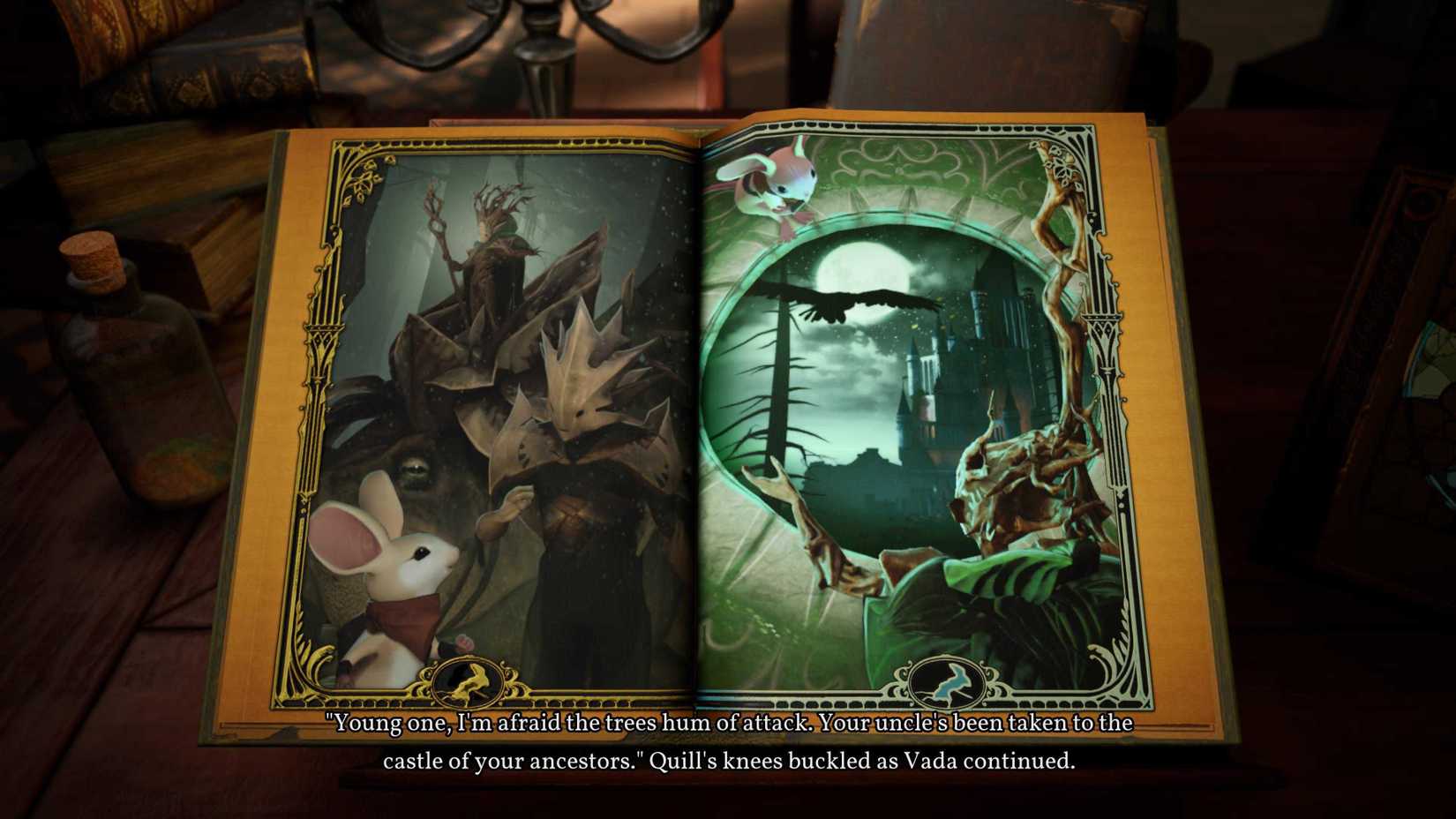 Image: Polyarc via Polygon
In Moss: The Forgotten Relic, you are just as much a protagonist as the furry creatures on screen. You take on the role of “The Reader,” an omnipresent force interacting with a magical storybook discovered in an ancient library. You are soon introduced to Quill, a courageous young mouse who recognizes your presence almost immediately. When her uncle is abducted following the discovery of a mystical shard of Glass, Quill embarks on a perilous quest that forces her to grow from a small-town mouse into a genuine legend—with you guiding her every step of the way.
As the Reader, your influence is tactile. You navigate Quill through lush forests and haunting, decrepit castles, physically manipulating the environment—sliding stone blocks into place or raising platforms—to help her traverse gaps. It is intuitive, though the transition from a VR-first experience to a traditional 3D platformer does hit one snag: the lack of manual camera control.
One joystick governs Quill’s movement, while the other maneuvers your ethereal hand as the Reader. This means your platforming precision is often at the mercy of the game’s fixed perspective. Judging the depth of a leap can be tricky, sometimes requiring multiple attempts to find the right angle. While usually manageable, there is one particularly grueling section toward the end of the first act that felt unnecessarily difficult due to these rigid camera angles. It is a minor frustration, though for a veteran of FromSoftware titles, it is a brand of “tough love” I am well-acquainted with.
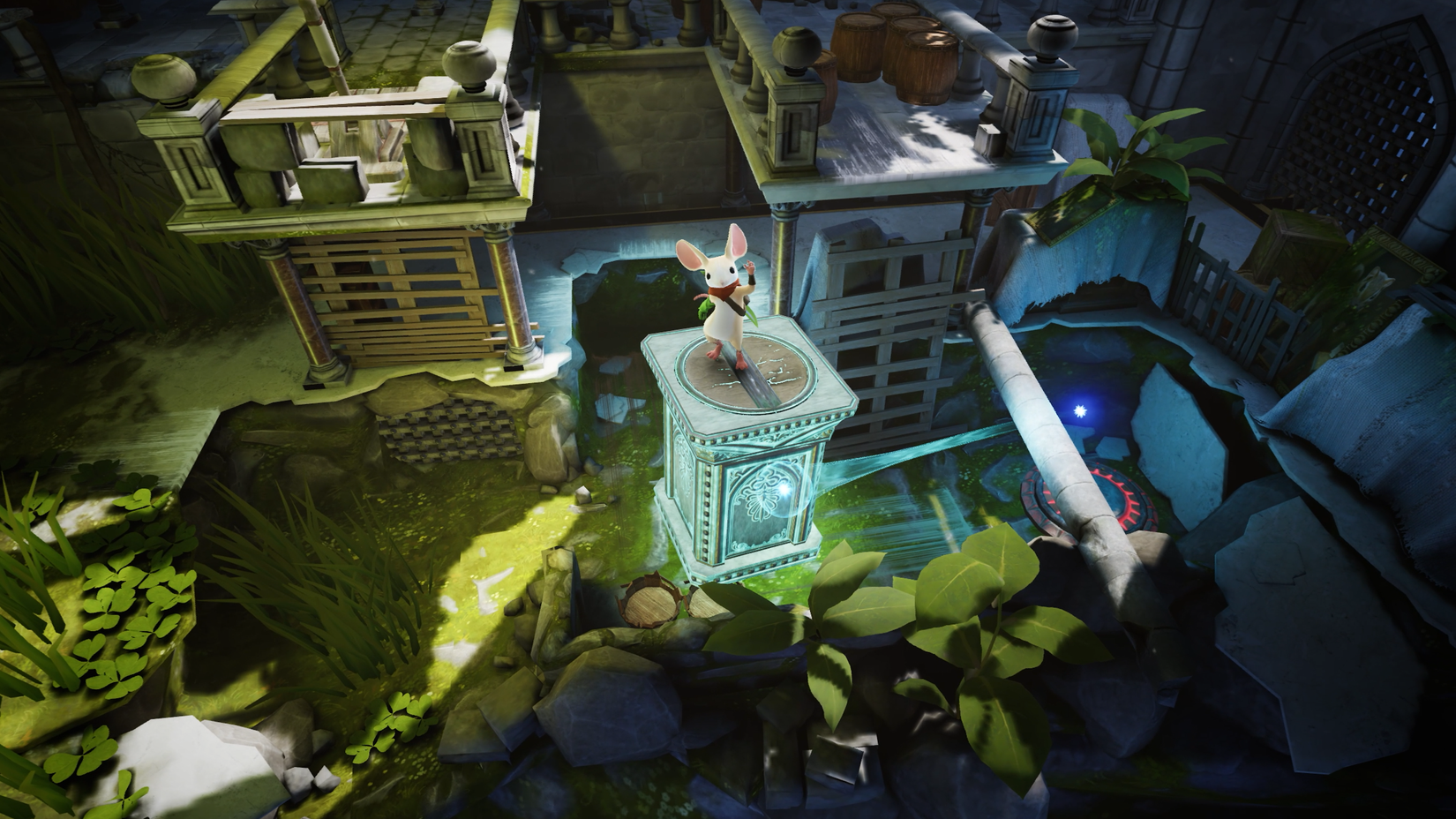 Image: Polyarc
The environmental puzzles are satisfying without being overly cryptic, often rewarding careful observation with that satisfying “aha!” moment. As the game unfolds, both Quill and the Reader gain an expanded repertoire of abilities. By the closing chapters of Book 2, juggling these mechanics—including puppeteering enemies to reach inaccessible switches—feels incredibly fluid and rewarding.
Combat, however, serves as the game’s weakest pillar. While the puzzle-solving feels like an engaging dance, the combat sequences can feel like a chore, tasking you with clearing waves of repetitive enemies in enclosed arenas. The experience improves significantly in the second half as Quill unlocks new weaponry, providing the much-needed variety that makes these encounters genuinely enjoyable.
Moss shines brightest in its characterization. Quill’s animation is packed with personality; she doesn’t move with the cold precision of a platforming robot. Instead, she scrambles, slips, and somersaults with a weight and charm that makes her feel alive. She will initiate high-fives after a victory, and as your bond deepens, she’ll even start dancing and spinning with joy—a small detail that builds a surprisingly genuine emotional connection.
 Image: Polyarc via Polygon
This charm is even more apparent when you briefly control Sahima, a grumpier mouse with a completely different attitude. Instead of high-fives, she offers impatient glares and sarcastic claps if you falter during a puzzle. It’s a hilarious, sharp contrast to Quill’s sweetness, though I found myself counting the minutes until I was reunited with my heroic companion. Over the ten-hour journey, Quill evolves into a character of true empathy and courage. When she faces heartbreak, you feel it right alongside her.
Despite the occasional camera-related frustration, Moss: The Forgotten Relic is a delightful experience. While the combat remains functional at best, the brilliance of the puzzle design and the profound bond you form with its protagonist make the game a must-play. That final, joyful high-five is more than enough of a reward for the journey.
Moss: The Forgotten Relic launches July 16 on Nintendo Switch, Nintendo Switch 2, PlayStation 5, Windows PC, and Xbox Series X. This review was conducted on PS5 using a pre-release code provided by the publisher. For more details on our standards, please refer to our ethics policy.
Source: Polygon
Related articles
 James McAvoy Shares Advice for the New Professor X in the X-Men Reboot
 Ranma 1/2 Season 3 Receives New Trailer Featuring Opening and Ending Themes
 Xbox Head Asha Sharma Spends Hours Each Month Answering Player Inquiries
 Annihilation Battles Mode Returning to Ace Combat 8: Wings of Theve
 Lies of P Developers Register Trademark for Wonders of O
 Jason Momoas Early Sci-Fi Series Now Streaming Free on YouTube
 Seven Classic Noir Movies to Watch After Spider-Noir
 Composer Mick Gordon Contributed to Music for First StarCraft Shooter Trailer