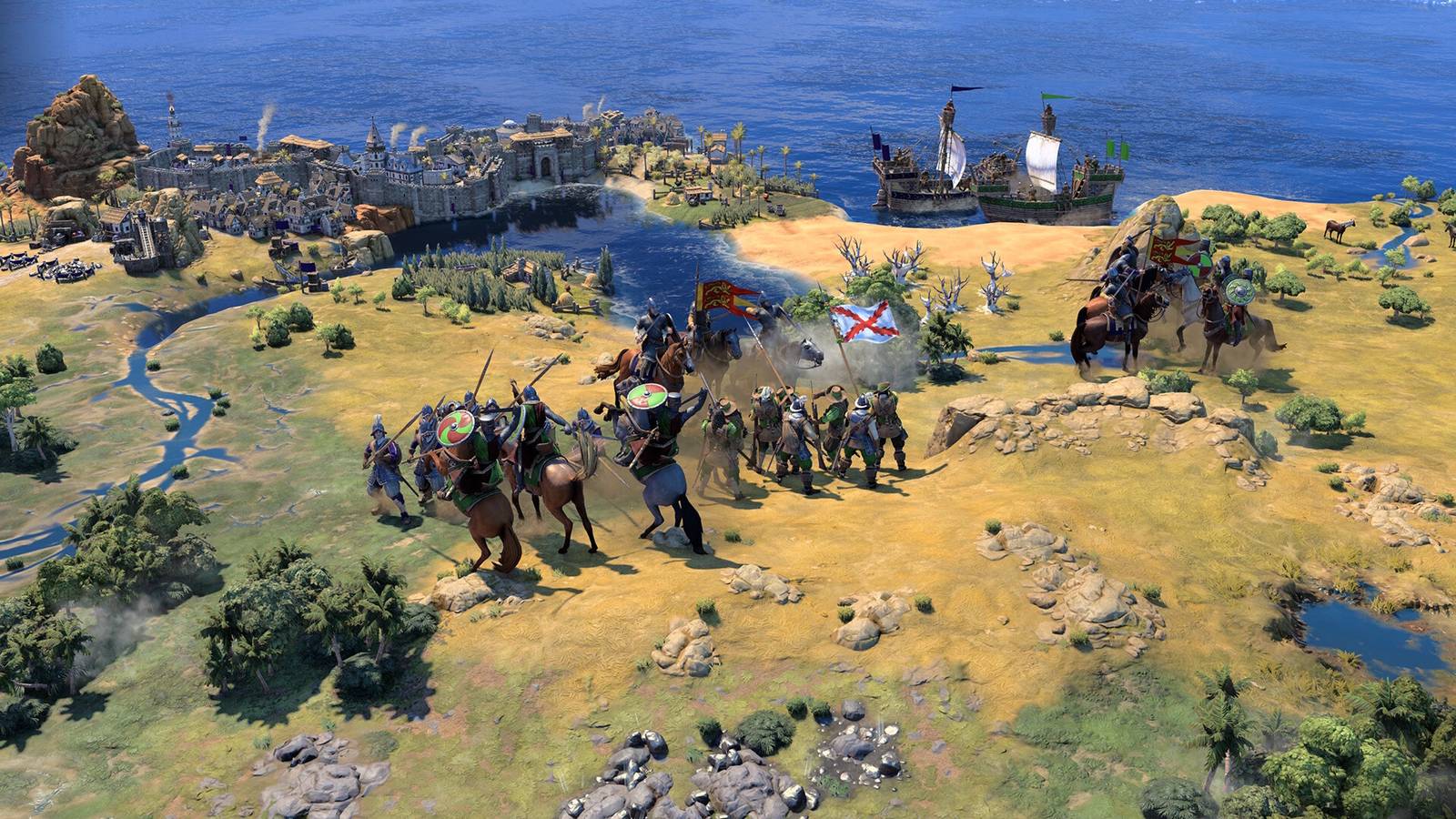
Civilization VII’s latest updates fix its most divisive feature and restore my confidence in the game
Two major updates to Civilization 7 this year have fundamentally transformed the 4X experience, largely for the better, and have reignited my optimism for the title’s trajectory. Firaxis kicked things off in late May with the substantial “Test of Time” update, which introduced significant mechanical overhauls. This was followed in late June by a leaner patch refining the happiness and government systems. While the game has yet to reach its full potential—diplomacy, in particular, still feels like a hollow shell of what it ought to be—Firaxis finally appears to have a coherent vision for Civ 7 and, more importantly, a roadmap for how to execute it.
The “Test of Time” update addressed one of the most polarizing aspects of the game: the forced evolution of civilizations across historical eras. At launch, Firaxis required players to swap civilizations at the start of each new age, with choices restricted based on previous performance. While intended to weave history into strategic decision-making, it was broadly unpopular; players who had spent hours building a narrative alliance between Isabella of Castile and Gandhi found the shift to a more rigid, historical progression jarring and restrictive.
The game now offers much more agency. You can commit to your chosen leader for the duration of the entire campaign and retain your original civilization if you so desire. Every civilization now has an “Apex Age”—a peak historical period where they unlock signature units, buildings, and specialized bonuses. Outside of this window, civilizations transition into a “time-tested” state, effectively meaning they continue to function but shift focus. During these periods, you can leverage “syncretism” to borrow special features from other civilizations that share historical synergy with your own, or choose to “affirm” your existing traditions to solidify your civilization’s unique identity.
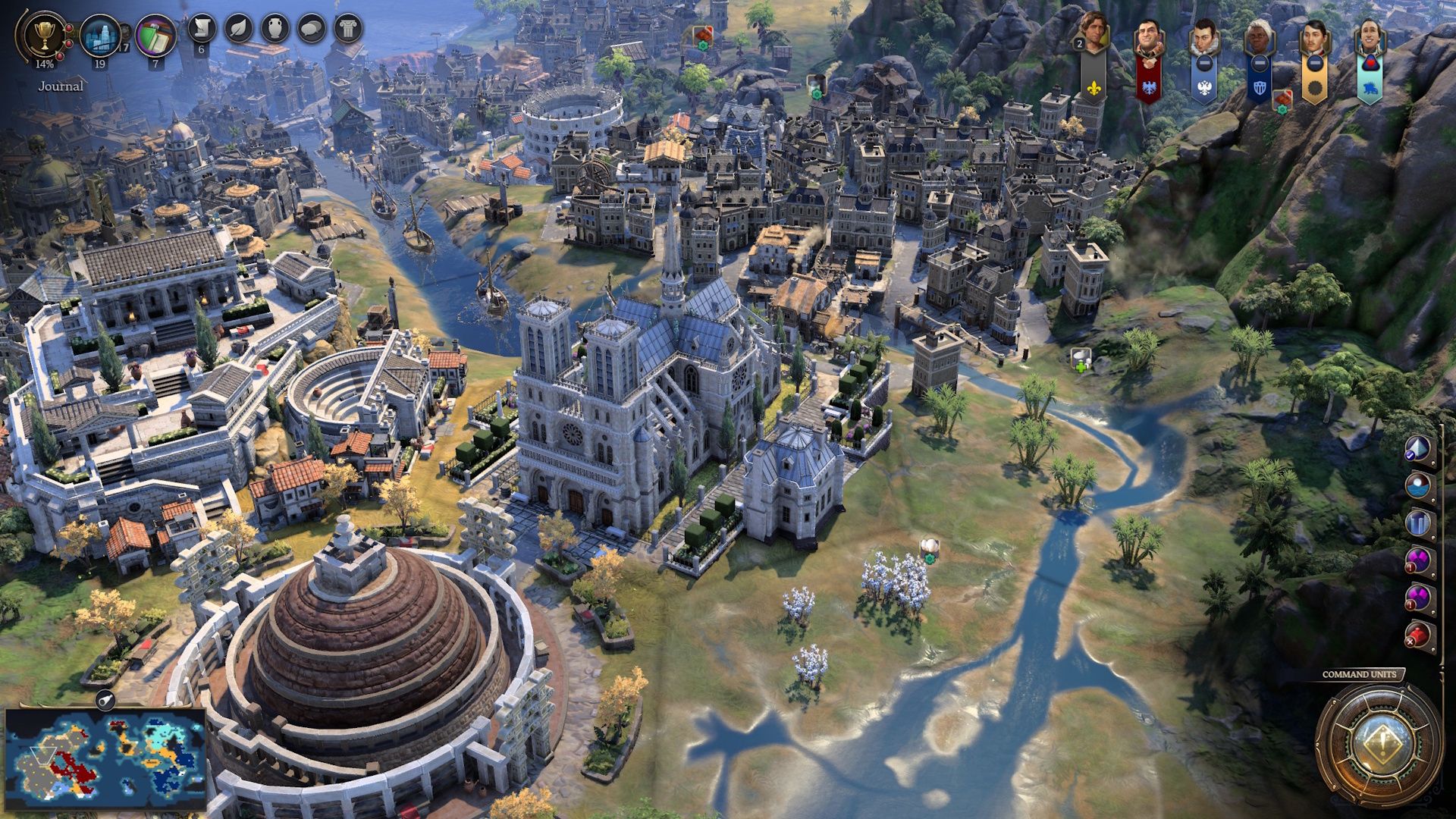
Image: Firaxis Games/2K Games via Polygon
Firaxis deserves credit for how these transitions feel. In a recent playthrough as Alexander the Great, I aimed for a cultural victory; when the Age of Exploration dawned, I was presented with meaningful options. While some choices, like the defensive Norman motte and bailey, were clearly antithetical to my pacifist cultural run, the presence of distinct strategic trade-offs made the progression feel fresh and purposeful. It highlights a key lesson: historical assimilation wasn’t always a product of conquest—sometimes it was a pragmatic choice. By allowing players to lean into that pragmatism, Firaxis has created a much more fluid and engaging historical simulation.
Victory conditions have also been streamlined to feel like a natural outcome of gameplay rather than an exhausting, disparate checklist. Economic victories are now tied to a cumulative GDP, while cultural victories rely on a holistic approach to tourism, wonders, and celebrations. These goals now feel like long-term objectives rather than gimmicky mini-games. Military and scientific paths remain largely unchanged, which is acceptable, though the new “science point” mechanics offer a welcome incentive to specialize early on.
To keep the momentum going between major milestones, the game introduces “triumphs”—customizable, achievement-like goals that offer tangible rewards. These milestones are a great addition, providing useful “dedications” that help maintain engagement during the Age of Exploration, which still suffers from pacing issues.
However, the happiness system remains a weak link. While the new grade-based happiness and incentive-driven celebrations are a step in the right direction, they are still easily ignored or managed through rote repetition. Even when overextending my empire, maintaining high happiness across my cities felt less like a strategic grand design and more like performing a standard inventory check.
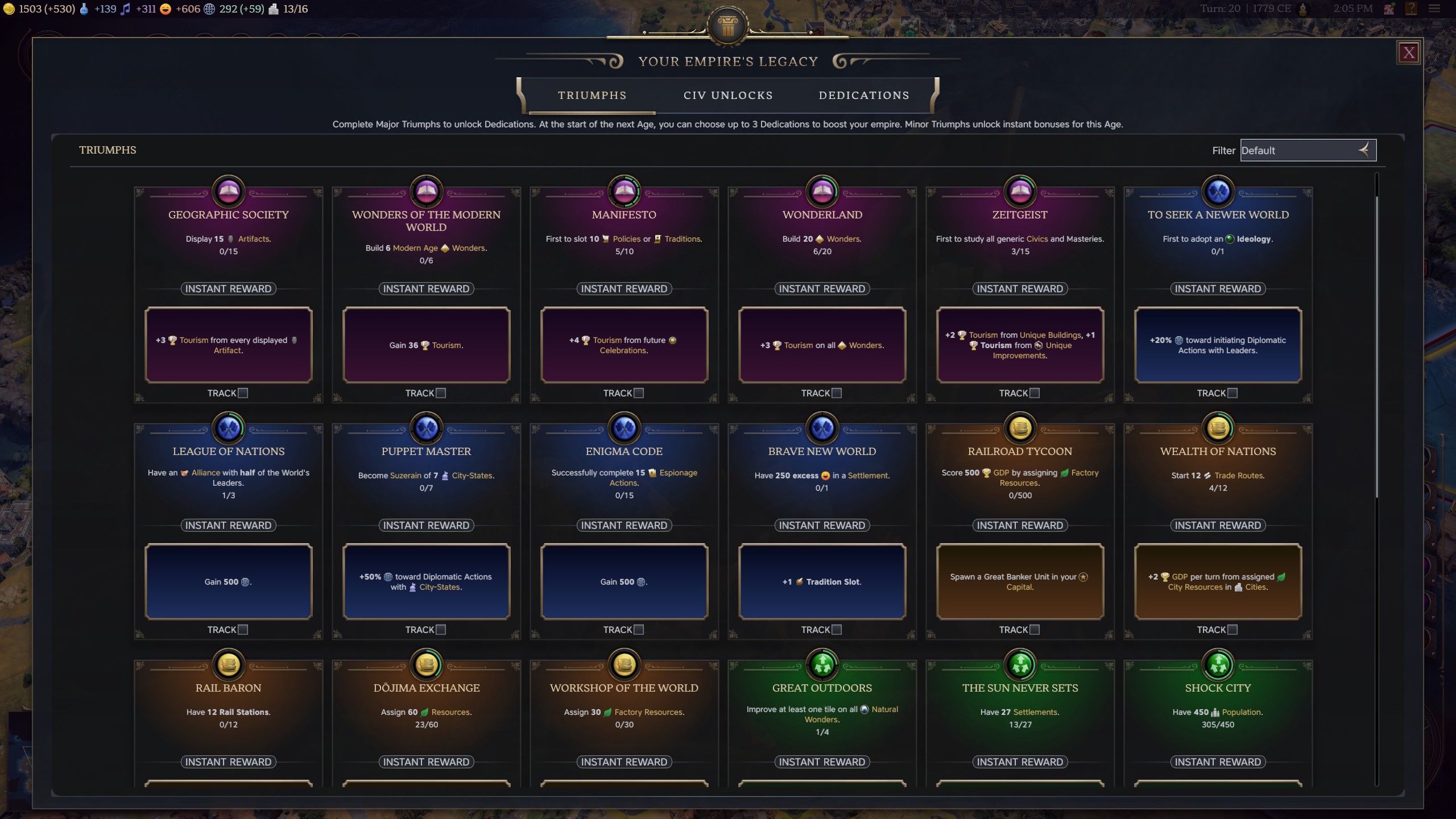
Image: Firaxis Games/2K Games via Polygon
This “checklist” sensation is even more apparent in religion and diplomacy. While religious buffs are functional, they rarely feel essential or particularly fun. In one match, a religious crisis struck, but instead of the civil unrest I expected, my population seemed entirely unbothered, further highlighting that the game’s crisis system still requires a significant overhaul.
Diplomacy remains the most disappointing area of the game. Despite policies and traditions centered on influence, interaction with rival leaders remains stiflingly shallow. Your primary diplomatic options are limited to:
- Proposing a trade.
- Initiating a celebration/alliance.
- Declaring hostility.
- Embarking on theft.
- Distributing “charitable” (or guilt-ridden) handouts.
There is a grim satisfaction in leveraging your influence to force an opponent to cede cities during a war, but it feels like mere global extortion rather than a nuanced diplomatic strategy.
Despite these lingering flaws, Civ 7 is in a much better place than it was at launch. The latest updates have mitigated the rigidity that once plagued the experience, making each age feel more distinct and rewarding. While the game still needs more depth in its city planning and diplomatic suites, the current trajectory is promising. Firaxis seems to finally understand how to let Civ 7 thrive, even if the road to greatness is a work in progress.
Source: Polygon
Related articles
 Rockstar Releases Full GTA VI Presentation in 4K on YouTube
 Black Library Unveils Three New Warhammer 40,000 Imperial Guard Novels
 Jason Statham’s The Beekeeper 2 Gets Update From Original Director
 Prime Video Adapting Stephen King’s Crouch End into Limited Series
 Unreleased Nvidia DLSS 5 Tested With Mixed Results
 GTA VI Currently Runs at 30 FPS on All Consoles with 60 FPS Support in Question
 GTA VI vs GTA V comparison shows major generational leap
 Gaming’s Most Bizarre Puzzle Franchise Returns in One Month