Bugonia co-writer Will Tracy admits he doesn’t retain every detail of Jang Joon-hwan’s 2003 dark sci-fi black comedy Save the Green Planet! That surprised some — Tracy, who collaborated on Yorgos Lanthimos’s new adaptation, didn’t study the original script obsessively. Instead he screened the film once, jotted a few impressions, and set about shaping a very different retelling.
“I only watched Save the Green Planet! once,” Tracy told Polygon. “I didn’t want to feel beholden to someone else’s specific choices. I thought the fairest approach was to let both films exist independently.”
The basic premise remains: an unstable man (Jesse Plemons in Bugonia) kidnaps a pharmaceutical executive he insists is an alien. But Tracy and Lanthimos diverge sharply in how they reframe characters and outcomes. A key change: the executive in Jang’s original, portrayed by a man, becomes a woman in this version — a role taken on by Emma Stone. The films also resolve their central mystery in different ways: both ask whether the captive is truly extraterrestrial, yet they answer it with distinct tonal and narrative choices.
Tracy says the puzzle at the story’s core wasn’t his principal obsession.
“I didn’t want the film to be a single trick — one reveal and then nothing else,” he explained. “There’s more to it than a single twist.”
Polygon spoke with Tracy about Bugonia’s conclusion, how he and Lanthimos refined the surprises, and the creative choices that distinguish this adaptation.
Warning: Full spoilers ahead for the ending of Bugonia.
So — is Emma Stone’s character an alien?
Short answer: yes.
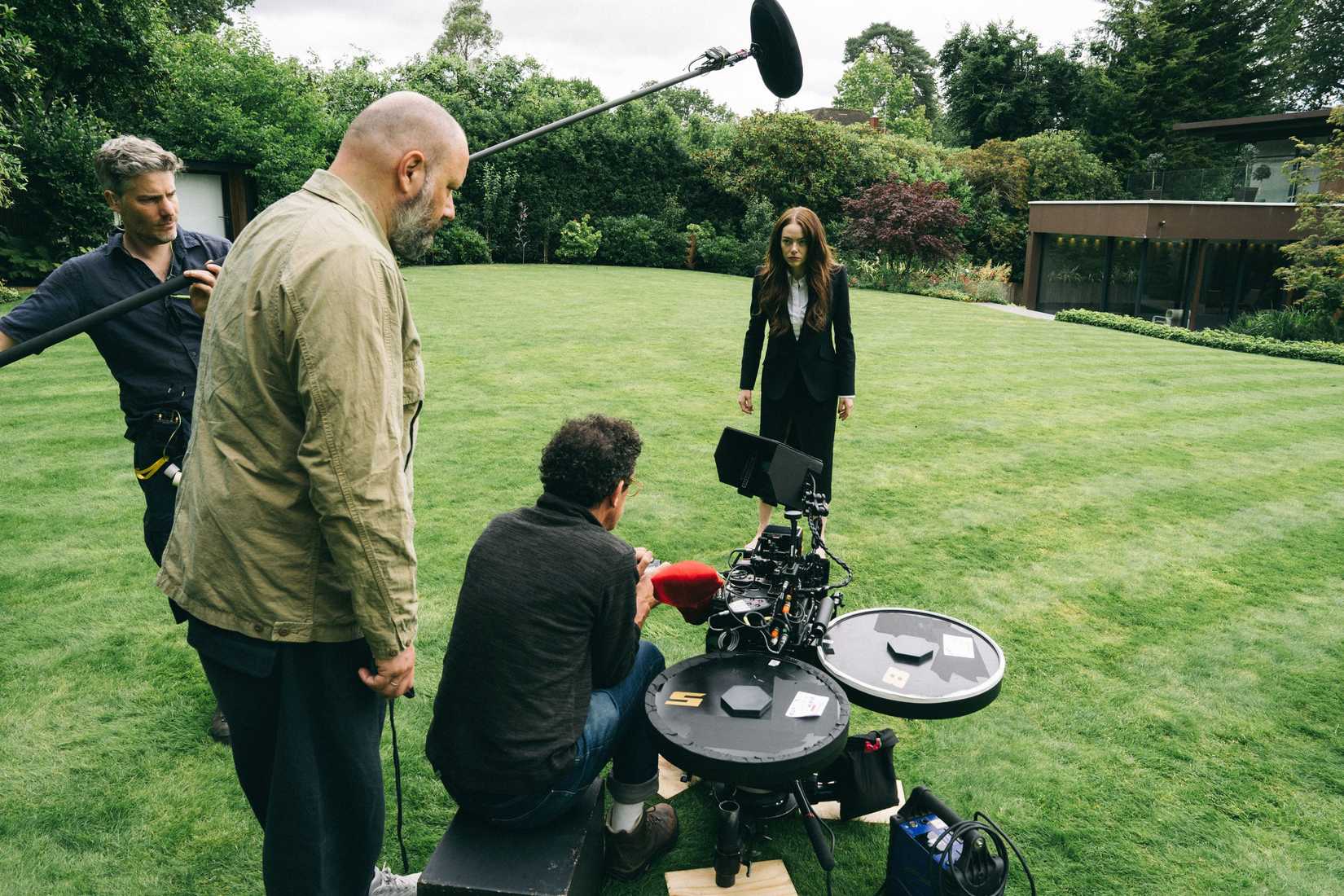
As in Save the Green Planet!, Bugonia concludes by revealing that Emma Stone’s Michelle Fuller — the powerful pharmaceutical CEO — is in fact alien royalty. She manipulates Teddy (Plemons) into taking his own life with a teleportation device and then departs by beaming up to an Andromedon vessel.
The revelation relies heavily on Stone’s layered performance. Across the film’s 118 minutes she sustains an ambiguous, multifaceted portrayal that invites repeat viewings to fully appreciate the subtext and hints.
“Emma talked about giving a role that rewards a second viewing,” Tracy said. “She was conscious of what someone would notice on a rewatch — the ‘I know that I know’ layer of performance.”
Designing the Andromedons and their ship
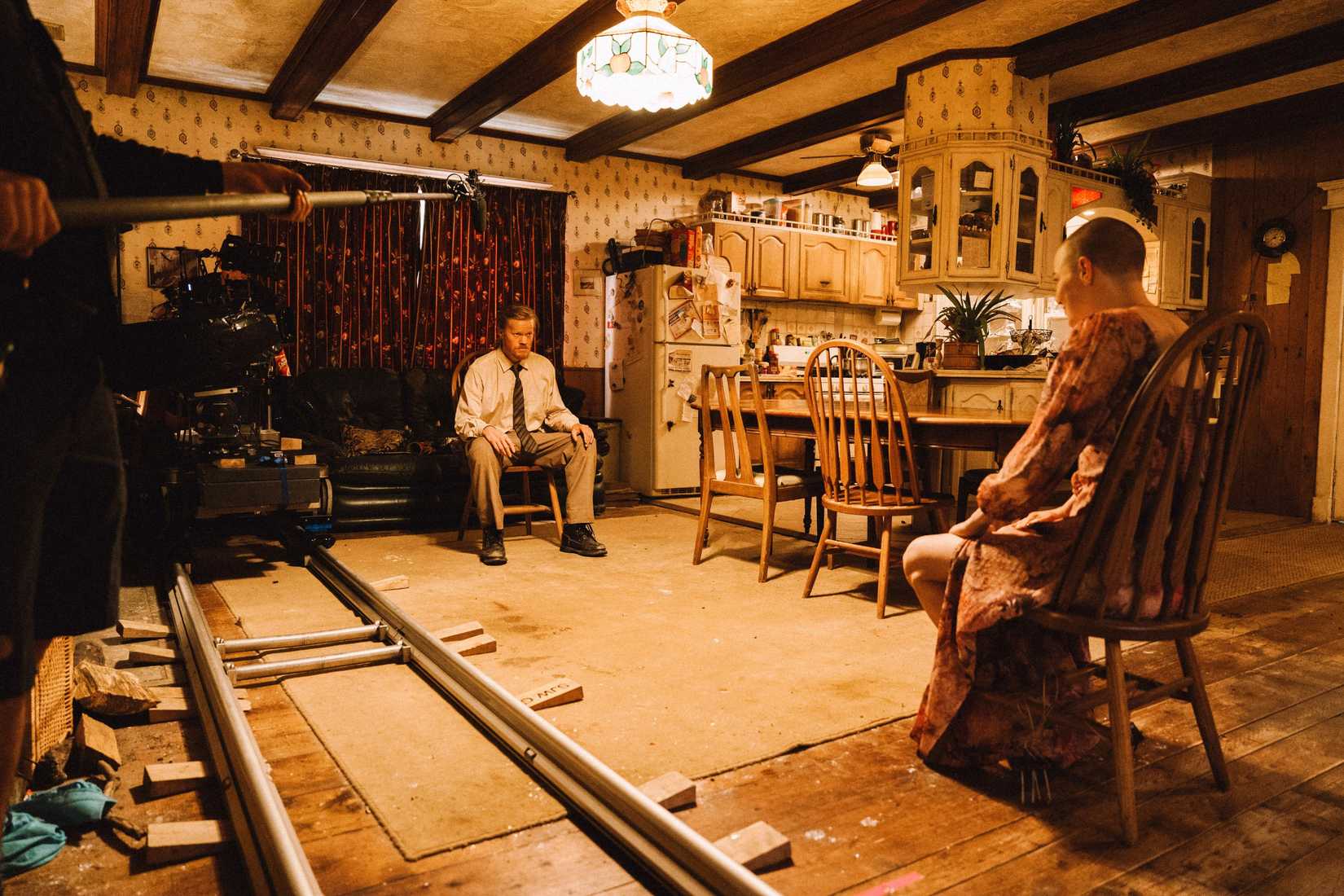
When Michelle’s true identity is exposed, the film offers a fleeting look at her craft and kin. The ship avoids the usual chrome-and-lights sci-fi clichés: Lanthimos and the design team favored organic, almost marine imagery.
“Yorgos wanted the vessel to feel like a jellyfish — organic rather than overtly technological,” Tracy explains.
They should feel strangely kind of tribal or primitive.
The Andromedons’ wardrobe follows the same philosophy: instead of metallic futurism, their garments resemble oversized, intricately woven robes made from thick, rope-like fibers. The intention was to create an aesthetic that reads ancient and ceremonial, not sleek.
“For costumes we avoided the expected futuristic tropes,” Tracy says. “They’re tribal and elaborate at once — ornate knitworks that suggest an old, sophisticated civilization rather than a glossy, high-tech one.”
The end of the world — or simply the end of humanity?

One of the most notable tonal departures from Jang’s film is how the extraterrestrials respond. In Save the Green Planet! the aliens retaliate by destroying Earth. Bugonia offers a quieter, more surgical outcome: humanity is extinguished, but the planet and its ecosystems persist.
“I wanted to imagine Earth after humans,” Tracy says.
The film’s closing sequence shows scenes from around the globe where all humans lie motionless, yet life and the planet continue on. The image invites many interpretations: is it a mournful finale or a strangely liberating one? Is humanity’s eradication a tragedy, or could it be seen as a cleansing?
Tracy declines to pin down a single reading. “Some viewers find it bleak and hopeless; others perceive a strangely optimistic liberation. Both reactions feel valid.”
Bugonia is currently playing in select theaters and opens wide on October 31, 2025.
Source: Polygon