Battlefield Combat: Gunplay
Greetings from Battlefield Studios. I’m David Sirland, Senior Producer, joined by Florian Le Bihan, our Principal Game Designer. Since launch, we have meticulously analyzed player data and community feedback from both Battlefield Labs and the live environment to shape the future trajectory of Battlefield 6 and REDSEC.
To provide transparency on these initiatives, we are launching Battlefield Combat—a content series dedicated to our design philosophy and the ongoing evolution of our combat mechanics.
In this inaugural deep dive, we are focusing exclusively on gunplay.
Refining Gunplay Mechanics
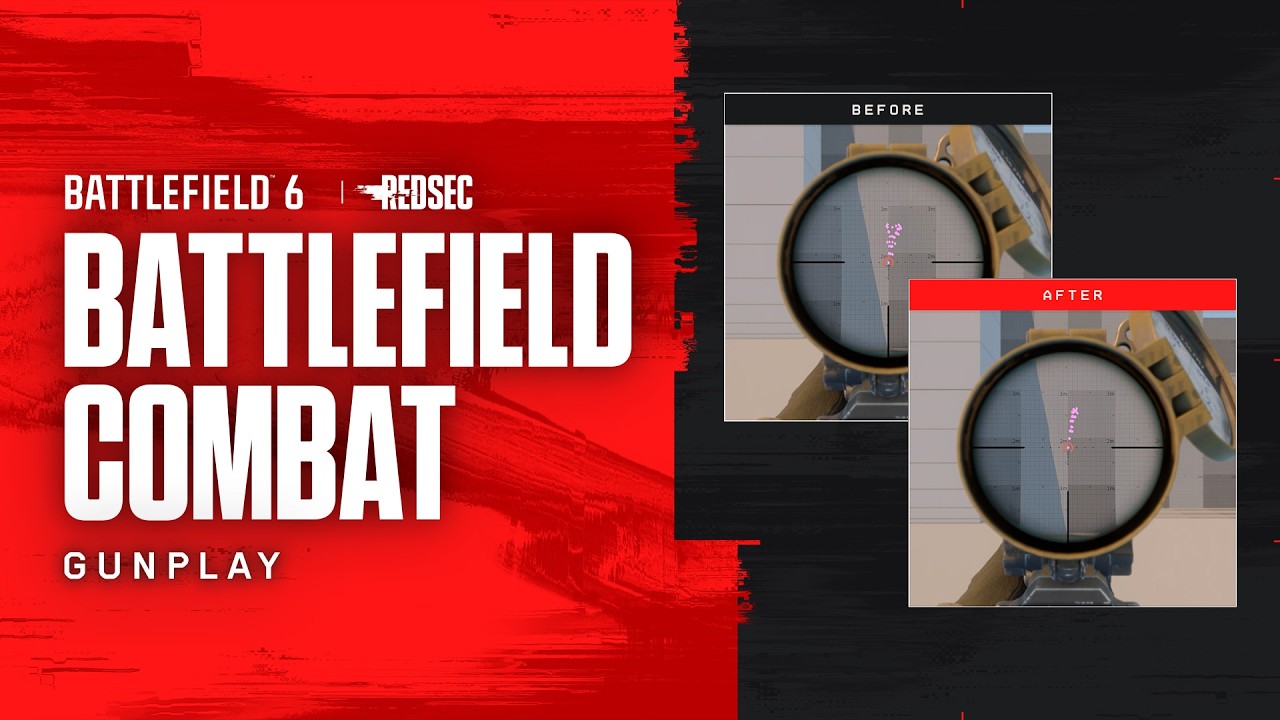
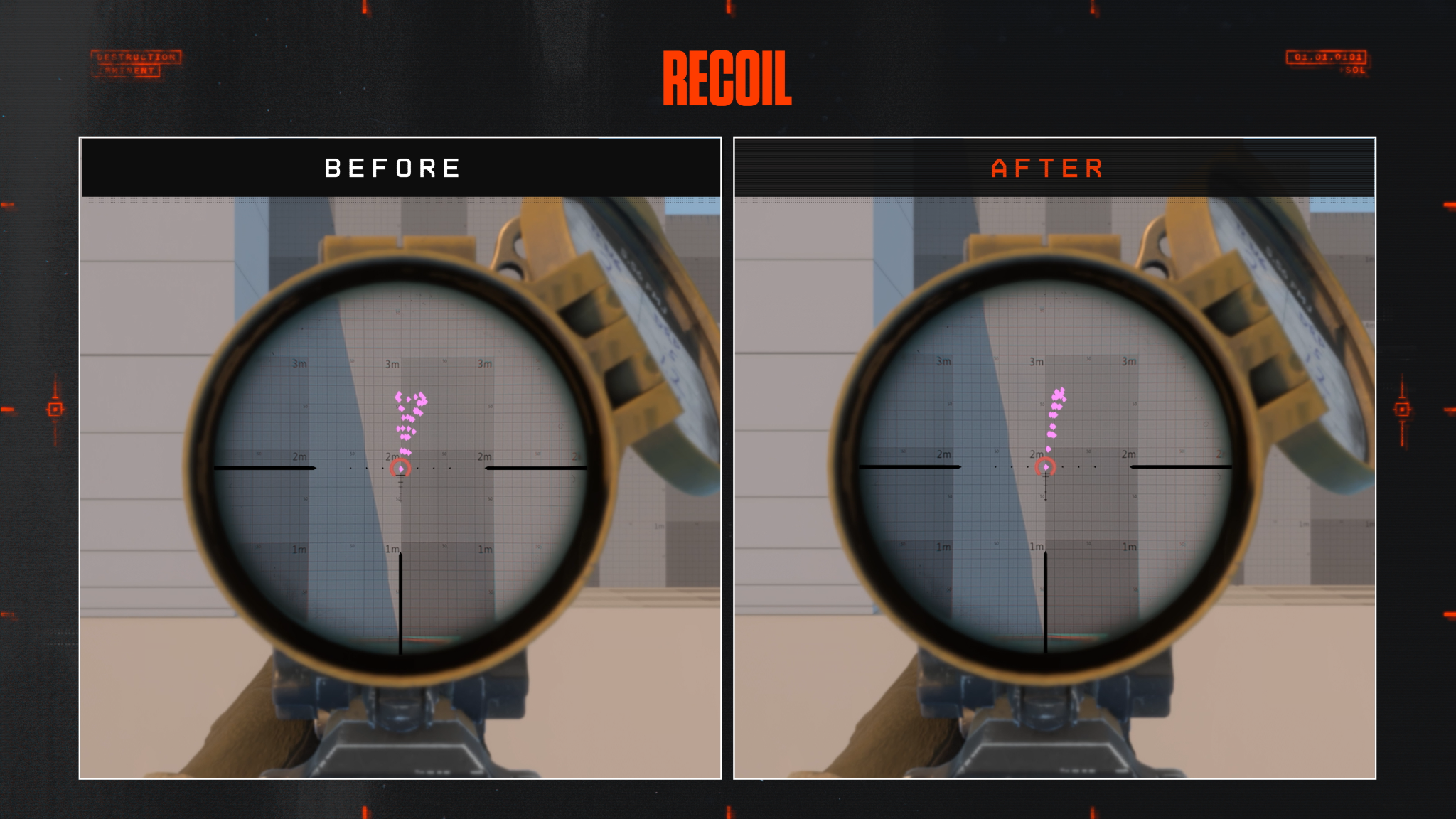
We have implemented a comprehensive overhaul of our weapon systems to ensure recoil patterns are both consistent and predictable. By reducing unnecessary variance in intensity and direction, we’ve made weapon mastery more intuitive. To emphasize skillful engagement, we have slightly increased bullet deviation following the first shot. This adjustment incentivizes controlled bursts and rhythmic tap-firing for long-range precision, while ensuring full-auto remains a devastating option for close-quarters encounters.
Ballistics: Distance and Drag
Our goal is to elevate the complexity of long-range engagements. While we’ve maintained snappy, responsive muzzle velocities for medium-range skirmishes, we have introduced increased bullet drag; projectiles now lose velocity and drop significantly beyond the 150-meter mark. This ensures tactical clarity in standard engagements while demanding genuine skill and precise weapon tuning for extreme-range sniping. Furthermore, we have lowered the base muzzle velocity for most weapon classes—particularly SMGs—requiring players to better account for target movement and trajectory.
Adjusting Time-to-Kill (TTK)
Our current close-quarters TTK for automatic primary weapons hovers between 200 and 300 milliseconds, mirroring the legacy feel of Battlefield 3 and 4. To deepen the skill gap, we’ve aimed to increase the average TTK without diminishing the potential for “optimal” performance. We achieved this by recalibrating damage multipliers based on specific hit zones.
Hit Zone Damage Multipliers
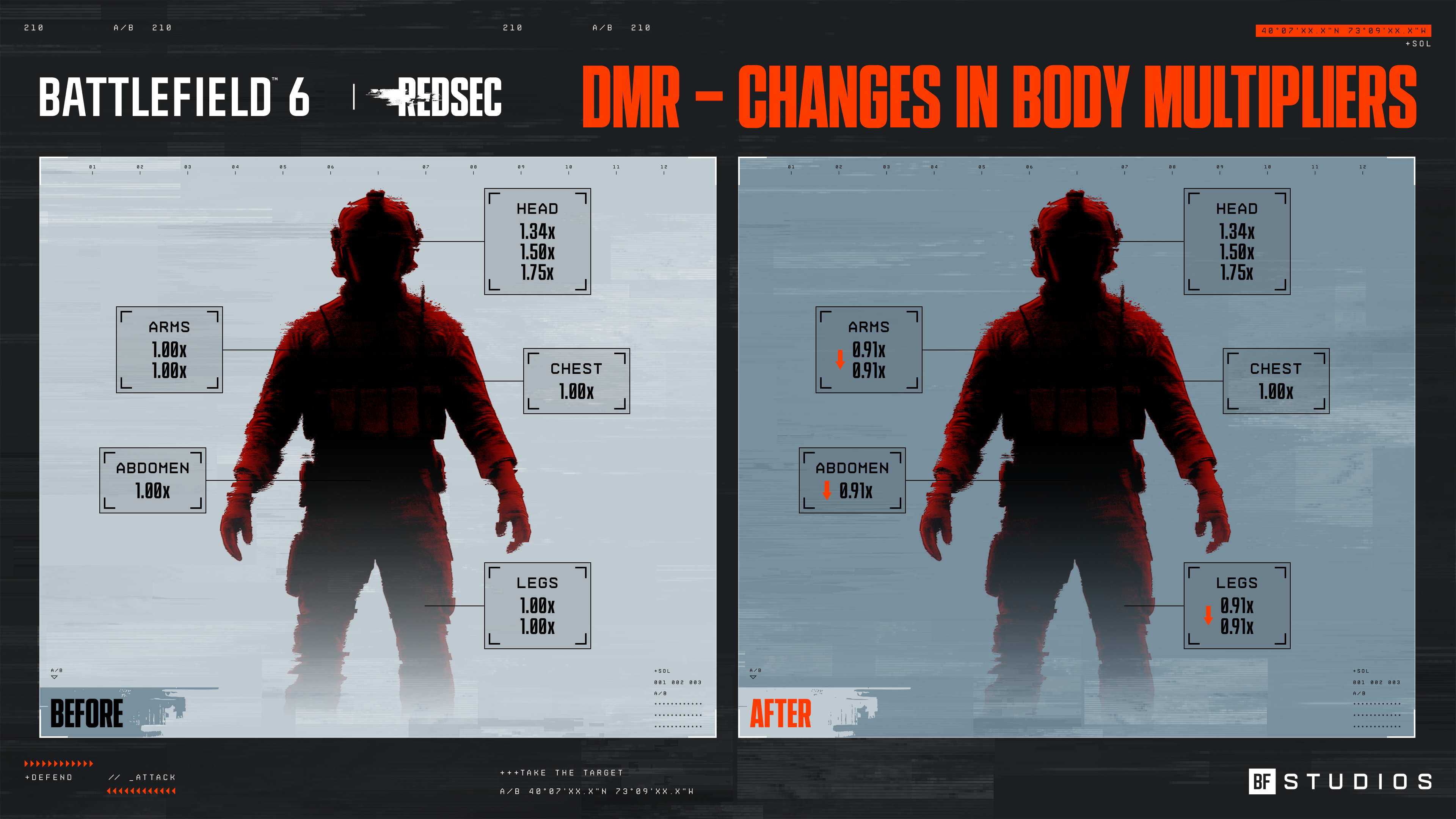
Precision should be rewarded. Historically, damage values were relatively uniform across the body, which dampened the satisfaction of landing accurate shots and contributed to a lack of tactical depth. Based on community feedback, we are introducing a major change: starting with the next update, damage dealt to limbs and the lower torso will be reduced for most primary weapon classes. While this effectively increases the shots-to-kill requirement in those areas, players who prioritize center-mass and headshots will see their accuracy rewarded with faster, more efficient takedowns.
Explore the comprehensive technical breakdown of these changes here: Battlefield Combat: Gunplay Deep Dive
Related articles
 Battlefield 6: Community Update on What’s Coming in Season 5
 Battlefield Community Survey – Siege of Las Vegas
 Battlefield x Dead Space Crossover Event: A Guide to the New Nightmares
 Steam Free Trial Extended!
 Live Q&A on Battlefield Discord, October 20: Siege of Vegas and Season 5
 Battlefield 6 Full Game Trial*
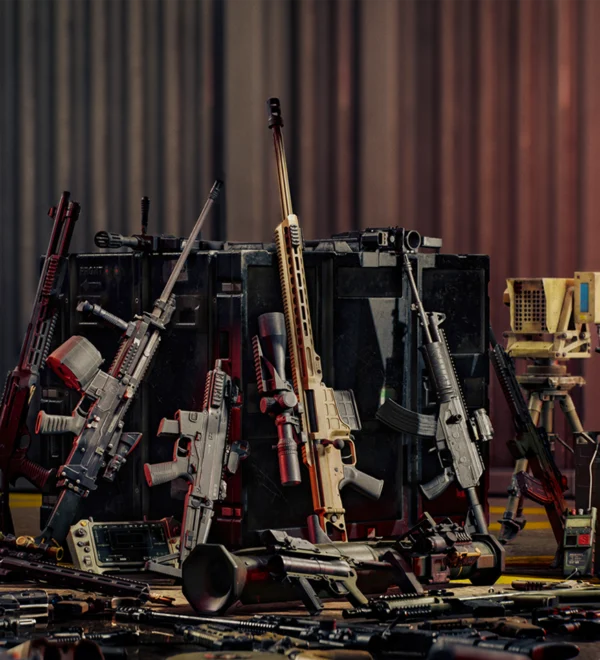 Game of the Year Edition
 Battlefield 6 | REDSEC Season 5