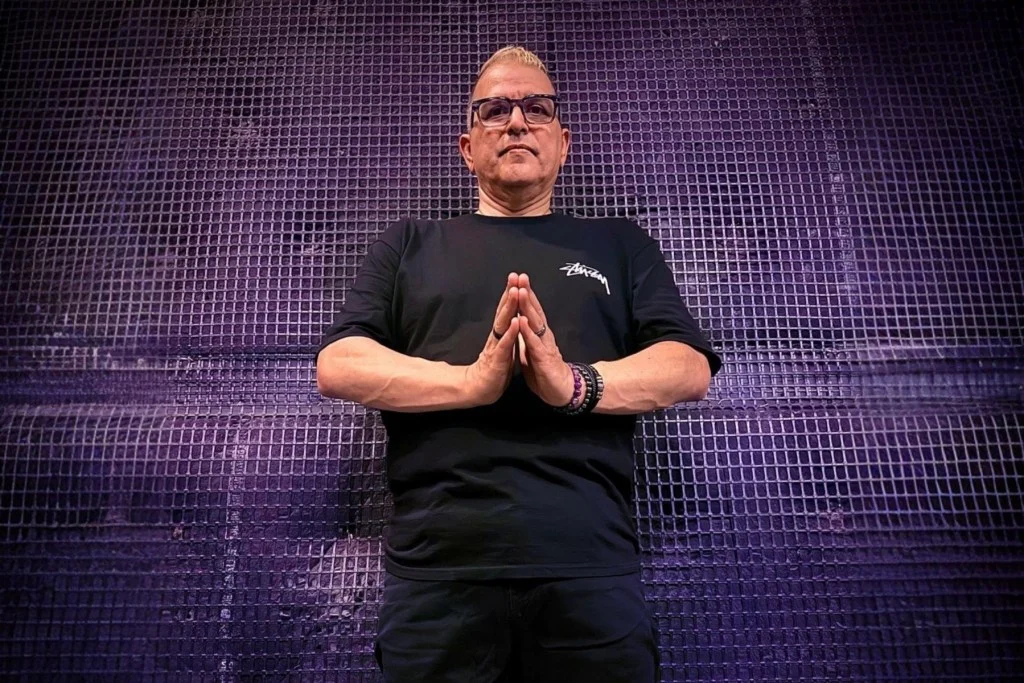
20 Questions with Doc Martin: The Truth About the ’90s L.A. Rave Scene and Remembering DJ Dan

It is impossible to chronicle the evolution of West Coast dance music without centering the narrative on Doc Martin.
Born Martin Mendoza in San Francisco, his journey began behind the decks with vinyl, eventually helping to anchor the burgeoning Los Angeles rave scene of the early 1990s. Beyond his role as a performer alongside SoCal icons like DJ Dan and Marques Wyatt, he functioned as a musical historian, capturing the essence of house, acid, and techno on wax and cassette, later cementing his legacy with his independent label, Sublevel.
Three decades later, both the imprint and the artist remain vital. Speaking with Billboard from his home in Oceanside, California, Martin reflects on a busy summer schedule—from the 30-year anniversary retreat for San Francisco’s Om Records to an international trek including D.C.’s Flash, the Love Long Beach Festival, Canada’s Shambhala, and the UK’s Houghton Festival.
He admits that he long ago made a vow: if his passion for the peripatetic DJ lifestyle ever faded, he would walk away. Based on his vibrant energy today, that fire remains unextinguished. Here, he dives into the grit of the ’90s underground, his stint as a tour DJ for Deee-Lite, and the lasting impact of his late friend, DJ Dan.
1. Where are you currently based, and what is the atmosphere like?
I’m in Oceanside, California. It’s a coastal retreat—about two miles from the ocean with perfect weather year-round.
2. What was the first piece of music you purchased, and on what format?
It’s a classic choice—likely a 7-inch single in the 1970s. I believe it was “Boogie Oogie Oogie” by A Taste Of Honey.
3. What was your parents’ perspective on your career path?
My mother was a talented hairdresser and singer who performed backups for groups like Paul Revere & The Raiders. My father was an upholsterer. For a long time, my mother kept asking when I’d find a “real” job. After 35 years, I think she’s finally come to realize that this is exactly what I was meant to do.
4. What was the first non-musical luxury you treated yourself to once you found success?
I bought a Lexus GS 300 when they first launched. Eventually, I returned to sensible Toyotas—I realized there’s no need to overspend on vehicles.
5. Which album would you suggest as an entry point for someone new to electronic music?
I’d point them toward the debut from Future Sound Of London, Accelerator (1992).
6. What is the last track that truly caught your attention?
I’ve been revisiting The English Beat’s Live at US Festival. Regarding new music, Harry Romero’s remix of “House of God” by DHS is a standout.
7. Which performances are you most excited for this summer?
My August trip to England for the Houghton Festival is a highlight. I’m also looking forward to playing at Berlin’s Heideglühen and the iconic Notting Hill Carnival.
8. The 1990s Los Angeles dance scene has reached legendary status. What was it actually like?
It was remarkably rebellious. The warehouse district provided the perfect canvas for renegade parties. You had a fascinating cultural intersection—goths, rockabillies, punks, and college kids all under one roof. At my first L.A. set, I turned around to find Nicolas Cage and James Spader in the DJ booth. It was an incredibly diverse and electric era.
9. Was the scene as iconic as the history books suggest?
Absolutely. Because these events were grassroots and self-funded, there was a deep sense of ownership. Every prop was handmade; every party was a labor of love.
10. When did you notice the cultural shift?
Around the mid-to-late ’90s. When corporate investors began to see the profit potential, the landscape changed. While we played massive venues like The Palladium, it was clear that the industry was evolving into something more commercialized.
11. How did your experience as a tour DJ for Deee-Lite shape you?
It was an eye-opening professional baptism. I gained a bird’s-eye view of the entire country from a tour bus and learned how to command diverse crowds on a national scale.
12. What was the most significant lesson from that tour?
Learning the power of a high-end sound system. That was my first experience playing on professional-grade gear, and the clarity changed my perspective on production and performance forever.
13. To what do you attribute your remarkable longevity in this industry?
An unwavering obsession. I still immerse myself in music for hours every day. If I ever felt complacent, I would stop, as it wouldn’t be fair to the audience.
14. What does music represent to you?
It’s an addictive connection. Witnessing that shared energy between myself and the dance floor is a feeling that never loses its intensity.
15. What is the greatest challenge facing dance music today?
Over-saturation. We’re in an era where social media clout is often prioritized over studio craft. Labels are signing personalities rather than nurturing raw, long-term talent, which makes it harder for music with true staying power to emerge.
16. If you hadn’t pursued music, what would your professional life look like?
I was training to be a professional chef in high-end restaurants. It was incredibly stressful, and the environment was grueling. Finding music was my salvation.
17. What has been your most impactful business decision?
Launching my Sublevel residency in Los Angeles. By consistently booking underground heroes from abroad, I helped cultivate a unique community that valued curation over commercial trends.
18. How did the passing of DJ Dan affect you?
We grew very close in his final years. We would spend hours on the phone as confidantes, exchanging ideas and supporting one another’s creative growth. His loss is deeply felt.
19. Is there a specific memory of Dan you’d like to share?
Our time at a festival in Alaska. We stayed in a house together, away from the chaos, just talking for hours and revisiting years of shared history. It was a vital time for us to reconnect.
20. What advice would you offer your younger self?
Filter out the noise and stay centered. Always let your authentic personality dictate your musical output; never compromise who you are for the sake of trends.
Related articles
 Yes Boone Makes Progress on Debut Album After Signing With Major Label
 Noisia Reunite After Seven-Year Hiatus
 Ben Saunders, First-Ever ‘The Voice’ Winner, Found Dead at 43
 Macklemore Donates $1M in Ed Sheeran Tour Earnings to Palestinian Aid and Calls on Robert Kraft to Match It
 Cookie Monster Releases Chappell Roan Parody Video Titled Got to Go Potty for Sesame Street
 Kelli Giddish Reveals How Taylor Swift’s Cat Appeared on Law & Order: SVU Emmys Sketch
 Taylor Swift Music Videos Are Now Available on Spotify, From Tim McGraw to Opalite
 Tinashe, Rachel Chinouriri, Nxdia, and Fousheé to tour college campuses for Tabby Tour