
The Muppet Masterpiece That Revolutionized the Franchise 30 Years Ago

Every few months, a familiar hypothetical resurfaces across social media: which literary classic or cinematic hit should be reimagined with a cast of Muppets and a solitary human actor? (The conversation inevitably turns to Knives Out.) This persistent thought experiment is a profound tribute to Brian Henson’s directorial legacy. The ubiquity of the prompt highlights how deeply his 1990s Muppet films—The Muppet Christmas Carol and Muppet Treasure Island—have influenced the brand’s identity, even three decades after the latter’s debut, regardless of its actual standing in the franchise hierarchy.
While some fans claim to appreciate the Muppets with a unique intensity, the modern fascination with this “Muppet adaptation” formula is somewhat curious. The era of the Muppets recreating established literature on the silver screen was largely a 1990s phenomenon. Aside from a 2005 television rendition of The Wizard of Oz starring Ashanti, the Muppets’ history is actually filled with original stories. Because there hasn’t been a long-running modern equivalent to The Muppet Show, these specific theatrical releases have fostered a misconception that the Muppets’ primary purpose is to put on whimsical, high-budget school plays.
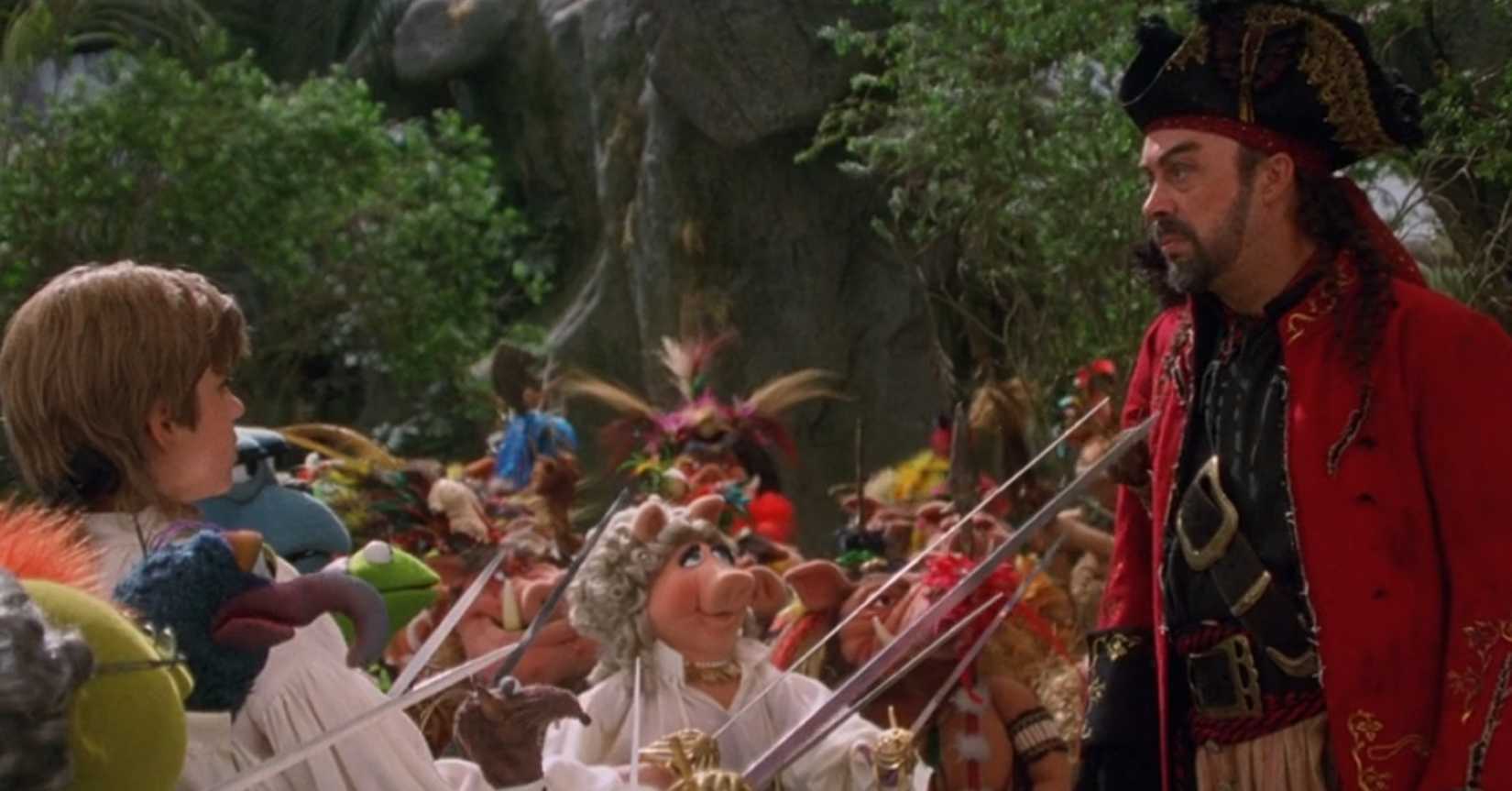 Image: Disney
However, as a recent special reminded audiences, the group is capable of much more. The original trilogy produced during Jim Henson’s lifetime—The Muppet Movie, The Great Muppet Caper, and The Muppets Take Manhattan—offered meta-fictional origin stories. While The Great Muppet Caper featured the characters playing “roles,” it remained a pastiche of classic cinema rather than a direct remake. These early films felt like precursors to the troupe’s eventual variety show stardom, grounding them in a world where they were performers first and foremost.
The 1992 release of The Muppet Christmas Carol, the first film following Jim Henson’s death, established the archetype of a Muppet ensemble anchored by a single human. This perception is slightly exaggerated; the film features many human actors, but Michael Caine’s wonderfully sincere portrayal of Ebeneezer Scrooge was so commanding that it overshadowed everyone else. Muppet Treasure Island functioned as a spiritual successor, refining these elements—sometimes to a fault.
In Muppet Treasure Island, the central human presence is divided between the young Jim Hawkins and the legendary Long John Silver. Early production plans suggested letting Gonzo and Rizzo take on the role of Hawkins, but the studio eventually opted for a human child, Kevin Bishop, to ground the narrative. This left Gonzo and Rizzo to reprise their roles as comedic narrators and sidekicks, a dynamic borrowed directly from their turn as Charles Dickens and his companion in Christmas Carol. To match Caine’s gravitas, the production cast Tim Curry, who delivered an iconic, swashbuckling performance as Silver.
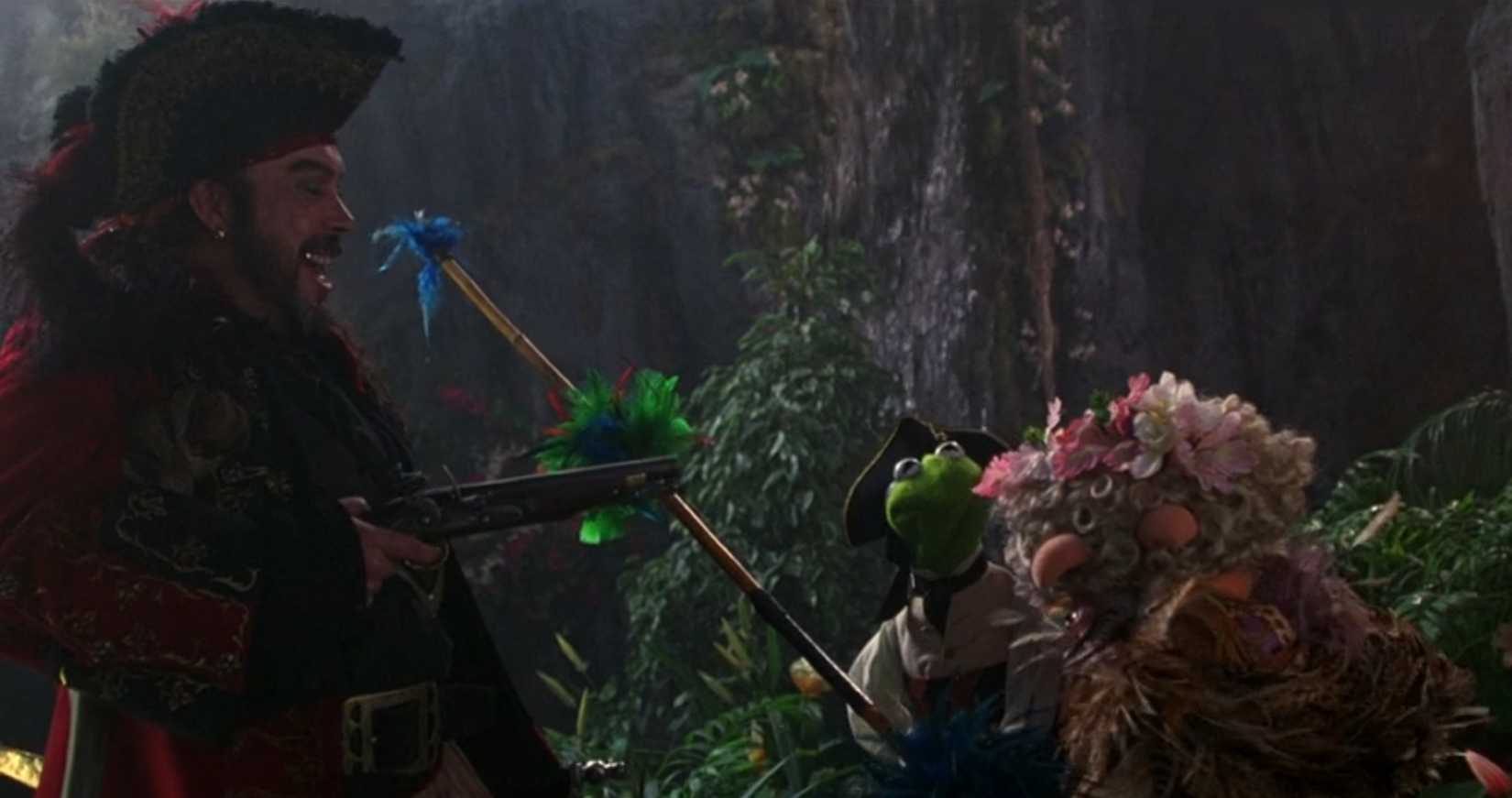 Image: Disney
This structure meant that for the second consecutive film, the iconic quartet of Kermit, Piggy, Fozzie, and Gonzo were pushed slightly into the periphery in favor of human stars and specialized Muppet creations. This wasn’t necessarily a flaw; it allowed the Henson Company to continue its tradition of technical innovation. Christmas Carol experimented with atmospheric, non-traditional puppets like the haunting Ghost of Christmas Past, while Treasure Island leaned into comedic grotesque, filling the screen with misshapen pirates and a rat-centric sub-economy of cruise ship amenities.
Yet, it remains jarring that Kermit doesn’t appear for nearly half an hour, and Miss Piggy’s entrance is delayed even further. In the mid-90s, there seemed to be a palpable hesitation in how to utilize a post-Henson Kermit. Instead of giving Steve Whitmire’s Frog center stage, the spotlight shifted toward his established character, Rizzo the Rat. While Rizzo is a fantastic addition to the roster, there is an undeniable craving for Kermit’s leadership that the film takes too long to satisfy.
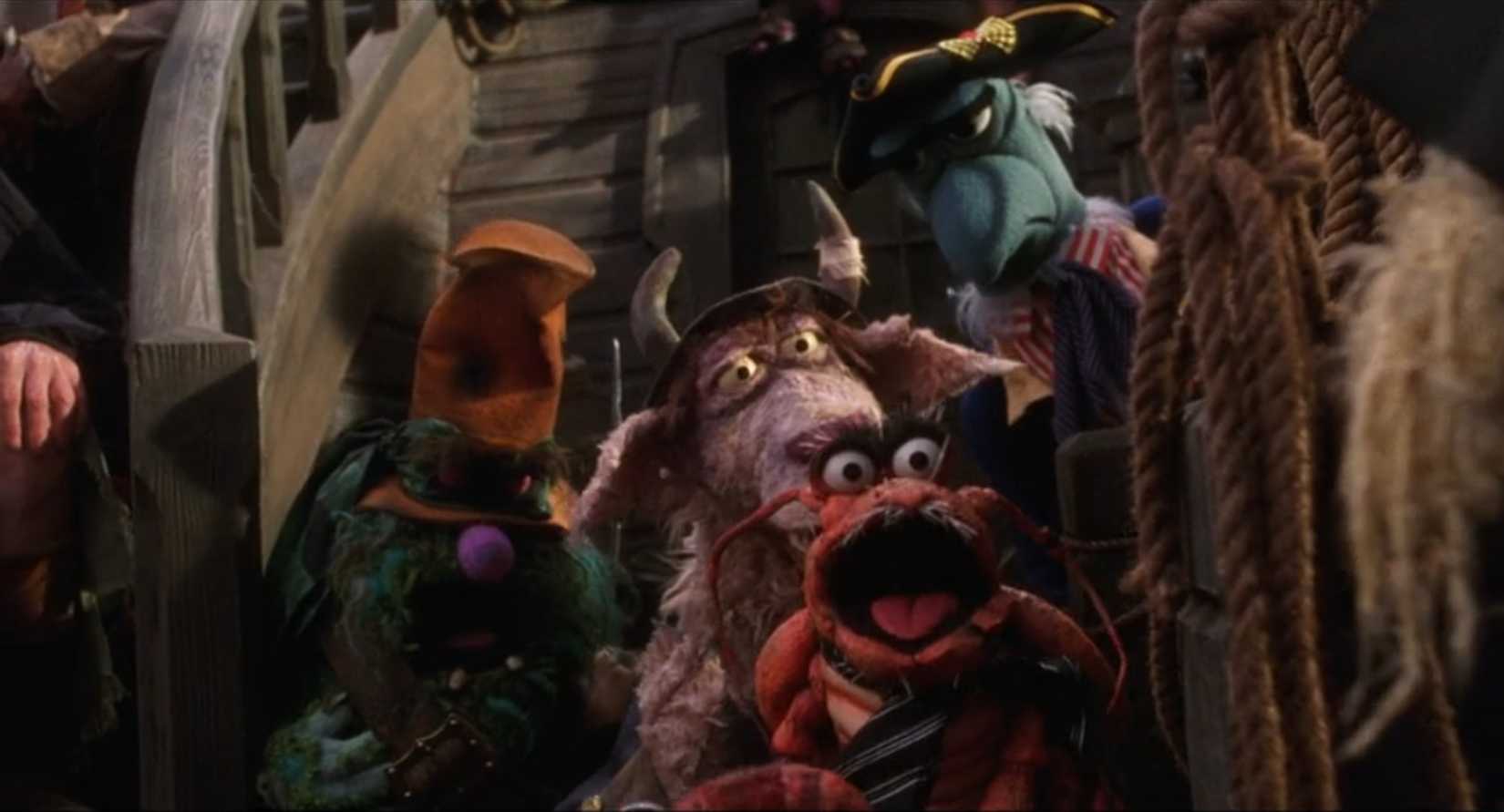 Image: Disney
The film also occupies a strange transitional space in Muppet history. Released just before Muppets Tonight, the movie misses out on modern favorites like Pepe the Prawn or Bobo the Bear. On the distribution side, its ties to Disney were still unofficial; a full acquisition wouldn’t happen for another eight years. Nevertheless, Treasure Island mirrors the 1990s Disney animation formula more than any other Muppet project, offering a musical adventure that felt consistent with the studio’s era, if not quite reaching the heights of the Ashman/Menken renaissance.
POLY Report: Subscribe for the Latest Insights
Get the best of the gaming and entertainment world delivered straight to your inbox.
By subscribing, you agree to our Terms of Use and Privacy Policy.
Ultimately, Muppet Treasure Island remains a delightful, albeit flawed, entry in the Muppet canon. While it might be the least robust of their theatrical features, it captures the troupe’s chaotic spirit through high-seas adventure. Thirty years later, it stands as a reminder that the Muppets aren’t a simple plug-and-play formula; their charm lies in their inherent unpredictability and sweet, unruly nature.
Source: Polygon
Related articles
 Owlcat Shows Lady Inquisitor and Massive Power Armor in New Warhammer 40,000: Dark Heresy Teasers
 Pokémon Pokopia Player Discovers Trick to Get Missing Event Pokémon
 New «Avengers: Doomsday» Teaser Features Two Captain Americas and Fantastic Four Baseball Game
 One Piece: Grand Gourmet Restaurant Sim Launches on Mobile and PC
 Jenna Ortega Wants to Step Away From TV Series After Wednesday and Explains Why
 Two New Trailers Released for Mamoru Oshii’s Armored Trooper Votoms: Die Graue Hexe Ahead of Nov. 20 Premiere
 Lawrence Makoare, Who Played Lurtz in The Lord of the Rings, Says He Is Joining The Hunt for Gollum
 GTA IV Gets Experimental Android Port