
Legendary Final Fantasy artist reveals the one thing AI still cannot replicate
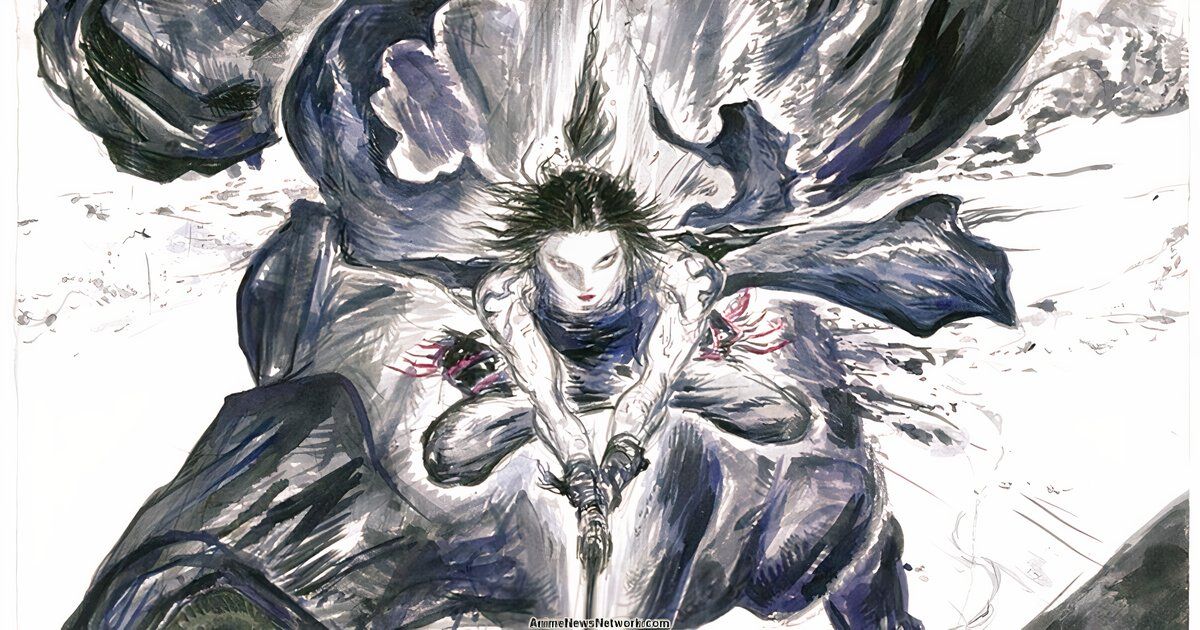
For decades, Yoshitaka Amano’s work has existed in a realm between reality and reverie. His illustrations—famed for their haunting elegance, visceral intensity, and mythic scale—defy simple categorization. Yet, during our discussion at Anime Expo, the legendary artist offered a surprisingly grounded perspective on the evolving landscape of digital media: “AI cannot create zero to one.”
Amano frames artificial intelligence not as a competitor, but as a secondary tool. He posits that the genesis of a truly original idea remains an exclusively human endeavor. While he acknowledges that AI might eventually bridge the gap between “zero and one” in the coming century, his core sentiment remains firm: in an era dominated by automated generative processes, the true heartbeat of art lies in the spark of human inception.
This creative philosophy serves as the foundation for ZAN, a highly anticipated animated project currently in development between a Japanese studio and a production team in Los Angeles. Drawing inspiration from a 2013 illustrated novel, Amano describes ZAN as a liberating creative canvas that grants him total artistic agency—a departure from his more collaborative historic works like Final Fantasy, Angel’s Egg, and Vampire Hunter D.
When discussing the aesthetic of ZAN, Amano emphasized the importance of maintaining the “imperfections” inherent in hand-drawn animation. For him, these subtle irregularities aren’t flaws to be polished away by digital algorithms; they are the literal fingerprints of the human soul. Despite the industry’s push toward faster, cheaper digital workflows, Amano asserts that there remains a profound, untapped hunger for the raw texture of hand-drawn art.
Perhaps most intriguingly, Amano views the resurgence of traditional techniques through the eyes of the next generation. To younger audiences, he suggests, hand-drawn animation isn’t a “return” to the past; it is a novel, fresh experience. It is a medium of discovery rather than nostalgia, positioning works like ZAN—alongside recent projects like The Ghost in the Shell and Virgin Punk—at the forefront of a new visual movement.
Quality, however, necessitates time. Hiroaki Ikegami, CEO of Yoshitaka Amano Inc., clarified that ZAN will be crafted as a limited miniseries, with an estimated production timeline of two to three years. This pace is essential for a project committed to traditional artistry, echoing the lengthy, meticulous schedules of classics like Akira.
Amano’s approach to adaptation is equally transformative. He rejects the notion that a story must stay tethered to its original medium, noting that adapting a manga into animation is an act of metamorphosis, not mere translation. Even the title has been sharpened: the original Deva Zan has been simplified to ZAN, a name that invokes the swift, decisive cut of a blade—a perfect metaphor for the project’s direct and focused vision.
Looking toward the future, Amano even hinted that the epic scale of his narratives might eventually find a home in the grandeur of opera. Ultimately, Amano remains a creator who avoids the trap of trends. As his translator noted, his best ideas rarely come from watching his peers; they emerge from an endless internal flow of creation. Amano isn’t trying to lecture his audience or preserve history; he is simply continuing to draw, leaving the interpretation to the viewer. In a landscape obsessed with efficiency, he reminds us that art does not reach its peak through perfection—it attains its humanity through the beautiful, stubborn evidence of the human hand.
Source: Polygon
Related articles
 Zenless Zone Zero Future to Be Detailed on August 28 in Update 3.2 Presentation Teaser
 Dark Fantasy Action-RPG in the Style of Classic Diablo Launches on Steam
 Paradox Shows Transport Fever 3 Gameplay and Premium Edition
 Rockstar Developers Met with Real Criminals and Spent a Decade Studying Miami Residents for GTA VI
 Tim Curry, Star of Command & Conquer: Red Alert 3 and It, Dies
 Total War: Warhammer 40,000 Previews Allow Players to Create and Paint Custom Space Marine Chapters
 GTA VI Characters May Gain Weight and Look Tired Without Proper Care
 Warhammer 40,000: Boltgun II Gets New Trailer With Release Date