Update 26.09.01
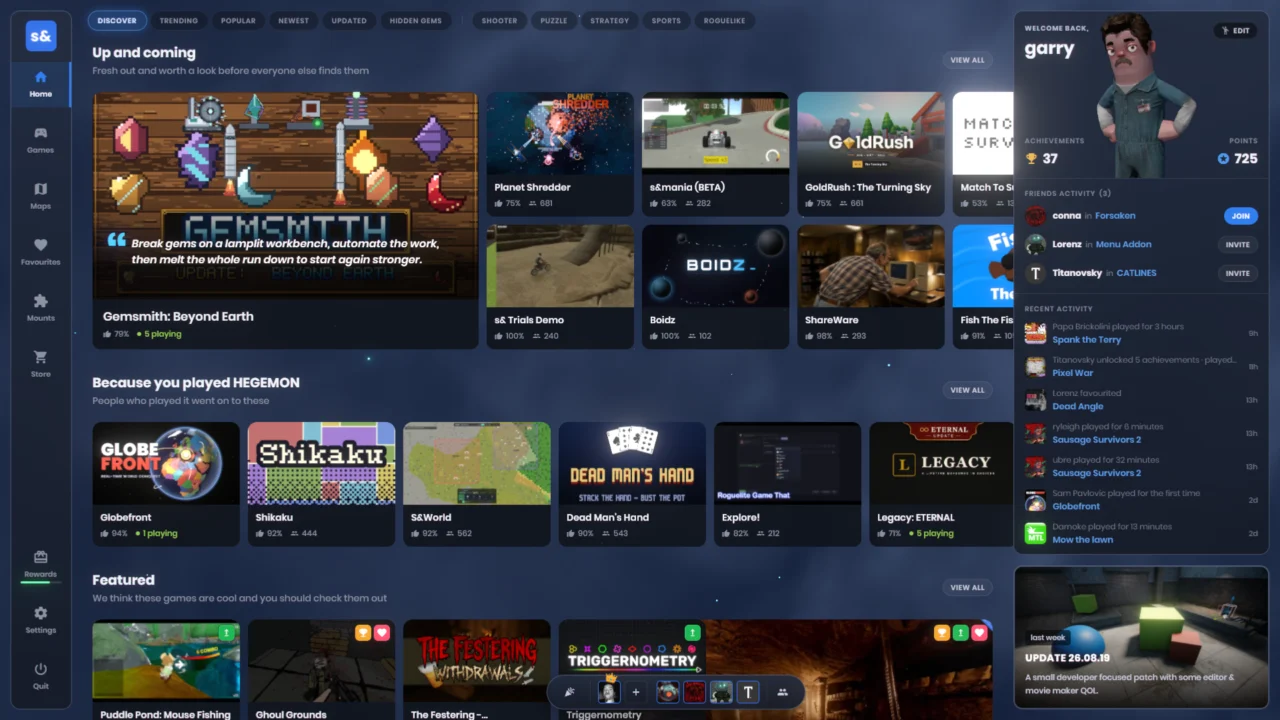
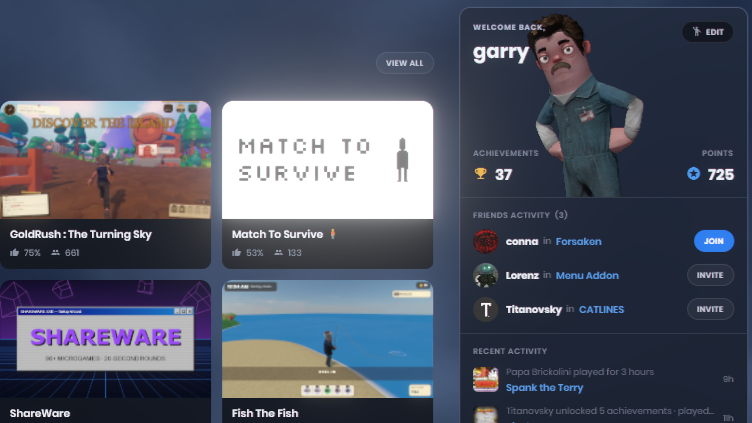
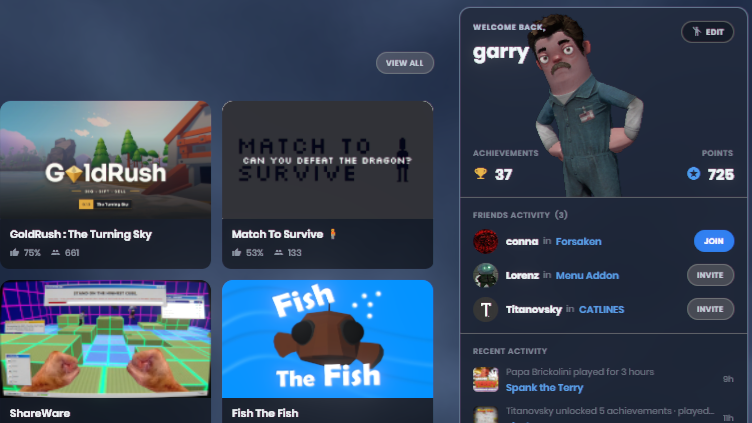
Refreshed Main Menu
I realize that constantly overhauling our menu is becoming a running joke at this point, but we have rebuilt the main dashboard once again.
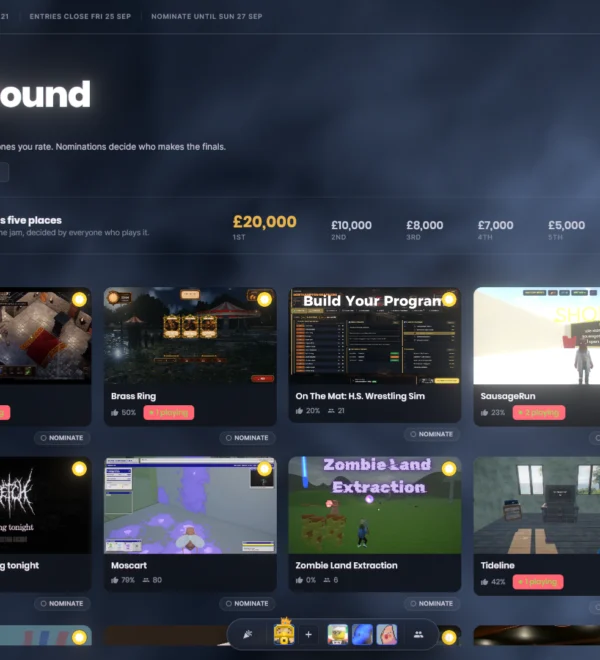
A frequent critique we receive is the perceived lack of quality titles. The truth is, exceptional games exist; we simply haven’t done a sufficient job highlighting them. Players naturally gravitate toward the traditional server browser—which fundamentally defeats the intended architecture of s&box—so we have officially removed the server browser entirely.
This fresh design places games front and center. Our objective is to surface experiences tailored to your tastes, offering a vivid preview of what gameplay actually looks like via integrated video loops.
You will also notice background audio. This track is entirely temporary, purposefully chosen to motivate us to implement a permanent replacement. Accompanying this change is a brand-new Game.Music API alongside a MusicComponent, making it seamless for developers to integrate dynamic soundtracks into their own creations.
Intelligent Discovery
Promoting games effectively only matters if we successfully connect you with titles you genuinely want to experience. Consequently, the entire discovery algorithm has been reconstructed from the ground up.
Previously, the discovery portal presented the exact same 31 games to every user, curated strictly through broad global metrics. That narrow scope accounted for a mere 1.2% of the entire catalog. If your project wasn’t part of that minuscule pool, organic visibility was virtually impossible.
The revised algorithm elevates platform coverage to approximately 70%, ensuring the vast majority of titles now possess a fighting chance to find an audience.
You might wonder about the remaining 30%. Those belong to incomplete submissions lacking foundational metadata: no custom thumbnail, undefined genres, missing tags, or empty screenshot galleries. Complete these essential details and encourage a friend or two to jump in, and your project will almost certainly begin surfacing for others.
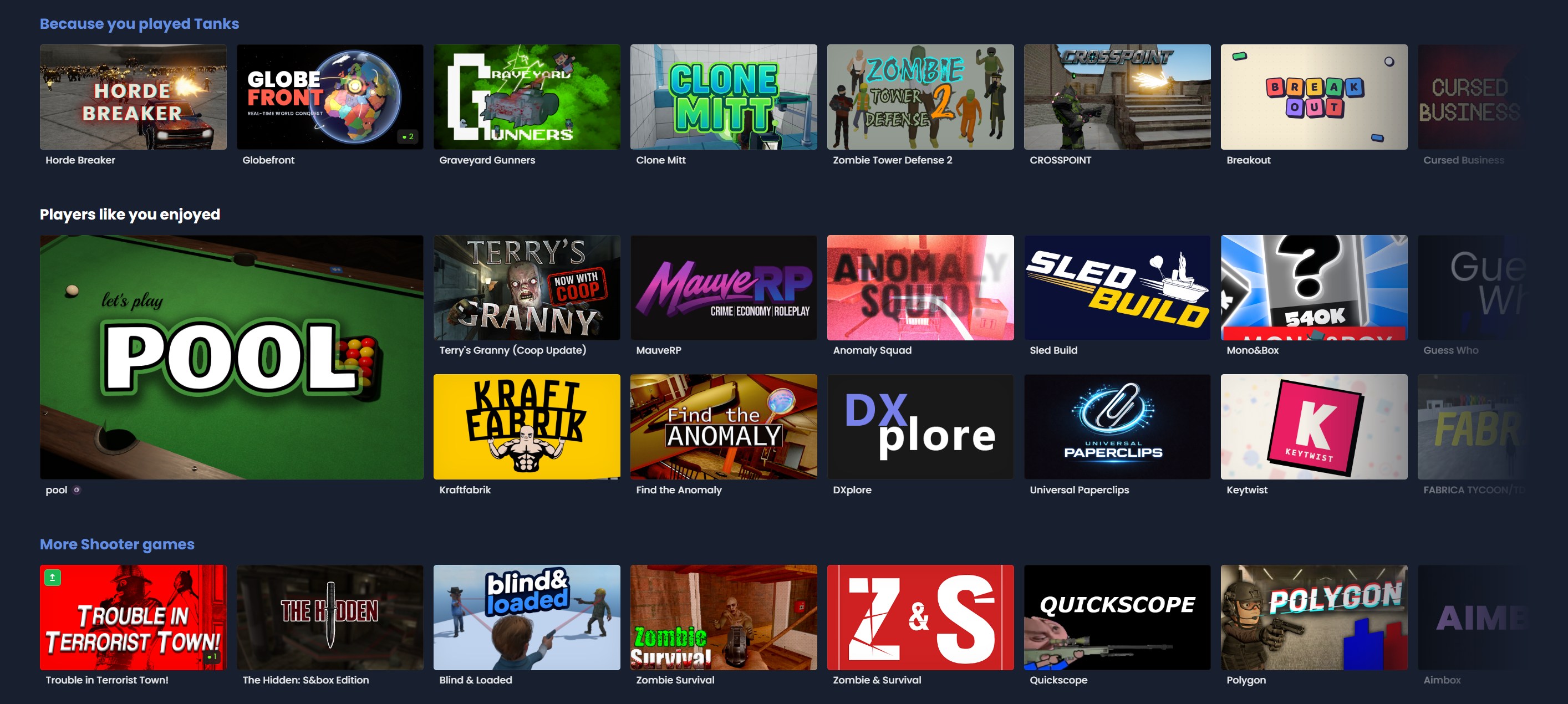
Games are now displayed across a dynamic variety of curated rows:
- Personalized shelves: Driven by individual play history, such as “Because you played X,” “Players like you also played,” and “More games in Genre X.”
- Metric-driven shelves: Showcasing community momentum through categories like “Trending,” “Up & Coming,” and “Highly Rated.”
Ultimately, we trust this creates a meritocratic environment where every creation has a fair opportunity to be discovered, while empowering players to effortlessly find experiences they will genuinely enjoy.
Game Mounts
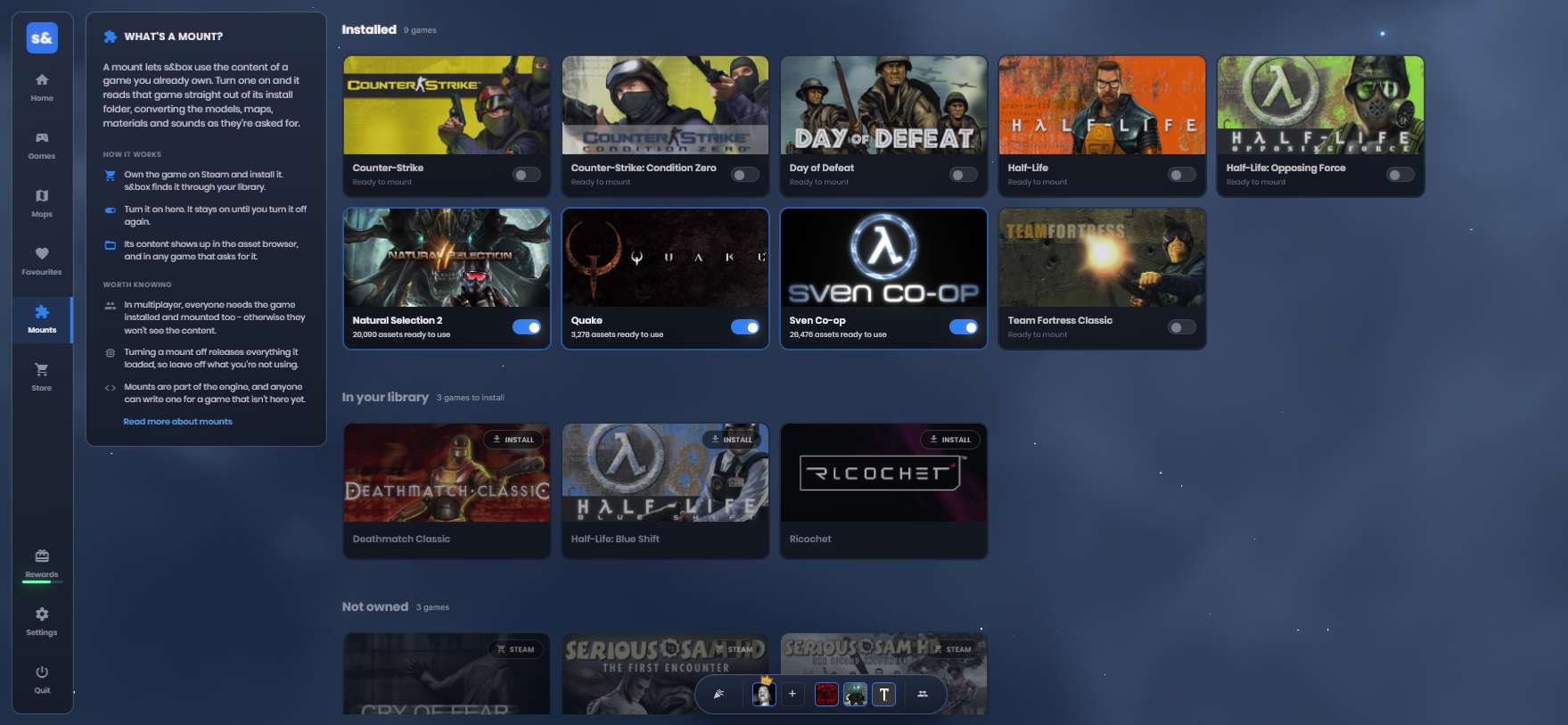
We have introduced a dedicated Game Mounts interface designed to clearly outline the feature and bring it to the forefront of the user experience.
Settings Redesign
The settings menu has received a comprehensive visual overhaul to harmonize seamlessly with the fresh aesthetic of the main dashboard.
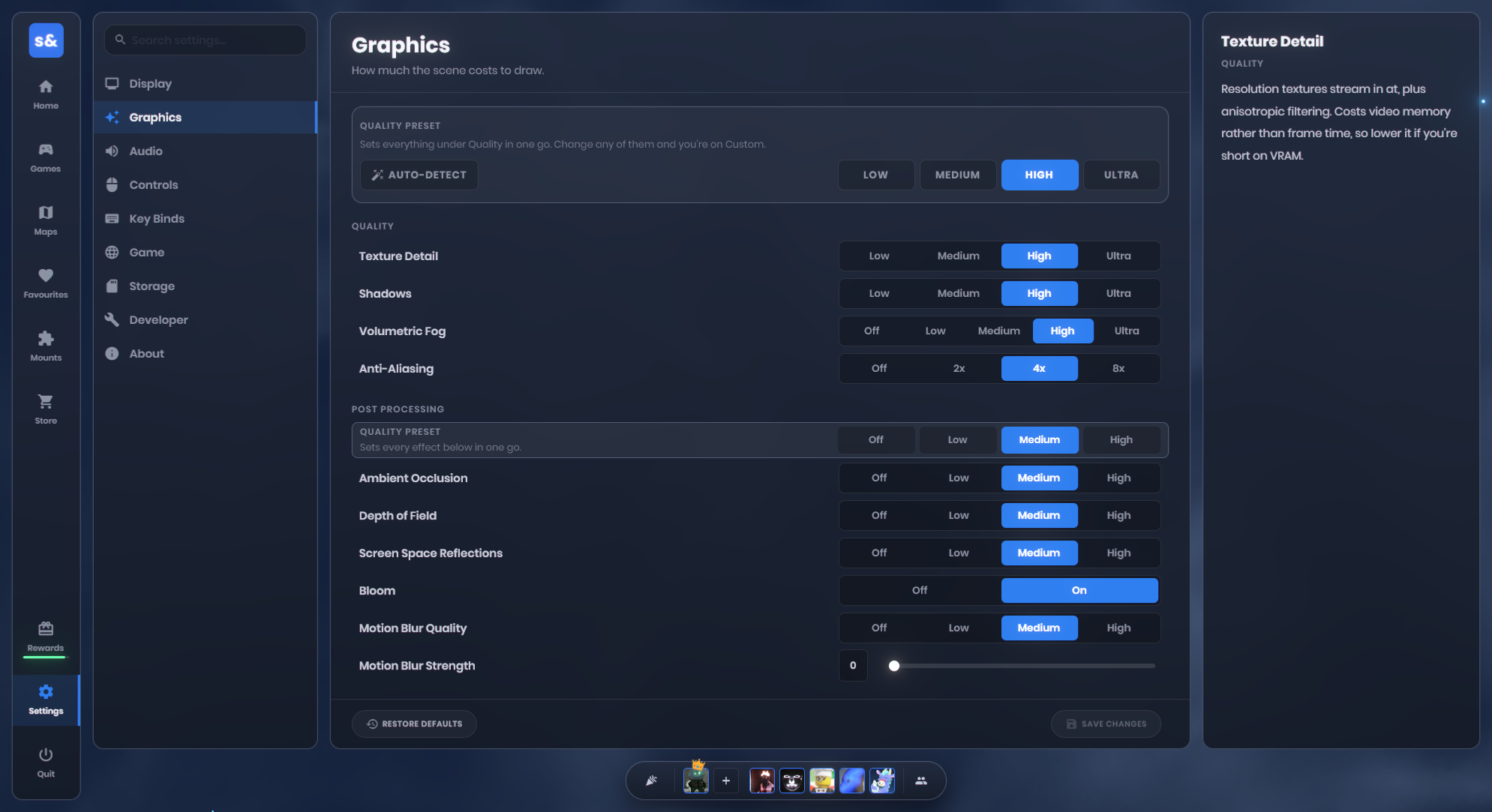
- Added a responsive settings search utility.
- Introduced granular Post-Processing configuration options.
- Implemented an auto-detect mode that automatically applies an optimal performance preset tailored to your specific GPU and CPU.
Native Linux Client
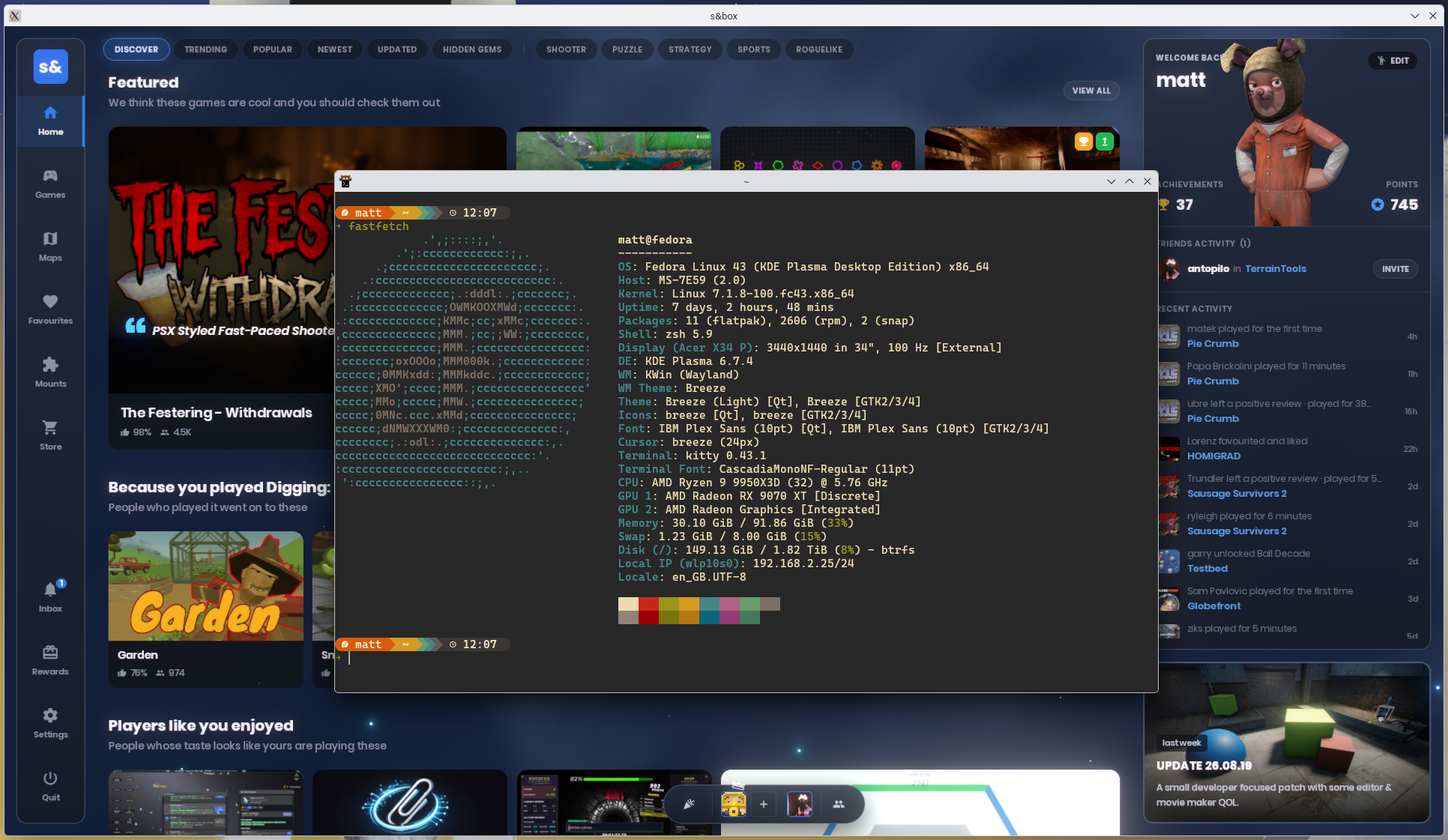
The software is now distributed with a fully operational, native Linux client on Steam. Leveraging the Steam Runtime, it establishes a reliable, unified set of dependencies capable of functioning smoothly across any Linux distribution.
Early reports indicate substantial performance improvements compared to running the Windows build through Proton, alongside dramatic gains in frame stability and reliability on the Steam Deck.
While skeptics may draw predictable comparisons to historical Linux support for GMod or Rust, this approach is fundamentally different. We have made highly intentional architectural decisions to reach this milestone, proudly operating as an open-source project with total ownership and complete visibility into our engine’s source code.
Native Linux Editor
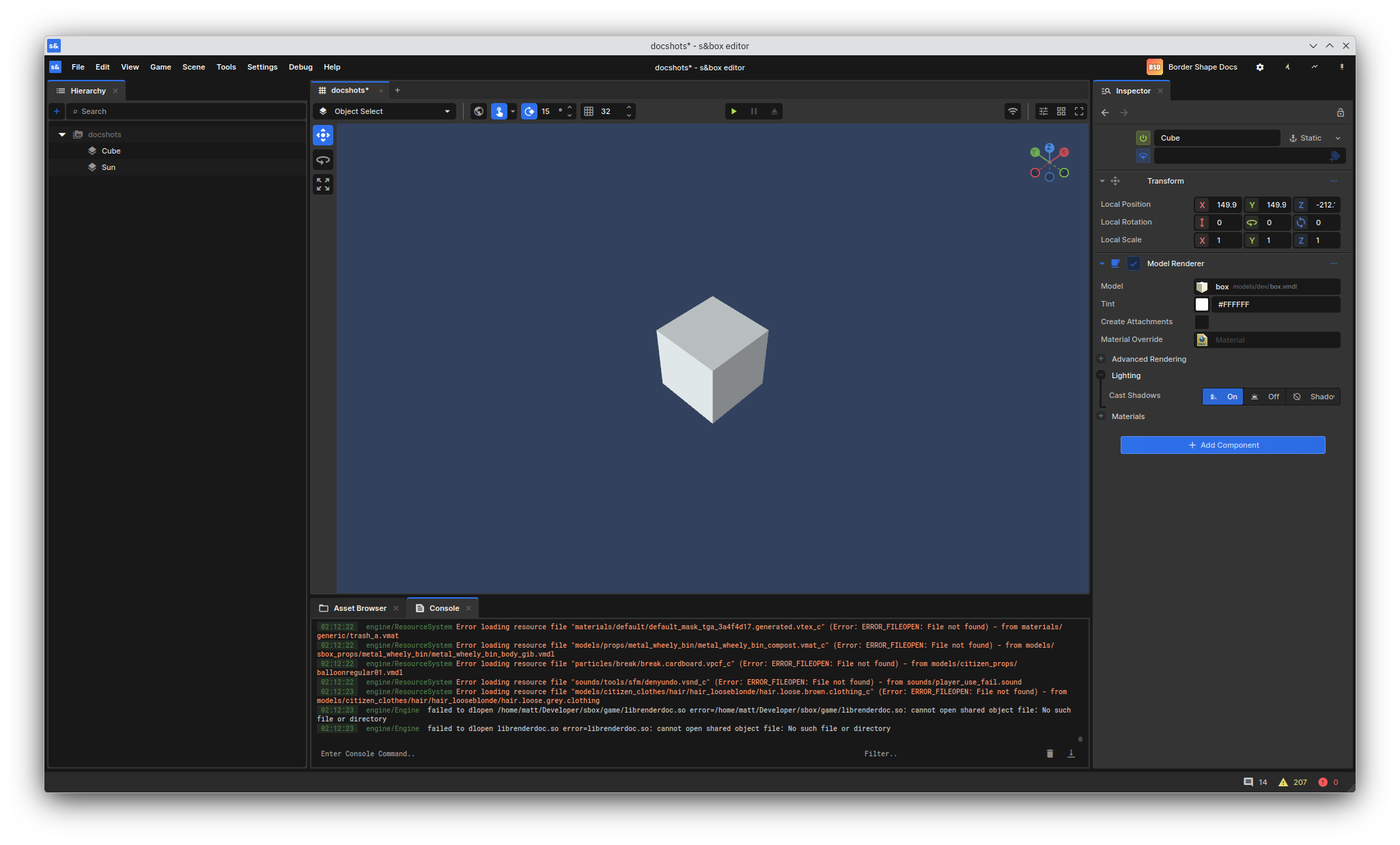
We have also successfully packaged the editor natively for Linux. Although this port was not originally scheduled for release quite this early, the client transition went so smoothly that a vast majority of the editor toolkit simply worked out of the box.
The editor was never truly stable when forced to run under Proton. While a reasonable number of bugs inevitably remain, the overall daily workflow is exponentially superior.
The sole caveat is that this release does not yet bundle native Valve proprietary tools such as Hammer, ModelDoc, or Animgraph.
Future Multiplatform Support

By intentionally adopting modern, open-source, multiplatform technologies such as .NET, SDL3, and Vulkan, we have positioned ourselves for long-term scalability. This technology stack significantly minimizes the engineering overhead required to support additional operating systems.
Consequently, our next major milestone will be the rollout of a native macOS editor.
Advanced Post-Processing UI
By default, screen panels render sequentially after post-processing effects—which is typically the desired behavior. However, there are scenarios where alternative layering is necessary: perhaps you want your UI elements to capture environmental bloom, or you need radiation visual filters to dynamically affect interface elements.
To address this, the ScreenPanel component now includes a toggle to render prior to post-processing, giving creators absolute creative control.
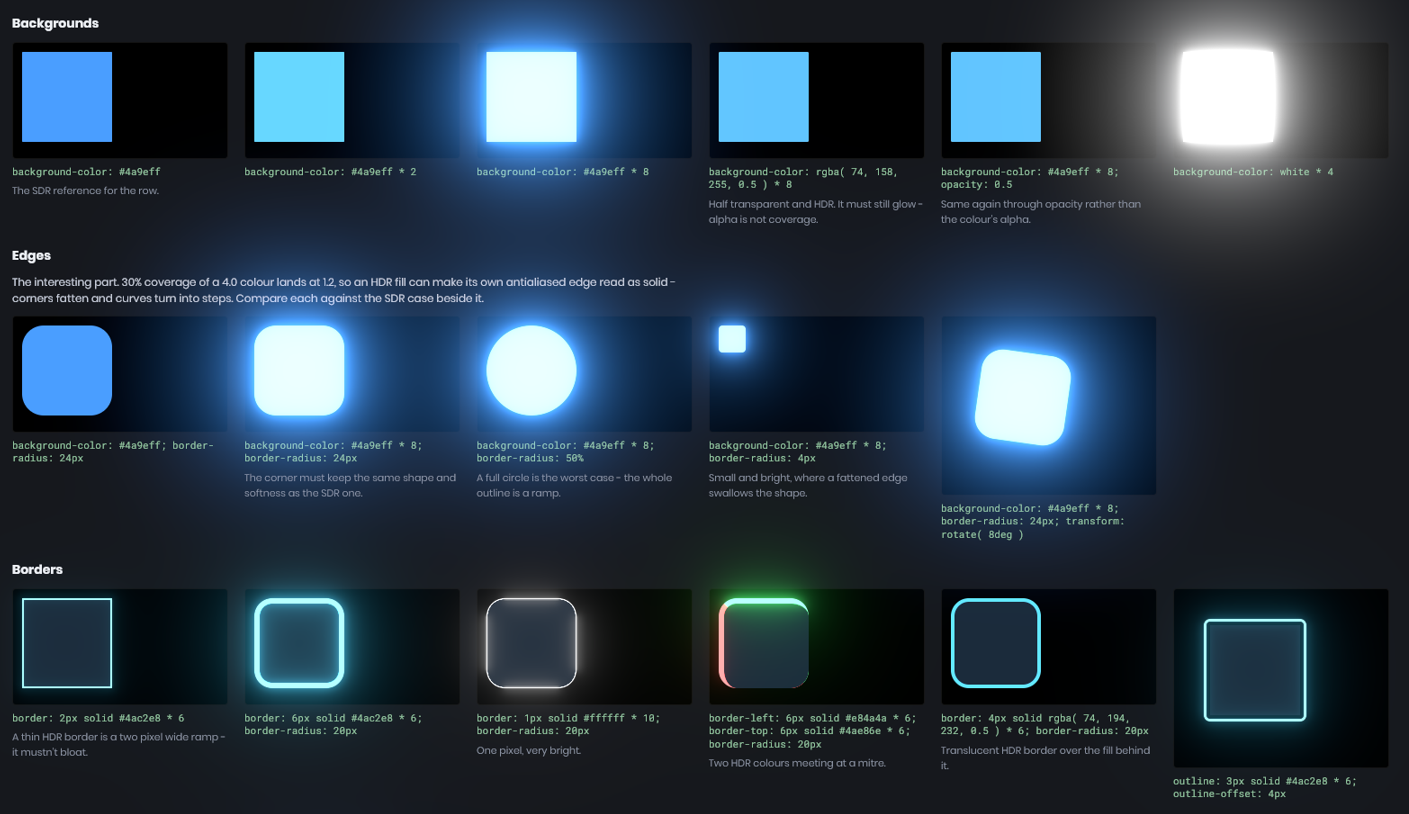
Furthermore, the UI system now natively supports High Dynamic Range (HDR) color outputs, allowing for intense visual luminosity. The color parser now natively interprets basic multiplication, making it effortless to scale color brightness on the fly:
background-color: rgba( white * 4, 0.5 );
color: #3273EB * 8;
GPU-Accelerated Gradients
Linear, radial, and conic CSS gradients are now dynamically rendered directly by the UI shader rather than relying on baked static image assets. This architectural shift yields significantly smoother visuals and faster generation times.
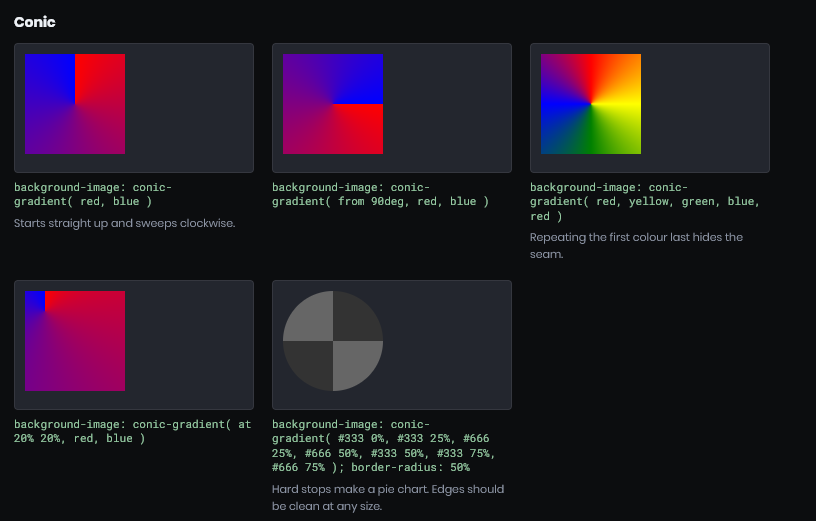
We have rigorously refined these implementations to match modern web standards down to a 1:1 ratio. This includes support for positioned and repeated backgrounds, precise circle and ellipse sizing, pixel-accurate stops, transparent color interpolation, and distinct corner direction rules.
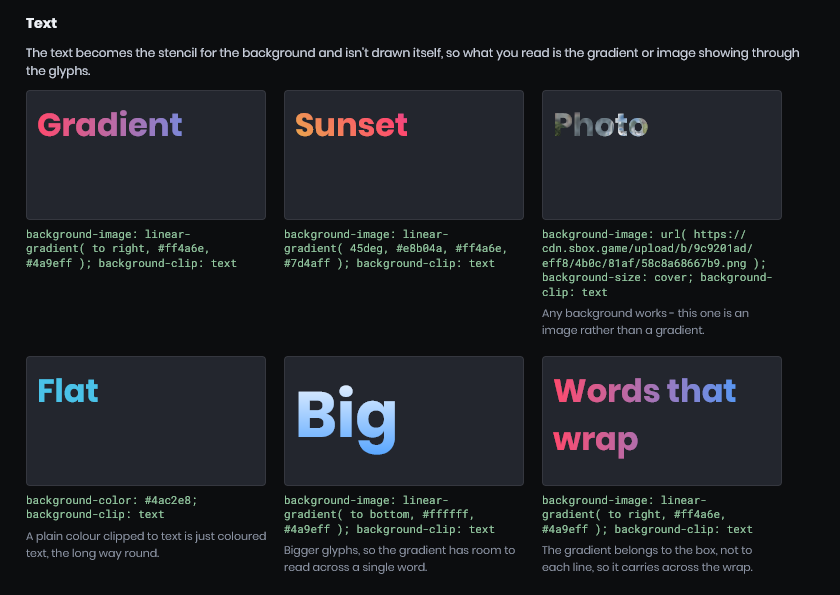
Background Clipping
The standard CSS background-clip property is now fully supported!
Custom UI Border Shapes
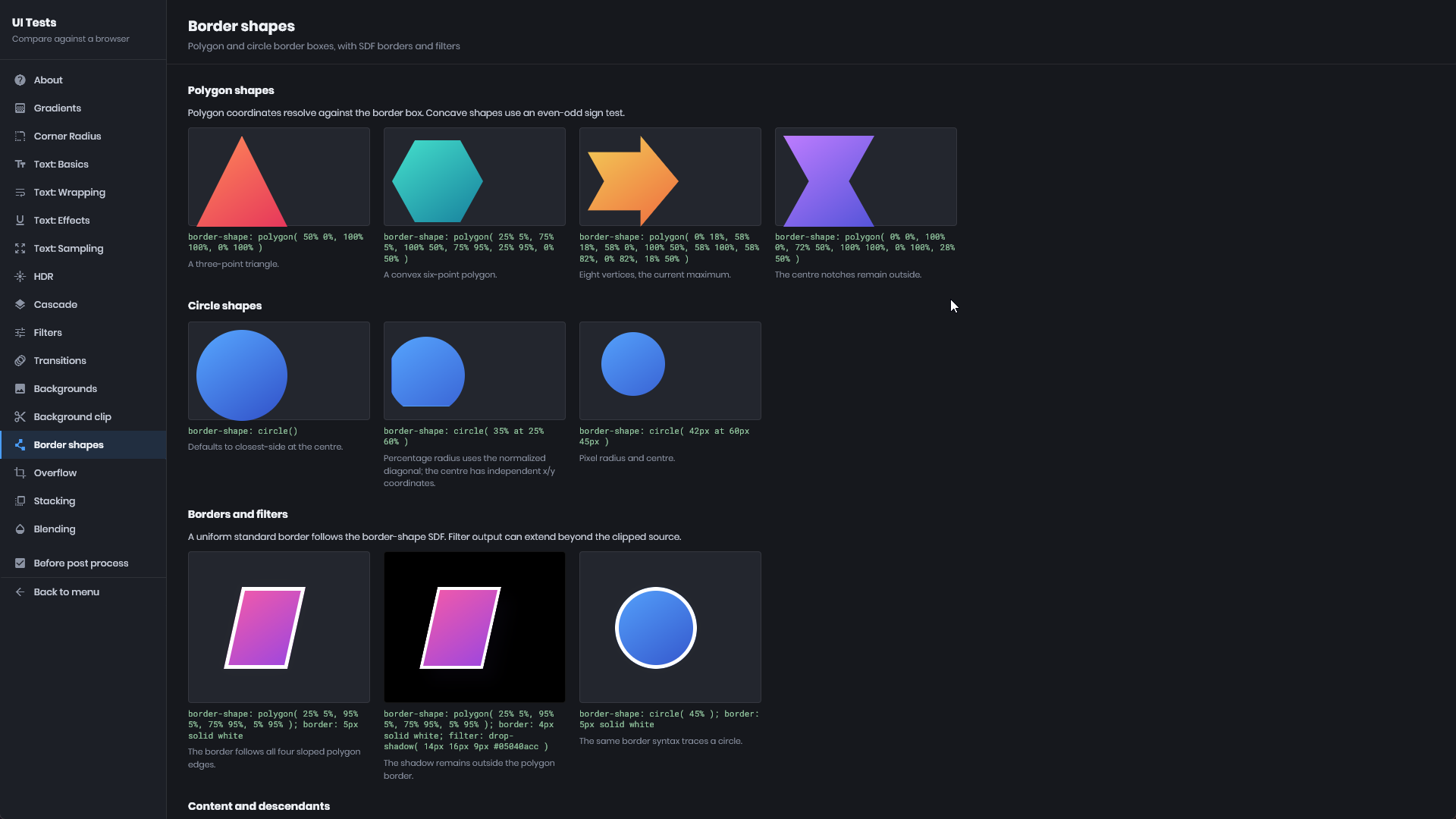
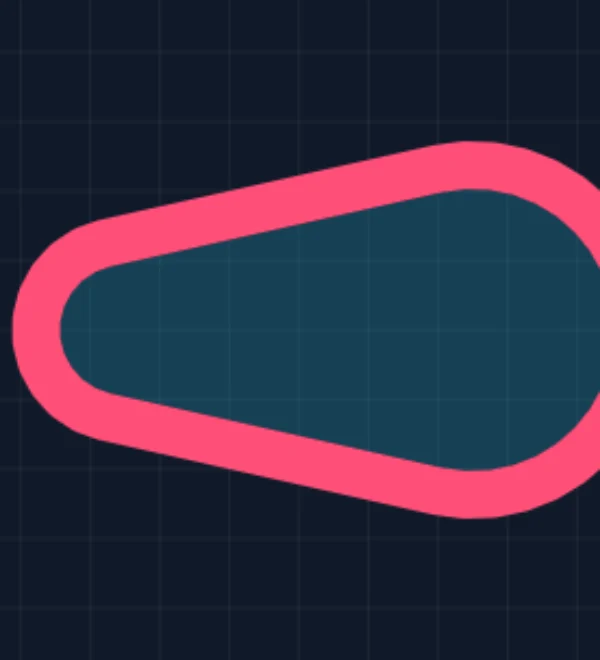
Growing tired of conventional rectangular interface boxes, we sought a robust method to generate arbitrary polygons and unique silhouettes, initially struggling with the implementation until discovering the experimental CSS border-shape property.
Using this standard, you can mathematically define complex layout geometries directly via CSS:
border-shape: polygon( 25% 5%, 75% 5%, 100% 50%, 75% 95%, 25% 95%, 0% 50% );
border-shape: circle( 42px at 60px 45px );
By implementing this capability within our UI renderer using Signed Distance Fields (SDF), these shapes render with pristine anti-aliasing. You can effortlessly apply custom border colors, dynamic drop shadows, and ensure precise hit-testing during click interactions.
We look forward to seeing developers leverage this to create increasingly imaginative user interfaces!
UI Rendering Enhancements
Historically, containers, borders, clipping bounds, and drop shadows handled corner radius calculations independently. We have unified this underlying codebase so every rendering element behaves cohesively. Additionally, we’ve expanded border radius functionality to support distinct horizontal and vertical definition parameters.
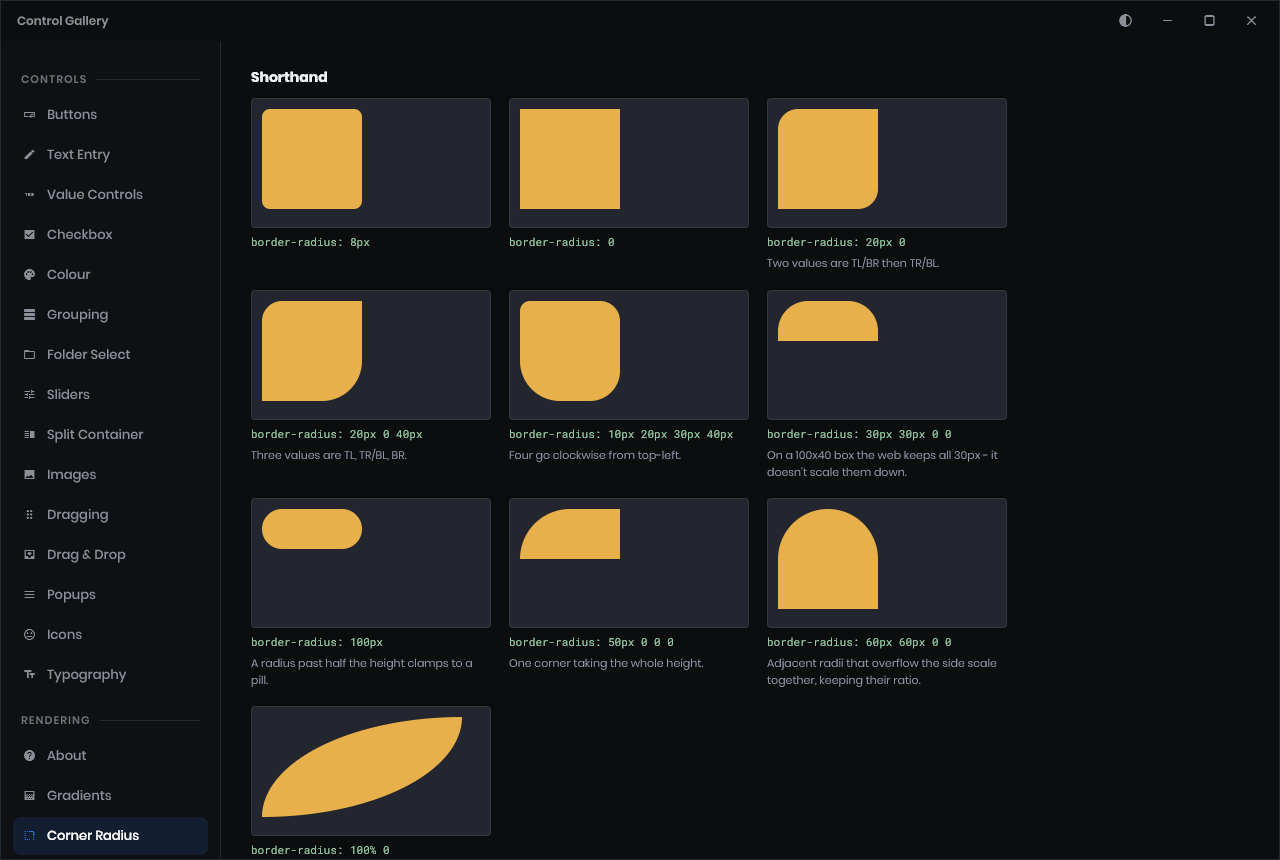
UI rendering now operates strictly in Gamma Mode, ensuring alpha blending behaves precisely as expected—matching web-standard visual fidelity. While a subtle technical detail, it is a long-standing improvement that greatly enhances aesthetic consistency.
UI Performance Optimization
Intensive profiling of the main menu yielded substantial performance optimizations across the entire UI framework.
We identified background computational overhead—such as continuous matrix inversions—that seemed negligible in isolation but scaled heavily when repeated across 2,000 distinct panels every single frame.
Furthermore, text rendering has been updated to unpremultiplied alpha, enabling text elements to be efficiently batched alongside other render operations and drastically reducing overall draw calls.
Scrolling behavior has also been refactored to prevent full-layout invalidation, restoring a smooth, fluid user experience.
Mapping: Select Loop Faces
Select two adjacent polygon faces and simply press L to instantly propagate the selection loop across the mesh, dramatically accelerating the workflow when constructing long geometry strips.
Mapping: Select Similar
The “Select Similar” utility automatically identifies and selects matching meshes and models based on your current selection, seamlessly bringing a familiar, efficient Hammer workflow into the scene editor environment.
Transform Tools Enhancements
We have refined how transform gizmos handle scaling and rotation operations. Previously, scaling and rotating objects yielded identical behavior regardless of the active transform space, which felt counterintuitive. Transform tools now clearly differentiate between global and local coordinate spaces.
When resizing a collection of objects in global space, they are now treated as a unified group originating from the geometric center of the selection, rather than scaling each individual item independently. Resizing within local space continues to scale objects from their respective local origins, preserving legacy behavior.
Rotating objects in local space now correctly rotates each asset independently around its own origin point. Global space rotation behavior remains unchanged.
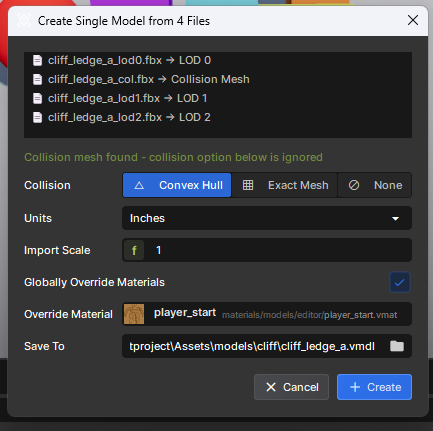
Material Override Quality of Life
You can now explicitly configure how initial materials are assigned to models when instantiating them from the asset browser or context menu. Previously, newly generated models were invariably assigned a default material group tied to a global override.
Creators can now completely opt out of this automated assignment, or alternatively, specify a custom material to serve as the global override.
Reorderable Scene Tabs
Scene tabs can now be effortlessly dragged and rearranged into whatever structural order best suits your personal workflow.
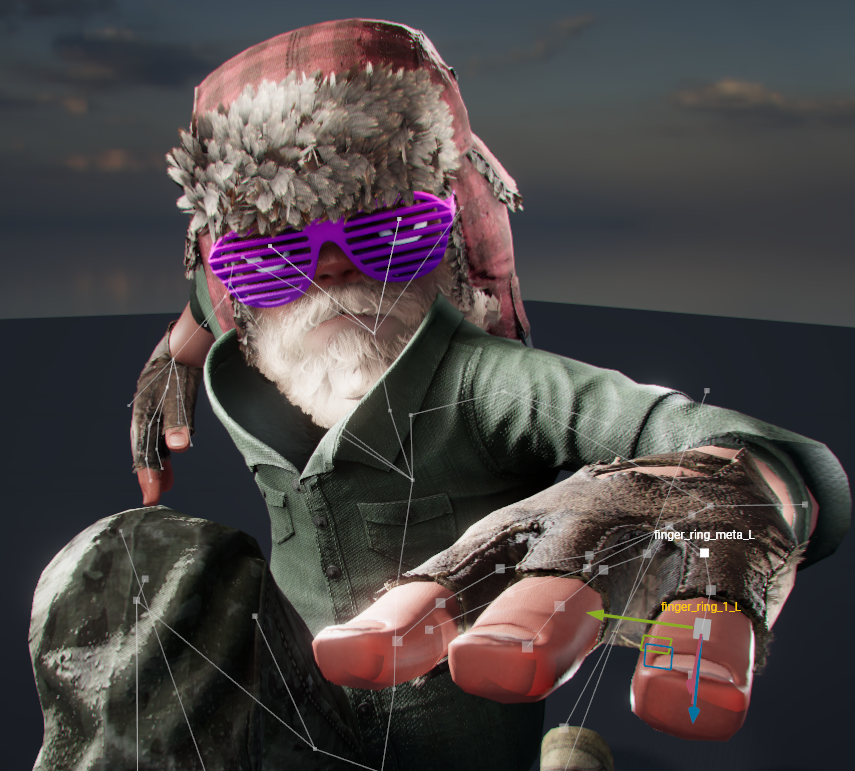
Bone Name Labels
Hovering over or selecting an articulated bone gizmo now displays the corresponding bone identifier directly inside the scene viewport, significantly simplifying complex rig navigation.
New Native Launcher
Our long-term architectural objective is the complete elimination of Qt dependencies. After evaluating various alternatives, we determined that building upon our native panel system is the optimal path forward. Any improvements made to our panel framework inherently benefit both the editor and in-game UI systems simultaneously.
As an initial milestone, we have successfully migrated the launcher away from Qt entirely, rebuilding it natively on our panel architecture.
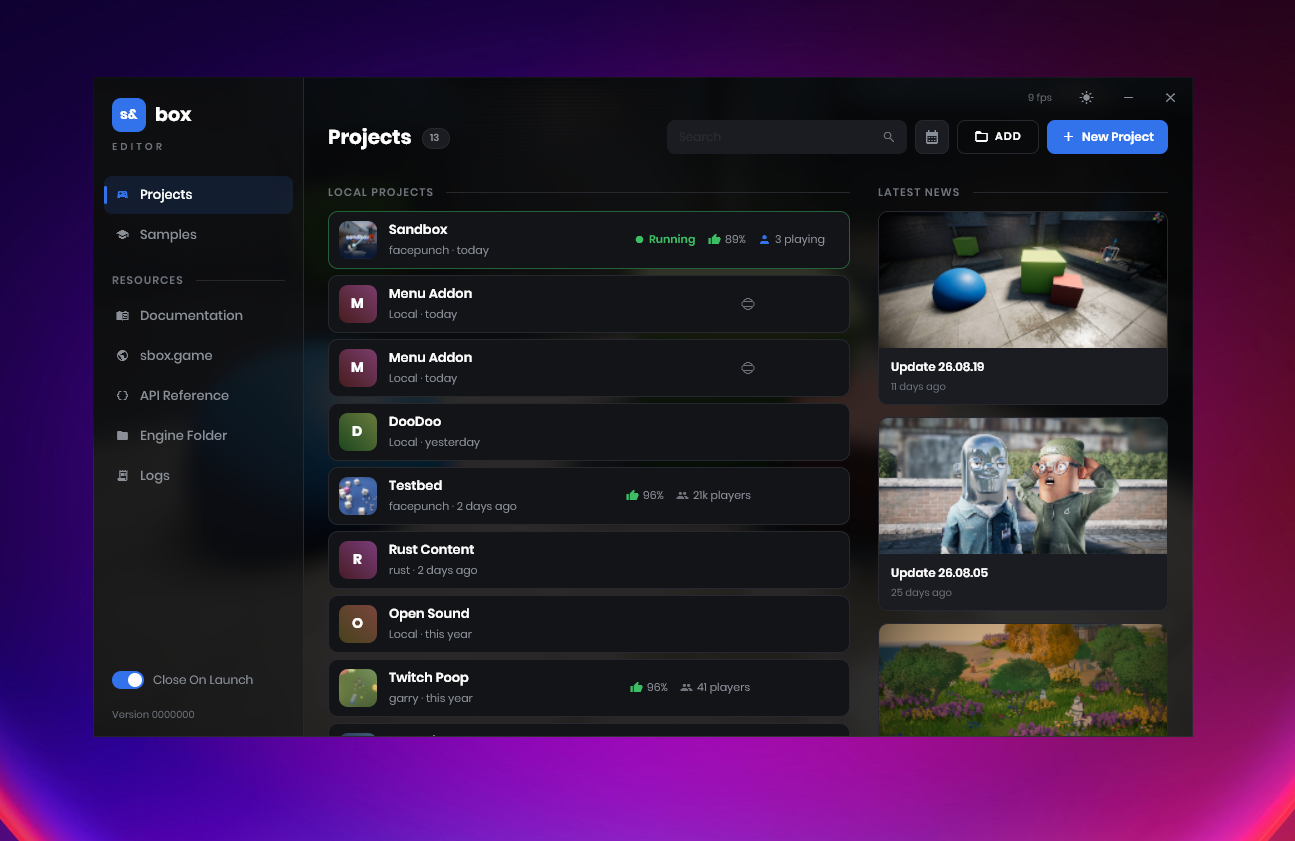
This updated launcher incorporates highly requested community features—most notably, the ability to detect an active editor instance, highlight the entry accordingly, and prevent accidental duplicate launches.
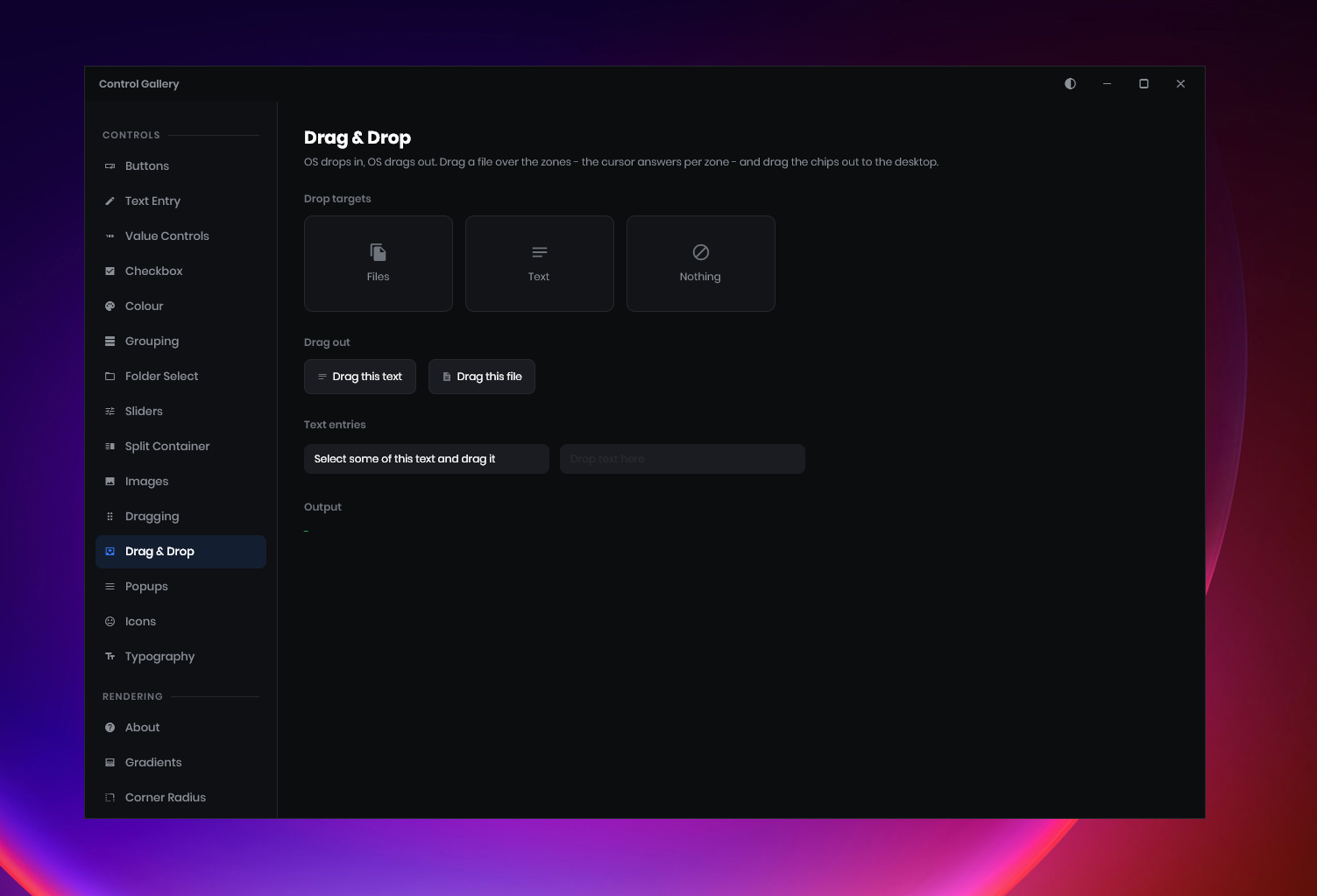
Panel Gallery Utility
Replacing Qt is an extensive, multi-phase undertaking requiring continuous iteration and refinement of our panel framework. To facilitate ongoing testing and development, we have included a dedicated utility application named PanelGallery.exe located within the bin/managed/ directory, serving as a visual sandbox for the UI ecosystem.
Forums Overhaul
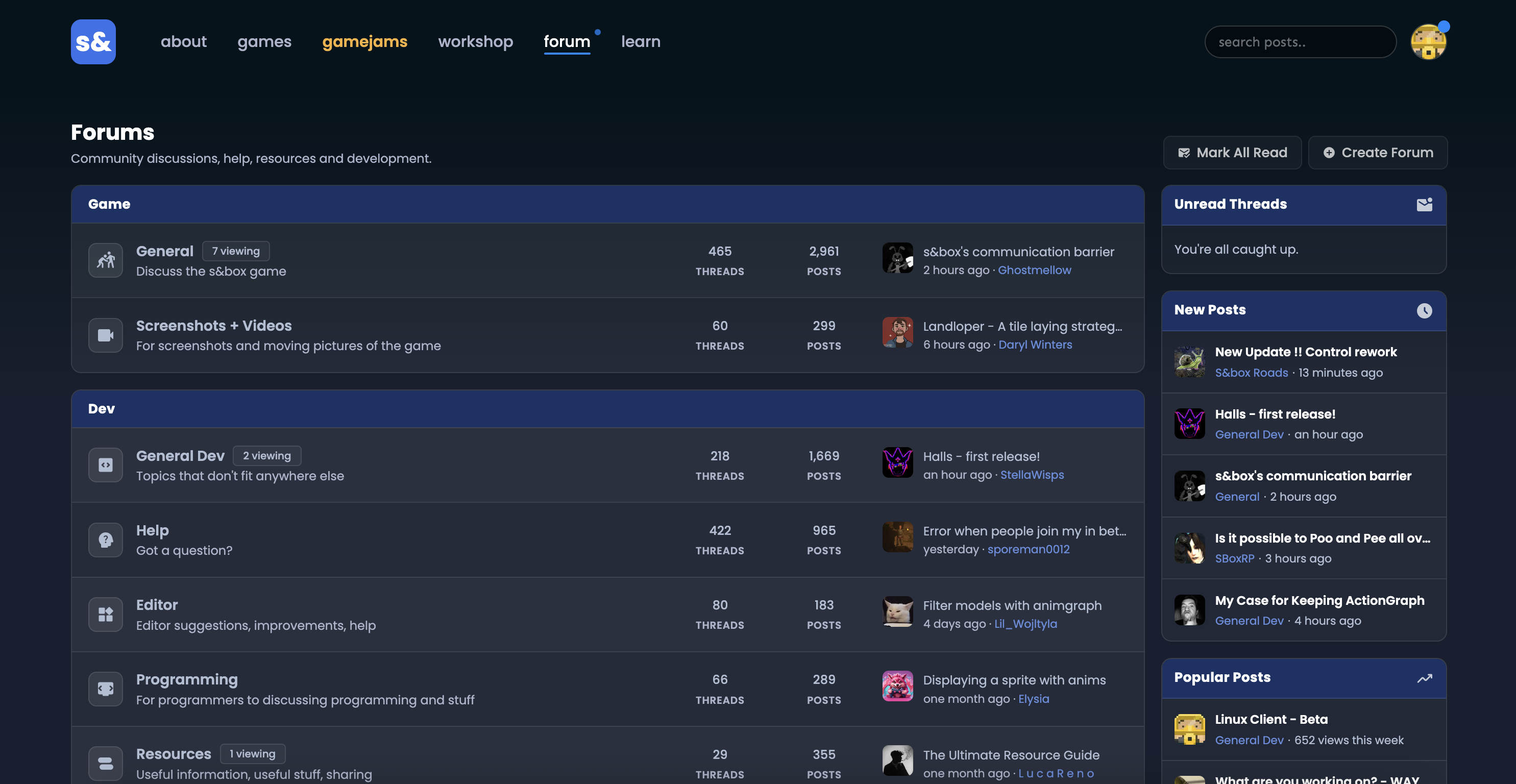
The community forums have been redesigned to provide a traditional, highly intuitive discussion layout that feels immediately familiar and easy to navigate.
Markdown Documentation
Our official documentation, API reference manuals, tutorials, and release notes are now natively accessible in Markdown format by simply appending .md to any documentation URL or by passing the request header Accept: text/markdown.
While admittedly standard for human readers, automated systems and bots will rejoice 🤖
Roadmap Redesign
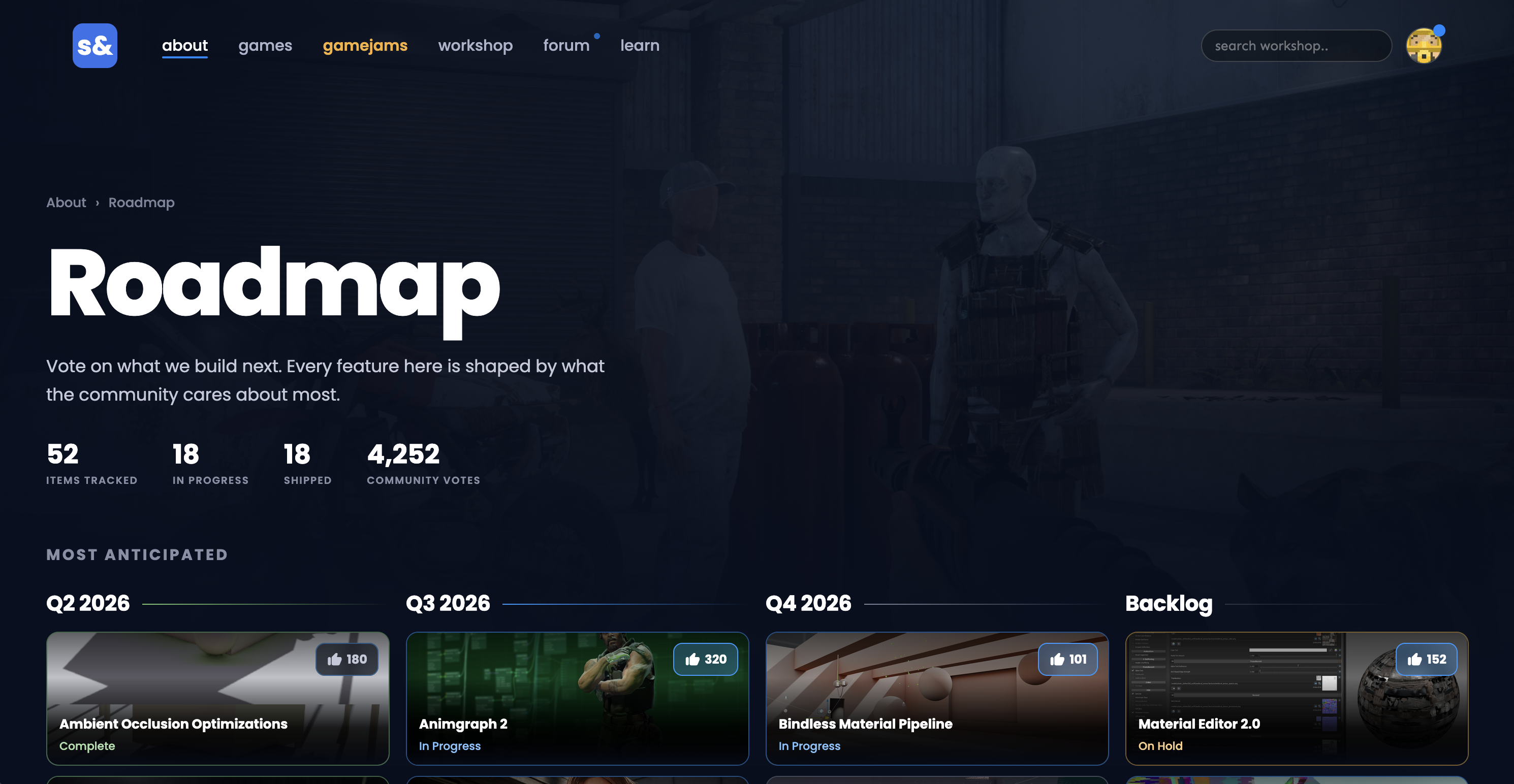
Recognizing that our previous communications regarding project milestones and progress lacked clarity, we have completely revamped the roadmap interface. Maintenance is now streamlined for our internal team while offering a far more digestible experience for users; clicking any roadmap item now triggers an interactive modal containing comprehensive details, direct GitHub links, and auxiliary tracking information.
Summary & Future Outlook
Although our focus has been somewhat distributed over the past few weeks, development momentum is fully restored. I wanted to outline our broader strategic vision—while these plans have occasionally surfaced on Discord, they hadn’t been formally documented. Given that player concurrency metrics remain relatively flat, I understand community anxieties may exist.
Make no mistake: this is our engine. It is the Facepunch engine. We are building it because we are Facepunch, driven by the conviction that we will ultimately want to power future titles using proprietary technology. I refuse to let us remain entirely dependent on Unity, vulnerable to arbitrary licensing shifts or retroactive revenue demands. We want to forge a free, open-source, modern engine. Regardless of immediate fluctuations in platform adoption, we remain deeply committed to this trajectory as an investment in our ideal technological future.
That said, we naturally want the platform to thrive. We want users to actively play and enjoy experiences here, and we want creators to build financially sustainable businesses. We want the platform to successfully fund its own ongoing development, and we will continue proactively fostering that growth.
Our immediate next step is an upcoming Game Jam slated for this September, kicking off on Friday the 4th, featuring a substantial £50,000 prize pool. We are engineering an event structure designed to be as engaging for players as it is rewarding for developers, utilizing community-driven player voting to determine winners. We will likely coincide this event with a free weekend or a promotional sale, with detailed announcements arriving very soon.
Following the jam, we plan a major Christmas promotional sale featuring strategic cross-promotion alongside Rust. By exposing the platform to a broader audience outside of die-hard Garry’s Mod enthusiasts, we hope new players will easily discover experiences tailored to their preferences.
Looking ahead to next year, we aim to host regular, recurring Game Jams, iterating and optimizing the process until the events run autonomously.
Eventually, we will evaluate our mature technology stack and embark on building an entirely standalone game based on a brand-new intellectual property. At that stage, an internal Facepunch team will develop an independent title powered by our engine for commercial release on Steam and whatever console hardware is prominent at the time.
 Rethinking
 Neck and Neck
 Update 26.09.15
 Update 26.09.08
 Update: August 26, 2019
 Update 26.08.05
 Update July 26, 2022