
The Running Man: A Fantastic Stephen King Adaptation Ruined by Its Ending
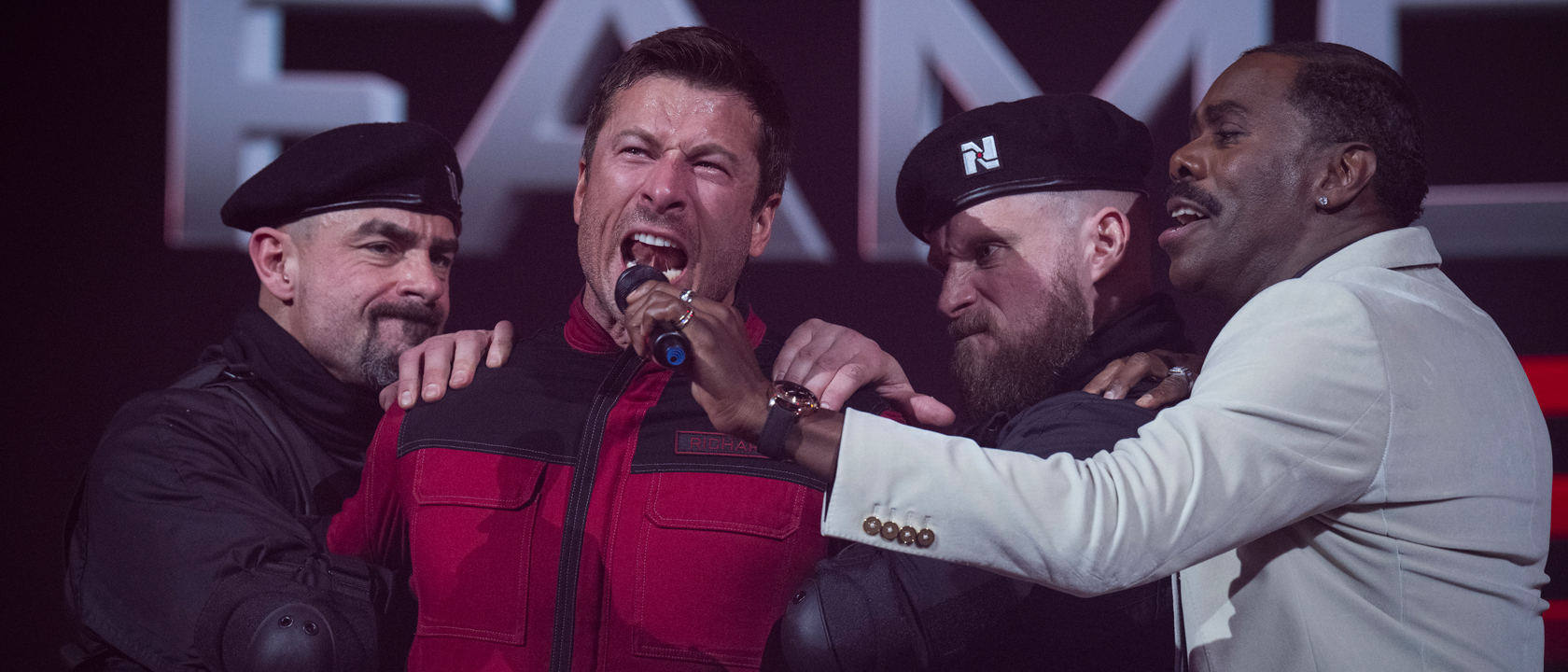
Were it not for Brett Leonard’s The Lawnmower Man, Paul Michael Glaser’s 1987 The Running Man would stand unchallenged as the most unfaithful Stephen King adaptation. Beyond the dystopian milieu, televised death games and a handful of familiar names, that Schwarzenegger vehicle is pure blockbuster fare. As an aficionado of Arnie’s one-liners and ’80s action spectacle, I’ve always admired its bravado—but I’ve also longed for a rendition truer to King’s razor-edged novella.
.
The Running Man (2025)
- Release Date: November 14, 2025
- Director: Edgar Wright
- Writers: Edgar Wright & Michael Bacall
- Cast: Glen Powell, Josh Brolin, Lee Pace, Colman Domingo, Michael Cera, Emilia Jones, Daniel Ezra, Jayme Lawson, Karl Glusman, Katy O’Brian, Martin Herlihy, William H. Macy
- Rating: R (strong violence, some gore, language)
- Runtime: 133 minutes
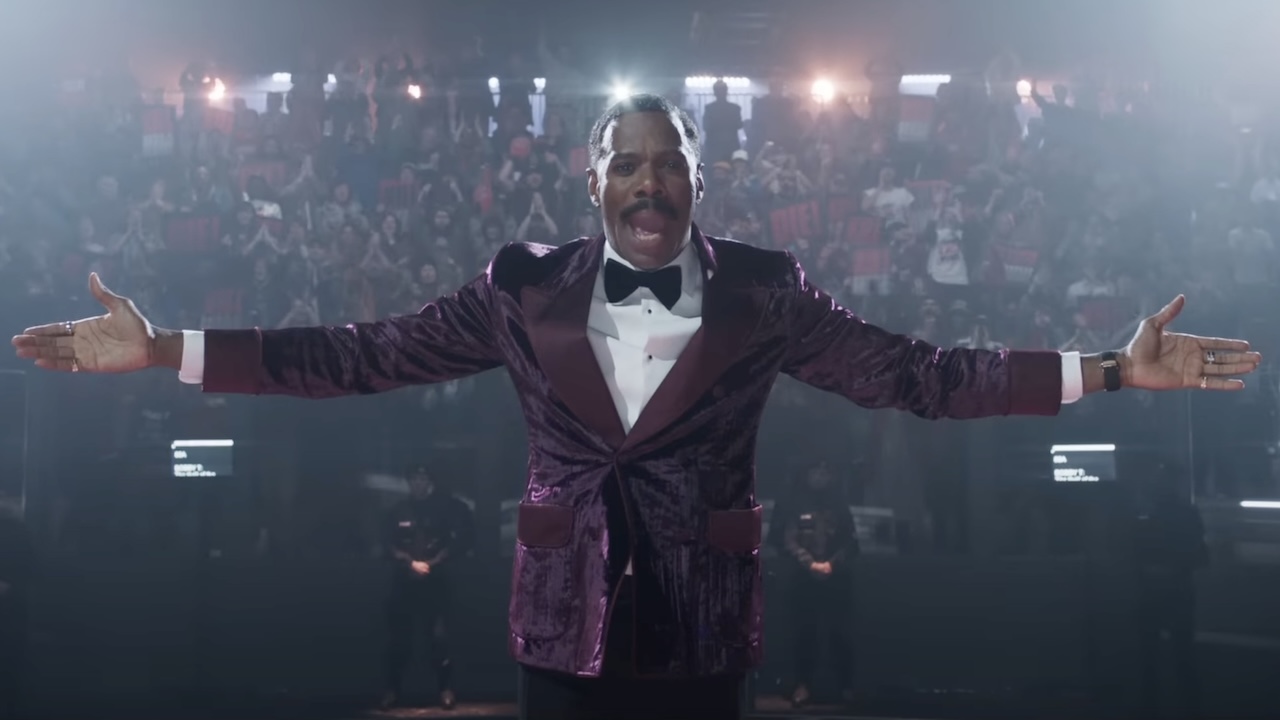
In this reinvention, Edgar Wright and Michael Bacall have earnestly pursued King’s vision—delivering a sharp social critique wrapped in thrilling action. Yet when the third act veers from the source, the narrative’s bite is blunted, leaving a lingering sense of squandered potential despite the film’s overall vigor.
.
Glen Powell portrays Ben Richards, a jobless everyman desperate to support his ailing daughter and devoted wife (Jayme Lawson). With no other recourse, he signs up for a perilous state-sanctioned game show, only to be plucked by the smirking producer Dan Killian (Josh Brolin) for the most ruthless spectacle of all: The Running Man.
.
King’s Darkness and Wright’s Dynamism
First published in 1982 under Stephen King’s Richard Bachman pseudonym, The Running Man exudes a bleak cynicism. Wright honors that tone, infusing the film with both dystopian dread and kinetic energy. As Richards navigates a society riddled with corruption, inequality and propaganda, the audience witnesses the righteous fury that fuels his every move—an emotional throughline King’s novel renders so powerfully.
.
Along his odyssey, Richards forges alliances with underground rebels and learns the depth of systemic rot. These moments of solidarity and revelation translate beautifully to screen, testament to Wright’s knack for marrying spectacle with substance.
.
An Undercooked Finale
Unfortunately, the ending betrays all that came before. Wright’s decision to soften King’s uncompromising conclusion might avoid controversy, but it also undercuts the story’s thematic core. Without revealing spoilers, it suffices to say the finale feels both arbitrary and overly cautious, jarring in a narrative that otherwise thrives on bold stakes.
.
Missing the Wright Touch
Fans of Edgar Wright’s signature flair—rapid-fire editing, playful foreshadowing and meticulously chosen needle-drops—may find the film’s aesthetics surprisingly restrained. Though the action sequences sparkle and the drone-camera gimmick invigorates, the trademark “Wrightisms” are fewer and farther between than one might expect.
.
Even so, The Running Man delivers exhilarating set-pieces and a magnetic lead performance. It just stops short of embodying the full creative hallmark we’ve come to expect from its director.
.
Final Verdict
On balance, this is a commendable adaptation—wrought with intelligence, spectacle and heart. Yet the missteps in its closing act demote it from a potential “A-” to a solid “B.” It’s a testament to Wright’s skill that the film works at all, but one can’t help mourning the missed opportunity to let King’s darkest impulses shine through unfiltered.
.
Related articles
 Ryan Reynolds’ “Mayday” receives positive reviews from critics
 Michael Keaton to Direct Western Starring Morgan Freeman
 “Daddy’s Daughters” wedding sequel to be released in 2027
 Halle Berry and Colin Firth to Star in New Rom-Com
 Netflix Begins Filming New Dan Brown Adaptation
 Spider-Noir series canceled after first season
 Actors cast as Dobby and Tom Riddle for Harry Potter season two
 International “Doker” Film Festival Kicks Off in Moscow