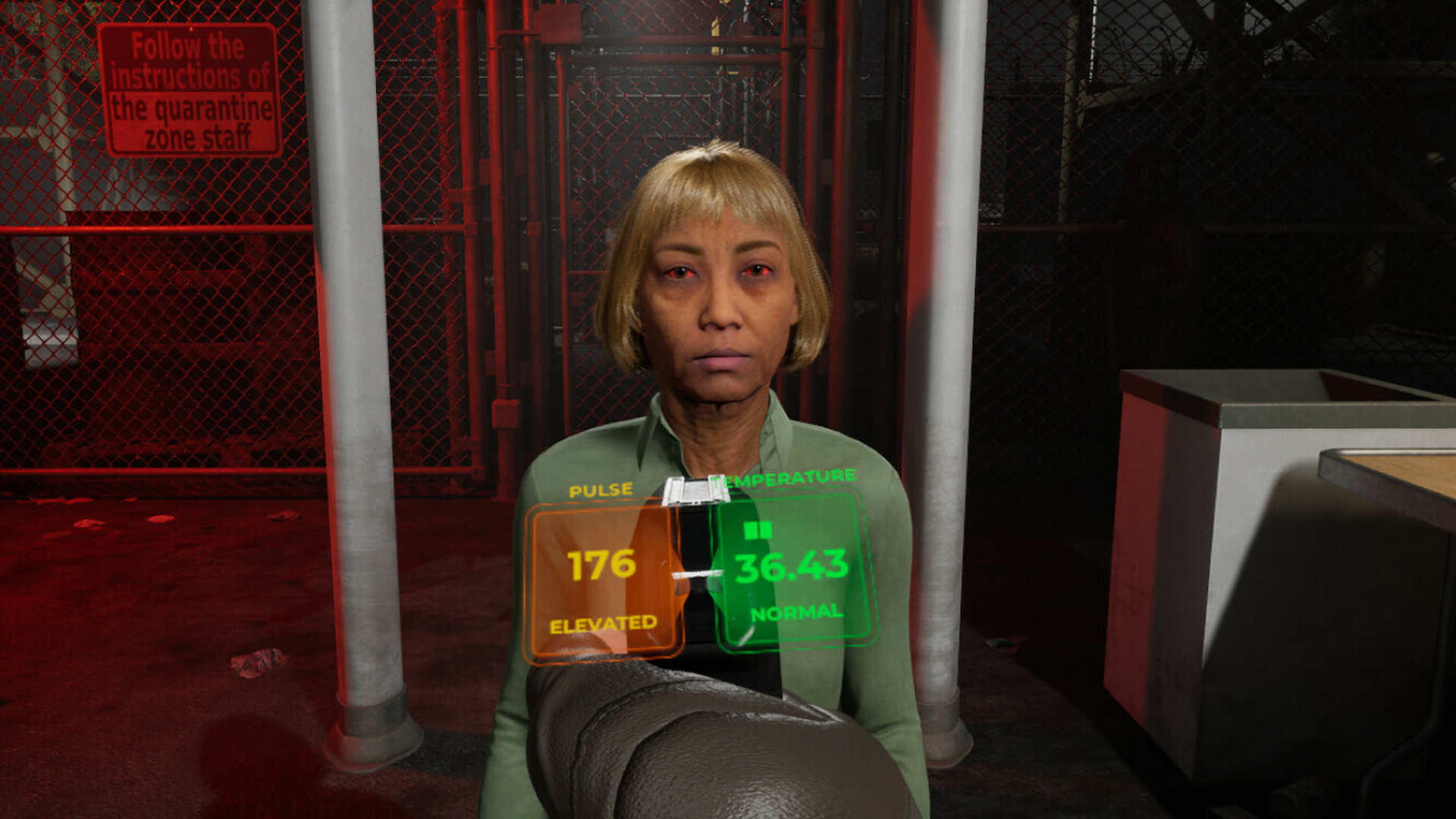
Fortunately, you get diagnostic tools that evolve as the game progresses. Early clues come from a visual inspection — a hidden bite through a T‑shirt is an immediate red flag — and later you’ll gain a stethoscope for listening, an oximeter to check pulse and oxygenation, and a thermometer for fever detection. If doubt remains, you can buy confirmatory tests that unequivocally detect infection, though they come at a steep price.
Screening is only half the job: you must also sustain everyone housed inside. That means provisioning enough food for evacuees and for those held in quarantine after inconclusive checks, plus fuel to keep generators running as you expand the base. The demo doesn’t leave much cash for large-scale upgrades, but the base-building mechanics hint at deeper systems beneath the surface.
Combat segments switch you from clinician to drone operator, trading the stethoscope for a laptop as you pilot drones to safeguard convoys or clear swarms near the perimeter. These sections play like straightforward horde shooters and allow upgradeable firepower, but they never reach the complexity of the medical gameplay. The heart of the demo is the diagnosing — some patients are unmistakably infected, while others conceal their illness masterfully. I once cleared a patient who later turned and killed three people after slipping past my checks, which underlines how tense and consequential those decisions can feel.
Like any simulation, repetition can set in, but Quarantine Zone does make thoughtful efforts to break the monotony of a day full of examinations. The setting and systems clearly resonate: the demo is climbing Next Fest charts and the full game has secured a comfortable spot in Steam’s top 20. With a release scheduled as soon as next month, this could easily become a breakout hit.
Time for a new contender on our list of the best zombie games?
Source: gamesradar.com