
John Carpenter’s Final Film Deserves Another Look

John Carpenter’s films often follow a familiar arc: they open to modest or cold reception, then over the years build a dedicated following that eventually re-evaluates them. That renaissance has happened for entries like The Thing, They Live, and even more divisive late-career pieces such as Prince of Darkness and In the Mouth of Madness. One movie that hasn’t yet enjoyed that revival is Carpenter’s final theatrical horror, The Ward.
Its omission from retrospectives — for example, the Criterion Channel’s seasonal “Directed by John Carpenter” program — is notable; the collection rounds up most of his canonical work but leaves out this quietly effective late entry. Fortunately, The Ward is available to stream on platforms such as Prime Video, Peacock, and Tubi, where viewers can judge it for themselves.
The Ward returns Carpenter to a tight, single-location setup reminiscent of films like Assault on Precinct 13 and The Thing, but with a gender flip: the action unfolds inside a women’s psychiatric ward in Oregon, circa 1966. Amber Heard plays Kristen, a young woman brought in after being found at the scene of a house fire she apparently started. She claims amnesia about the events leading up to the blaze and regards the attending physician, Dr. Stringer (Jared Harris), with suspicion and hostility.
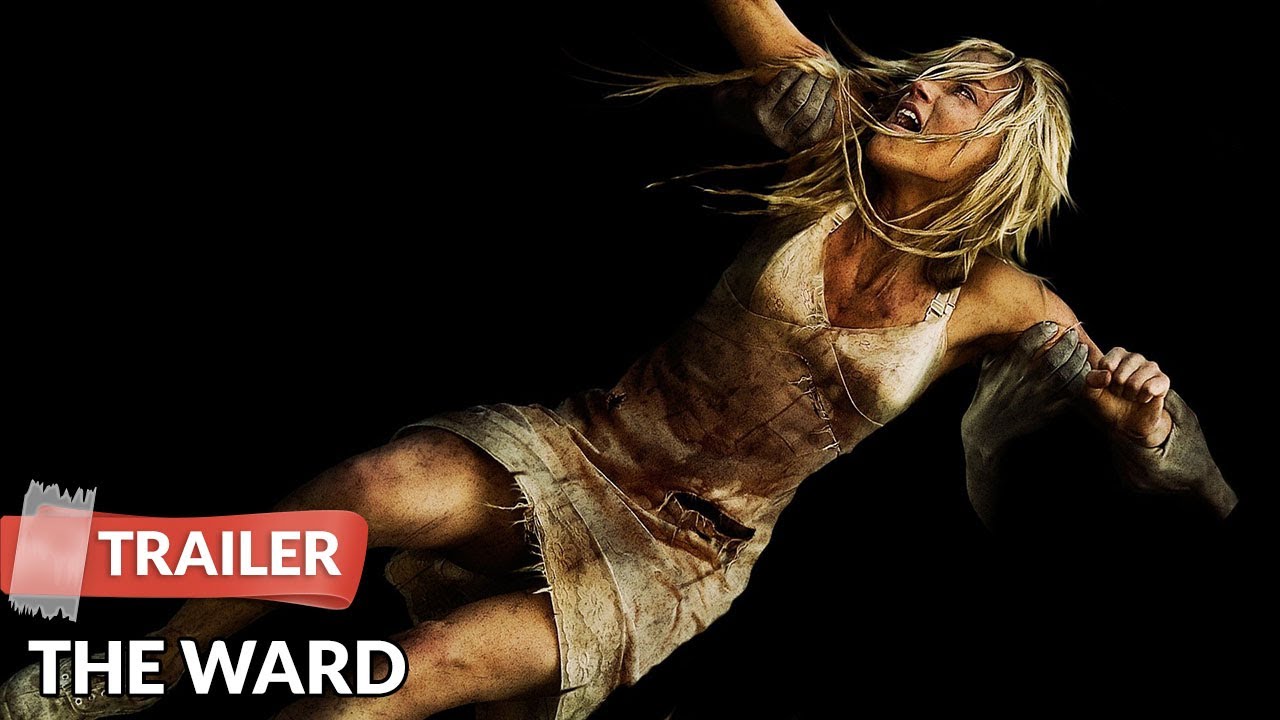
Inside the ward she meets a small ensemble of patients: Mamie Gummer’s Emily, the volatile one; Danielle Panabaker’s Sarah, flirtatious and guarded; Lyndsy Fonseca’s Iris, the creative spirit; and Laura-Leigh’s Zoey, who behaves with a childlike simplicity. Rumors circulate about other patients — Tammy and Alice — who have vanished, and unsettling imagery intermittently cuts to a basement where a young girl is chained, played by a very young Sydney Sweeney.
The screenplay, by Michael and Shawn Rasmussen (authors of the compact survivor-thriller Crawl), leans into familiar horror beats. That simplicity works to the film’s advantage: with a relatively modest budget and fewer effects demands than some of Carpenter’s more ambitious late projects, he directs with a focused eye, composing widescreen frames and letting the camera travel through the hospital’s corridors with assured economy.
The Ward rarely aims for sustained terror so much as it cultivates forward momentum. Carpenter’s use of 35mm cinematography lends the pictures a tactile warmth, and he stages scenes — such as a radio-driven dance sequence amid a storm — with an appreciation for blocked movement and group dynamics. The result is an efficient, often elegant exercise in confined dread.

Amber Heard gives a rugged, workmanlike performance that anchors the story — she sells Kristen’s toughness and vulnerability in equal measure, a quality that suits Carpenter’s blend of genre tropes and melodrama. The supporting players are intentionally schematic, which aligns with the film’s B-movie lineage and helps set up an ending that some viewers may find polarizing.
Ultimately, the film resonates where it matters: it frames Kristen’s struggle as a contest between suppression and confrontation of trauma. In that respect, The Ward both anticipates later trauma-centered horror narratives and serves as a concise valediction for Carpenter’s long career in cinema. Kristen’s final refusal to quietly accept a tidy resolution reads as a meditation on whether horror can — or should — be neatly resolved.

The film’s commercial path was modest. After premiering on the festival circuit more than a decade ago, it received a brief theatrical run and quickly moved to home release, which limited its immediate cultural footprint. That quiet distribution history likely contributed to its relative obscurity compared with higher-profile genre flops of the era.
Viewed on its own terms, though, The Ward stands as one of Carpenter’s more assured late-period works. If it also marks the end of his feature-film horror output, it’s a respectable and thoughtful final statement — one that deserves rediscovery by fans of restrained, atmospheric genre filmmaking.
Where to watch: Prime Video, Peacock, and Tubi, among other streaming services.
Polygon’s annual Halloween Countdown is a month-long series of brief recommendations highlighting noteworthy horror films, TV episodes, and specials to stream for the season. You can view the full calendar here.
Source: Polygon
Related articles
 Robert Pattinson Responds to Chris Hansen’s Complaints About the Movie “Primetime”
 Ryan Reynolds’ “Mayday” receives positive reviews from critics
 Michael Keaton to Direct Western Starring Morgan Freeman
 “Daddy’s Daughters” wedding sequel to be released in 2027
 Halle Berry and Colin Firth to Star in New Rom-Com
 Netflix Begins Filming New Dan Brown Adaptation
 Spider-Noir series canceled after first season
 Actors cast as Dobby and Tom Riddle for Harry Potter season two