
Good Fortune Isn’t a Great Movie — It’s a Great Keanu Reeves Hangout Film

Good Fortune review: a flawed fable propelled by an unexpectedly human Keanu Reeves
Good Fortune, Aziz Ansari’s first feature as a director, has struggled to find an audience at the box office. Several issues contribute: the bland, non-descriptive title doesn’t hint at the film’s offbeat blend of fantasy and satire; the screenplay often reads like a sermon, spelling out its moral points rather than trusting the story to show them; and many performances feel oddly stagey, as if the actors were reciting lines rather than inhabiting characters. The movie’s release also coincides with a fraught moment of widening economic inequality, which may make viewers less receptive to a film that ultimately frames poverty as spiritually noble while wealth is merely troublesome. Box-office reports and wider social anxieties give that timing extra weight.
Still, the film has notable strengths: it’s imaginative, often daring, frequently funny, and thematically timely. And above all, it functions as a surprising and oddly effective Keanu Reeves showcase.
I’ve never been inclined to rank Reeves among the great chameleons of screen acting. For much of his career he’s relied on a restrained, almost monotone presence — an affect that directors have, at times, turned into an asset by casting him as a closed-off or stoic figure (from My Own Private Idaho to The Matrix to John Wick). Those parts played to his strengths: a man whose stillness reads as menace, mystery, or melancholy.
In Good Fortune Reeves plays Gabriel, a low-tier guardian angel charged with a peculiarly modern duty — watching over people who text while driving and nudging them out of harm’s way. Stationed above the city like a less solemn echo of Bruno Ganz’s presence in Wim Wenders’s Wings of Desire, Gabriel aspires to greater heroism. He decides to intervene more radically: he swaps the lives of two men — Arj (played by Aziz Ansari), a struggling odd-jobber living out of his car, and Jeff (Seth Rogen), a wildly wealthy tech executive — in hopes that the experience will teach humility and appreciation.
The swap is supposed to mirror the classical “vision of another life” trope — think It’s a Wonderful Life — giving one man a glimpse of a different reality so he can return reformed and grateful. But Arj quickly discovers that Jeff’s problems are the kind money can fix, and that a life of abundance offers temptations and comforts he’d never imagined. Rather than learning to value his old life, Arj revels in his new freedom. Consequences follow: Gabriel’s unauthorized meddling gets him dismissed from his angelic duties and stripped of immortality — he is made human.
 Photo: Eddy Chen/Lionsgate
At first, Reeves’s Gabriel — an earnest, ambitious angel — never quite convinces as a visionary. His performance largely stays within the actor’s familiar register. But the movie’s most rewarding moments arrive after Gabriel is punished and rendered mortal. Freed from celestial duties and compelled to live inside the messy, corporeal world, he begins to explore ordinary sensations with childlike wonder: tasting food, fumbling with cigarettes, adjusting to menial labor. Those small discoveries unlock something rare in Reeves’s recent work — a genuine, tentative smile that feels earned and alive.
One of the film’s quieter pleasures is watching Reeves do the mundane badly and beautifully. He takes a dishwasher job, dons a paper service cap, and becomes gawky in an unglamorous way that strips away the John Wick veneer. The costuming and posture transform his physicality: the lethal, sleek presence is replaced by a more awkward, vulnerable body. Seeing that cultivated cool dissolve, even for a few scenes, is unexpectedly affecting.
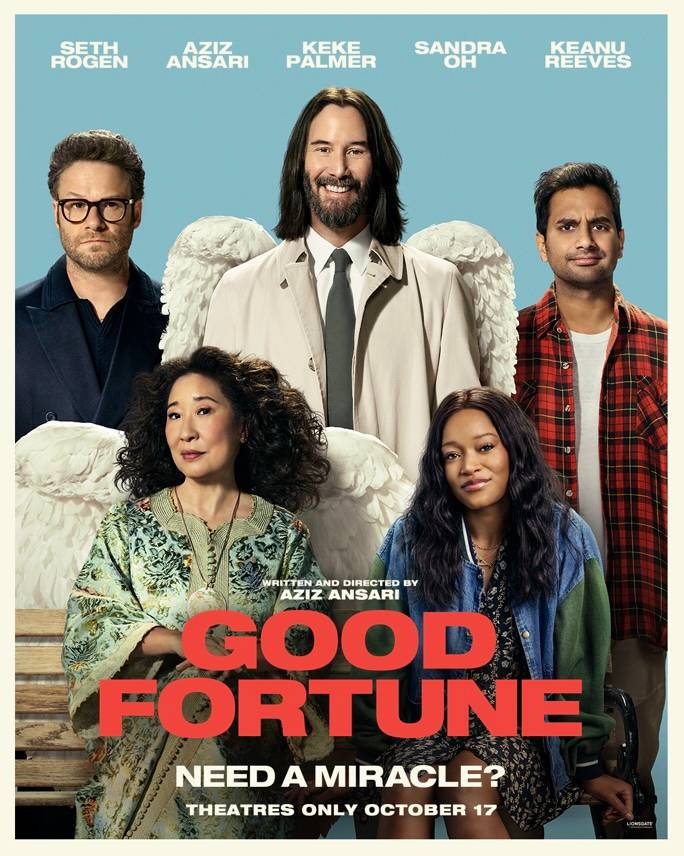 Image: Lionsgate
The movie doesn’t always succeed dramatically. Ansari’s script sometimes strains to manufacture the moral turnaround it needs: convincing someone to abandon wealth for hardship requires more subtle justification than the film often provides. Still, the production looks and sounds like a project made with relish. Reeves seems to loosen up as Gabriel’s setbacks accumulate; in later scenes, when the character laments human difficulties or savors small comforts, the actor occasionally sheds decades of screen-protective cool and taps into something more youthful and spontaneous.
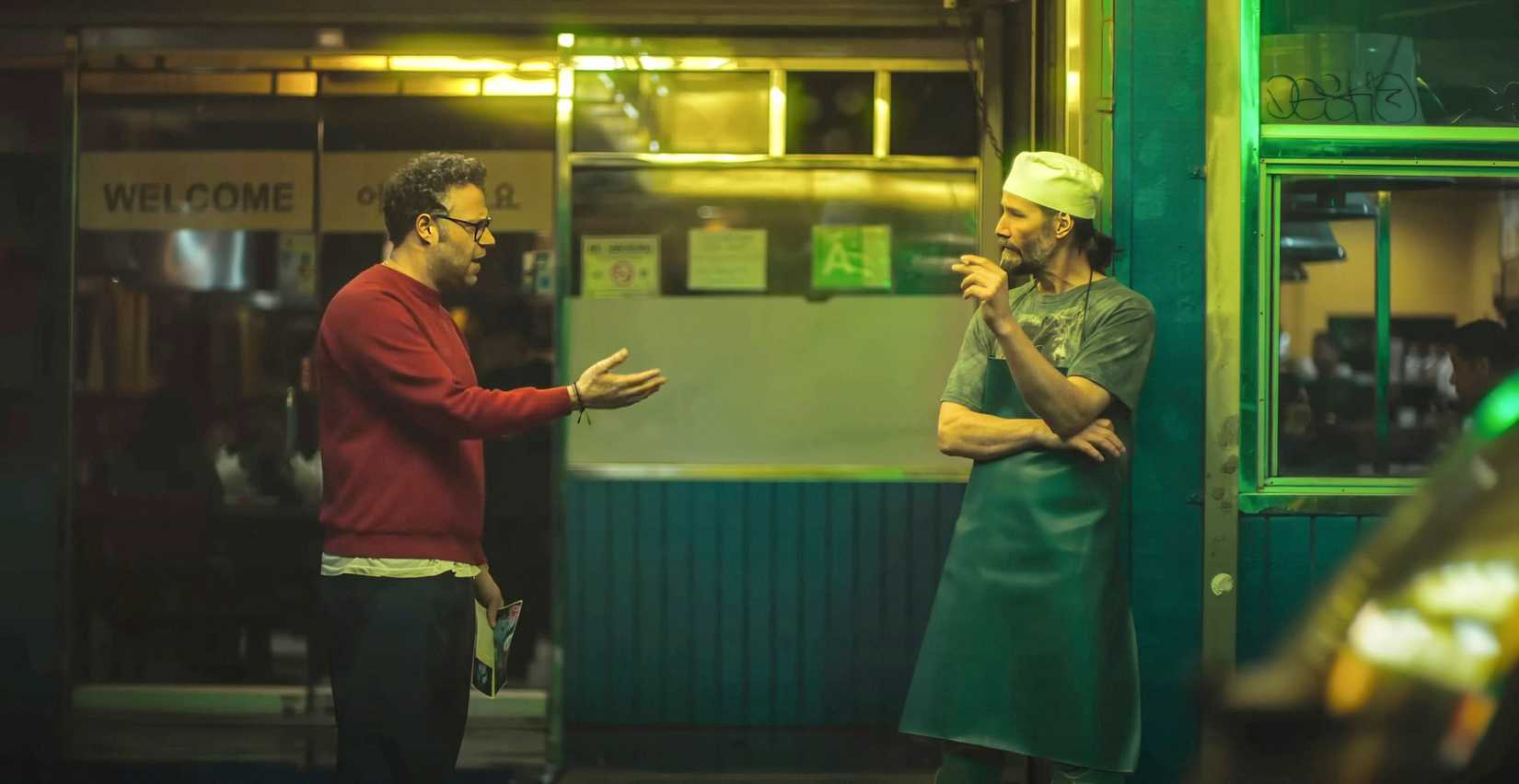 Image: Lionsgate
Ultimately, Good Fortune is a film about small gratifications: the tiny pleasures available even amid insecurity and scarcity. It doesn’t always land its ethical argument, but it’s frequently inventive and — most important here — it offers a rare glimpse of Keanu Reeves letting his guard slip. Those moments of human curiosity and soft joy are the movie’s most memorable gifts.
Source: Polygon
Related articles
 Robert Pattinson Responds to Chris Hansen’s Complaints About the Movie “Primetime”
 Ryan Reynolds’ “Mayday” receives positive reviews from critics
 Michael Keaton to Direct Western Starring Morgan Freeman
 “Daddy’s Daughters” wedding sequel to be released in 2027
 Halle Berry and Colin Firth to Star in New Rom-Com
 Netflix Begins Filming New Dan Brown Adaptation
 Spider-Noir series canceled after first season
 Actors cast as Dobby and Tom Riddle for Harry Potter season two