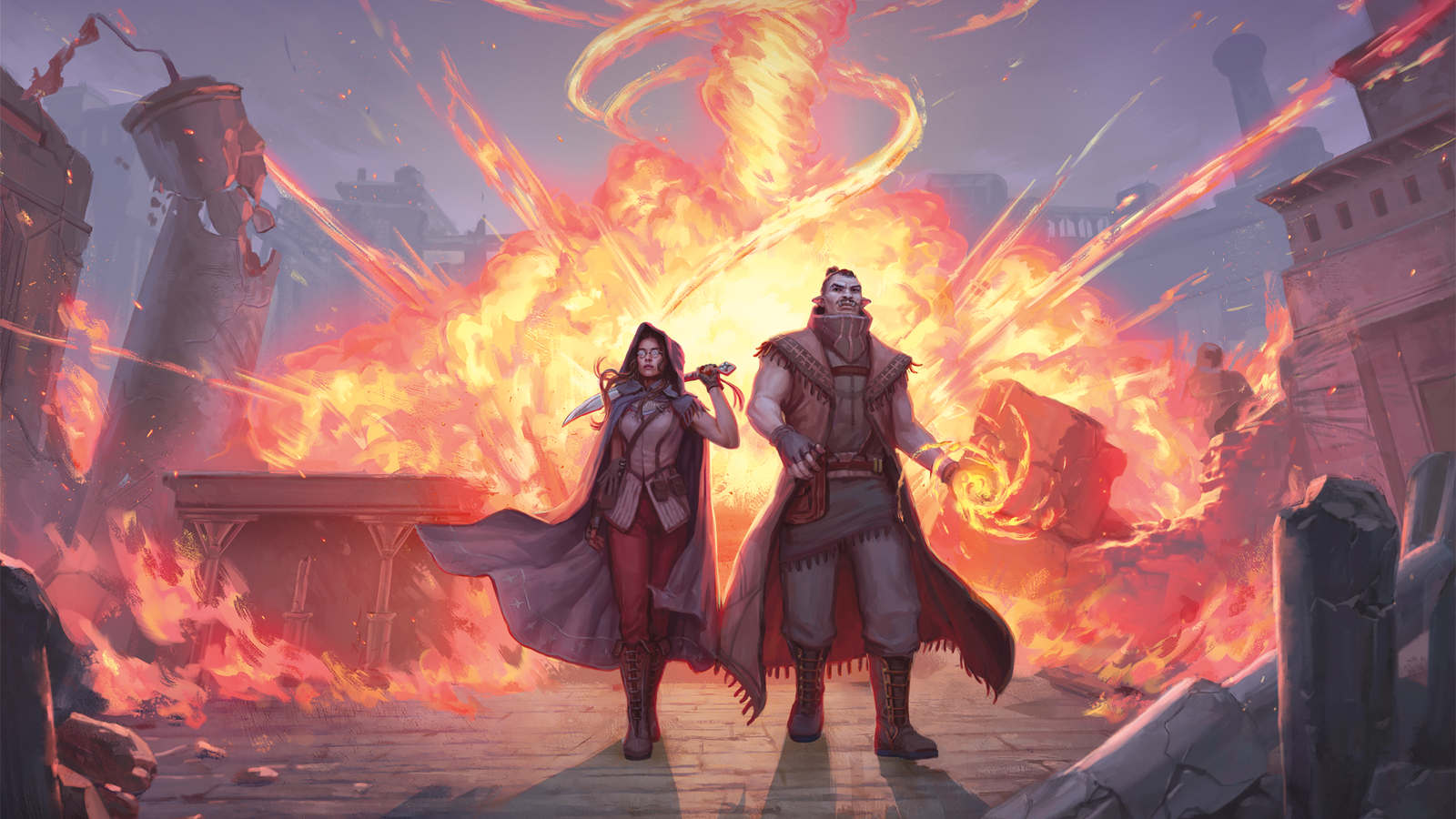
New D&D Book Grants Every Class Extra Magic and Companions
Following the debut of the 2024 revised ruleset with Ravenloft: The Horrors Within, Wizards of the Coast is steering Dungeons & Dragons into starkly different territory. Their latest release, Arcana Unleashed, is a player-centric supplement packed with revised subclasses, new spells, and enchanted relics that place arcane mastery at the center of gameplay. Alongside it comes Arcana Unleashed: Deadfall, an espionage-themed campaign situated in the perilous magocracy of Thay.
Both releases highlight the evolving design philosophy of the 5.5e era. Arcana Unleashed revitalizes several underperforming 5e subclasses and distributes spellcasting potential far more generously across the board. Yet in doing so, it continues to blur the boundaries between distinct classes—trading traditional niche specialization for modular customization. For better or worse, this open-ended approach represents the contemporary direction of D&D.
Arcana Unleashed Expands Magical Access Across the Board

The Arcana Domain Cleric returns in force, retaining its core identity of siphoning wizard utility onto a divine chassis, but with substantial buffs. Gaining Counterspell at 5th level gives the archetype immediate defensive utility. Even more impactful is the replacement of the lacklustre Arcane Abjuration with Modify Magic. By expending a Channel Divinity use, the cleric can grant temporary hit points to an ally or inflict a 1d6 penalty on a foe’s saving throw against their cast spell. Shaving 1–6 points off an enemy’s saving throw drastically amplifies the potency of shutdown staples like Command and Hold Monster, making it arguably one of the strongest control features in the game.
Wizards naturally receive substantial enhancements, completing the classical arcane specialist archetypes missing from the 2024 Player’s Handbook: Conjuration, Necromancy, Enchantment, and Transmutation. Each receives noticeable upgrades over its predecessor. Conjurers now unlock tactical teleportation at 3rd level rather than 6th, using it a number of times equal to their Intelligence modifier for heightened mobility, while their 6th-level minions arrive with reinforced durability and damage resistances.
Enchanters gain Hypnotic Presence at 3rd level, enabling them to charm and incapacitate a target on a failed Wisdom save—an ability that can be used consistently to orchestrate devastating group focus-fire.

Necromancy has undergone a thorough mechanical overhaul. Abandoning minor recovery mechanics, it embraces the quintessential fantasy of leading an empowered undead cohort—granting summoners the ability to enhance their creations and detonate them within enemy ranks for burst damage. Transmuters also receive long-overdue tuning, with significant improvements centered on shape-shifting versatility.
Conversely, the martial options show mixed results. The Mystic Arts Monk struggles to blend constrained spellcasting with the core martial framework, resulting in awkward resource tension.
The supplement also brings 10 fresh character backgrounds, nine anchored directly to influential magical cabals detailed in the lore. The tenth—the Familiar Trainer—is poised to be universally favored. Built around the Familiar Friend origin feat, it allows any class, from Barbarians to Fighters, to start their adventuring career with the utility of Find Familiar.

This design trajectory makes one thing unmistakable: class boundaries are continuing to dissolve. While open-ended systems can be liberating, they risk diminishing archetypal identity and challenging balance. For Dungeon Masters frustrated by cross-class dips via feats like Magic Initiate, the introduction of Magic Connoisseur—which grants access to additional 1st- and 2nd-level spells—amplifies that homogenization even further.
For DMs, the supplement offers extensive worldbuilding advice for magic-heavy settings. While seasoned campaign runners may find the general advice familiar, the roster of faction profiles provides immediate utility as modular patrons, rivals, or background forces. The monster and spell sections are equally useful, highlighted by a stat block for Venger, the classic antagonist from the vintage 1980s animated series.
Deadfall Provides Rich Setting Lore Inside a Rigid Narrative

As the inaugural full-length campaign designed around the 5.5e ecosystem, Arcana Unleashed: Deadfall utilizes a two-part format: an expansive regional gazetteer followed by a structured adventure module. While the sourcebook details regarding Thay offer an exceptional look at the realm, the adventure itself leans heavily into linear design, providing minimal room for exploratory sandbox play.
The narrative places the party in the service of a high-ranking patron, the Zulkir Xelnene Thrul, on a mission to undermine Szass Tam’s machinations. The sequence of milestones leaves little latitude for divergent player agency, and the stakes of operational security often feel low.

Blunders during covert assignments generally yield little more than a scolding from their patron, accompanied by explicit bailout mechanics—such as paying a 5,000 gold fee to erase procedural tracks—that insulate the party from lasting failure.
The tension of a cloak-and-dagger narrative is further undercut by the campaign’s 11th-level starting point. At this tier, spells like Greater Invisibility, Scrying, and Teleport can bypass conventional espionage hurdles with ease. When high-tier spells solve most investigative problems and failures carry simple corrective costs, maintaining high dramatic tension becomes a challenge.
Structurally, Deadfall shares clear stylistic parallels with Vecna: Eve of Ruin, utilizing quest-giver structures and a predetermined pivot into a climactic assault on the antagonist’s stronghold. While predictable, the module remains a versatile asset when repurposed. Its individual encounters, dungeon maps, and the first comprehensive Thay gazetteer in years supply plenty of modular value for custom campaigns.

Ultimately, Arcana Unleashed and Deadfall solidify the modern framework of 5.5e: streamlined character building with high customization, paired with structured, highly produced narrative adventures that prioritize accessible pacing.
Source: Polygon
Related articles
 Dark Fantasy Action-RPG in the Style of Classic Diablo Launches on Steam
 Paradox Shows Transport Fever 3 Gameplay and Premium Edition
 Rockstar Developers Met with Real Criminals and Spent a Decade Studying Miami Residents for GTA VI
 Tim Curry, Star of Command & Conquer: Red Alert 3 and It, Dies
 Total War: Warhammer 40,000 Previews Allow Players to Create and Paint Custom Space Marine Chapters
 GTA VI Characters May Gain Weight and Look Tired Without Proper Care
 Warhammer 40,000: Boltgun II Gets New Trailer With Release Date
 Hackers Claim GTA VI Is Still Far from Completion