Five Timeless Calvin and Hobbes Comics That Highlight Bill Watterson
You might think little remains to discuss regarding Calvin and Hobbes. The strip ended 30 years ago last December, and creator Bill Watterson has launched no official revivals or major follow-up projects. Since the series ended, Watterson’s only other published project is 2023’s The Mysteries, an illustrated fable for adults created in collaboration with John Kascht. Rumors persist that Watterson spends most of his time painting landscapes and burning the results.
Enthusiasm for Calvin and Hobbes should have faded by now, especially since Watterson never actively maintained that flame. Instead, the comic remains a popular subject for online discussion, propelled by new fans, various treasury editions, and its enduring influence on the medium.
Rereading the entire run goes relatively fast, and readers almost always take something new away from the experience. Growing older makes it much easier to empathize with Calvin’s dad and his anti-consumerist stance.
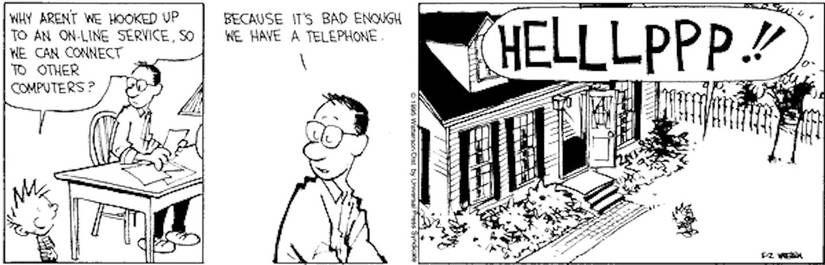
Calvin and Hobbes for May 2, 1995
Five particular strips stand out as especially timeless during a recent archive review.
August 31, 1995
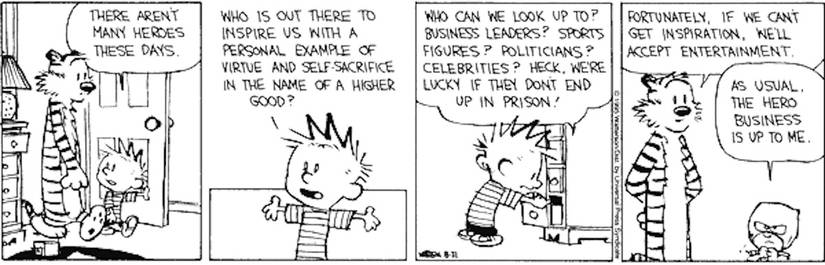
The strip from August 31, 1995 functions as a one-shot that could have been written yesterday, suggesting it taps into a permanent part of the modern human condition. If any single installment summarizes the 21st century so far, this might be the one.
“There aren’t many heroes these days,” Calvin says, preparing to change into his Stupendous Man costume. “Who can we look up to? Business leaders? Sports figures? Politicians? Celebrities? Heck, we’re lucky if they don’t end up in prison!”
Calvin and Hobbes for August 31, 1995
“Fortunately,” Hobbes replies, “if we can’t get inspiration, we’ll accept entertainment.”
June 15, 1995
Fans frequently focus on the large Sunday strips from the second half of the run as examples of Watterson experimenting with newspaper comic formats. Watterson proved himself an extraordinarily flexible artist who could switch styles instantly from science-fiction tableaus to pseudo-realistic sequential art and giant dinosaurs.
Calvin and Hobbes for June 15, 1995
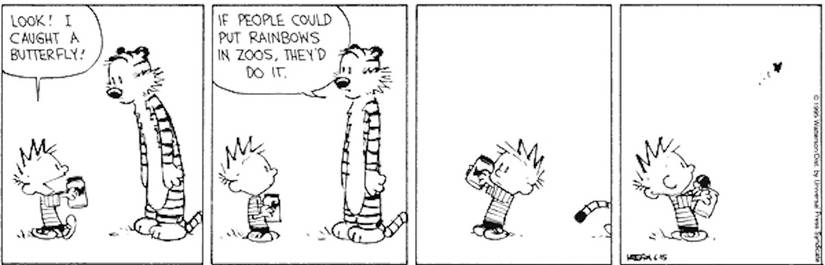
Sometimes, however, less proves more, and this strip demonstrates Watterson working in a minimalist mode.
“If people could put rainbows in zoos, they’d do it,” Hobbes says after Calvin catches a butterfly in a jar.
Calvin releases the butterfly without a word. The delicate strip achieves massive impact using a mere dot of ink and a few lines.
October 21, 1988
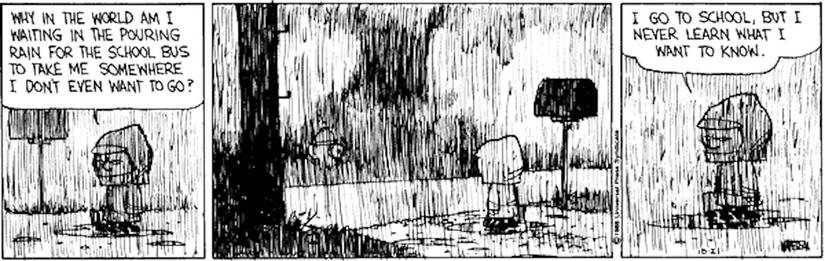
Calvin and Hobbes for October 21, 1988
Watterson gained early recognition for his detailed drawing skills. Charles Schulz noted this talent in his introduction to the first collection, praising Watterson’s ability to depict splashes of water, flying shoes, weird facial expressions, and countless minor details.
The October 21, 1988 strip exemplifies this skill as Watterson smudges fine lines to capture pouring rain. The minimalist dialogue frames a portrait of simple drudgery that remains entirely legible on a printed newspaper page, comparable to reproducing a Claude Monet painting in ballpoint pen.
“Why in the world am I waiting in the pouring rain for the school bus to take me somewhere I don’t even want to go?” Calvin asks alone at the bus stop. “I go to school, but I never learn what I want to know.”
February 20, 1990
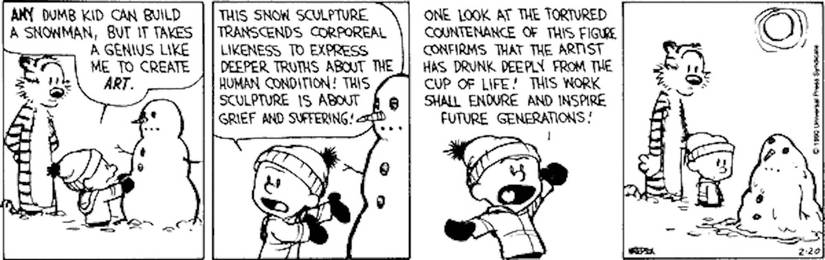
Calvin and Hobbes for February 20, 1990
If the publisher ever releases themed collections of specific strips in the style of Peanuts, Calvin’s snowmen should top the list. Creating small armies of elaborate snow goons serves as one of Calvin’s superpowers and generates the strip’s best sight gags. In this installment, Watterson spins Percy Bysshe Shelley’s poem “Ozymandias.”
“One look at the tortured countenance of this figure confirms that the artist has drunk deeply from the cup of life!” Calvin yells, gesturing at a mundane snowman. “This work shall endure and inspire future generations!”
The snowman melts moments later while Calvin looks away. Readers look upon his snow goons, ye mighty, and despair.
January 31, 1993
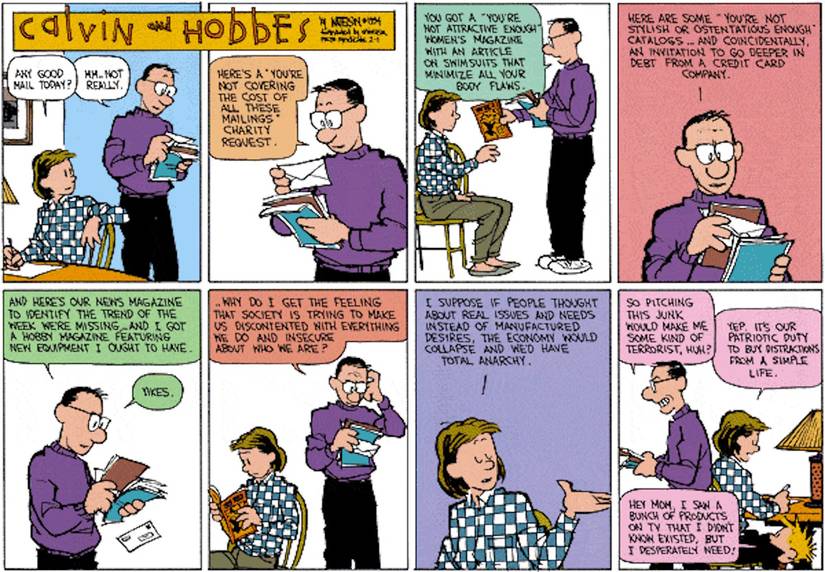
This strip focuses heavily on physical mail, meaning it has not aged quite as well as the rest of the series, but the core critique remains relevant. If anything, the underlying commentary has intensified in the 21st century.
Calvin and Hobbes for January 31, 1993
Sorting the family mail, Calvin’s dad asks aloud, “Why do I get the feeling that society is trying to make us discontented with everything we do and insecure about who we are?”
“I suppose if people thought about real issues and needs instead of manufactured desires,” Calvin’s mom replies, “the economy would collapse and we’d have total anarchy.”
Culture keeps working toward that exact goal decades later. As the strip concludes, getting rid of all junk mail without buying anything makes someone a financial terrorist. Fight the system.
 Ubisoft Announces March of the Giants MOBA with Army-Based Gameplay
 Nintendo Patent Details Game-Key Cards Functionality
 Rumor: AMD is Developing New Ryzen Z3 Chip for Gaming Handhelds
 PlayStation Creator Cites Modern Gaming Industry Problem
 Warner Bros. New Owners Will Retain DC Studios Leadership, Keeping James Gunn Safe
 Hot Toys Adds Interactive Tech to Robocop and RoboCain Figures From Robocop 2
 Creator of Heroes 3 Plays Remake and Shares Feedback
 John Boorman’s Excalibur Transcends Fantasy Genre 45 Years After Release