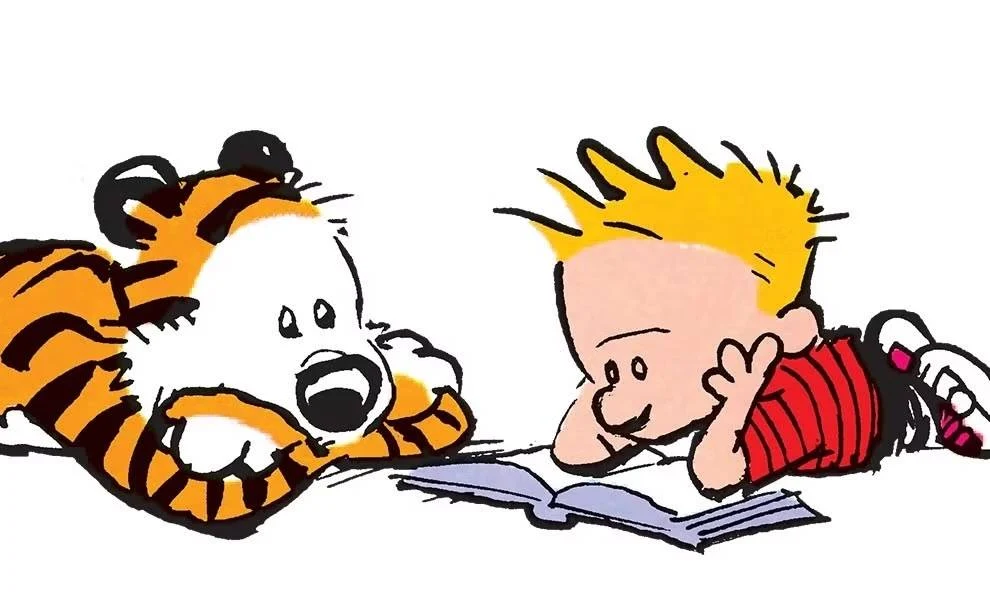
Calvin and Hobbes Quote Named Greatest in Comic Strip History After 31 Years
Last New Year’s Eve marked the 30th anniversary of the ending of Bill Watterson’s seminal newspaper strip Calvin and Hobbes. The impact of the series is still felt throughout Western print media.
If you were reading comics at the time, Calvin and Hobbes likely left a lasting impression. Newspaper comics were beginning a headlong dive into functional irrelevance, but Watterson insisted on keeping his work creative, fresh, creator-owned, and printed at a legible size.
As a result, the weird DNA of Calvin and Hobbes runs through the webcomics movement of the 2000s, Western indie comics in general, and fiction as a whole. Watterson chose to walk away at the height of his fame and abilities rather than hand the strip off to an anonymous imitator at his syndicate or age into self-parody. Since then, Watterson has remained reclusive, only emerging from retirement for occasional gimmicks like a stint in 2014 as an uncredited guest artist on Pearls Before Swine.
The best daily strip is largely a matter of personal taste. Ask 10 fans and you will get 11 different answers. Everyone on the Polygon staff who cited a specific favorite strip or quotation brought up something different.
As the writer of this piece, however, I get to declare which one is the best.
‘We need to start putting prices on the priceless’
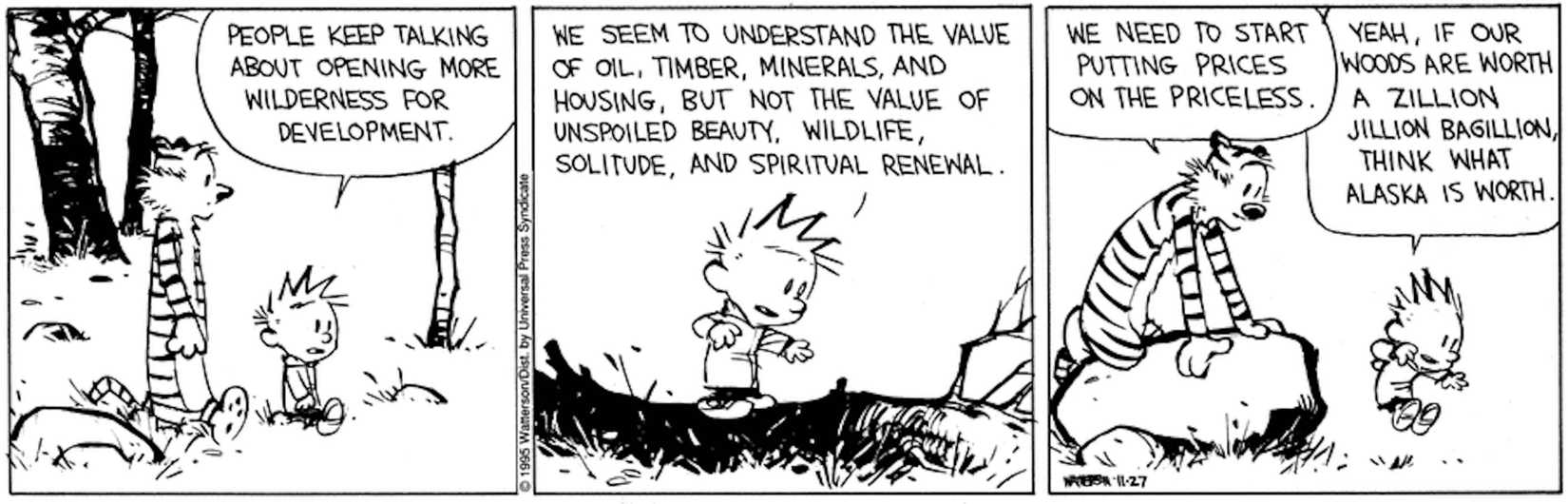
According to the official GoComics archive, this strip ran on Nov. 11, 1995, near the end of the run of Calvin and Hobbes. It serves as an effective mission statement for one of the major themes of the strip. For all the ink spilled on Calvin and Hobbes since its conclusion, its environmentalist reading feels underdiscussed.
We need to start putting prices on the priceless.
Watterson noted in the annotations to The Calvin and Hobbes Tenth Anniversary Book (1995) that he always drew the strip with the notion that Calvin’s house was built right up against the edge of a nature preserve or national forest.
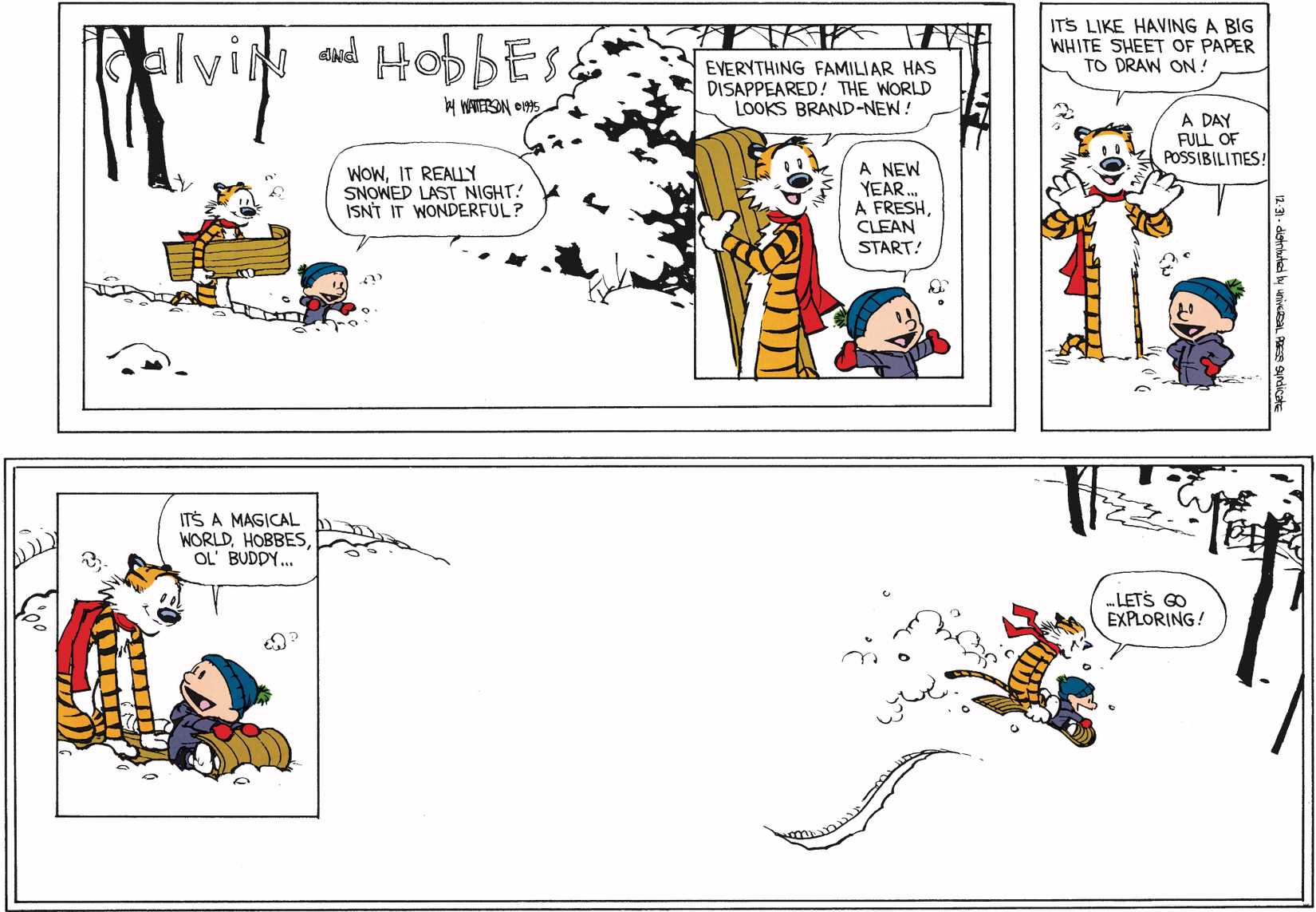
Calvin frequently explored an infinite, dreamlike vision of nature filled with trees to climb, hills to sled down, and rivers to cross. Watterson’s wilderness was never defanged. Calvin often sustained mild injuries while wandering, offering a realistic take on the outdoors that avoided being a saccharine playground.
The quiet environmentalist message of Calvin and Hobbes endures because the strip as a whole has barely aged. This theme often intersects with the anti-consumerist aspect of the series, typically embodied by Calvin’s dad reacting to the annoyances of life in the 1990s. Calvin’s love of the woods remains simple and pure.
American culture struggles with accepting and measuring intangibles. Pop culture took over 30 years to catch up to Watterson, but similar messages now appear in mainstream media, such as the villainous capitalism that runs through Al Ewing’s work at Marvel.
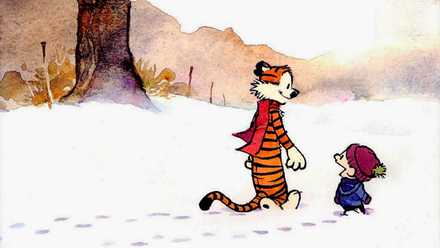
Some human qualities remain difficult to monetize, leading many to dismiss them as irrelevant. Calvin and Hobbes captured that truth in just three panels, making it one of the most effective messages ever published on a comics page.
Source: Polygon
Related articles
 Matt Reeves Releases New Image for The Batman Part II on Batman Day
 PlayStation 3 Emulator Runs Twisted Metal at 70 FPS on PC
 World of Warcraft: Forever Beta Launch Crashes Servers, Developers Express Surprise at Popularity
 New Galaxy Express 999 Anime Movie Announced
 Valve Developers Express Surprise Over Players’ Joy at Minor Updates
 EA Sports FC 27 Receives Mixed Reviews on Steam Amid Criticism
 Arc Raiders Developers Release Teaser for Frozen Trail Major Update
 PAX West 2026’s Most Surprising Hit Was a 150-Year-Old Board Game Combining Darts and Woodworking