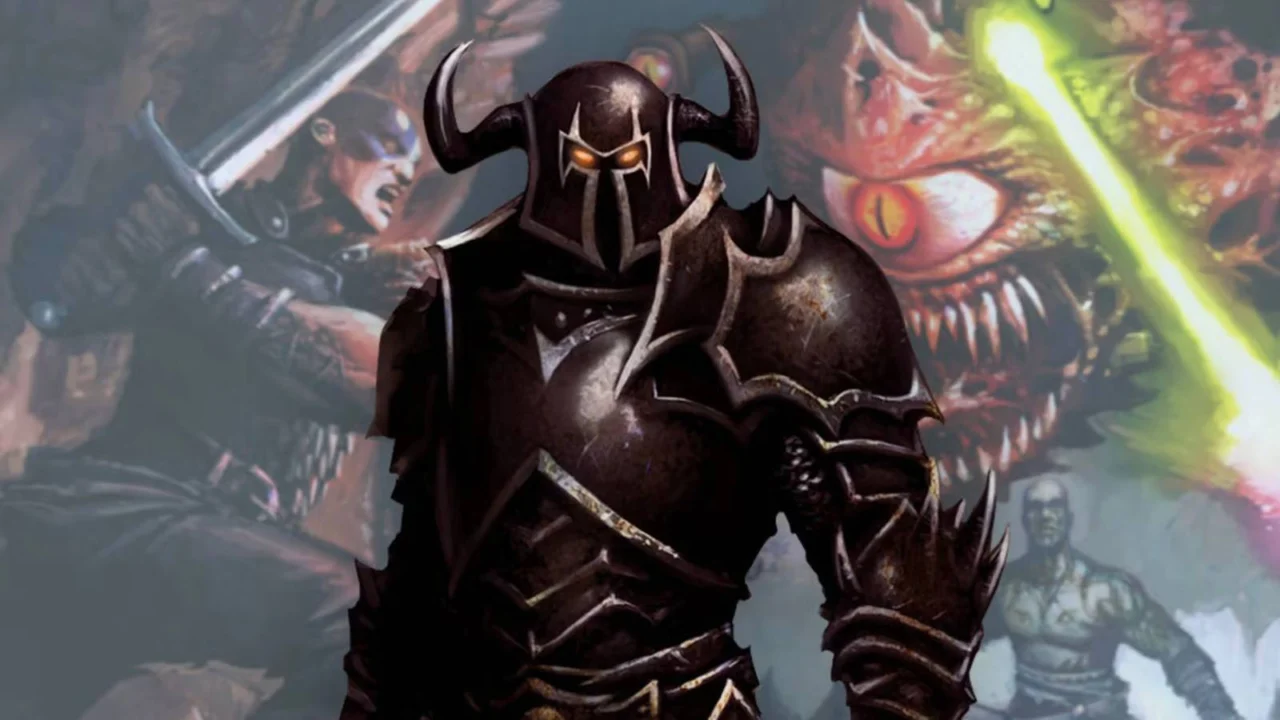
26 Years Later, BioWare’s Most Influential RPG Is Still Shaping My Life
The year is 2000, and the collective anxiety of the Y2K scare has finally dissolved. A 13-year-old boy sits inside a McDonald’s booth surrounded by friends. One of them wears an unusual T-shirt featuring a logo that vaguely resembles a Native American war bonnet. Curious, he asks about its origin, and the reply alters the course of his existence forever: “It’s a game. You haven’t heard of it?”
The game in question was Baldur’s Gate 2: Shadows of Amn. The T-shirt, included exclusively with the collector’s edition, bore the game’s striking emblem: two contrasting profiles, one bathed in illumination and the other cast in shadow—an ambiguous motif that enthusiasts have debated for over a quarter of a century without reaching a definitive consensus. Naturally, that kid was me. Shortly after that encounter, I acquired a copy and plunged headfirst into the digital incarnation of the Forgotten Realms meticulously crafted by BioWare. Nearly three decades later, BioWare as we knew it is gone. This poignant milestone prompted me to reflect on how Baldur’s Gate 2 and the studio’s legendary catalog of computer role-playing games from the late ’90s and early 2000s fundamentally shaped my life’s trajectory.
How Baldur’s Gate 2 Awakened My Passion for Fantasy
My initial encounter with the fantasy realm occurred through the simple sight of a woman reading The Lord of the Rings while waiting at a bus stop. I was far too young to truly comprehend Tolkien’s prose, but the mesmerizing cover illustrated by Italian artist Danilo Silva instantly captivated me. Not long after, I impulsively purchased a few Magic: The Gathering booster packs at a local newsstand, igniting an expensive hobby that my bank account still resents today. Even so, these isolated serendipitous moments wouldn’t have been enough on their own to put me on the professional path I walk today—making a living writing about competitive Magic tournaments or analyzing cinematic masterpieces like the Council of Elrond.
That vital catalyst was entirely the work of Baldur’s Gate 2. Entering high school in the year 2000 meant navigating a turbulent period when a teenager’s interests could easily scatter in a hundred different directions. By following up their acclaimed debut with an absolute masterpiece, BioWare cemented my lifelong devotion to fantasy fiction, Dungeons & Dragons, and immersive RPGs. In hindsight, that single piece of software is likely also the root cause of my enduring passion for writing.
I possessed zero knowledge of D&D when I first booted up the game, which brilliantly adapts the intricate rules of the tabletop RPG’s second edition into a tactical real-time-with-pause combat engine. Deciphering the complexities of what many consider the most mechanically dense iteration of D&D proved just as exhilarating as exploring the sprawling territories of Faerûn. Although D&D has since evolved through several successive editions, my fascination with the Forgotten Realms has never wavered. I initially began playing tabletop sessions simply to recreate in reality the sublime emotions BG2 had stirred within me and to share those adventures with friends. Twenty-six years later, I still DM a weekly D&D campaign, cover the franchise professionally on a regular basis, and have even had the privilege of interviewing luminaries who built the universe, including Ed Greenwood, the visionary creator of the Forgotten Realms.
A Paradigm Shift for Computer RPGs
None of this cultural milestones would have materialized had BioWare not pitched Battleground: Infinity to publisher Interplay—a proof-of-concept demo that eventually evolved into the original Baldur’s Gate. At that juncture, computer RPGs were enjoying a massive renaissance propelled by heavyweights like Diablo, The Elder Scrolls, and Fallout. Conversely, digital adaptations bearing the D&D branding were struggling to find their footing. Interplay had recently secured the license from Strategic Simulations, the studio behind celebrated classics such as Pool of Radiance, Eye of the Beholder, and Ravenloft: Strahd’s Possession. Yet, consumer tastes had shifted dramatically: clunky first-person perspectives paired with rigid, blocky interfaces no longer appealed to modern fantasy enthusiasts.
Baldur’s Gate 2 opens with one of the most resonant, atmospheric musical scores ever composed for an interactive medium, courtesy of Michael Hoenig, who also scored its predecessor. Following the unsettling introduction featuring Jon Irenicus’ unnerving gaze in the opening cinematic, the “Shadows of Amn Theme” floods your speakers with majestic orchestral grandeur the moment you reach the title screen. After spending countless hours listening to that triumphant refrain while painstakingly rerolling character stats for optimal attributes, the game delivers thoroughly on the grand adventure its soundtrack promises.
BioWare did far more than simply modernize D&D video games from a technical standpoint. They accomplished something nearly unheard of in the genre at the time: they placed narrative front and center. The studio built its stellar reputation upon the foundation of exceptional writing, and Baldur’s Gate 2 served as the definitive proof that sophisticated storytelling would become BioWare’s signature hallmark. While the first Baldur’s Gate pursued a relatively straightforward fantasy narrative—albeit one laced with compelling plot twists—its sequel took far bolder risks. You begin stripped of your hard-earned heroism as the savior of the Sword Coast, a godspawn harboring a divine spark, locked inside a dismal cell where a mad wizard subjects you and your companions to cruel experimentation. Jon Irenicus, brought vividly to life by the legendary vocal talents of David Warner, establishes himself immediately as an imposing, multi-dimensional antagonist, framing your entire journey as an uphill battle against overwhelming power and calculated malevolence.
Baldur’s Gate 2 achieves a masterclass in pacing by balancing urgency with freedom: it instills a pressing, overarching objective while simultaneously providing ample motivation to wander off the beaten path and explore every region at a leisurely pace.
The game kicks off in the sprawling metropolis of Athkatla, easily one of the most richly detailed urban environments ever realized in an RPG. Athkatla operates as a bustling hive of political intrigue, brimming with forbidden arcane secrets, hidden caches of treasure, and intricate subplots waiting to be uncovered. Yet, with your sights set on tracking down Irenicus and freeing your captive companion Imoen from the clutches of the Cowled Wizards, the narrative introduces an elegant obstacle: acquire 10,000 gold pieces to pay off the local thieves’ guild in exchange for their investigative aid. Accumulating this substantial sum serves as the ultimate narrative pretext to scour the city’s alleyways, interact with its vibrant denizens, and unearth rich side quests and memorable party members. More importantly, it offered a masterclass in structural pacing and quest design that I continue to apply to my own tabletop campaigns today.
How BioWare’s Early Masterpieces Shaped My Worldview
I could easily spend thousands of words extolling the virtues of Baldur’s Gate 2, but there is little need—fans have been doing precisely that for 26 years. I don’t need to reiterate why it stands as one of the greatest video games ever made, but the recent winding down of BioWare forced me to confront how profoundly the title altered my life’s trajectory. And the studio’s influence didn’t stop there. BioWare eventually returned to the D&D sandbox with Neverwinter Nights and its subsequent expansions. While those titles never quite matched the literary heights of the original Baldur’s Gate entries, their fully 3D engine and transition to the third edition D&D rule set kept me happily hooked for hundreds of hours throughout my high school years, maintaining the creative spark until it could burn on its own. Even so, I always felt a subtle ingredient was missing; Neverwinter Nights was a magnificent D&D toolkit, but it lacked the poignant soul of a great narrative.
In that regard, Baldur’s Gate 2 remained utterly singular, a magic I never quite found replicated elsewhere. While BioWare delivered stellar storytelling across much of their Dragon Age and Mass Effect portfolios, I engaged with them only sparingly, subconsciously associating the peak video game RPG experience strictly with D&D—at least until Bethesda’s The Elder Scrolls 5: Skyrim eventually expanded my horizons years later.
Ultimately, a single game proved sufficient. I fell hopelessly in love with fantasy worlds and sweeping sagas of adventure, cultivating that ardor across every available creative medium: literature, graphic novels, tabletop games, cinema, anime, and eventually my own creative writing pursuits. It served as a steadfast anchor through all of life’s unpredictable transitions, helping me forge friendships when relocating to foreign countries and even playing a pivotal role in securing the career I have today—one I might gladly abandon someday should I fulfill my ultimate dream of becoming a published fantasy novelist, yet another ambition I can trace directly back to the formative influence of BioWare’s golden era.
So, thank you, BioWare, and special gratitude goes out to James Ohlen, Kevin Martens, Brent Knowles, and every single developer who poured their passion into the Baldur’s Gate 2 team. Even if those key architects had long since moved on by the end of the studio’s run, the masterpiece they forged defined the company’s legacy and enriched countless lives along the way. Twenty-six years later, it remains breathtakingly brilliant.
Source: Polygon
Related articles
 Microsoft’s Alligator Xbox May Be a GTA VI Marketing Workaround
 Analysts Say Gran Turismo 7 Is Not on PS Plus Because It Has Earned Sony Hundreds of Millions of Dollars
 Mike Flanagan Hints at Unexpected Approach to Warhammer 40,000 Series Starring Henry Cavill
 The Legend of Zelda: Ocarina of Time – Shadow Temple Dungeon Walkthrough
 Ganondorf’s Castle Walkthrough in The Legend of Zelda: Ocarina of Time
 The Legend of Zelda: Ocarina of Time — Spirit Temple Dungeon Walkthrough
 Study Confirms Impact of Social Messaging on Video Game Sales
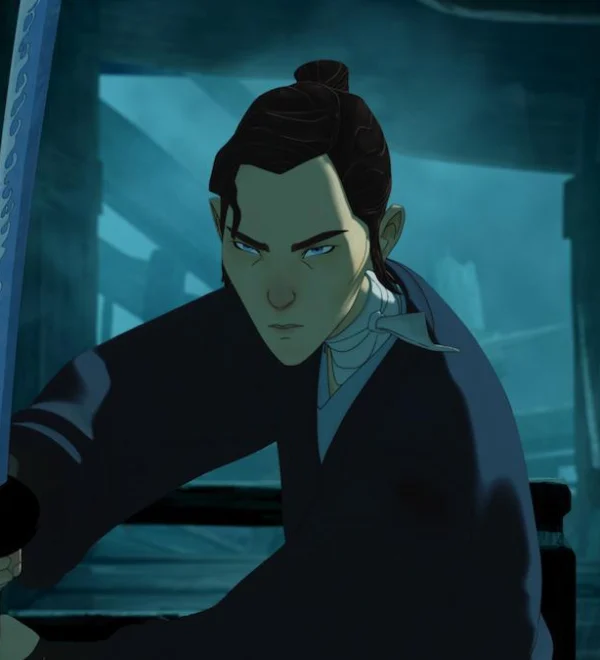 Blue Eye Samurai Season 2 Gets Trailer and Release Date as Mizu Heads to London