10 RPGs From The ’90s That Aged Like Fine Wine
The 1990s marked a watershed era for the gaming industry, propelled by rapid technological breakthroughs and visionary studios that permanently transformed digital entertainment. This decade witnessed the arrival of the original Sony PlayStation in 1995 and the Nintendo 64 in 1996, hardware powerhouses that birthed legendary masterpieces such as Super Mario 64, Resident Evil, and The Legend of Zelda: Ocarina of Time.
The cultural and creative breakthroughs of that decade also laid a sturdy foundation for the role-playing genre. Even though hardware capabilities have advanced exponentially over the past thirty years, these timeless titles remain exceptionally engaging today—not only because they are brilliantly designed, but because they established the architectural blueprints for modern game design.
10
Chrono Trigger
Long before their official merger into Square Enix, industry heavyweights Squaresoft and Enix joined forces in 1995 to engineer a legendary RPG that continues to command immense respect. In Chrono Trigger, players step into the shoes of Crono alongside a diverse assembly of companions, leaping through different eras to avert a planetary cataclysm caused by the extraterrestrial parasite Lavos. The adventure seamlessly blends the finest pillars of the genre: an emotionally resonant narrative, a sublime melodic score, and dynamic combat inspired by the Active Time Battle architecture found in early Final Fantasy chapters.
Perhaps the most remarkable achievement of Chrono Trigger, even three decades later, is its extraordinary replay value. Featuring over a dozen distinct conclusions—including an exclusive secret ending that honors its visionary creators, lovingly dubbed the “Dream Team”—it remains an absolute masterclass in game design.
9
Castlevania: Symphony of the Night
While Symphony of the Night wasn’t the inaugural entry in the storied franchise, it represented a monumental paradigm shift. It completely redefined Castlevania, pivoting it away from linear, stage-based platforming into an expansive action-RPG that laid the structural bedrock for the entire “Metroidvania” subgenre. Users control Alucard, the dhampir son of Dracula, as he investigates his progenitor’s gargantuan fortress. The scope of exploration is staggering, boasting 940 standard chambers alongside an entirely inverted mirror-dimension, culminating in a colossal 1,880 rooms to conquer across dual maps.
As the game’s 30th anniversary approaches in 2027, there has never been a better opportunity to celebrate its breathtaking gothic pixel artistry and Michiru Yamane’s mesmerizing sonic landscape, widely considered the pinnacle of the franchise’s musical achievements.
8
EarthBound
At a time when the marketplace was saturated with high-fantasy dragon-slaying epics and royal rescue missions, EarthBound boldly charted an unconventional path. Following a young boy named Ness and his companions on a mission to repel an otherworldly extraterrestrial threat, the experience swaps out traditional broadswords for baseball bats and exchanges potions for burgers and pizza. Mechanics involve visiting municipal libraries to procure cartographic data and commuting between municipalities via public transit. Anyone who came of age during the ’90s will find endless endearment in its quirky coming-of-age narrative and charming 16-bit visual aesthetic.
EarthBound enjoys far greater cultural reverence today than it did upon its initial rollout. In the July 1995 publication of GamePro magazine, critic Sir Scary Larry famously remarked, “The humor is too mature for little kids, and the gameplay is too immature for older gamers. This one is bound to fall to Earth sometime soon.” Over the past thirty years, a passionate community of admirers has proudly proved that prediction hilariously wrong, cementing its status as an undisputed cult masterpiece.
7
Final Fantasy Tactics
Final Fantasy Tactics arrived in 1997 to overwhelming commercial acclaim and critical praise, securing a prestigious IGN Editor’s Choice Award for good reason. The narrative follows noble cadet Ramza Beoulve amid the devastating power struggle known as the Lion War, fearlessly tackling heavy themes such as political corruption and systemic class warfare. Tactics also introduced an extraordinarily versatile job system that encourages gamers to experiment with class transitions, accumulate job points, and cross-pollinate specialized skills. Starting out simply as a Squire or Chemist, users can eventually unlock formidable advanced vocations like Knight or Black Mage.
Its enduring popularity warranted a PlayStation Portable adaptation entitled The War of the Lions in 2007, followed by a sweeping modern reimagining, The Ivalice Chronicles, in 2025, which introduced helpful quality-of-life improvements and the ability to toggle between vintage and enhanced visual styles.
6
Fire Emblem: Genealogy of the Holy War
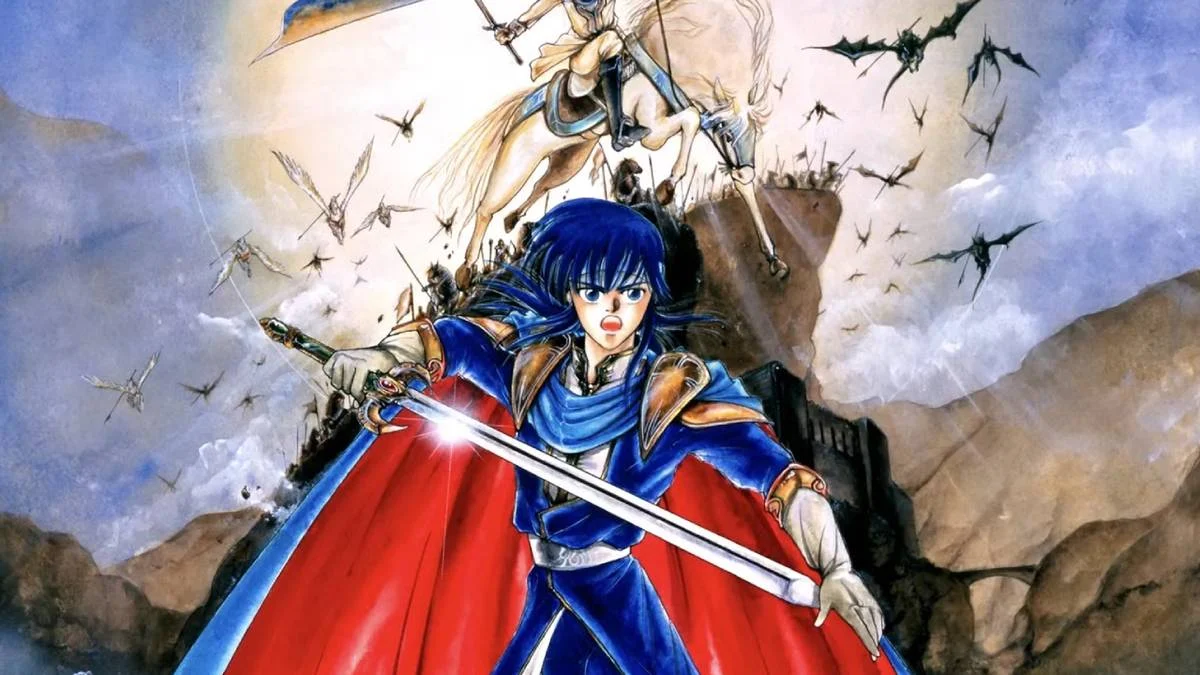
Long before the Fire Emblem franchise achieved mainstream prominence across Western territories, there was Genealogy of the Holy War, launched exclusively in Japan in 1996. Because it never received an official localized release, contemporary enthusiasts must rely on emulation to experience this hidden treasure. The structure of the campaign is divided neatly into two distinct chapters. The first phase permits gamers to forge romantic pairings between units through deliberate matchmaking mechanics, while the second phase introduces a brand-new generation of heroes largely consisting of the offspring from those initial matches—hence fulfilling the title’s genealogical promise.
Although modern Fire Emblem installments, such as the upcoming Fortune’s Weave, have largely streamlined romance systems, passionate fans have persistently campaigned for a full-scale remake of this classic for decades.
5
Super Mario RPG
Every single excursion starring Mario prior to 1996 adhered strictly to traditional platforming formulas interspersed with occasional minigames. Super Mario RPG shattered this routine by uniting the iconic plumber with unexpected allies like Bowser and Princess Peach. This creative departure was made possible through an unprecedented collaboration between Nintendo and Squaresoft, a studio rapidly ascending to greatness via the Final Fantasy franchise. The adventure utilized an engaging turn-based battle framework where participants could execute physical maneuvers or consume restorative items like mushrooms.
A beautifully polished remake of Super Mario RPG graced the Nintendo Switch in 2023. While it introduced updated three-dimensional aesthetics, it faithfully preserved the exact mechanical heartbeat of the original.
4
Fallout 2
Although the visual presentation of 1998’s Fallout 2 differs vastly from contemporary blockbusters like Fallout 76, it remains an essential journey for RPG enthusiasts. Whatever the title lacks in technological fidelity, it compensates for with an immensely rich storyline that significantly expands upon the post-nuclear wasteland established in the 1997 original. Set eighty years after the events of its predecessor, the game world is nearly double the geographical scale, granting users unprecedented exploratory freedom and introducing a colorful cast of eccentric personalities. Moreover, individual choices carry profound narrative weight, directly dictating the survival and destiny of various settlements and inhabitants.
Given the Fallout franchise’s massive cultural footprint—spanning multiple mainline chapters, spin-offs, and an acclaimed Prime Video television adaptation—revisiting Fallout 2 offers a fascinating window into the franchise’s humble origins.
3
Parasite Eve
Combine the tense survival-horror mechanics of Resident Evil with the cinematic grandeur of Final Fantasy, and the resulting creation is Parasite Eve, a dark atmospheric RPG set in late-’90s New York City. The plot initiates when NYPD detective Aya Brea attends an opera performance on Christmas Eve, only for the audience to spontaneously combust into flames. Everyone succumbs to the anomaly except for Aya and an enigmatic soprano named Melissa Pearce, who has become a vessel for a malevolent mitochondrial entity known as Eve. Embodying classic survival-horror conventions, Aya must hunt down Melissa across the metropolis to halt a biological nightmare.
Parasite Eve is delightfully bizarre and deeply suspenseful. While it occasionally embraces visceral body-horror tropes that might unsettle sensitive players, it remains compelling from opening to credits. Lacking any contemporary remake, diving into the original release remains the definitive way to experience this chilling narrative.
2
Suikoden I & II
Konami aimed for the stratosphere during the 1990s, endeavoring to craft a Japanese role-playing epic capable of rivaling Final Fantasy. Though more than two decades have elapsed since the final mainline installment, the early entries in the Suikoden library remain widely celebrated. Both Suikoden I and Suikoden II revolve around grand thematic pillars: assembling a massive military force, expanding a fortified headquarters, and waging war. The initial game features a briskly paced campaign focused on toppling the corrupt Scarlet Moon Empire, whereas its sequel delivers a more deliberate, emotional narrative centered on two lifelong friends torn apart by localized conflict. Each adventure grants users access to an astonishing roster of 108 recruitable characters who bolster active combat squads and secure military bases.
Both games are mandatory playthroughs—particularly with a Suikoden anime adaptation on the horizon. A high-definition remastered collection covering both titles is currently available for $49.99.
1
Pokémon Gold & Silver
While Red and Blue introduced an entire generation to the wonder of Pokémon in 1998, it was the subsequent arrival of Gold and Silver a year later that proved just how monumental the franchise would become. Pokémon Gold and Silver served as the series’ first full transition to vibrant color following the monochromatic roots of their predecessors. Furthermore, the scale was staggering, introducing the Johto territory to explore, 100 novel creatures to capture, intricate puzzles to unravel, and a brilliant post-game incentive allowing users to journey back through a fully colored Kanto region after completing the primary campaign.
Over a quarter-century after their debut, legions of fans still revere Gold and Silver as the absolute pinnacle representing the “golden era” of Pokémon development.
Pokémon Gold and Silver originally debuted across Japan in November 1999 before making their official North American arrival in 2000.
Source: Polygon
Related articles
 Blizzard Reveals Amazon Class in Diablo IV Will Be Exclusively Female
 Sony PlayStation Shuts Down Fan-Made The Last of Us Part II PC Multiplayer
 Game Designer Explains Why Kemuri Will Not Support Xbox
 Blizzard Showcases World of Warcraft The Last Titan Teaser, Xbox Controller Layout, and Roadmap
 Hasbro Addresses Heartbreaking Optimus Prime Death 40 Years After Transformers The Movie
 Diablo IV Rumored to Add Amazon Class and Launch on Nintendo Switch 2 Next Week
 Developers Run Demon’s Souls and Astro Bot on PS5 Emulator
 Five Years After Star Wars: KOTOR Remake Announcement, New Ad Features Old Footage