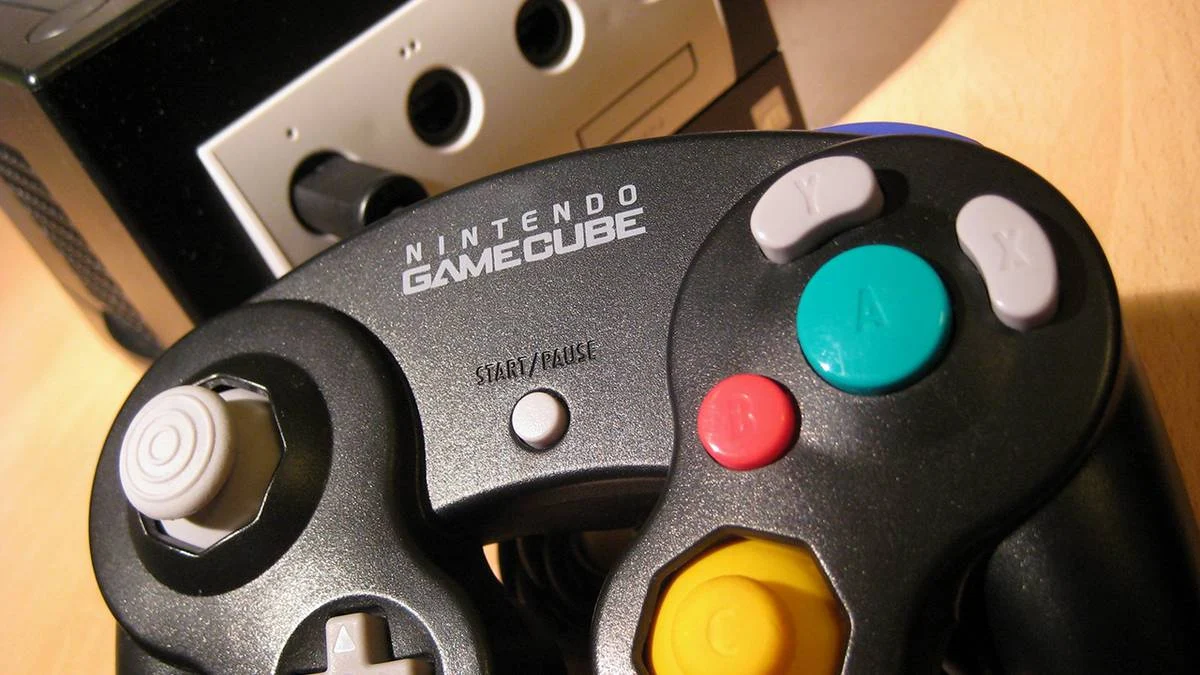
10 Near-Perfect GameCube Games Nobody Played
The Nintendo GameCube represents the final era in which Nintendo made raw processing power and hardware specifications a primary focus, packaging cutting-edge architecture inside an eccentric, violet lunchbox with a convenient carrying handle. While its toy-like aesthetic invited jokes, it secretly housed some of the finest, most innovative software of its generation. Many of these masterpieces were criminally overlooked upon release, but barring today’s inflated collector market prices, there is no good reason modern gamers cannot experience them now. Here are 10 near-flawless GameCube cult classics that deserve your attention today.
Nintendo’s GameCube hubris broke the hardware but secured its legacy
Nintendo stubbornly resisted the PlayStation hegemony and its own loyalists, but the gamble paid off brilliantly decades later
1
Billy Hatcher and the Giant Egg
Publisher: Sega
Release date: Sep. 23, 2003
Billy Hatcher and the Giant Egg was featured prominently on the Nintendo GameCube Preview Disc distributed during the 2003 holiday rush, yet that marketing push failed to translate into commercial acclaim for Sega. Crafted by Sonic Team, the platformer utilized creative physics-based mechanics that would have felt right at home in a Sonic Adventure release. Users navigated intricate, whimsical stages by rolling, nurturing, and hatching colossal eggs to overcome hazards and defeat foes. While widespread acclaim eluded it initially, approaching this eccentric adventure with an open mind reveals an endlessly charming experience.
2
Gotcha Force
Publisher: Capcom
Release date: Nov. 27, 2003
Capcom enjoyed stellar platform dominance and delivered numerous blockbuster hits on the GameCube, but Gotcha Force inexplicably slipped through the cracks despite offering phenomenal 3D arena-shooter mechanics. Users journeyed through a surprisingly deep campaign multiple times to amass an extensive arsenal of heavily armed collectible toys, pitting them in chaotic multiplayer battles against squads controlled by friends. Granted, the arcade-centric design and occasionally stubborn camera require some patience, but for enthusiasts craving competitive brawling in the vein of Power Stone, this hidden gem is an absolute triumph.
3
Lost Kingdoms
Publisher: Activision
Release date: Apr. 25, 2002
Long before cementing its legendary status with Dark Souls, developer FromSoftware experimented with eclectic concepts across multiple genres. Among these early experiments was Lost Kingdoms (released as Rune in Japan), an atmospheric action-RPG following a resolute warrior named Katia as she navigated a dark, mist-shrouded realm. Players summoned magical creatures and unleashed attacks directly from a customizable deck of cards in real-time skirmishes. Featuring striking aesthetics for its era and an inventive tactical card-battling system, the title offered a refreshing alternative to conventional action games. It performed well enough to secure a 2003 sequel, though the franchise sadly faded into obscurity thereafter.
Get Polygon’s Wishlister newsletter
A weekly cheat sheet to what you’ll eventually love to play. No buying, no
commitment — just saving for later.
Free. Unsubscribe anytime.
4
Chibi-Robo!
Publisher: Nintendo
Release date: June 23, 2005
Skip Ltd. was an idiosyncratic boutique developer best recognized for its fruitful collaborations with Nintendo. Their crowning achievement was Chibi-Robo!, an imaginative adventure title that debuted in Japan in 2005 before launching globally the following year. Players managed a four-inch-tall mechanical helper, navigating household environments to spread joy and accumulate precious “happy points.” While the franchise experienced an uneven trajectory culminating in the underwhelming 3DS side-scroller Chibi-Robo!: Zip Lash in 2015, the original GameCube release remains an absolute delight for anyone seeking a heartwarming escape from mainstream tropes. It is also accessible via Nintendo Switch Online, making it effortless to revisit.
5
Skies of Arcadia Legends
Publisher: Sega
Release date: Dec. 26, 2002
Skies of Arcadia stands as one of the finest role-playing games ever engineered, despite remaining largely underappreciated outside of dedicated enthusiast circles. Originally launched on the Dreamcast, it found its definitive home on the GameCube as Skies of Arcadia Legends, featuring enhanced character models, shortened load times, and an abundance of rich new side content. At the time, its breathtaking sky-faring worlds, strategic airship confrontations, and compelling turn-based battles delivered a sense of genuine wonder. Modern players would undoubtedly fall in love with Vyse and his optimistic pirate crew, but frustratingly, Sega has yet to port the title to contemporary hardware.
6
Custom Robo
Publisher: Nintendo
Release date: Mar. 4, 2004
Custom Robo is a criminally short-lived sci-fi franchise created by Noise Inc. and published by Nintendo. Only the GameCube entry and a subsequent Nintendo DS sequel ever crossed the Pacific to North America, and neither managed to secure the mainstream traction required to sustain the series. Nevertheless, the GameCube iteration remains an unadulterated joy. Users pilot miniature robotic combatants across enclosed virtual arenas, equipping them with an exhaustive assortment of customized parts, explosives, and homing projectiles. Blending frantic isometric action with a robust story mode (“A New Journey”) that continually rewards experimentation, it offers an adrenaline-fueled experience unlike anything else in the console’s library.
7
Odama
Publisher: Nintendo
Release date: Mar. 31, 2006
If you have ever envisioned pinball merged with feudal warfare and commanded via microphone, Odama is the fever dream you never knew you needed. This wildly unconventional game was built around an innovative voice-recognition peripheral packaged right inside the retail box, allowing players to bark direct tactical orders at their troops. Simultaneously, users manipulated traditional controller inputs to operate massive flippers and direct the Odama—a colossal, destructive boulder used to smash enemy infantry and fortifications. Produced by Yoot Saito, famed for the equally eccentric Seaman, it remains one of the boldest and most bizarre experiments in Nintendo’s publishing history.
8
Baten Kaitos: Eternal Wings and the Lost Ocean
Publisher: Namco
Release date: Nov. 16, 2004
When discussions turn to Namco’s illustrious RPG lineage, conversations typically gravitate toward the Tales series or the sci-fi epic Xenosaga. However, the publisher once backed another ambitious, short-lived franchise co-developed by Monolith Soft and tri-Crescendo. It launched with Baten Kaitos: Eternal Wings and the Lost Ocean, a sprawling fantasy adventure blending pre-rendered backdrops and lush orchestral scores with an intricate card-driven combat system. For genre aficionados, it easily ranks among the most content-rich and aesthetically stunning experiences on the system. Fortunately, both the original game and its prequel are readily accessible today via the 2023 release of Baten Kaitos 1 & 2 HD Remaster on Nintendo Switch and PC.
9
Geist
Publisher: Nintendo
Release date: Aug. 15, 2005
Nintendo is globally synonymous with all-ages entertainment, occasionally scrubbing dark themes and religious symbolism from its Western localizations. During the GameCube generation, however, the company occasionally stepped out of its comfort zone with mature projects like Eternal Darkness: Sanity’s Requiem and Geist. Developed by n-Space, this M-rated shooter followed John Raimi, a counter-terrorism operative who is transformed into a disembodied spirit following a catastrophic mission. The inventive gameplay allowed players to possess both inanimate objects and living hosts, using psychological terror and physical manipulation to solve puzzles and eliminate targets. Featuring a surprisingly eerie local multiplayer suite, it remains a uniquely gritty artifact of its time.
10
Cubivore: Survival of the Fittest
Publisher: Atlus
Release date: Feb. 21, 2002
Nintendo initially planned to publish Cubivore: Survival of the Fittest in North America, mirroring its Japanese release, but ultimately backed out—leaving Atlus to step in and save the project. While this ensured Western fans could experience the game in English, it also resulted in an exceptionally limited print run that makes physical copies prohibitively expensive today. Long before Atlus achieved mainstream superstardom with Persona, the studio was well-accustomed to niche releases. Cubivore has accrued legendary status over the decades thanks to its bizarre, blocky aesthetic and evolutionary mechanics. Users controlled a geometric beast that consumed rivals to trigger anatomical mutations necessary for survival. Balancing gluttony with strategic evolutionary choices—alongside a bizarre mating mechanic to pass down desired traits—yielded surprising tactical depth. For collectors and purveyors of the wonderfully strange who can look past its Nintendo 64DD-era visual origins, tracking down Cubivore is a true bucket-list adventure.
Source: Polygon
Related articles
 Luminary Developer’s AI Voice Criticism Addressed as Wife’s Voice
 Gamers Mock Early Announcements of Diablo V and New StarCraft
 Blood of Dawnwalker converted into cooperative game with split-screen gameplay
 First Look at Real GTA VI Advertisements Surfaces Without Grand Theft Auto Branding
 New Minecraft Add-On Simulates Multiplayer Offline
 Diablo IV Season of the Infernal Legacy to Feature Echo of Diablo and Other Content
 Rumor: Positive Playtest Feedback Could Bring PvE Mode to International Arc Raiders
 Remedy Explains Why Control Resonant Physical Edition Will Release Later