Why This Underrated 1979 Slasher From a Horror Icon Deserves a Second Look

Although Tobe Hooper maintained a prolific directorial career spanning several decades, his cinematic legacy is largely anchored by two specific milestones. His 1974 masterpiece, The Texas Chainsaw Massacre, served as a visceral breakout that redefined horror through its raw, documentary-style grit. Years later, he helmed Poltergeist, a high-budget supernatural thrill ride so polished that many film historians still debate if it was secretly directed by producer Steven Spielberg.
Outside of these pillars, much of Hooper’s filmography struggled to find an audience, often fading into obscurity (with the notable exception of the cult-favorite Chainsaw Massacre Part 2). However, nestled directly between his two most famous works lies a hidden gem that warrants a modern reappraisal.
 Images: Universal Pictures
Debuting in early 1981, The Funhouse tracks four adolescents who spend an evening at a traveling carnival—an attraction already haunted by rumors of suspicious deaths in neighboring towns. Dismissing a stern warning from a protective father, the group indulges in the seedy atmosphere, drifting between midway games, freak shows, and burlesque tents.
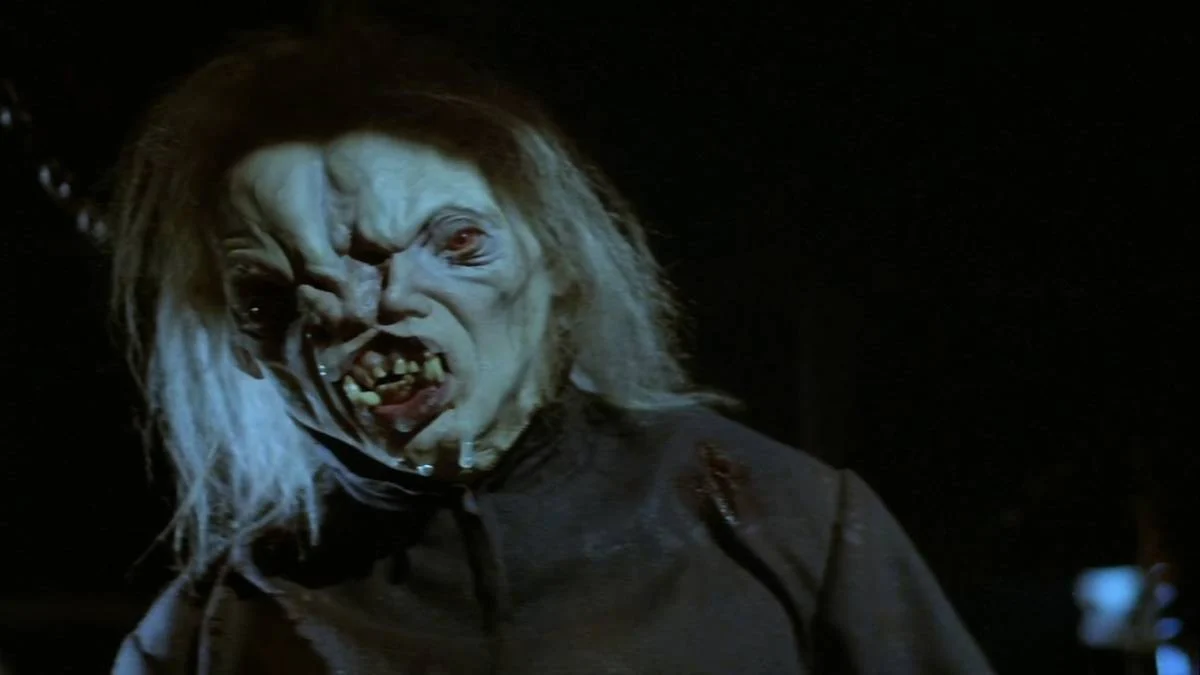
Driven by a surge of youthful bravado, they decide to sneak into the funhouse ride after hours to spend the night. Their adventure takes a lethal turn when they witness the murder of a fortune teller (Sylvia Miles) by a man wearing a Frankenstein mask (Wayne Doba). The killer, a physically and intellectually disabled individual, is quickly discovered to be more than just a man in a costume; he is a disfigured soul treated as a monster by his own father (Kevin Conway). Once the teens are spotted, the film transforms into a claustrophobic pursuit through the ride’s mechanical bowels as the father-son duo hunts them down.
 Image: Universal Pictures/Everett Collection
Admittedly, The Funhouse carries baggage that has not aged gracefully. The depiction of the primary antagonist as a “grotesque” disabled person lacks any modern nuance, leaning heavily into dated tropes of disability as horror. Furthermore, the film indulges in the era’s typical voyeurism, most notably in a shower sequence featuring Elizabeth Berridge. Hooper’s commitment to “authenticity” even led him to rent real malformed livestock from a traveling carnival—a choice that would be handled via CGI or skipped entirely in today’s production climate.
Nevertheless, despite these problematic elements, The Funhouse remains a masterclass in atmospheric dread. The setting feels legitimately grime-streaked and dangerous, inhabited by “carnies” who feel like outcasts from polite society. For anyone who remembers the flickering lights and questionable safety of local fairs, Hooper perfectly captures that specific brand of unease. He takes his time, allowing the first half of the film to simmer with visual storytelling and unsettling character work before the violence erupts.
 Image: Universal Pictures/Everett Collection
The funhouse itself is a triumph of production design, filled with stuttering animatronics and mechanical clowns that feel eerily sentient. These props evoke the same “uncanny valley” horror that propelled Five Nights at Freddy’s to fame, but with a more tactile, classic horror aesthetic. The use of shadow and strobe lighting amplifies the tension as the teenagers navigate the locked-down attraction. The villains, too, are formidable; the makeup effects are stellar, and Kevin Conway delivers a chilling performance as a father willing to kill anyone to protect his family’s dark secrets.
 Image: Universal Pictures
There is a thematic connective tissue between The Funhouse and The Texas Chainsaw Massacre. Both films explore insular, “freakish” families who operate under their own moral codes, protecting their own while viewing outsiders as expendable prey. In many ways, the carnival folk feel just as authentic and terrifying as the backwoods slashers that made Hooper a household name.
While The Funhouse may not reach the heights of Hooper’s 1974 debut, it remains a potent slice of 80s horror that sustains its scares across a brisk 96-minute runtime. Notably, the film lacks the polished, professional aesthetic that characterized Poltergeist just a year later. Instead, it leans into the gritty, experimental style Hooper was known for, perhaps serving as the strongest evidence for those who believe he was not the primary creative force behind his most famous blockbuster.
Source: Polygon
Related articles
 Battlefield 6 Is Temporarily Free, and a New UFO Easter Egg Has Drawn Criticism From Many Players
 Studio Behind Crime Action Game Samson Reportedly Goes Bankrupt, Leaving Employees Unpaid
 Modder Restores Cut Mass Effect 3 Multiplayer in Mass Effect Legendary Edition
 Video Memory Leaks Fixed in Bloodborne on PC, Improving Performance
 Viral She-Wolf Life Sim Family Time Reaches Steam’s Top 50 Most Wishlisted Games, Gets Cloned as Friendslop
 Pokémon Pokopia: Guide to the “Pumpkaboo’s Sweet Surprises” Event
 Musicians Talk About Vampire: The Masquerade – Bloodlines Remake, but Fans Remain Skeptical
 Battlefield 6 Developers Respond to Memes About Paid “AI Slop” Skins and Explain Design Choices