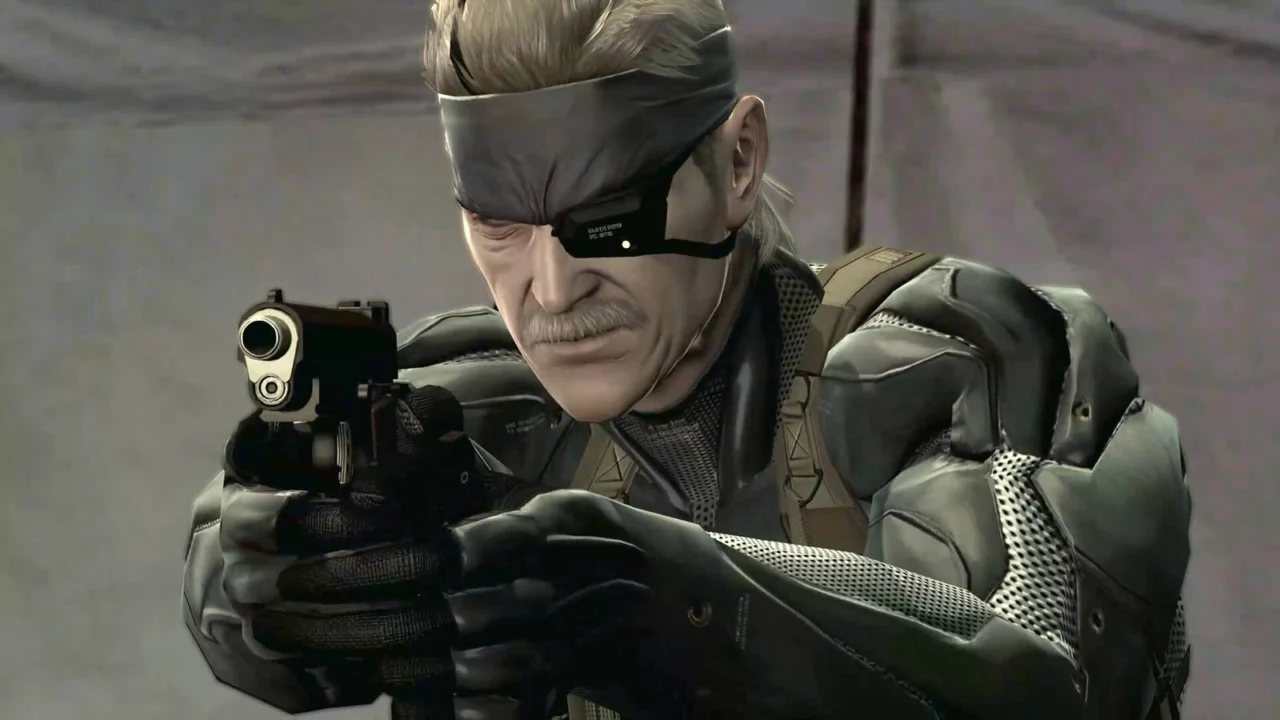
Why Metal Gear Solid 4 Can Never Be Replicated
Midway through Metal Gear Solid 4: Guns of the Patriots, immediately before Solid Snake plunges into a frenetic motorcycle pursuit across war-torn streets, director Hideo Kojima deliberately derails the cinematic adrenaline for an unsettling ideological reckoning. Big Mama pauses to disclose the grim truth behind her resistance forces: they are child combatants, orphaned by perpetual regional violence and funneled directly into the private defense apparatus. These youths turned to mercenary skirmishes to sustain their surviving siblings and enact vengeance against the very defense contractors responsible for their parents’ deaths. Her exposition concludes with an uncomfortably sharp observation.
“Nowadays, anyone with a computer can get combat training,” Big Mama reflects. “The FPS games these children love are distributed for free by these companies. Of course, it’s all just virtual training. It’s so easy for them to get absorbed by these war games. And before they know it, they’re in the PMCs holding real guns. These kids end up fighting in proxy wars that have nothing to do with their own lives. They think it’s cool to fight like this. They think combat is life.”
Nearly two decades after its 2008 launch—an era long enough for the game itself to reach enlistment age—that monologue resonates with chilling clairvoyance. Following years of being marooned on legacy PlayStation 3 hardware, the title returns to modern platforms through Metal Gear Solid Master Collection: Vol. 2, alongside Peace Walker and Ghost Babel. While this collection represents an essential milestone for digital preservation following the deprecation of legacy digital storefronts, it simultaneously delivers an unsettling realization: an uncompromising, big-budget interactive project of this nature could never be greenlit today.
Positioned five years after the events of Sons of Liberty, Guns of the Patriots functions as an unrelenting, high-stress psychological spiral. Every geopolitical catastrophe Snake fought to prevent has crystallized into systemic reality. Sovereign conflict has devolved into an automated, corporatized bloodbath waged by unmanned bipedal walkers and heavily augmented private military contractors. Ravaged by accelerated cellular degeneration, a prematurely aged Old Snake embarks on a globe-spanning swan song to dismantle a shadow hegemony and sever the artificial intelligence controlling global conflict.
Upon its debut, MGS4 divided audiences despite sweeping critical acclaim. Its indulgent, feature-length cinematics—culminating in an unprecedented 70-minute epilogue—alienated players who believed Kojima prioritized filmic ambitions over mechanical agency. Time does little to smooth these structural oddities. It remains a deeply auteur-driven, maximalist experience obsessively devoted to resolving every loose narrative thread in the saga’s convoluted continuity. Whether classified as gratuitous fan service or rigorous closure, the sheer thematic density of its world-building remains unmatched.
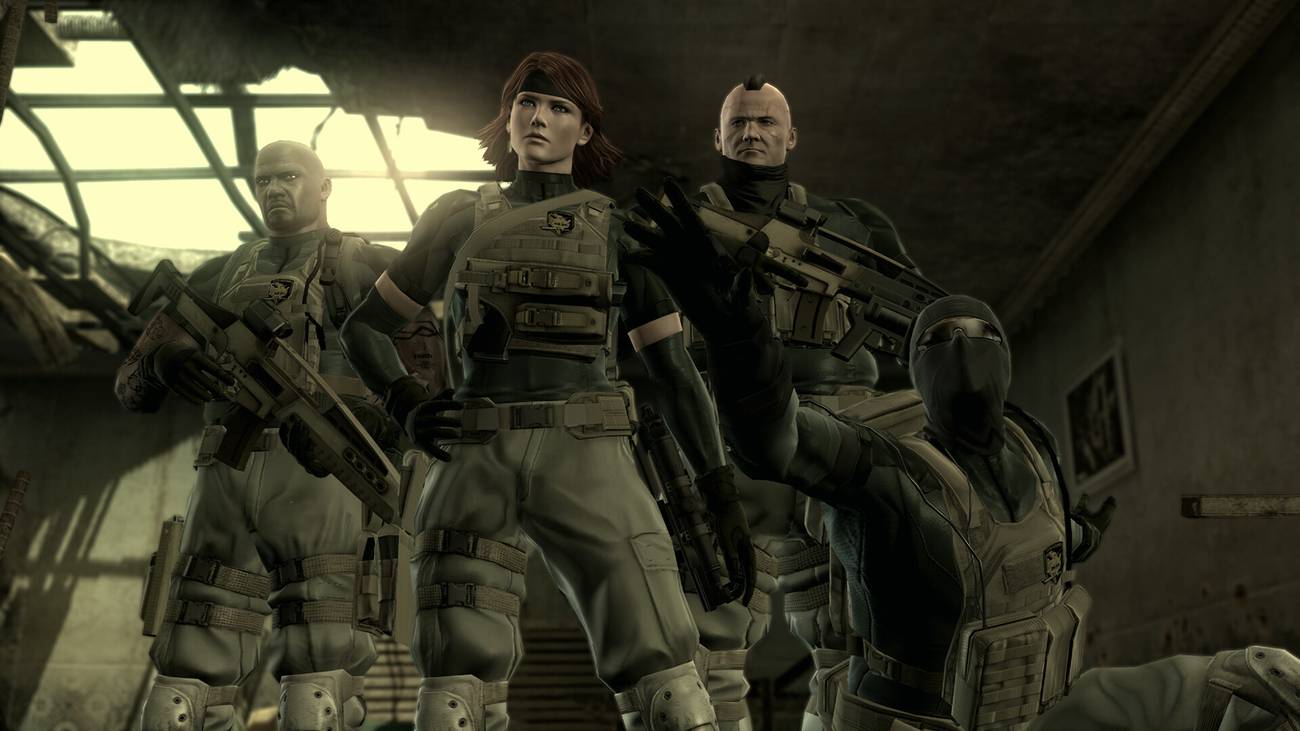
Viewed through a contemporary lens, the cutscenes often serve as a welcome respite from the mechanical friction. The remaster remains thoroughly authentic to the original’s quirks, preserving the erratic third-person shooting, tedious tailing segments, and polarizing boss architecture that defined the late-2000s transition to high-definition hardware. Aside from its claustrophobic, labyrinthine opening act set within an unnamed Middle Eastern combat zone, MGS4 is mechanically idiosyncratic and often unwieldy.
Yet the game’s mechanical aging pales in comparison to the shocking candor of its political messaging. Produced during the height of the War on Terror, Guns of the Patriots stands as an unvarnished prosecution of the military-industrial complex. The writing avoids diplomatic equivocation: “The age of deterrence has become the age of control,” Snake observes during his opening narration, “all in the name of averting catastrophe from weapons of mass destruction.”
That cynicism was rooted in historical immediacy. Developed during the twilight of the Bush doctrine—in the wake of fraudulent pretexts regarding Iraqi WMD stockpiles—the narrative dissected an era when multilateral alliances were leveraged into open-ended, shifting occupations. Though constructed from an external vantage point by a Japanese development team, the franchise remained intrinsically tied to Western geopolitical foreign policy, much as Metal Gear Solid 2‘s exploration of domestic counter-terrorism landed merely weeks after September 11.
The commodification of violence is embedded directly into the gameplay loop via Drebin 893, an arms laundering merchant accompanied by a soda-drinking monkey. Functioning as a modernized Greek chorus, Drebin demystifies how sovereign nations and private corporations transform perpetual devastation into predictable balance sheets. As Otacon bluntly summarizes following their introduction: “The world economy depends on war… Can you imagine what would happen if war just disappeared overnight?”
This dynamic is woven directly into the title’s economy: aggressive combat escalation spikes weapon costs through heightened demand, whereas silent evasion suppresses arms trade liquidity. What read as dystopian satire eighteen years ago mirrors modern geopolitical realities. Contemporary conflicts across Eastern Europe and the Middle East continue to drive record revenues for aerospace and defense contractors like Lockheed Martin, Boeing, and General Dynamics. Modern proxy warfare has become precisely the self-sustaining marketplace Kojima depicted.
You can feel the mainstream gaming industry’s thematic regression when playing through Metal Gear Solid 4, realizing just how unpublishable it would be today.
The game’s treatment of automated warfare and algorithmic command networks has transitioned from speculative fiction to contemporary defense policy. Where the systemic integration of The Patriots’ AI network once felt like heightened science fiction, present-day initiatives openly champion algorithmically driven combat architectures and fully automated battlefield logistics. Decades later, sovereign defense apparatuses appear to have adopted the very systems Kojima framed as existential threats.
What makes MGS4’s return so compelling is how courageous it appears compared to the sterilized landscape of modern AAA game design. Despite decades of posturing about narrative maturity and hyper-realistic visual fidelity, major game publishers have retreated from direct political engagement. Industry leaders routinely issue contradictory statements claiming explicit geopolitical allegories are entirely apolitical to avert market controversy. While decentralized indie titles occasionally explore anti-capitalist or environmental critiques, unflinching takedowns of the defense establishment—akin to Spec Ops: The Line—have all but vanished from high-budget development.
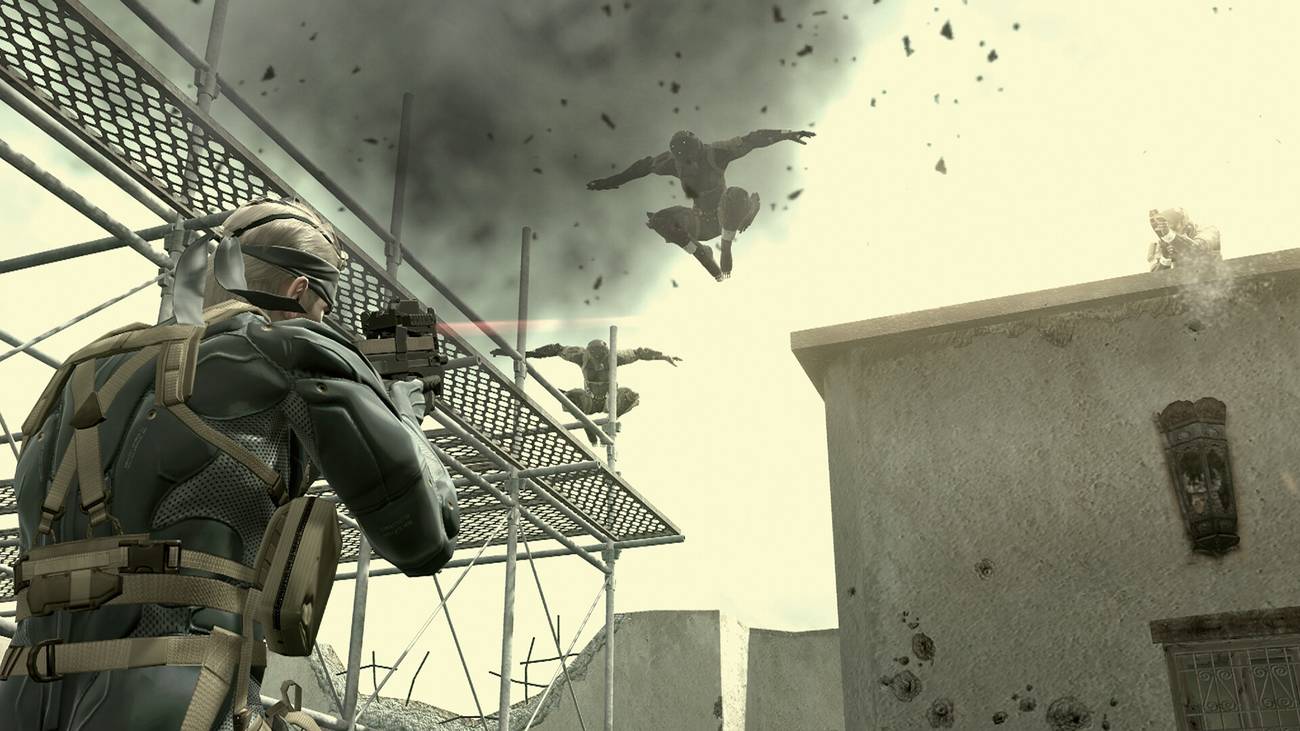
This institutional timidity is a byproduct of structural consolidation. Gaming entertainment has grown deeply intertwined with the institutional apparatus it once critiqued, from commercial esports branches acting as military recruitment funnels to mainstream military shooters collaborating with defense bodies for training prototypes. Big Mama’s treatise on interactive media acting as an ideological feeder system for tactical combat is no longer subtext; it is standard operational doctrine.
At the executive level, creative audacity is constrained by conflicting commercial partnerships. Can one realistically anticipate an uncompromising critique of the global arms trade from studios owned by platform conglomerates that maintain active military surveillance and logistics contracts? Can uncompromising anti-imperialist satire thrive under corporate entities capitalized by foreign sovereign wealth funds and sovereign investment trusts? The contemporary blockbuster ecosystem has fundamentally neutralized the artistic conditions necessary for a game like this to exist.
Ultimately, Metal Gear Solid Master Collection: Vol. 2 serves as an invaluable corrective to the assumption that high-budget video games are progressively growing bolder. Despite its mechanical eccentricities and stylistic indulgences, Metal Gear Solid 4: Guns of the Patriots delivers a ferocious, anti-war thesis that towers over modern mainstream releases. It remains a defiant, dissonant critique operating right in the belly of the machine.
Metal Gear Solid Master Collection: Vol. 2 is available on Nintendo Switch, Nintendo Switch 2, PlayStation 5, Windows PC, and Xbox Series X/S.
Source: Polygon
Related articles
 Cosplayer Transforms into Arlecchino from Genshin Impact
 Post-apocalyptic adventure Caravan SandWitch is free on the mobile Epic Games Store
 Lanterns Scores Biggest Debut of Any DC Studios Project on HBO Max
 Prime 1 Studio Opens Pre-Orders for Godzilla vs. King Ghidorah Statue
 Western Critics Praise Metal Gear Solid Master Collection Vol. 2
 Second Teaser Released for Fool’s Night Anime
 Peanuts Marks 65th Anniversary of Iconic Linus Quote
 Alan Wake 2 Gets Major Update Nearly Three Years After Release