
Why Edgar Wright’s The Running Man Completely Rewrites Stephen King’s Ending

Edgar Wright reimagines Stephen King’s tale in his 2025 adaptation The Running Man, delivering an ending engineered to gratify viewers hungry for retribution after following Ben Richards (Glen Powell) through relentless hardship. Wright’s finale echoes the spirit of Paul Michael Glaser’s 1987 film — both conclude with an emphatic, cathartic payoff designed to leave audiences feeling morally vindicated: the underdog triumphs, the corrupt are punished, and order is ostensibly restored.
But those cinematic finales depart from the harsher satisfaction that defines King’s original 1982 novel (published under the Richard Bachman pseudonym). The two films offer tidy, crowd-pleasing resolutions; King’s book delivers a bleaker, more resonant conclusion. The movies opt for the reassuring grandeur of spectacle, while the novel insists on an unvarnished reckoning that the screen versions avoid — and the reasons for that choice are obvious.
Editor’s note: Spoilers for the endings of all three versions of The Running Man follow.
How does the 2025 movie The Running Man end?

All three tellings place Ben Richards in an impossible bind: poverty and desperation push him into a televised manhunt where contestants are hunted for sport and spectacle, their deaths cheered by audiences fed a steady diet of propaganda. Glaser’s 1987 film makes sweeping changes to characters and intent; Wright’s 2025 version tracks King’s plot for much of its runtime, only to pivot to original material in the final act — a sudden tonal swerve that feels conspicuous precisely because the rest of the film is so faithful.
In both King’s novel and Wright’s film, Richards lives in grinding deprivation with his wife Sheila and their ill toddler, Cathy. He’s a blue-collar worker unable to hold steady employment amid systemic economic collapse and social cruelty. Desperate to pay for Cathy’s care, he becomes the kind of grist for Free-Vee’s exploitative programming that Killian (Josh Brolin in Wright’s film) cannily harvests for ratings. Once on The Running Man, Richards is granted a head start while Hunters try to track and execute him — a narrative designed to stoke viewers’ schadenfreude.
Richards eludes capture across a chain of grim locales, occasionally finding refuge with sympathetic resistance figures, all while Killian curates footage to recast Richards as an irredeemable villain. The show’s manipulations reveal how the broadcast constructs villains to gratify an audience’s appetite for violence and spectacle.

As the Hunters close the net, Richards takes Amelia Williams (Emilia Jones) hostage and fabricates a bomb threat to seize control of a plane that also carries lead Hunter McCone (Lee Pace). Killian offers Richards a Faustian bargain: become a Hunter himself, monetarily secure but morally compromised, trading survival for complicity. In the film, Killian goes further — he claims McCone murdered Sheila and Cathy and shows Richards footage of the attack, giving Richards motive to retaliate. But Richards rejects Killian’s offer, attempts to crash the plane into Free-Vee headquarters, and survives a downing that, in viral footage, appears to show him escaping via an escape pod.
Richards eventually locates Sheila (Jayme Lawson) and Cathy alive and elevated to comfort, implying the network honored its payout and secured their safety. Free-Vee’s viewers, inflamed into fandom for Richards, storm the network; a riot erupts and Richards slips back into the building, shooting Killian. The film cuts to black on that violent, crowd-sourced catharsis.
That ending is engineered to satisfy: Richards refuses Killian’s corrupt bargain, his family is safe, the network is punished, and the audience gets the gratification of poetic justice. Yet it often reads as hurried and improbably neat — like a consoling fantasy layered atop an otherwise grim narrative. It lacks the emotional weight and moral ambiguity of King’s original finale.
How does Stephen King’s novel end?

Wright’s film mirrors King’s plot through much of its runtime, but the novel’s tone is consistently darker and more meticulous in its social detail. King has room on the page to sketch a bleaker near-future: institutionalized inequality, manipulative media, and corrosive corporate power. Reading the book in the 2020s often feels unnervingly relevant, as the novel’s anxieties about economic disparity, curated outrage, and the erosion of public oversight echo contemporary headlines and debates.
King emphasizes the persistence of these problems: when a rebel predicts a reckoning for “the maggots” harvesting society’s spoils, Richards replies with weary skepticism — revolutions are perennially promised but rarely realized. That fatalism suffuses the book’s conclusion: there is no tidy systemic correction, no lasting electoral victory, just a stark recognition of how entrenched injustice can be.

In King’s original, Killian lies when he tells Richards his family is dead — in the novel, they truly were murdered while Richards was hiding. Their deaths are random and senseless, underscoring how poverty compounds vulnerability: Sheila and Cathy’s fate is less the product of grand conspiracies than of everyday predation and neglect. Killian’s indifference — his failure to relocate them to safety when Richards signed on — suggests the rigging of the game and the expendability of the poor.
The climax resembles the films in outline: Richards fights McCone on the plane, kills the Hunter, and sees Amelia parachute to safety. But King’s Richards is mortally wounded; he deliberately pilots the crippled aircraft into the Free-Vee building. The book closes on a devastating image: “The explosion was tremendous, lighting up the night like the wrath of God, and it rained fire twenty blocks away.”
That finale resists easy heroics. It’s an act of destructive defiance rather than a solution — a refusal to let the spectacle continue unpunished, even at the cost of the protagonist’s life. Hollywood studios have understandably shied away from such bleakness: the image of a plane slammed into a building remains culturally fraught, and the book’s refusal to offer systemic redemption is a hard sell for mainstream audiences.
But King’s ending makes an essential point: personal sacrifice may register as protest, but it does not magically dismantle the structures that enable cruelty and profiteering. The book’s last act acknowledges the limits of individual revolt and the tragic reality that some balances of power resist straightforward moral upset.
How does the 1987 Running Man end?

Glaser’s 1987 adaptation overhauls King’s story. Schwarzenegger’s Richards is recast as a framed former officer, not a desperate father; the game becomes a stylized gladiatorial arena, populated by theatrical Hunters and pulpy one-liners. The film foregrounds spectacle and action rather than social critique. With help from a journalist (Amber, played by María Conchita Alonso), Richards exposes the show’s corruption, joins a resistance, and ultimately rigs Killian to one of the show’s lethal rocket sleds — condemning the host to a spectacular death when the sled detonates.
The movie strips away many of King’s thematic concerns: the sense of sustained poverty, the random cruelties of life on the margins, and the moral ambiguity of violent protest. Its cleaner, more conventional arc is one reason it appealed to studios and audiences at the time — and why Wright’s more faithful film still finds itself tempted by a similarly pacified finale.
Wright’s 2025 film, by contrast, often feels like a near-miss: it embraces King’s characters and social detail, then balks when asked to commit to the novel’s final moral uncompromisingness. The result is a film that inches up to King’s boldness and then retreats, offering spectacle where the book offers a stark and unsettling coda.
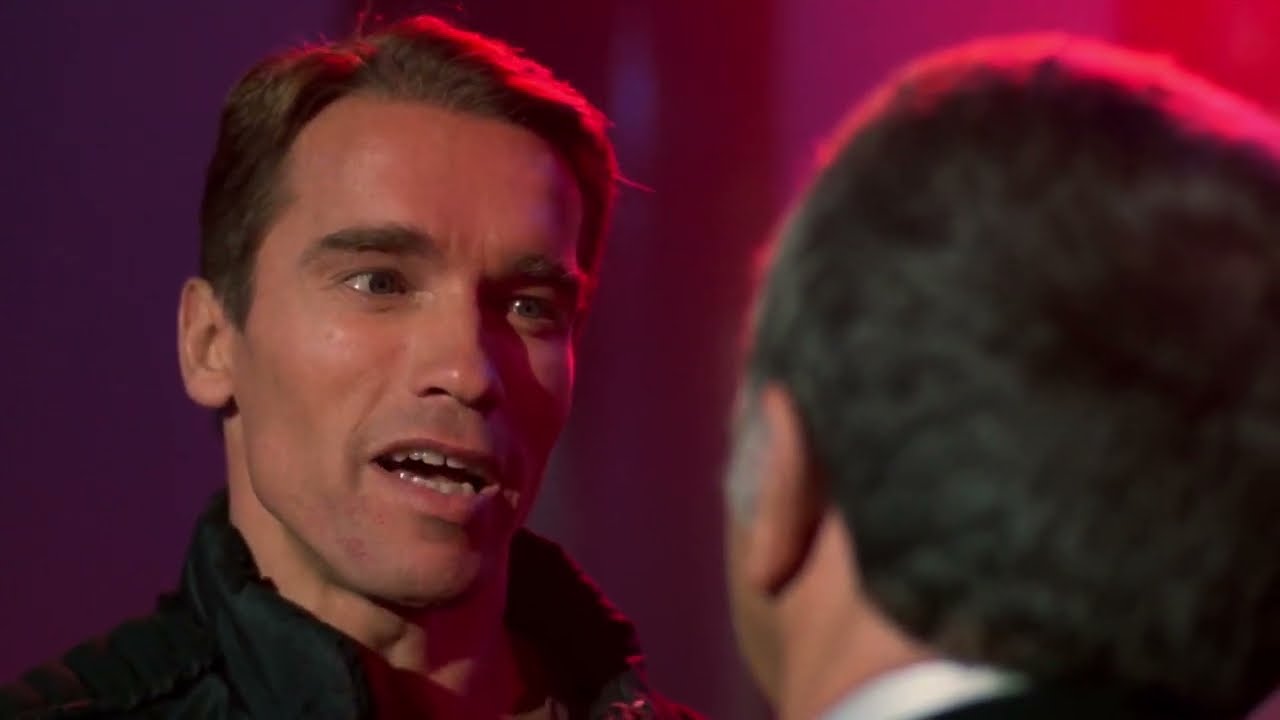
Source: Polygon
Related articles
 Actors cast as Dobby and Tom Riddle for Harry Potter season two
 International “Doker” Film Festival Kicks Off in Moscow
 Milla Jovovich to Appear in the New Season of “Hot Rivalry”
 The first excerpt from Zach Cregger’s “Companion” has been released
 “Obsession” Star to Play Waitress in Apple Sci-Fi Series
 Paul Thomas Anderson is working on a new project
 Gal Gadot’s “Heart of Stone” receives scathing reviews
 Netflix and Alfonso Cuarón Developing Dungeons & Dragons Horror Series