
Stunning New Time-Travel Film Perfectly Captures a Classic Sci‑Fi Trope

Humanity’s longing for an idealized world stretches back to the earliest stories we tell. Across cultures and eras we imagine places where scarcity, pain, and conflict are solved—complete, seamless paradises where problems evaporate. Science fiction often translates that yearning into technological marvels that create near-perfect societies, but those fictional utopias frequently come with an underside: a concealed compromise or moral price (see, for example, The Giver or Wall-E).
That expectation of hidden cost is upended in Arco, a gorgeously hand-drawn animated feature from French illustrator Ugo Bienvenu.
“Utopias are utopias because they’re not defined too much,” Bienvenu said during a screening and Q&A attended by Polygon. “When you define too much, a utopia becomes reality.”
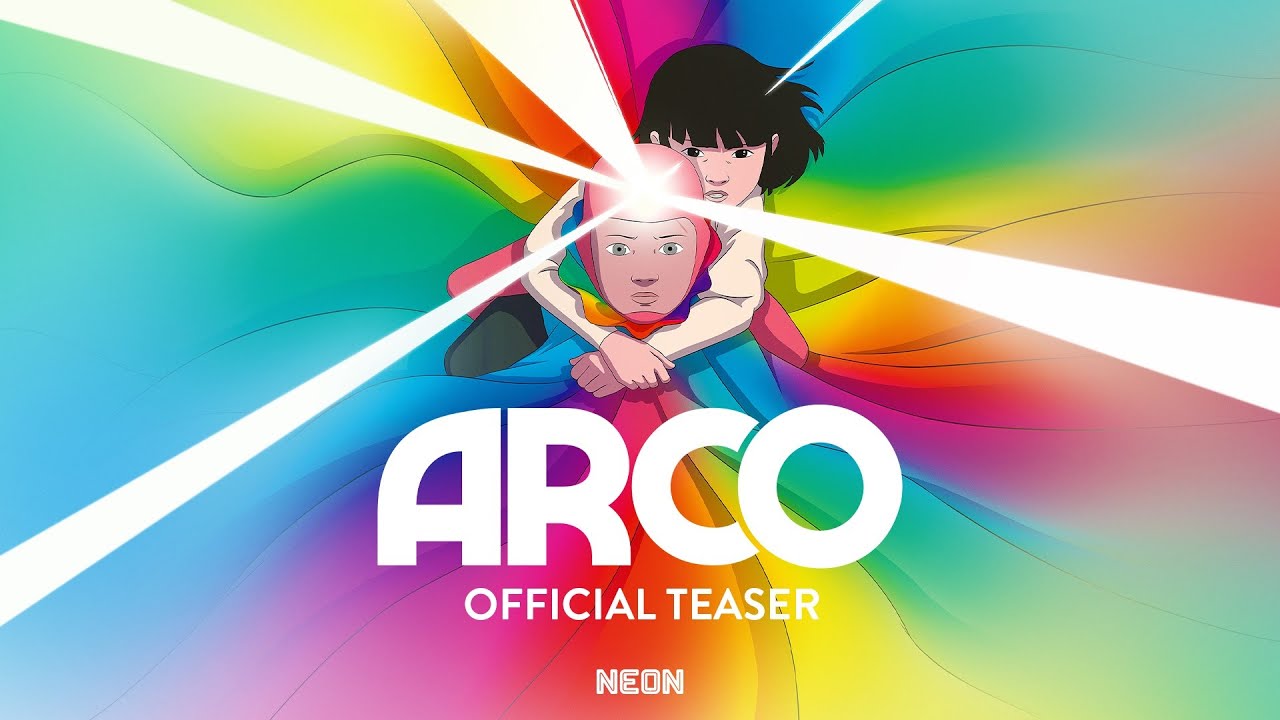
Arco opens in the 29th century, portraying a serene society of self-sufficient homes perched on vast platforms and lifted above the clouds by engineered, tree-like pylons. Bienvenu deliberately leaves technical explanations sparse, trusting shared cultural imagery to supply the audience’s imagination.
“In every foundational text — in Japan, in the Bible — there are gardens in the sky,” he said. “And I really wanted to use the subconscious of the viewer so I didn’t have to explain a lot of things; so I could go fast on some things to be able to go deeper with others.”
But the film quickly destabilizes that tranquility: its protagonist, a young 29th-century boy named Arco, is abruptly hurled into the recent past—specifically, the 2070s—forcing a collision between lofty ideals and a far grimmer near-future.
 Image: Neon
The version of the near future we see is far less idyllic. Technological progress is largely devoted to countering the effects of climate collapse: fortified “bubbles” shield suburban properties from violent storms while wildfires rage beyond town borders, always threatening to leap with a change in wind.
Other changes are subtler: smartphones have given way to smart glasses, with residents navigating the world through reflective lenses, and robots have become ubiquitous—performing roles once held by police officers, teachers, and caregivers.
When Arco travels back in time he is taken in by a family and their household robot, Mickey—a recurring figure in Bienvenu’s body of illustrations and comics.
“Mickey is a way for me to ask questions,” Bienvenu said. “I use it in a lot of different works.”
 Image: Neon
On screen, Mickey is expanded beyond his comic-book iterations and must speak. Bienvenu initially experimented with synthesizing the robot’s voice using artificial intelligence, but the result felt hollow and emotionally flat.
“It was not good at all,” he said. “There were no emotions.”
Instead, Bienvenu recorded two actors delivering the same lines and layered their performances to construct a single, textured vocal identity—a painstaking, hands-on approach that yielded the nuance he wanted. The process reaffirmed a lesson for him:
“When it’s perfect, we don’t feel anything,” Bienvenu said. “That’s what makes us humans, and that’s why maybe AI is not going to kill all the jobs.”
Ultimately, Bienvenu isn’t trying to forecast humanity’s trajectory. He’s more interested in making art that reflects the present moment than in issuing predictions, even while his work leans on science fiction’s capacity to imagine alternate futures.
As Bienvenu put it: “We shouldn’t know the future.”
Arco arrives in theaters on November 14, 2025.
Source: Polygon
Related articles
 “Daddy’s Daughters” wedding sequel to be released in 2027
 Halle Berry and Colin Firth to Star in New Rom-Com
 Netflix Begins Filming New Dan Brown Adaptation
 Spider-Noir series canceled after first season
 Actors cast as Dobby and Tom Riddle for Harry Potter season two
 International “Doker” Film Festival Kicks Off in Moscow
 Milla Jovovich to Appear in the New Season of “Hot Rivalry”
 The first excerpt from Zach Cregger’s “Companion” has been released