

Editor’s note: Spoilers for One Piece chapter #1165 below.
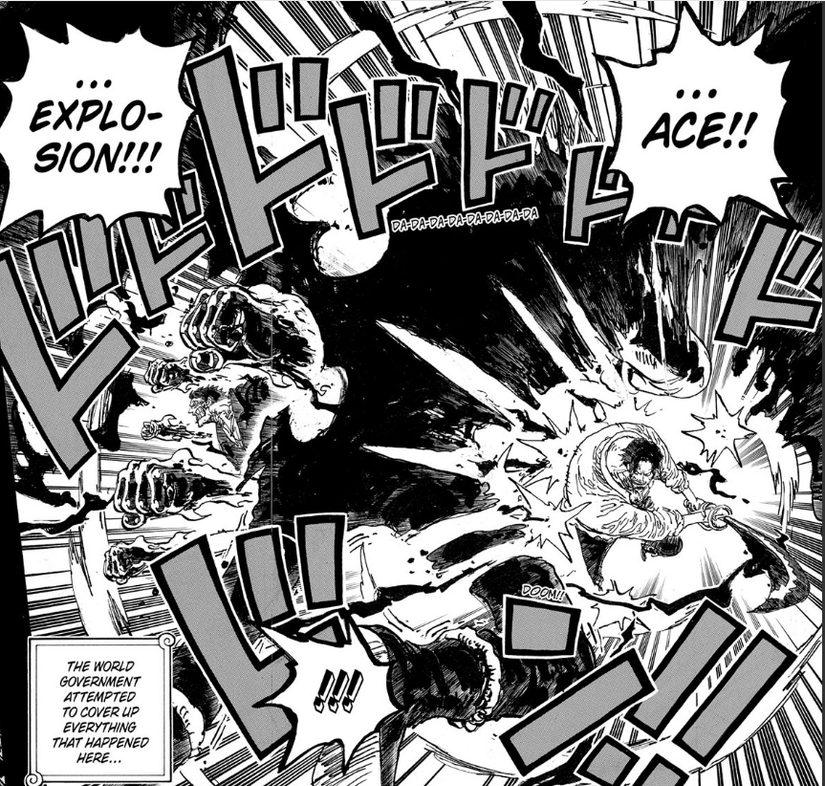
Longtime One Piece readers have been anticipating this reveal since the God Valley Incident was first referenced in chapter #957. Chapter #1165 finally closes the confrontation on God Valley between Garp, Roger, and Rocks D. Xebec, and — amid the clash — it quietly introduces a refined application of Supreme King Haki that could explain how Luffy and the Straw Hats might threaten the God’s Knights on Elbaph today.
Although many praised the flashback for its weight and drama, some fans criticized the sequence for feeling brief. Even so, the chapter’s subtle expansion of Haki demonstrates that Eiichiro Oda has always prioritized storytelling over extended fight choreography; raw power metrics and endless power-scaling have never been the primary engine of One Piece.

In a 2007 interview resurfaced on X by @sandman_AP, Oda said he prefers crafting fights that are driven by narrative stakes rather than sequences of escalating spectacle. He deliberately avoided making One Piece a straight-up battle manga because he didn’t want to simply compete with the likes of Dragon Ball. That creative choice helps explain why Haki in Oda’s world is handled as a narrative tool — flexible, mysterious, and tied to character will rather than a simple number on a power chart.
At a glance Haki is split into Observation, Armament, and Supreme King, but its layered applications make it more complex than that first impression suggests. Like Nen from Hunter x Hunter, Haki can be shaped and specialized; advanced techniques and uncommon usages change the dynamics of a fight far more than raw strength alone. (See more on Haki types here.)

During the God Valley sequence, even Roger and Garp — two of the era’s most formidable fighters — find that coating their attacks in Supreme King Haki isn’t enough when Rocks is shielding himself with the same force. Roger identifies the solution as striking with a “critical mass of Supreme Haki,” naming a higher threshold of the technique. That phrasing is unusually specific for Oda’s work and is introduced deliberately through two characters whose authority on combat is unquestioned.
That line primes the narrative for future developments: it suggests a path by which characters like Zoro, Sanji, and Luffy might access a stronger, more concentrated application of Supreme King Haki. The reveal also echoes the way Oda has reintroduced concepts — for example, how Wano’s events renewed interest in Devil Fruit awakenings for Kidd and Law shortly before Luffy’s own leap forward — ensuring each evolution of power also serves the plot.
Oda’s handling of Devil Fruits follows a similar pattern: Dr. Vegapunk’s explanation — that fruits originate from people’s wishes and sometimes gravitate toward specific users — frames awakenings as narrative resonance rather than mere mechanical progression. For characters like Luffy, awakenings often arrive at decisive emotional junctures and pull together long-threaded plotlines to produce meaningful, story-driven transformations.
Across the cast, strength in One Piece tends to be sculpted by history, circumstance, and desire. Many supporting figures end up far more consequential than they initially seem, and abilities frequently surface in response to pressure or revelation rather than routine training. That emphasis on character-led escalation is part of what distinguishes Oda’s storytelling.
There’s also a thematic kinship to early transformative moments in Dragon Ball: the first Super Saiyan surge was tied to emotional rupture, not a checklist of drills, and future Trunks’ breakthrough came in reaction to trauma. Oda similarly prefers power shifts that are emotionally charged and narratively resonant rather than purely quantitative.
So while power-scaling remains a familiar pastime in shonen fandoms, One Piece consistently uses combat as a vehicle for the series’ central strengths — character, mystery, and long-term storytelling — and chapter #1165 is another example of that approach in action.
Source: Polygon
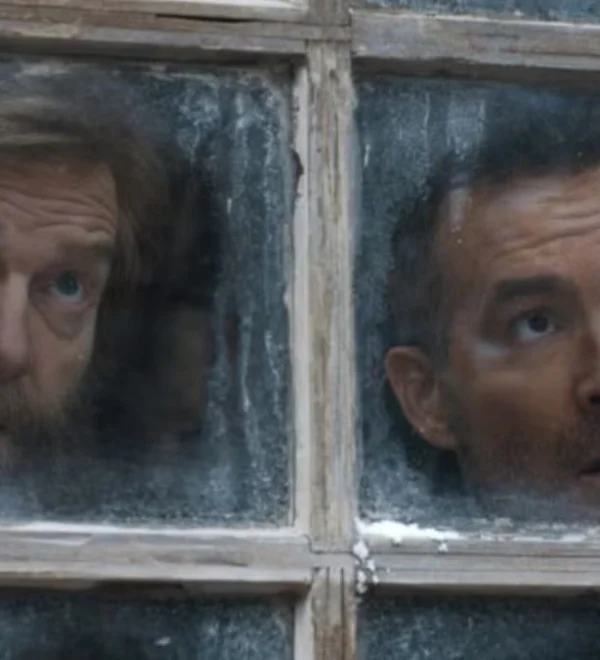 Ryan Reynolds’ “Mayday” receives positive reviews from critics
 “Daddy’s Daughters” wedding sequel to be released in 2027
 Halle Berry and Colin Firth to Star in New Rom-Com
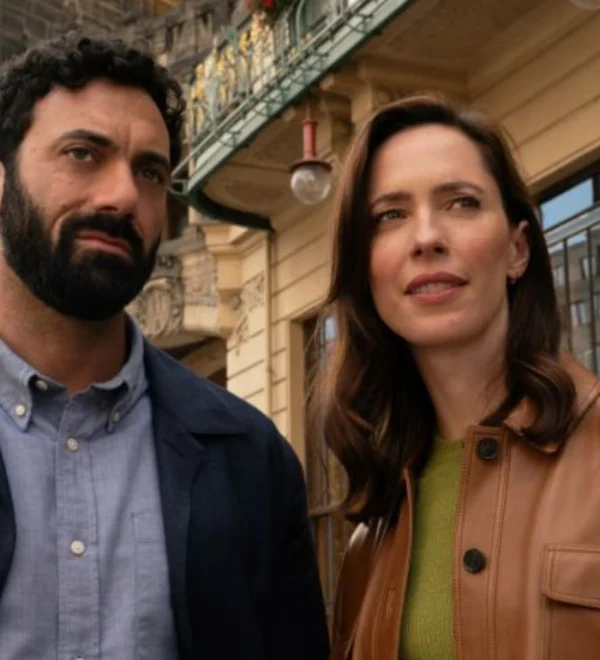 Netflix Begins Filming New Dan Brown Adaptation
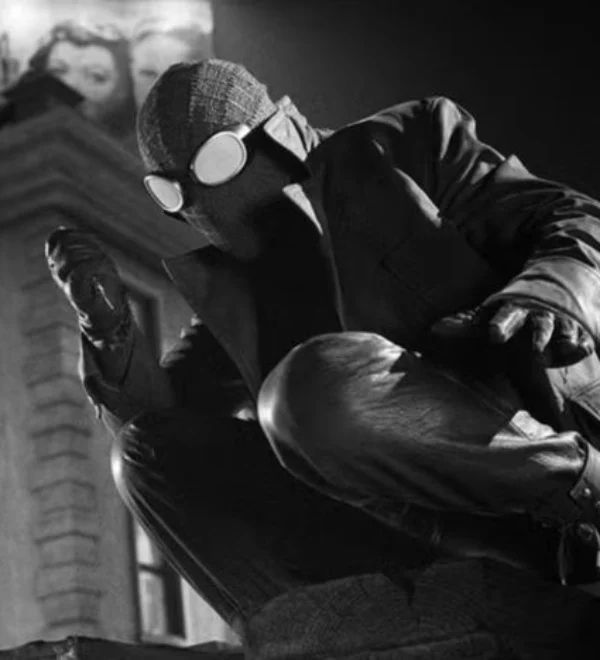 Spider-Noir series canceled after first season
 Actors cast as Dobby and Tom Riddle for Harry Potter season two
 International “Doker” Film Festival Kicks Off in Moscow
 Milla Jovovich to Appear in the New Season of “Hot Rivalry”