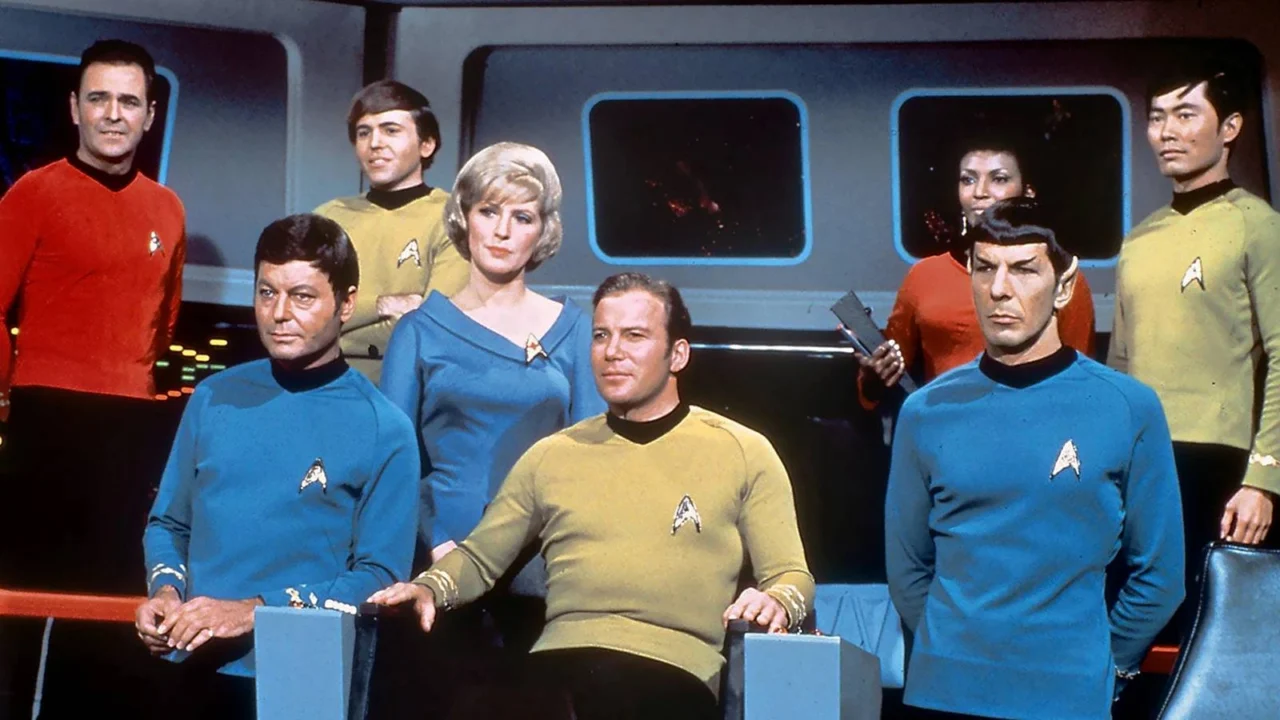
Polygon Ranks the 10 Best Episodes of Star Trek: The Original Series
Ask 10 Star Trek fans to name the best episodes of The Original Series, and you will probably get 10 different lists. Some fans put the writing first. Others care more about the performances or the science-fiction ideas. And someone will inevitably argue that “The City on the Edge of Forever” belongs at No. 1. They might be right.
Star Trek premiered in 1966 and set itself apart from most science-fiction television of the era. It had strange alien worlds, futuristic technology and the occasional space battle. But creator Gene Roddenberry also used those adventures to explore morality, prejudice, humanity and what it means to do the right thing.
Nearly 60 years later, the best episodes still resonate because they pair big ideas with memorable moments. Not every episode below is perfect. Each one, though, helps explain why the original series remains essential science-fiction television.
10. “Court Martial” (Season 1, Episode 21)
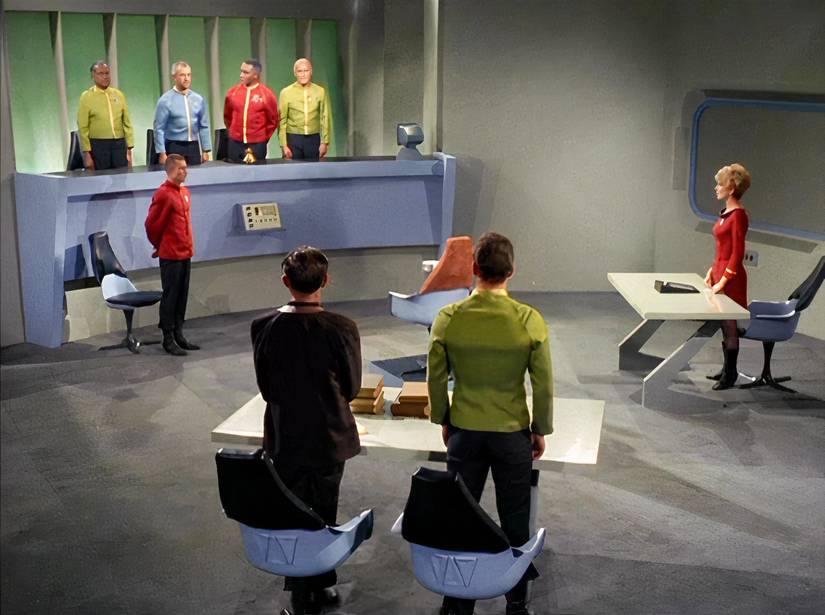
Captain James T. Kirk (William Shatner) makes life-and-death decisions all the time. In “Court Martial,” his own career is at stake. After a crewman, Benjamin Finney (Richard Webb), apparently dies, Kirk is accused of negligence. At his military trial, the Enterprise’s computer records contradict his account of what happened.
The episode turns Star Trek into a courtroom drama, and it does so well. Samuel T. Cogley (Elisha Cook Jr.), Kirk’s wonderfully old-fashioned attorney, argues passionately for human rights in an increasingly computerized society. Finney is eventually found aboard the Enterprise, where his heartbeat gives away his hiding place. The ending satisfies, and it shows that Star Trek can tell a compelling story without an alien threat.
9. “The Enterprise Incident” (Season 3, Episode 2)
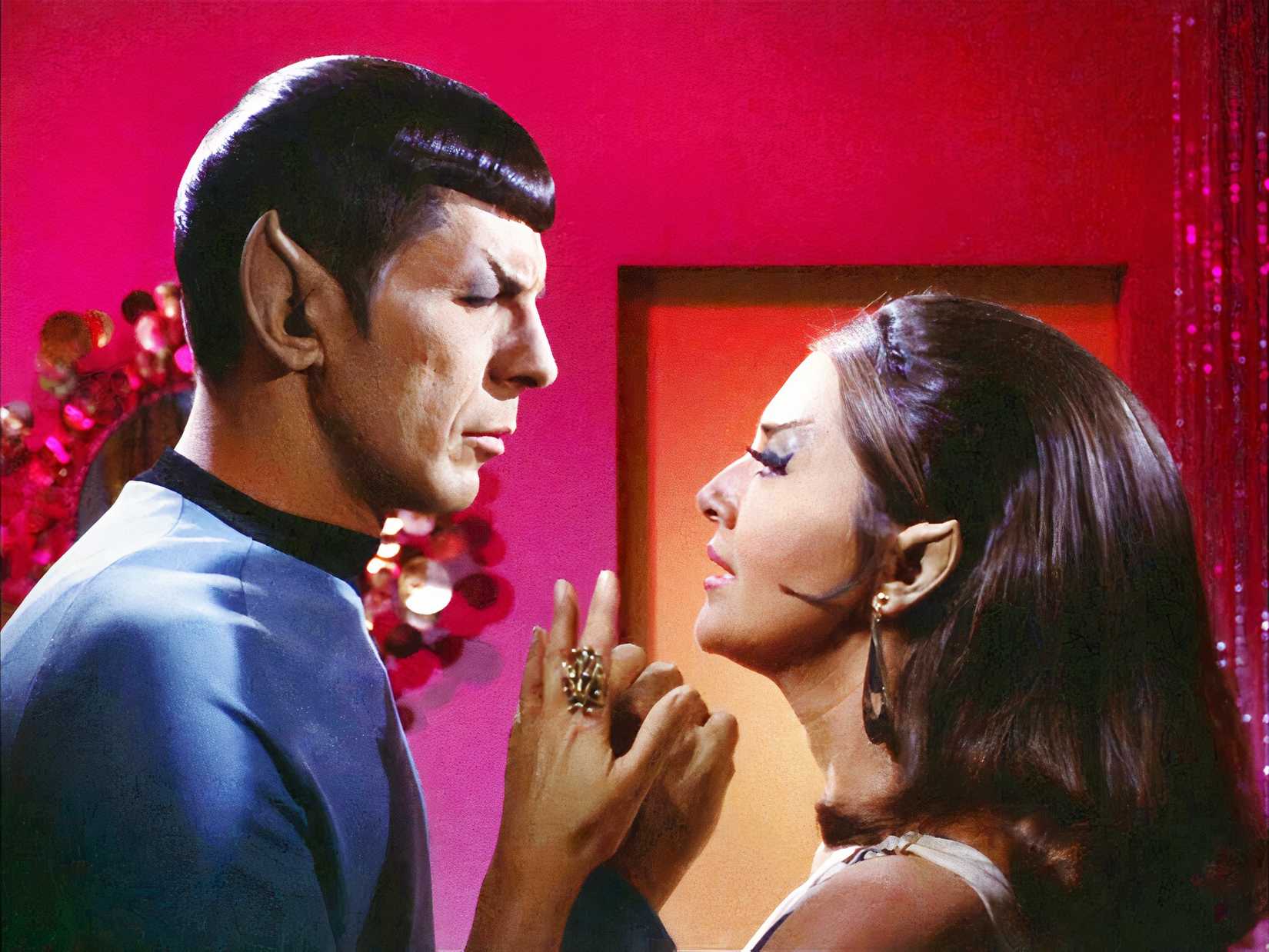
Star Trek rarely handles espionage as effectively as it does in “The Enterprise Incident.” Kirk seems to lose his judgment and orders the Enterprise into Romulan territory. There, Spock (Leonard Nimoy) appears to betray him. A Romulan commander (Joanne Linville) takes a personal interest in the Vulcan first officer. The elaborate deception turns out to be a Federation mission to steal a Romulan cloaking device.
The episode works because its characters operate in shades of gray. Kirk resorts to deception, Spock manipulates the commander’s trust, and the Romulans become more than faceless enemies. Linville is especially effective as an intelligent, formidable adversary. The episode also gives us the wonderfully ridiculous “Vulcan death grip,” a technique Spock admits doesn’t actually exist.
8. “The Cage” (Original unaired pilot)
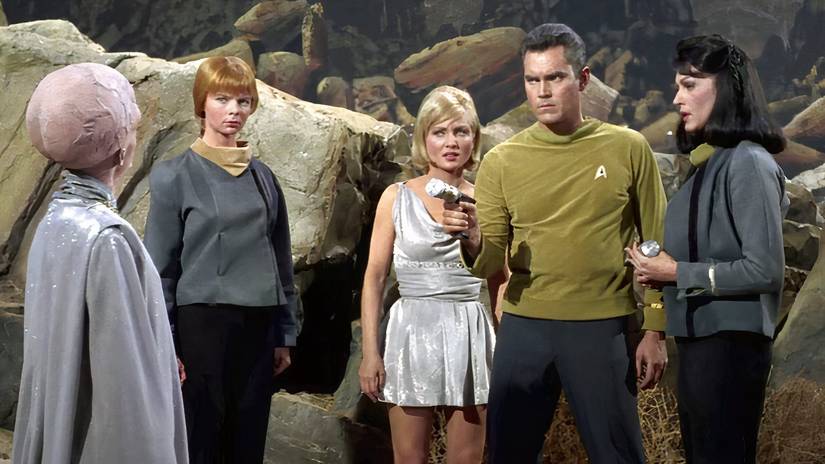
Before Kirk, McCoy or most of the familiar Enterprise crew, there was Captain Christopher Pike (Jeffrey Hunter). In Star Trek’s original pilot, Pike is a weary commander who questions his future in Starfleet. The Enterprise investigates a distress signal from Talos IV, and aliens who can create elaborate illusions imprison him. Their tricks challenge his understanding of reality.
NBC famously rejected “The Cage” as a pilot. Watching it today shows how much of the franchise’s identity was already in place. Its somber atmosphere differs from the series that eventually reached television, but its questions about freedom, perception and human nature are unmistakably Trek. Footage from the pilot later appears in “The Menagerie,” yet this early version of Star Trek deserves recognition on its own merits.
7. “The Empath” (Season 3, Episode 12)
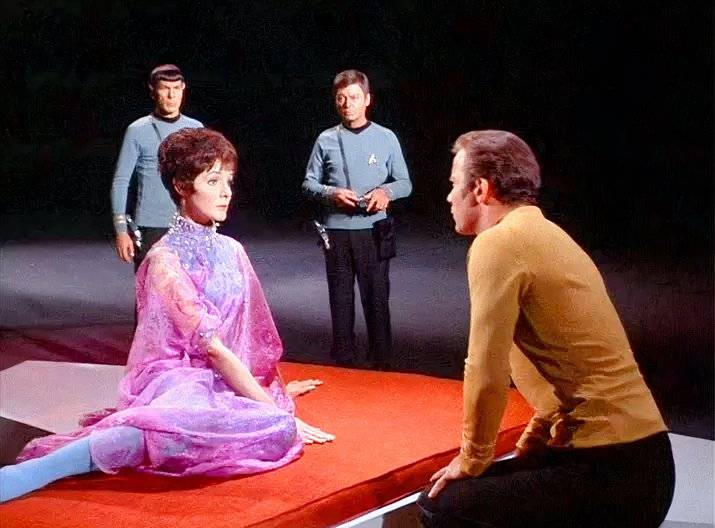
Few Star Trek episodes look or feel like “The Empath.” Kirk, Spock and Dr. McCoy (DeForest Kelley) investigate a research station on a doomed planet. They end up as prisoners of mysterious aliens called Vians. There they meet Gem (Kathryn Hays), a mute woman who can absorb another person’s injuries and suffering.
Much of the episode plays out against nearly empty backgrounds, which gives it the look of a stage production. Hays gives an expressive performance without speaking a word. McCoy supplies the emotional center when he secretly sacrifices himself to protect his friends. With its themes of compassion and selflessness, “The Empath” stands as one of the original series’ most unusual and haunting hours.
6. “The Trouble with Tribbles” (Season 2, Episode 15)
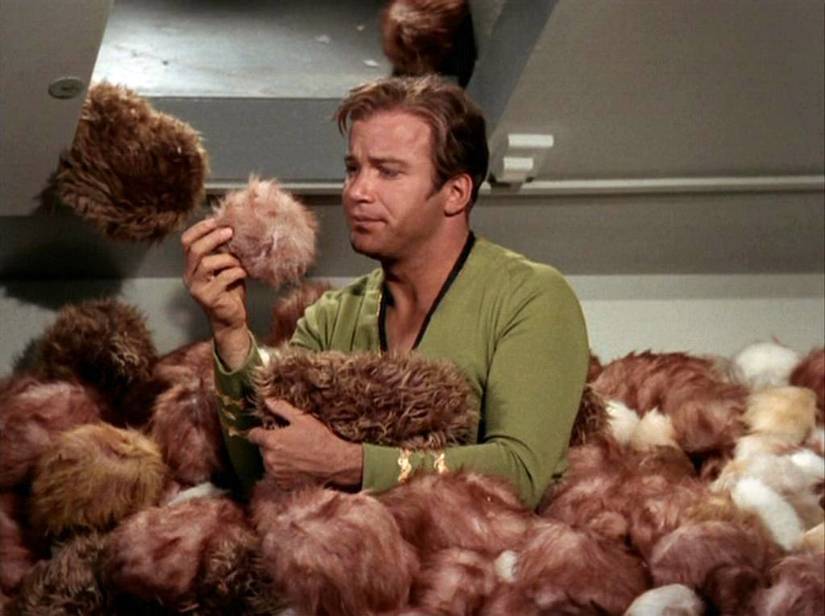
Not every great Star Trek episode needs a philosophical dilemma. Sometimes a spaceship full of rapidly reproducing furry creatures is enough. The Enterprise visits Deep Space Station K-7 to protect a shipment of valuable grain. Uhura (Nichelle Nichols) acquires an adorable creature called a tribble. Tribbles multiply at an astonishing rate, and they create chaos aboard the ship and the station.
David Gerrold’s script is among the funniest of the original series. It balances the infestation with Klingon troublemaking and Kirk’s growing exasperation. The image of Kirk buried under an avalanche of tribbles remains one of the franchise’s most recognizable moments. The characters are just as entertaining when they deal with something ridiculous.
5. “Arena” (Season 1, Episode 19)
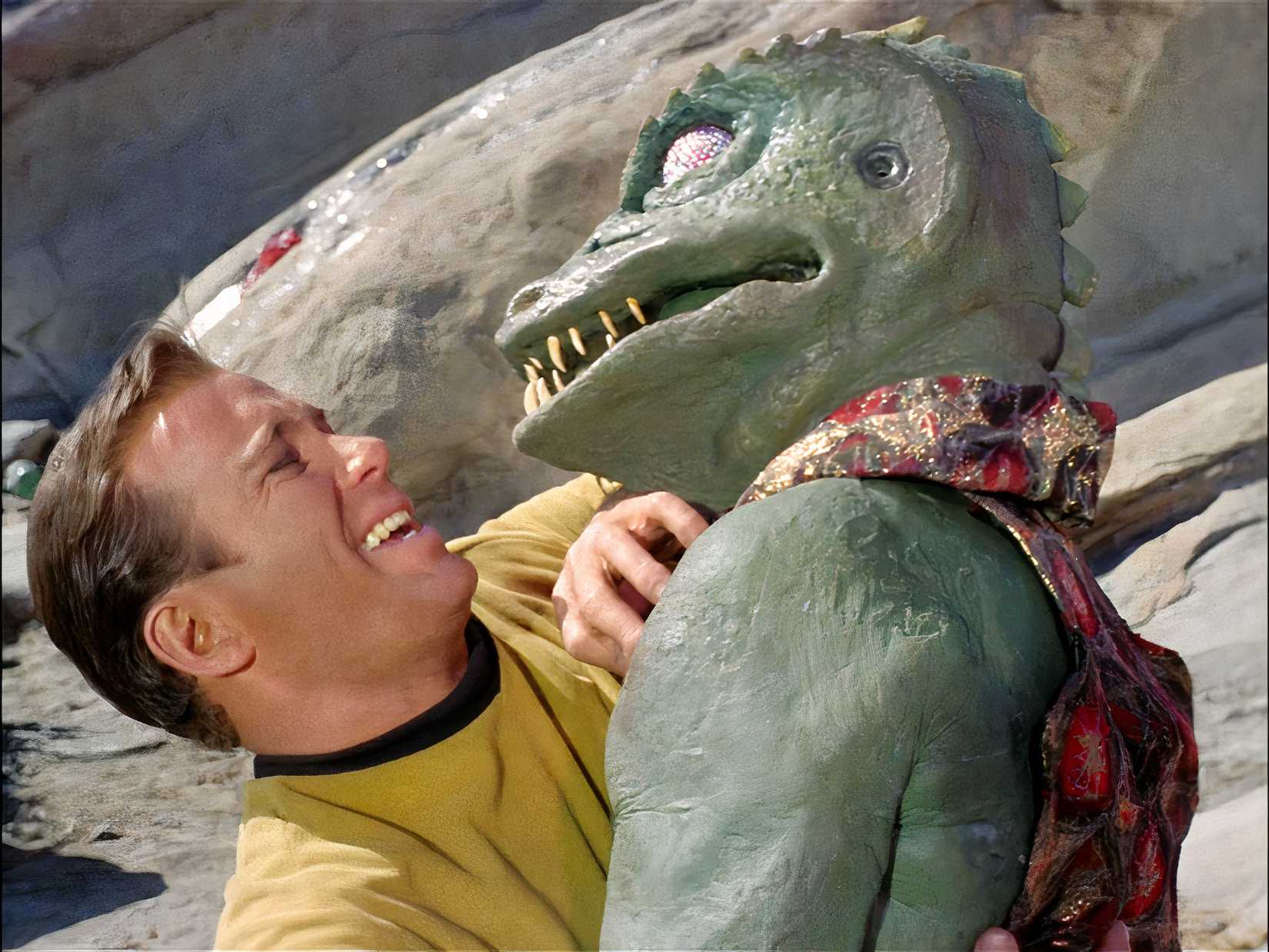
“Arena” introduces one of Star Trek’s best-known alien adversaries, even though the Gorn captain’s rubbery appearance has inspired decades of jokes. After an attack on a Federation outpost, Kirk pursues the responsible vessel. A powerful alien civilization called the Metrons steps in. They transport Kirk and the Gorn captain to a barren planet and order them to fight to the death.
The duel has become legendary, especially Kirk’s improvised cannon and the Gorn’s lumbering movements. The defining moment comes when Kirk gains the advantage and refuses to kill his helpless opponent. His decision turns a revenge story into something quintessentially Star Trek, the recognition that understanding and mercy can accomplish more than violence.
4. “Space Seed” (Season 1, Episode 23)
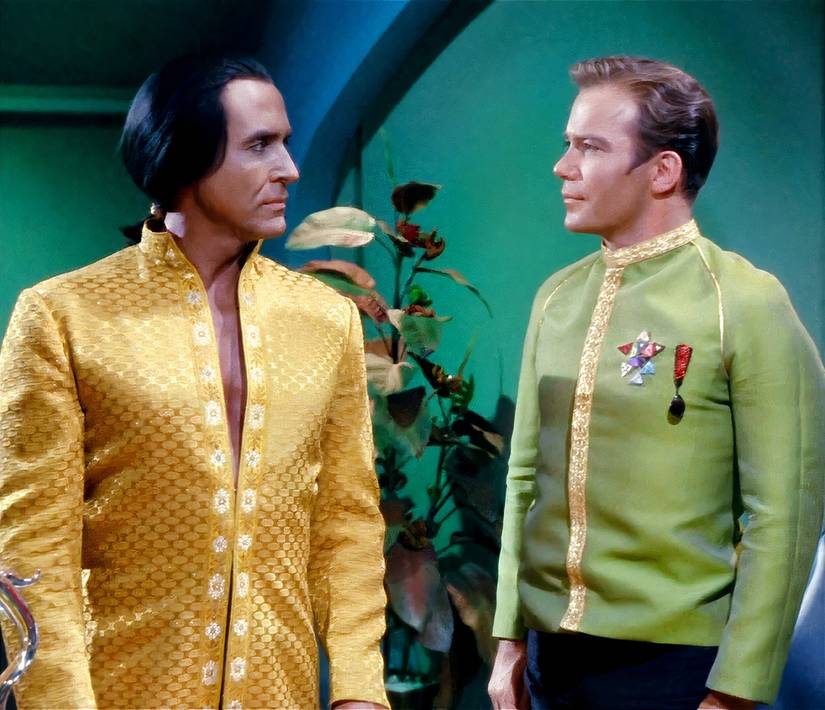
Long before Star Trek II: The Wrath of Khan, the Enterprise finds the SS Botany Bay, an ancient spacecraft carrying genetically engineered humans in suspended animation. Their leader, Khan Noonien Singh (Ricardo Montalbán), is a charismatic tyrant from Earth’s past. He wastes little time trying to seize control of the Enterprise.
Montalbán’s performance makes “Space Seed” stand out. His Khan is intelligent, physically imposing and effortlessly charming, which makes his battle of wills with Kirk especially entertaining. The episode also examines the dangers of genetic superiority and the temptation to confuse exceptional ability with moral authority. Kirk leaves Khan and his followers on Ceti Alpha V, a decision that eventually sets the stage for one of science fiction’s greatest films.
3. “The Doomsday Machine” (Season 2, Episode 6)
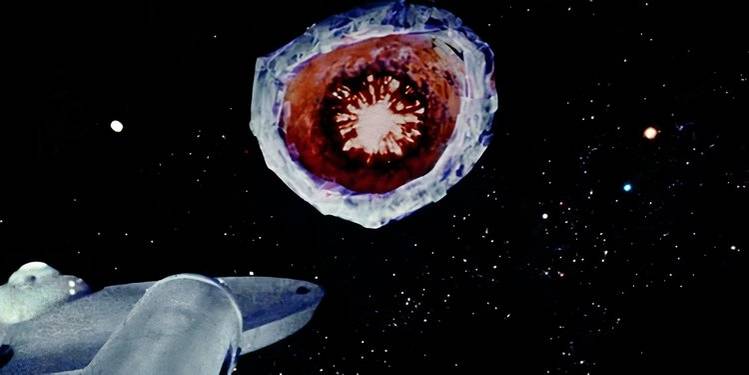
“The Doomsday Machine” introduces one of Star Trek’s most terrifying threats, an enormous automated weapon that can destroy entire planets. The Enterprise finds the damaged USS Constellation. Its commander, Commodore Matt Decker (William Windom), is devastated by the loss of his crew. Grief and a need for revenge consume him, and he becomes obsessed with destroying the machine regardless of the danger to everyone around him.
Windom gives an extraordinary performance, particularly when Decker confronts Spock over command of the Enterprise. His decision to pilot a shuttlecraft directly into the machine is just as memorable. Kirk is stranded aboard the Constellation, and the Enterprise faces an apparently unstoppable enemy. The episode delivers some of the original series’ most intense suspense.
2. “The City on the Edge of Forever” (Season 1, Episode 29)
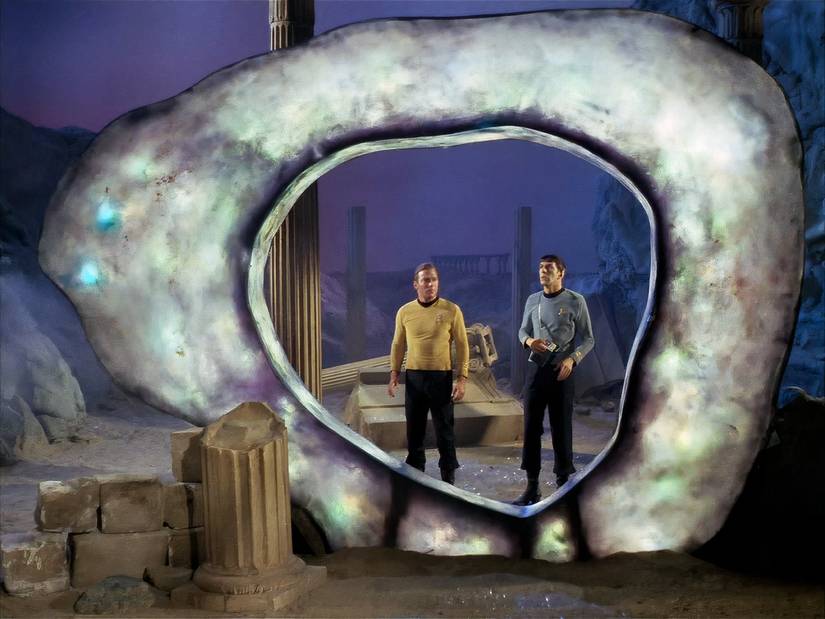
Widely regarded as one of Star Trek’s finest episodes, “The City on the Edge of Forever” sends Kirk and Spock to 1930s New York after a delirious McCoy accidentally alters history. While trying to restore the timeline, Kirk falls in love with Edith Keeler (Joan Collins). She is a compassionate social worker, and her idealism makes her an especially appealing match for the captain. Then Spock discovers that Edith must die for history to unfold correctly.
Shatner delivers one of his strongest performances, particularly in the heartbreaking conclusion when Kirk stops McCoy from saving Edith. Collins brings warmth and intelligence to a character whose death feels genuinely tragic. The episode is a devastating look at sacrifice. It shows that doing the right thing sometimes carries an unbearable personal cost.
1. “Amok Time” (Season 2, Episode 1)
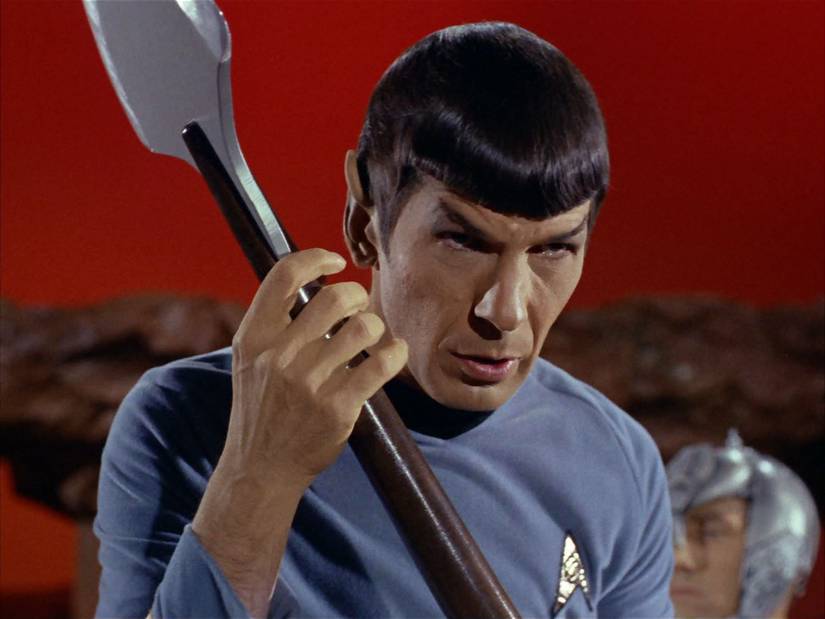
Spock’s Vulcan heritage is central to Star Trek, and “Amok Time” finally takes viewers to his home planet. Spock begins behaving erratically, and McCoy discovers that his condition is life-threatening. Spock reveals that he is experiencing pon farr, a biological cycle that requires him to return to Vulcan. Once there, his intended bride, T’Pring (Arlene Martel), invokes an ancient ritual that forces Spock into combat with Kirk.
Much of what appears here has become inseparable from Star Trek’s identity, from the introduction of Vulcan traditions to Gerald Fried’s fight music. The finest moment comes when Spock believes he has killed Kirk, then learns his friend is alive and responds with an astonishing burst of happiness. In that brief instant, Nimoy reveals more about Spock’s humanity than pages of dialogue could. It shows why the friendship between Kirk and Spock remains the heart of Star Trek.
Source: Polygon
Related articles
 Switch 2 Cartridge Manufacturer Exits the Market
 Microsoft’s Alligator Xbox May Be a GTA VI Marketing Workaround
 Analysts Say Gran Turismo 7 Is Not on PS Plus Because It Has Earned Sony Hundreds of Millions of Dollars
 Mike Flanagan Hints at Unexpected Approach to Warhammer 40,000 Series Starring Henry Cavill
 The Legend of Zelda: Ocarina of Time – Shadow Temple Dungeon Walkthrough
 Ganondorf’s Castle Walkthrough in The Legend of Zelda: Ocarina of Time
 The Legend of Zelda: Ocarina of Time — Spirit Temple Dungeon Walkthrough
 Study Confirms Impact of Social Messaging on Video Game Sales