Penguin Colony Was Built to ‘Put the Games Industry on Notice’
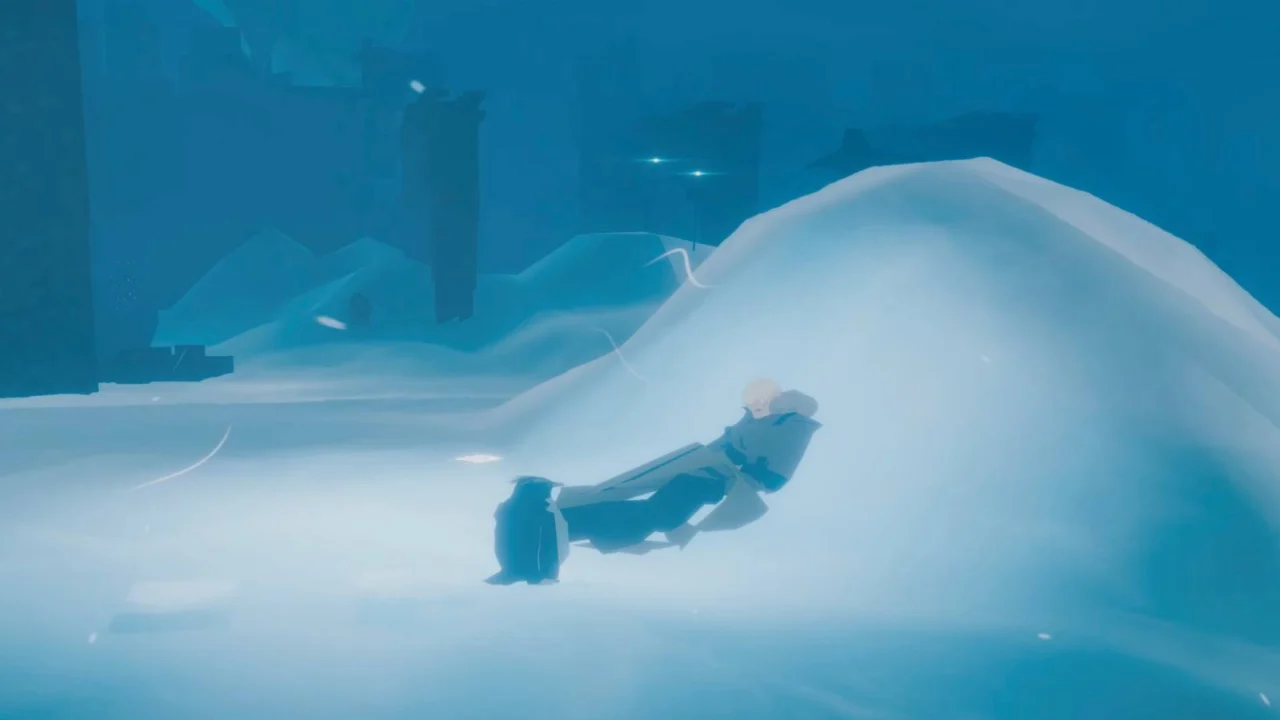
At first glance, Penguin Colony might resemble a charming, albeit slightly unsettling, homage to the PlayStation 2 era. Players guide a penguin as it waddles, slides, and navigates the gloom of the Antarctic wasteland, trailing an enigmatic beacon of light. Yet, lurking beneath the frozen surface are nazis, ancient cosmic entities, and a scathing critique of imperialism.
The latest title from Origame Digital (renowned for Umurangi Generation) reimagines H.P. Lovecraft’s classic At the Mountains of Madness through the perspective of Antarctica’s native inhabitants. This bold concept transcends absurdity to deliver a deeply personal psychological horror experience. For Tali Faulkner, a Māori developer hailing from Aotearoa New Zealand, the monstrous forces featured in Penguin Colony pale in comparison to the historical atrocities that inspired them.
During an extensive interview with Polygon, Faulkner elaborates on how penguins, nazis, Lovecraftian mythos, and his Indigenous heritage coalesced into an engaging, lo-fi indie horror experience. He discusses his motivation to confront pressing contemporary issues—such as the violence in Palestine and the broader gaming industry’s reluctance to address ongoing humanitarian crises—while ensuring the game’s structural mechanics and environmental design remained exceptionally crafted.
This interview has been edited and condensed for clarity.
Polygon: The jarring juxtaposition of Penguin Colony’s retro, PS2-styled penguins navigating a grim arctic expanse alongside its staunchly antifascist and anticolonial themes immediately evoked graphic novels by creators like Art Spiegelman or Mike Mignola. You mentioned an affinity for Alan Moore prior to this conversation, which certainly fits that aesthetic. What creative advantages did you discover by developing this narrative as a video game rather than in another medium?
Tali Faulkner: Video games represent humanity’s tenth art form—film, by comparison, is the sixth. To me, games stand alone because participation is mandatory. You can observe an art installation, but true interaction is limited. In contrast, games require active immersion and player agency. When building Penguin Colony, it was vital that our themes—conveyed through dialogue, environmental storytelling, and discovered imagery—could not simply be brushed aside or rationalized away by an indifferent audience.
Once the narrative elements and imagery were integrated, it became about orchestrating specific experiential moments that are exclusive to interactive media. Think of that lingering discomfort of standing near something that refuses to acknowledge your presence. Cinema can achieve this through cinematography, but only in a game can you linger by a scene for as long as you choose—for instance, listening to the unsettling, looped audio of creatures consuming their own. That atmosphere permeates the entire experience.
Players are actively encouraged to stray from the beaten path without penalty, often uncovering hidden details. Approaching the city near the conclusion, you encounter dense layers of lore that can easily be overlooked. Those who thoroughly explore will unearth profound revelations regarding an ancient, highly destructive colonial force that predates humanity itself. Curiosity is consistently rewarded.
Players might easily slide into psychological distress as well, given that the retro aesthetic closely mirrors found-footage horror popularized by the Backrooms.
Non-Euclidean level design is inherently eldritch. We aimed to make the environment feel vast and profoundly alien. Players often enter with specific expectations, only to emerge utterly surprised—which is the essence of Lovecraftian horror. Your frame of reference expands beyond comprehension, giving rise to genuine psychological dread.
How do you determine whether an early concept holds the potential to evolve into a complete game?
Securing government funding certainly helps.
That is a luxury many developers in the United States look upon with envy.
Australia’s initiative is commendable, though there is always room for expansion. If your primary motivation in game development is financial ease, film remains far more lucrative. Australian film grants often start around $10 million, whereas game funding typically caps much lower—around $100,000. The fiscal disparity is astronomical.
It sounds like your next project might simply need to incorporate more full-motion video.
No spoilers, but we are exploring ideas. Regardless, we were pitching Penguin Colony while simultaneously working on another project. When our pitch resonated, we shifted gears rapidly. After securing funding last year, we attended PAX Australia and partnered with a publisher who truly understood the vision. Collaborating with an incompatible publisher could have easily compromised the project through unnecessary censorship concerns.
Navigating commercial viability must have sparked challenging conversations.
Our initial pitches were transparent: this is the concept, and if it does not align with your interests, we can part ways immediately without wasting time. Fellow Traveller offered the dedication the project required. Development proceeded at a rapid pace over the course of a single year, primarily dedicated to polish, as our initial pitch already represented a robust experience.
Government grants undoubtedly aided our progress, and I hope more nations recognize the value of investing in interactive media. When a title achieves commercial success, the tax revenue easily offsets earlier failures. Public sector backing remains crucial.
How did the core vision of Penguin Colony solidify during production? What guiding principles anchored your major design decisions?
Honestly, the goal was to challenge the gaming industry and question its complacency.
As an Indigenous creator, your perspective on the industry differs fundamentally. Because I pass easily, people frequently overlook my heritage until my identity is highlighted. When I entered the industry following Umurangi Generation, executives frequently claimed they wanted diverse voices. Yet, when real-world Indigenous persecution occurs, many remain silent, treating it as someone else’s concern.
This institutional inaction treats Indigenous lives as expendable, fostering a hostile environment. Palestinian developers face even steeper barriers—often flagged as high-risk, leading to canceled projects, resistant Kickstarter campaigns, and publishers declining to engage. Mainstream creators are frequently discouraged from telling authentic stories. A primary motivation behind Penguin Colony was ensuring these excuses no longer hold weight. By amassing 90,000 wishlists prior to launch, we shattered the notion that socially conscious projects lack broad market appeal.
Origame Digital reclaims Lovecraft in a confrontational statement piece
The project serves as a wake-up call, dismantling justifications rooted in systemic bias. If anyone challenges our right to explore colonization through narrative, our response is uncompromising. Cowardice and careerism within the industry remain indefensible, particularly years into witnessing widespread devastation via satellite imagery. Real change is long overdue.
Was it difficult to make a political statement genuinely playable? Beneath the heavy themes and Lovecraftian reimagining, wandering around as a penguin is surprisingly entertaining.
Sincerity carried us through. Irony often requires caution, but absolute sincerity resonates with players who appreciate conviction. Too many modern games lean heavily into irony or meme-driven plots, which can feel unearned. We wanted to captivate players from the start, subverting expectations by presenting what initially appears to be a soothing nature documentary before introducing darker narrative turns.
Players might initially expect a peaceful wildlife experience reminiscent of Werner Herzog documentaries, only to encounter ancient monoliths and monstrous shoggoths fabricated by fictional, oppressive regimes. That contrast makes the discovery all the more jarring and memorable.
How much effort went into refining the movement mechanics to support organic exploration?
Given the minimalist design focused entirely on the penguin avatar, responsive mechanics were essential. Any technical glitch would alienate players. Traversal mechanics were refined so that swapping between different penguin capabilities expands gameplay possibilities organically.
As noted in recent reviews, end-game summaries highlight discovered and missed story chapters, motivating players to experiment with alternate movement styles. Curiosity naturally drives exploration—spotting a distant gate naturally tempts a player to investigate hidden paths, mirroring natural animal behavior.
How did you lean fully into the distinctive visual style?
Sixth-generation hardware like the PlayStation 2 relied on texture and grain to imply detail due to hardware limitations. Resident Evil 4 utilized visual grain to stimulate player imagination. In Penguin Colony, the barren landscape combined with abstract, repeating textures for creatures like the shoggoth invites the player’s mind to fill in the terrifying blanks.
We utilized inverse kinematics alongside a specialized procedural hair shader developed by Unity expert Kvant. The result mimics damp, tentacle-like strands that react dynamically to the environment. High-end ray tracing is unnecessary when the player’s imagination completes the picture.
Did you face significant internal or external pressure while maintaining your clear vision for the project?
This could ultimately be our studio’s final game—and if so, staying true to our convictions made it worthwhile. Compromising our principles was never an option. Standing against colonialism inevitably draws criticism, but if our studio closes its doors after this release, it proves the industry environment requires fundamental reform. Trainee opportunities exist elsewhere if blacklisting occurs.
That perspective may sound dramatic, but it reflects systemic realities. Indigenous creators rarely receive second chances. When a project fails, non-Indigenous team members often advance professionally by leveraging the collaboration on their resumes, while Indigenous creators face career setbacks.
The industry frequently seeks out Indigenous cultural content under the guise of safety, underestimating the complex legal and ancestral negotiations required to manage Indigenous intellectual property. I hope this title establishes a new benchmark for creative autonomy.
That is genuinely inspiring. To conclude: Is it accurate to assume Penguin Colony will skip Xbox platforms?
Correct. Furthermore, the game is unavailable in Israel via Steam. I encourage fellow developers to exercise this option by contacting Steam directly. While platforms may discourage regional restrictions, they accommodate requests when firmly insisted upon. We are bypassing Xbox and restricting distribution in Israel to align with our principles. The No Games for Genocide pledge needs broader adoption, and independent developers should be held to the same ethical standards. This is our stance, and we are committed to it.
Penguin Colony is available now on Windows PC.
Scarlet Hollow pushes the boundaries of RPGs by making players uncomfortable
Source: Polygon
Related articles
 CD Projekt Red Welcomes Key Kingdom Come Deliverance II Developer to The Witcher 4 Team
 Star Wars Jedi: Survivor Fan Discovers Final Easter Egg After Four Years
 Activision Reportedly Prepares Call of Duty: Modern Warfare 2 Return Following New Classification Discovery
 Microsoft Helped Valve Improve Controller Support in Steam
 2027 Marks the End of an Era for Pokémon Bank
 Square Enix Delays Final Fantasy XIV: Evercold to February 2027 and Prepares Major Expansion
 Call of Duty Returns to Nintendo After 13 Years With Modern Warfare 4 on Switch 2
 Blizzard Discusses PvE Return in Overwatch With a Caveat