
Paradise Unraveled: A Troubling Decline

During the winter of 2025, a casual gathering with fellow critics evolved into an impassioned debate over the year’s cinematic hits and misses. Eventually, the conversation turned toward Paradise, a high-concept Hulu original starring Sterling K. Brown that had completely eluded my radar. Without revealing a single plot point, a friend urged me to experience the pilot the moment I got home.
That recommendation proved essential. The premiere of Paradise is a masterclass in subverting expectations, opening with the shocking assassination of the U.S. President (James Marsden) and concluding with the revelation that the entire narrative unfolds within a sprawling, high-tech underground sanctuary. I devoured the inaugural season that very weekend, captivated by Dan Fogelman’s post-apocalyptic enigma and Sterling K. Brown’s magnetic performance as Xavier Collins. As a Secret Service agent grappling with his superior’s murder, Collins becomes the focal point of a massive, reality-shattering conspiracy.
Naturally, when the opportunity arose to screen seven of the eight episodes for Paradise Season 2, I didn’t hesitate. While the sophomore outing remains technically impressive and frequently enthralling, its decision to venture far beyond the titular bunker’s walls has seemingly diluted its narrative drive. Whereas the first season felt like a singular, claustrophobic marvel, Season 2 invites inevitable—and perhaps worrying—comparisons to the ambitious but famously convoluted sci-fi epic Lost.

Season 1 concluded with a seismic shift: Xavier escaped the bunker via aircraft after uncovering two monumental truths. First, the world wasn’t obliterated by nuclear fire; rather, the President utilized an EMP to disable the power grid and avert total annihilation. Second, his wife, Teri, is alive. Armed with these revelations, Xavier navigates the outside world while the bunker he left behind descends into a volatile power struggle.
This trajectory mirrors Lost‘s evolution. While its first season focused on survival on a mysterious island, the second season introduced the Swan station and characters like Desmond, all while layering on increasingly complex enigmas. Both series lean heavily on non-linear storytelling, though Paradise uses flashbacks as a structural scaffold rather than a rigid formula.
New to the ensemble is Shailene Woodley as Annie, a survivor seeking refuge in Elvis Presley’s Graceland mansion. Her path crosses with Xavier’s after his plane crash-lands nearby, leading her to provide medical aid. However, Annie harbors her own set of complications that could jeopardize Xavier’s mission to find his wife. Her introductory arc, which dominates the premiere of Season 2, establishes a vital link back to the Paradise facility.
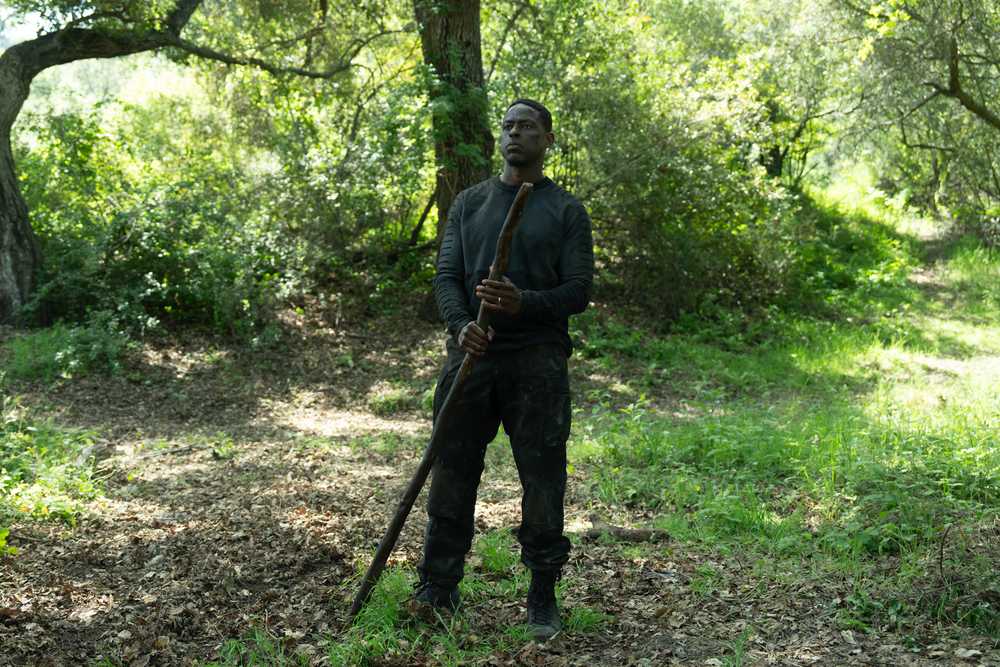
While the first season succeeded through narrative economy, Season 2 begins to sprawl. Expansion isn’t inherently flawed, but a reliance on convenient, interwoven backstories for disparate characters starts to feel slightly artificial. As new questions are piled upon old ones, the narrative waters become increasingly murky. It’s the same “mystery box” temptation that famously challenged Lost: crafting provocative riddles is effortless, but delivering a satisfying resolution is an entirely different feat.
Despite these narrative hurdles, Paradise remains visually arresting. The cinematography is breathtaking, particularly in the season’s opening sequences, which capture a haunting, cinematic view of the post-apocalyptic landscape. The flashback sequences also remain a highlight, providing much-needed context regarding Xavier’s history with Teri and her survival strategies following the global blackout.
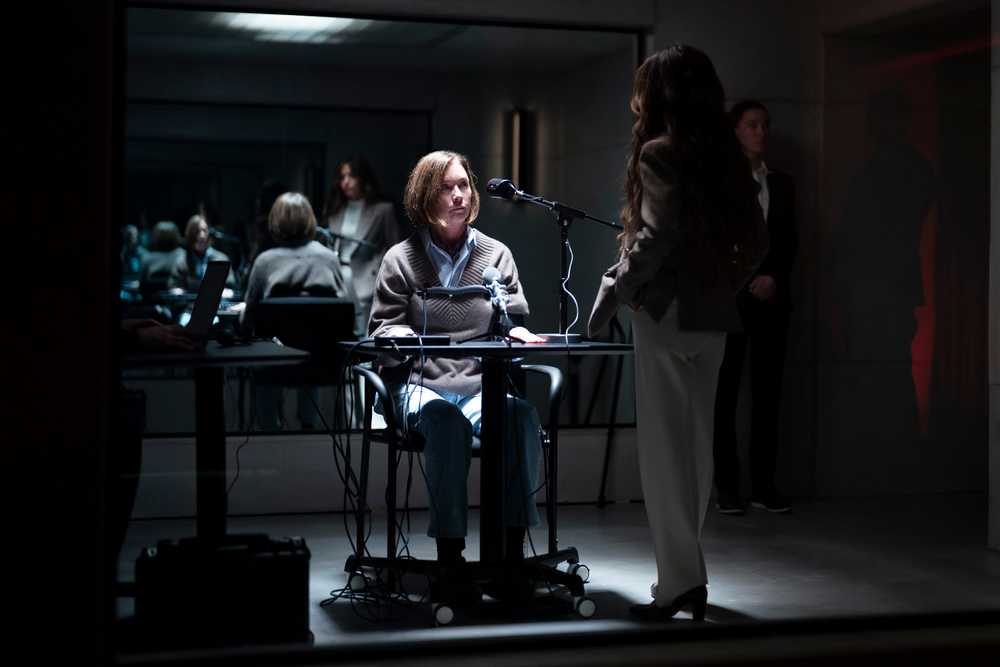
Fogelman also finds unexpected beauty in the surface world. While Season 1 examined a society that traded liberty for safety within the bunker, Season 2 reveals that life above ground has persisted in surprising ways. Xavier encounters diverse communities striving to build a more equitable society, though he still faces opportunistic predators eager to exploit the chaos.
In this sense, Paradise serves as an inversion of the Lost formula. Rather than tunneling deeper into one location, it expands outward to see what remains of humanity. Yet, as the season approaches its finale, the focus inevitably pivots back to the central bunker and its hidden conspiracies. The climax delivers the kind of high-octane cliffhanger typical of a mid-series Lost finale—offering just enough resolution to satisfy, while introducing fresh enigmas that may never be fully explained.
Stay Informed: The Polygon Report
Get the latest gaming news, film reviews, and expert insights delivered straight to your inbox.
By joining, you agree to our Terms of Use and Privacy Policy.
Paradise hasn’t quite reached the level of narrative exhaustion seen in later seasons of Lost. There is still an opportunity to ground the show, but Fogelman and his team must resist the urge to prioritize endless intrigue over meaningful answers. Adding more conspiracies and unexpected character connections can keep audiences engaged temporarily, but it risks a hollow finish.
While this approach can create addictive television, the legacy of Lost serves as a cautionary tale where even the creators eventually lost track of their own narrative threads. One hopes that Paradise will find a more cohesive path forward, even if the journey remains an undeniably thrilling ride for now.
Paradise Season 2 debuts on Hulu on February 23 with a special three-episode premiere. Subsequent episodes will release weekly on Mondays.
Source: Polygon
Related articles
 New Details Emerge About Marvel’s Zodiac Series, Featuring Spies Against People With Superpowers
 Need for Speed: Underground 2 Ported to Android
 Necromunda Tabletop Team Shares Plans for 2027
 Director Peter Berg Says Call of Duty Movie Won’t Be a Mindless Action Film
 Takopi’s Original Sin Compilation Film Gets New Trailer Ahead of November 27 Japan Release
 Doctor Who Episode “The Caretaker” Showed Peter Capaldi’s Twelfth Doctor at His Worst
 Cyberpunk: Edgerunners 2 Creators Release Two Music Albums
 MAS*H Still Stands Apart From Other TV War Series 50 Years After Its Debut