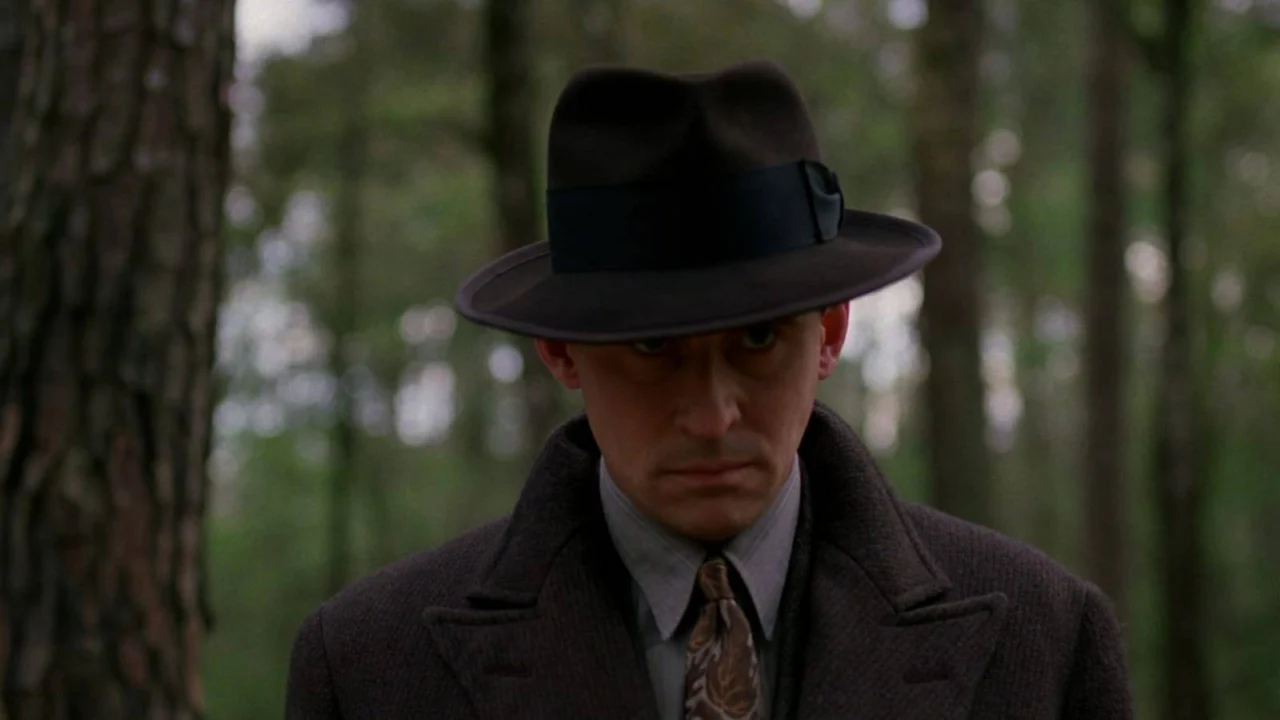
Miller’s Crossing
1990 served as a watershed moment for the gangster genre, a year bookended by the gritty brilliance of Martin Scorsese’s Goodfellas and the operatic conclusion of Francis Ford Coppola’s The Godfather Part III. Despite the reductive labels often applied to these filmmakers, neither is strictly tethered to organized crime cinema, making these entries significant milestones in their filmographies. Scorsese had explored the underworld before, yet Goodfellas marked his definitive mafia statement; conversely, the third Godfather served as a somber farewell to the Corleone saga that defined Coppola’s 1970s zenith. Both were critical darlings and box-office successes, but nestled between them was a more enigmatic noir: Miller’s Crossing, the third feature from Joel and Ethan Coen. It initially faltered at the box office and was ignored by the Academy, yet it fundamentally established the aesthetic blueprint for their legendary career.
Miller’s Crossing made its debut at the New York Film Festival just days after Goodfellas hit the mainstream. While Scorsese’s masterwork enjoyed steady commercial success, the Coens’ offering remained largely within the confines of cinephile circles. This niche appeal was perhaps inevitable; more so than any of their other works, Miller’s Crossing is a dense, academic tribute to the history of cinema itself.
While Scorsese drew inspiration from the visceral Warner Bros. crime flicks of the 30s, Goodfellas feels modern—raw, blood-soaked, and relentlessly profane. Coppola, on the other hand, elevated the once-sordid pulp tropes of the mafia into something stately and Shakespearean. The Coens, however, looked directly at the source material of the film’s 1929 setting, channeling the hard-boiled prose of Dashiell Hammett and the rhythmic banter of 40s noir. While their later crime forays would embrace colorful profanity, Miller’s Crossing utilizes a highly stylized patter, where characters exchange the greeting, “What’s the rumpus?” with straight-faced sincerity. Perhaps the film’s most iconic linguistic quirk is the short-tempered Johnny Caspar (Jon Polito) and his constant frustration with the “high hat” he receives from his rivals—a colorful period term for condescension.
The dialogue, while mirroring the staccato cadence of classic crime cinema, often teeters on the edge of screwball comedy—a genre that frequently bleeds into the Coens’ more serious work. Their two preceding films, the dark noir Blood Simple and the manic farce Raising Arizona, seem to collide here. The narrative is a Byzantine web of double-crosses and psychological leverage, led by Tom Reagan (Gabriel Byrne), an Irish strategist whose name echoes the legendary Tom Hagen from The Godfather. Reagan masterfully orchestrates a war between two factions; with a slight shift in tone, it could be a farce, yet the sudden, brutal gunfights remind the audience of the film’s lethal stakes.

Typically, these power plays are driven by the raw avarice seen in The Godfather or Goodfellas. Yet Tom Reagan appears oddly detached from such desires; he lacks both the venality of a foot soldier and the regal ambition of a don. Even his clandestine affair with Verna (Marcia Gay Harden), the paramour of his boss Leo O’Bannon (Albert Finney), seems more like a tactical complication than a romantic catalyst. He functions as a ghost in the machine—the man described as “the one who walks behind the man and whispers in his ear.”
Critics have occasionally chastised the Coens for being cold architects of their characters’ misfortunes. In many ways, Miller’s Crossing is the film where this critique feels most relevant. In a work like A Serious Man, the cruelty of fate is tied to a larger theological or thematic inquiry. Here, the film is less of a “nightmare comedy” and more of a technical exercise, lacking the existential dread found in The Man Who Wasn’t There.
Viewed alongside its 1990 peers, Miller’s Crossing feels simultaneously more traditional and more subversive. It demands a familiarity with the genre to truly resonate. Goodfellas also pays homage to the past—notably the shot of Joe Pesci firing at the camera, referencing 1903’s The Great Train Robbery—but it does so to emphasize the aggressive, immediate allure of violence. Scorsese makes the viewer a participant. Miller’s Crossing, by contrast, is weary and elegiac, though perhaps more energetic than the aging Michael Corleone in The Godfather Part III.
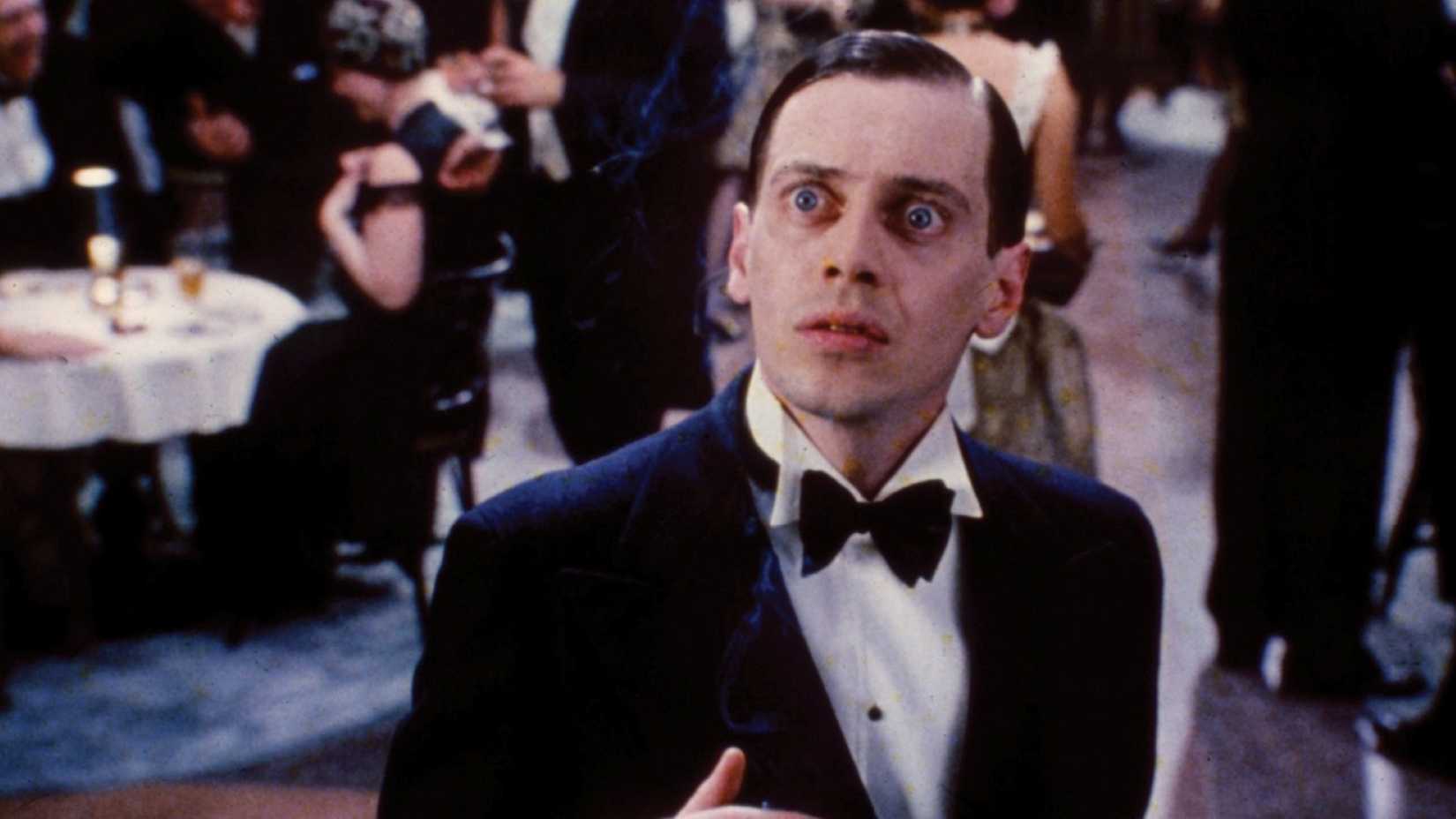
The screenplay was famously completed after the brothers overcame a bout of writer’s block that eventually inspired Barton Fink. While Fink tackled that paralysis head-on, Miller’s Crossing reflects it through the lens of language. The verbose, slang-riddled dialogue—exemplified by Steve Buscemi’s manic, one-scene appearance—is a testament to the Coens’ linguistic playfulness. Yet Tom Reagan remains an outlier, a man of few words. He doesn’t offer iconic laments like Corleone or engage in the “funny like a clown” camaraderie of the Goodfellas crew. The Coens’ decision to blend the cynicism of noir with the wit of screwball comedy is a brilliant cinephile gambit, even if it lacks the adrenaline-fueled rush of Scorsese’s criminal world.
Ultimately, Miller’s Crossing is a vibrant display of emerging mastery. Shot with lush precision by Barry Sonnenfeld—who would soon transition to directing with The Addams Family—the film is as humorous as it is tense. Whether Polito is ranting about “high hats” or dismissing underlings as “yeggs,” the film crackles with a unique energy. The atmospheric unease the Coens explored here would later be perfected in Fargo and No Country for Old Men. In 1990, the film was an outlier; today, it is recognized as the moment they truly found their voice.
Source: Polygon
Related articles
 Riot Games and Hypixel Studios to Fund Technoblade Documentary
 Sony Adapts Pixel Adventure Game The Drifter Into Film
 Netflix Sets Avatar: The Last Airbender Season 3 for 2027 Release and Reveals Fire Lord Ozai
 FX Releases First Behind-the-Scenes Video for Season 2 of Alien: Earth
 CDPR Reveals Number of Developers Working on The Witcher 3 Expansion
 Experts Explain How Ray Tracing Impacts GTA VI Visual Quality
 CD Projekt Red Begins Development on New Game Outside The Witcher and Cyberpunk Franchises
 The Video Games and More You Should Play This Weekend – September 4, 2026