
Inside the Reality of Your First Competitive Magic Tournament
A significant factor in the enduring legacy of Magic: The Gathering is its remarkable versatility. While the vast majority of enthusiasts find joy in “kitchen table” Commander sessions, the game has always maintained a prestigious professional circuit where thousands vie for supremacy in formats like Standard or Modern. Although I’ve long considered myself a dedicated player, I rarely ventured beyond the confines of my local game store. That changed when Wizards of the Coast unveiled the 2027 Magic Limited Championship. The prospect of a Pro Tour dedicated entirely to the nuances of Limited play was the catalyst I needed to finally test my mettle on the competitive stage.
Limited—encompassing both Draft and Sealed—is, in my view, the purest form of Magic. By constructing a deck on the fly from a fresh pool of boosters, players must rely on intuition and fundamental skill rather than the size of their bank accounts. Unlike Modern, where the barrier to entry is often a high-priced decklist, Limited offers a level playing field and a constantly evolving “meta” with every new expansion. Fortuitously, I belong to a vibrant Limited community; together, we set our sights on the 2027 Championship. Our journey began at the Regional Championship in Turin on March 8, a cornerstone of the Ultimate Guard European Magic Series.
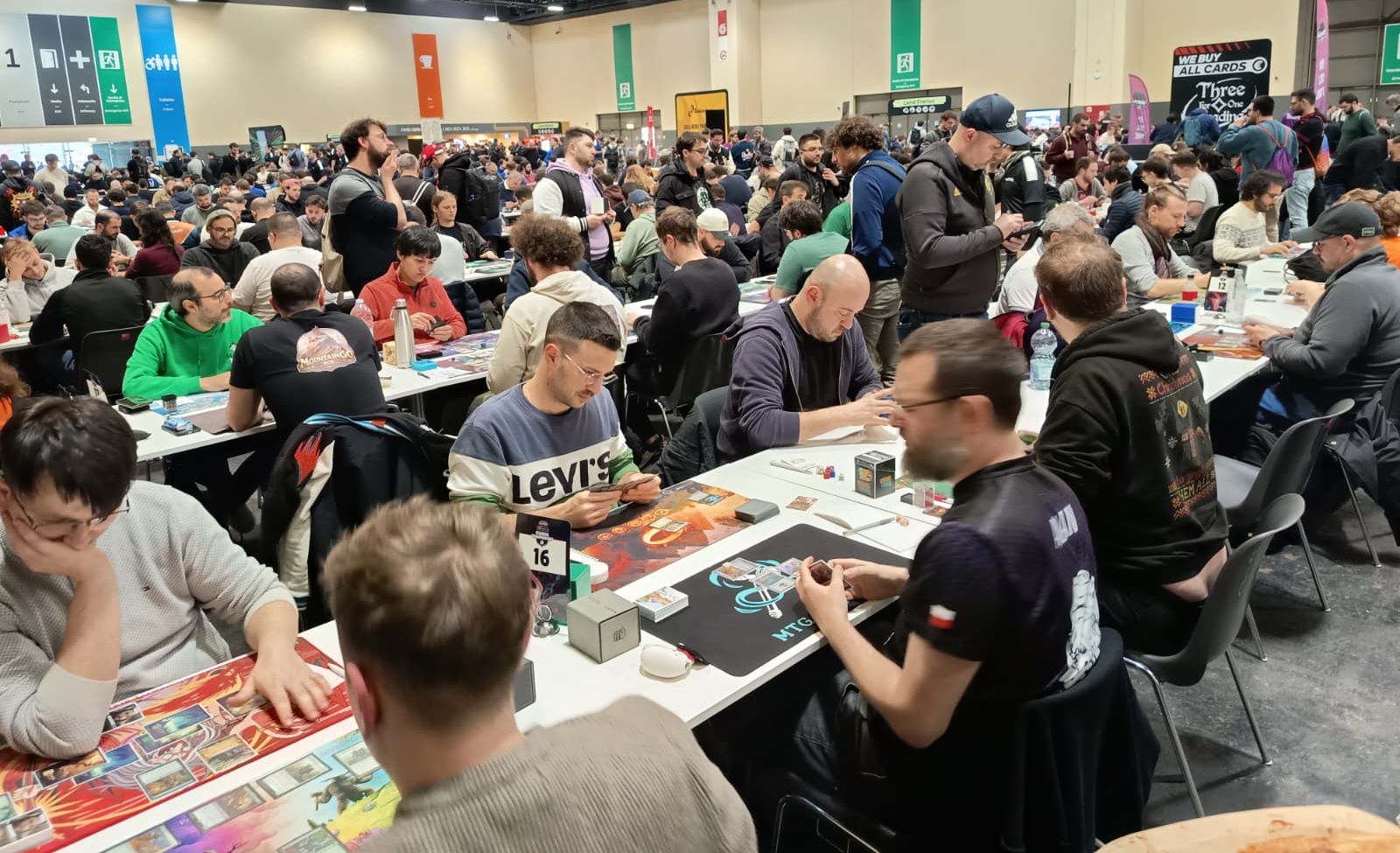
Outside of the massive Magic Cons, these Regionals are the pinnacle of European competition. While the weekend’s primary focus was Standard, the Sunday Limited Qualifier drew nearly 300 contenders. We were all chasing just four coveted invitations to the Limited Championship, navigating seven grueling rounds of Lorwyn Eclipsed Sealed, followed by a Top 32 Draft. Stepping into the venue, I felt a familiar rush of adrenaline mixed with the inevitable jitters that come with playing for high stakes.
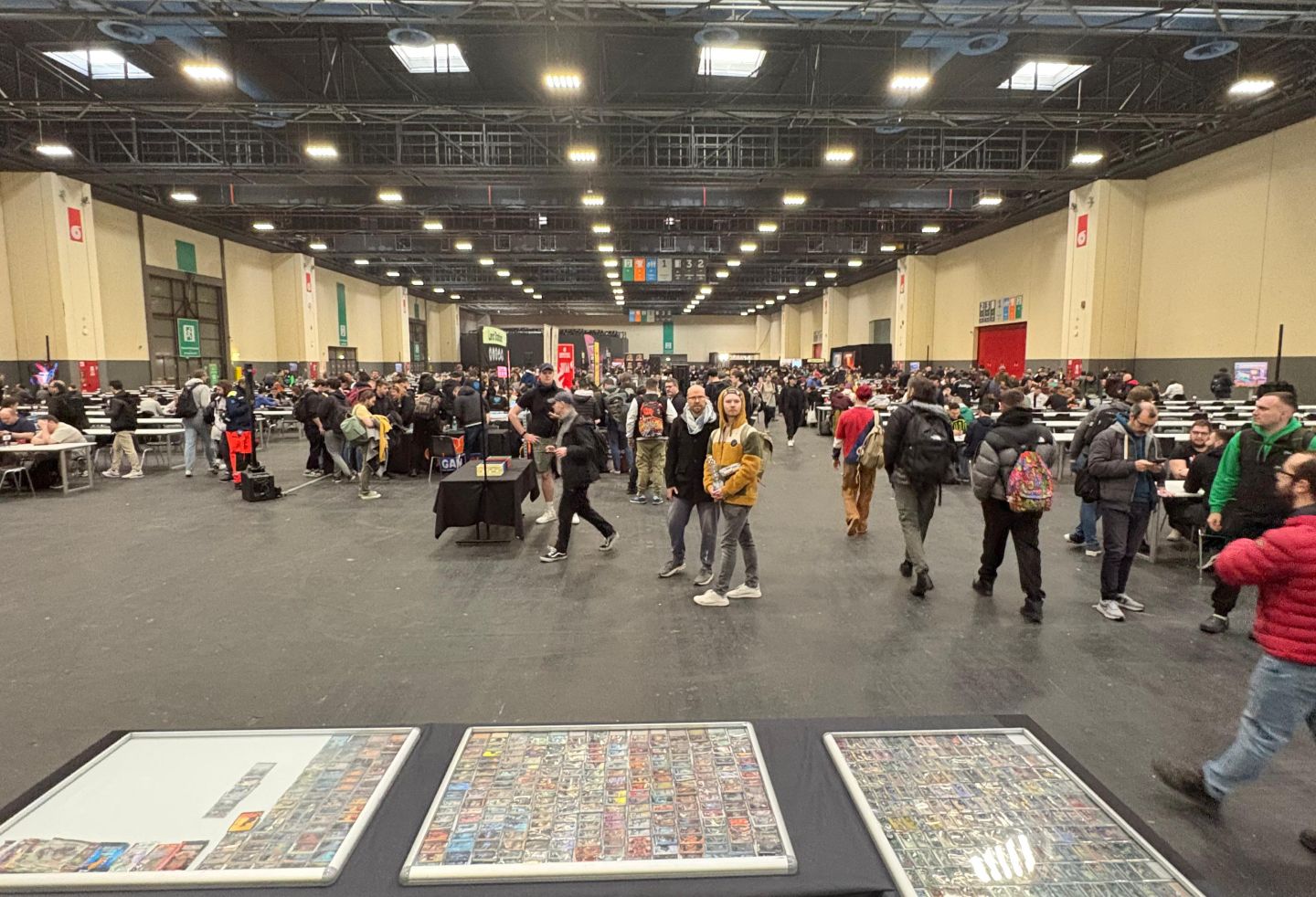
I have a complicated relationship with the Lorwyn Eclipsed environment. It is a format defined by protracted wars of attrition, complex board states, and game-swinging “bombs.” However, I respect the intellectual rigor it demands. Traditional card advantage is scarce, removal is often inefficient, and “mana flooding” is a constant threat. In this ecosystem, cards that would normally be dismissed as “draft chaff”—such as Gristle Glutton—become essential role-players. When you factor in the intricate typal synergies, building a coherent deck becomes a fascinating puzzle.
Preparation was paramount. I logged countless hours on MTG Arena and conducted practice sessions with my testing group, analyzing strategies from professional players. We arrived in Turin on a misty Friday, allowing some time for the city’s historic beauty and a few casual rounds of Pauper at the venue before the main event.
Saturday was a final dress rehearsal. Our group opened a booster box for a mock Sealed tournament, and I participated in an on-demand event to sharpen my instincts. By evening, I met with some old friends who were working the vendor booths. While the camaraderie was excellent, we stayed out far later than intended. It was a lapse in professional discipline that resulted in a serious lack of sleep before the big day.
Sunday morning arrived with a 9:00 a.m. start time. In any Limited tournament, fortune plays a role in the card pool you’re dealt. I assessed my options as a solid seven out of ten; I had powerful rares in cohesive colors, though I lacked consistent card draw. I eventually settled on a build that maximized my “top-end” potential, even if I missed a few subtle optimizations in my initial build.
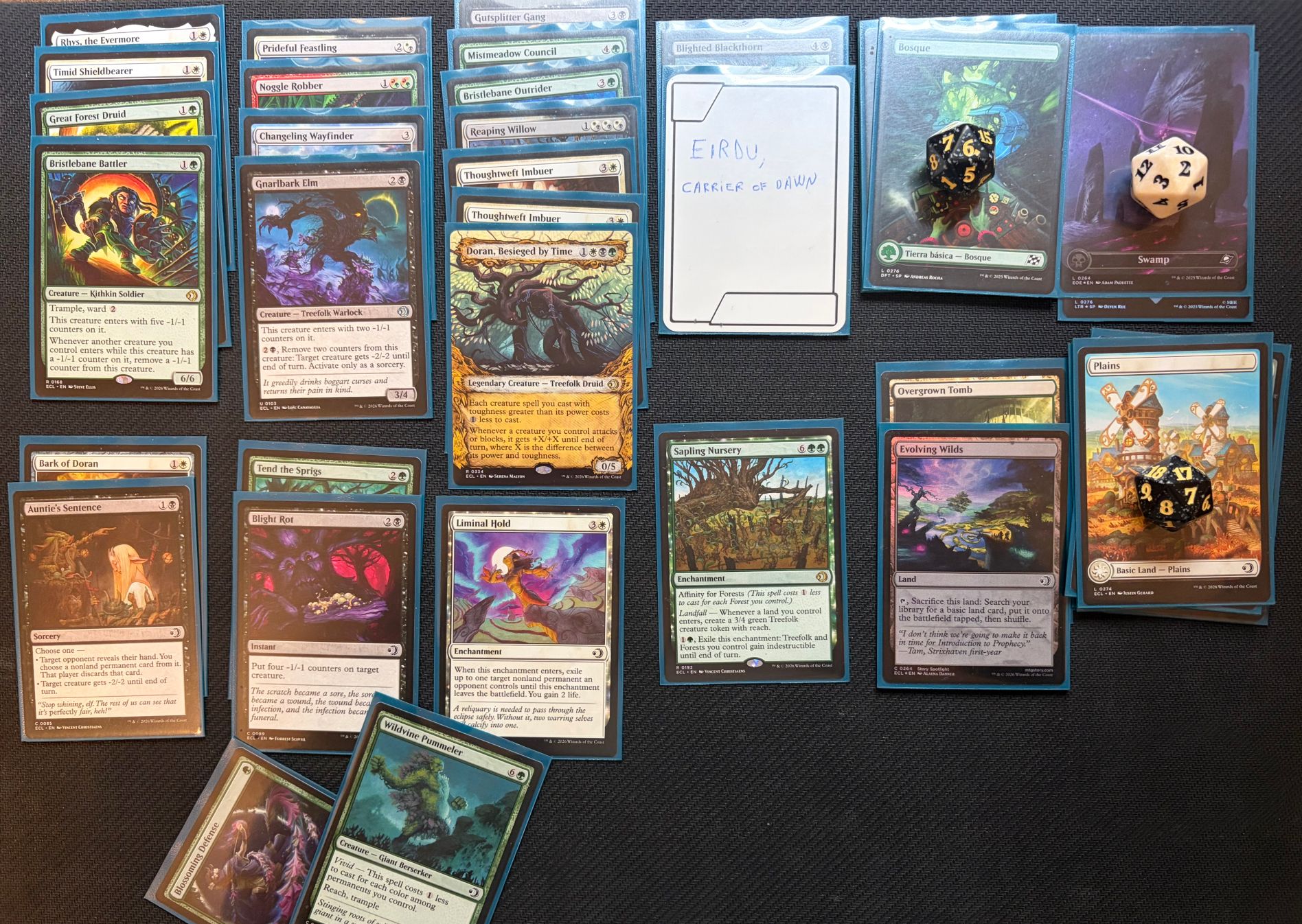
Blossoming Defense proved to be a standout, serving as both a defensive shield for my key creatures like Doran and an offensive combat trick. Additionally, Thoughtweft Imbuers.
The first round began with a comedy of errors. In my sleep-deprived state, I accidentally shuffled my sideboard into my main deck. A quick judge call resulted in a warning—a lucky break, all things considered. I managed to grind out a draw in a match that went to the final turns, despite an early Sapling Nursery.
Round two threw another curveball: a random deck check. The judges ruled that my sleeves were not sufficiently opaque, which is a major issue when playing double-faced cards like Eirdu. I was assessed a game loss, but managed to rally, winning the next two games to secure the match. It was a classic comeback that restored my confidence.
After a victory against an aggressive strategy in round three, round four became a marathon. My opponent was down to just 1 life while I sat comfortably at 35. I hesitated to play my Sapling Nursery to hide information for game two—a tactical error that almost cost me everything. He stabilized with his own Nursery, played Prismatic Undercurrents, and eventually used Omni-Changeling to copy my Eirdu. I only narrowly escaped with a win after a desperate all-out attack, aided by a clutch activation from Timid Shieldbearer. However, the game took so long that the overall match ended in another draw.
With a record of 2-0-2, the fifth round was do-or-die for the Top 32. In a twist of fate, I was paired against a close friend. The match was a rollercoaster. After I took game one, he responded in game two with a devastating Ashling’s Command, enabling a massive 12-point burn turn with Enraged Flamecasters. In the final game, I suffered a catastrophic “mana screw,” stuck on two lands until I was forced to concede. My dreams of the Top 32 were over.
I finished the day with a 3-2-2 record. While I didn’t reach the final bracket, I surpassed my personal goal of finishing with a positive win rate. Even more satisfying was seeing my friend progress, although he eventually fell victim to an 18-damage “swing turn”—a stark reminder of how explosive modern Magic can be.
Reflecting on the weekend, I was surprised by my lack of disappointment. Transitioning from casual to competitive play is as much about psychological resilience as it is about strategic execution. Competitive Magic events are a celebration of the game, regardless of where you place on the leaderboard. Whether you’re hunting for rare cards at vendor booths or meeting iconic artists, the experience is worth the trip.
If you’ve ever felt intimidated by the “Pro” side of the game, I urge you to give it a chance. Limited is the ideal entry point; it requires no prior investment and rewards pure adaptability. My quest continues in May, as I head to London for the Secrets of Strixhaven qualifier. The original Strixhaven remains one of my favorite sets, and I’m eager to see if my old strategies still hold weight.
I didn’t leave Turin with a trophy, but I left with a hunger to return. Competitive Magic isn’t an exclusive club—it’s just a larger table where the games are a bit more intense. Just remember to bring opaque sleeves and get some decent sleep.
Source: Polygon
Related articles
 Studio Behind Crime Action Game Samson Reportedly Goes Bankrupt, Leaving Employees Unpaid
 Modder Restores Cut Mass Effect 3 Multiplayer in Mass Effect Legendary Edition
 Video Memory Leaks Fixed in Bloodborne on PC, Improving Performance
 Viral She-Wolf Life Sim Family Time Reaches Steam’s Top 50 Most Wishlisted Games, Gets Cloned as Friendslop
 Pokémon Pokopia: Guide to the “Pumpkaboo’s Sweet Surprises” Event
 Musicians Talk About Vampire: The Masquerade – Bloodlines Remake, but Fans Remain Skeptical
 Battlefield 6 Developers Respond to Memes About Paid “AI Slop” Skins and Explain Design Choices
 Redwall Fantasy Series Returns in 2027 With New Novel Orphans of Mossflower After 16 Years