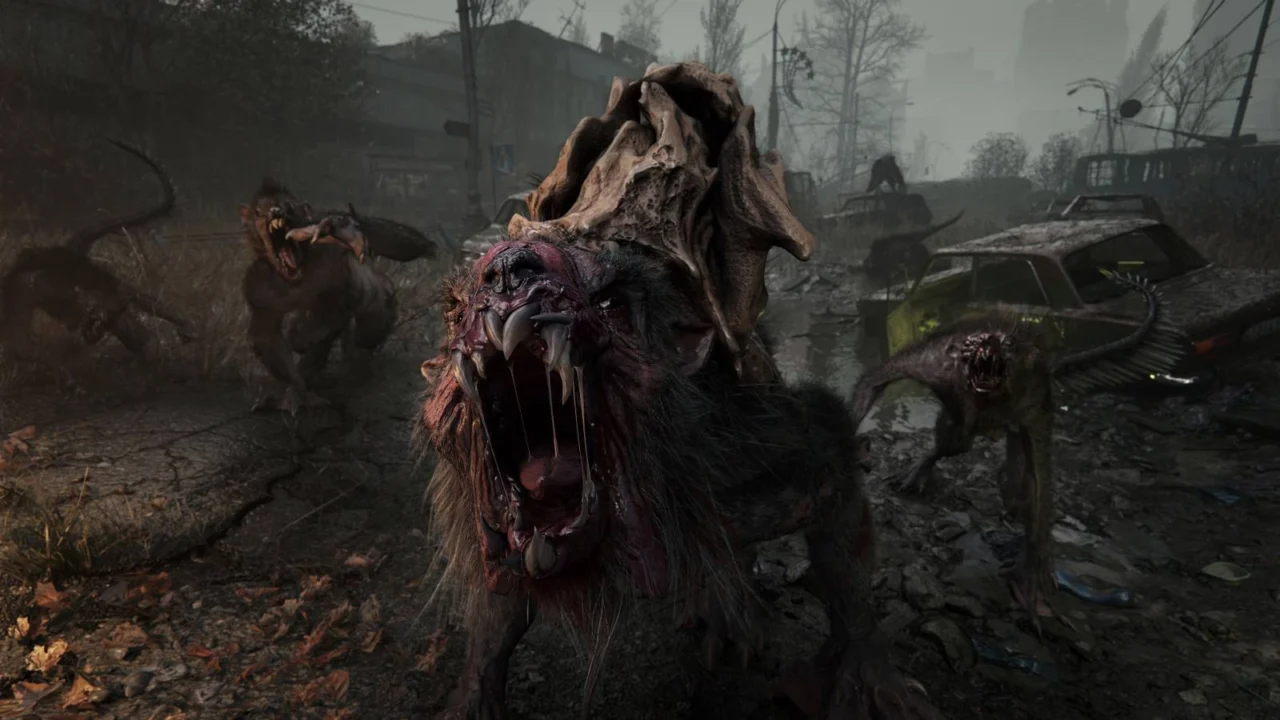
How the Ukraine War Inspired the Darkest Metro Game Yet, Developer Reveals
The geopolitical reality of today stands in stark contrast to 2019, when Deep Silver first delivered Metro Exodus to consoles and PC. The citizens of Ukraine have shouldered profound adversity following the full-scale Russian invasion initiated on February 24, 2022. This enduring crisis continues to inflict immense suffering on an innocent population caught in an unwanted conflict. For the team at 4A Games, actively crafting the bleak post-apocalypse of Metro 2039, the war profoundly reshaped their creative trajectory.
Scheduled to arrive in February 2027, Metro 2039 represents the newest entry in an acclaimed saga that originated with 2010’s Metro 2033. This atmospheric first-person franchise draws its harrowing narrative from the literary universe created by Dmitry Glukhovsky, who collaborated closely with 4A Games to realize his dystopian vision on screen. While Metro Exodus allowed a glimmer of optimism to surface, an extensive hands-on preview with the upcoming title proves the studio has not tempered its signature bleakness. The desolate world remains as unforgiving and dark as ever.
Speaking with Polygon, executive producer Jon Bloch shed light on how real-world hostilities compelled the development team to pivot their core vision.
“We had to rethink our story,” Bloch revealed. “Ideas we had of things that we had to get right with the first iteration of the game completely changed, so now the story was going to be the most important thing… We needed to basically take all the emotions of the team and everything that the team and everyone in Ukraine is going through and find a way to tell the right story.”

This introspection led 4A Games to discard earlier blueprints and restart the narrative from the ground up, placing the harrowing toll of conflict front and center. Creative director Andriy Shevchenko defines Metro 2039 as “a game without heroes.” Players step into the boots of a new lead, known simply as the Stranger—an individual guided by raw survival rather than virtuous idealism. In this desolate expanse, selfless crusades have no place; the setting has stripped away any pretense of traditional heroism.
The preview sequence begins mid-narrative, purposefully preserving central plot mysteries. It opens within a subterranean enclave just as a tense negotiation between rival factions collapses. As the antagonistic emissary departs with open threats of retribution, the Stranger calmly approaches the presiding authority, brokering an uneasy alliance to handle the brewing threat before heading into the shadows to execute the job.
Dialogue plays a pronounced role from the outset. Conversations echo from desperate denizens, transit passengers, and the protagonist himself. Marking a notable departure for the core numbered franchise (following the voiced lead in Metro Awakening VR), the Stranger speaks freely, expressing calculated motivations and viewpoints. This vocal agency establishes him not as a passive observer, but as a proactive survivor ready to seize control of volatile circumstances.
That assertiveness is indispensable given the relentless threats lurking above. Venturing to the surface reveals a misty, corpse-strewn cityscape choking on toxic atmosphere and prowled by mutated horrors. Straying even slightly from cover invites swift disaster; an early misstep near a cluster of roaming aberrations resulted in immediate demise, underscoring the lethal nature of the wasteland.

Recommended For You
Hand-picked by GameRant editors
GameRant may earn an affiliate commission from links on this page.
Sudden, brutal deaths remain an omnipresent reality. Whether succumbing to suffocation or executing a silent takedown against a patrolling guard, the stakes are unremittingly lethal. However, direct confrontation is rarely the sole solution. Intricate level design allows for tactical flexibility; the fortified installation at the heart of the demo features multiple points of ingress, establishing an exploratory benchmark found throughout the entire adventure.
While dynamic firefights utilizing firearms, explosives, and incendiary devices offer raw catharsis, the environment consistently rewards methodical reconnaissance and stealth.
“We try to provide players with different types of approaches to suit their play style,” Bloch emphasized. “If they want to go in loud or if they want to go in stealth. If they want to go in stealth, they still also have multiple choices of paths they can take… We try to put as much of that variety into those [sub locations] as we can.”
Opting for a measured, covert infiltration uncovers richer environmental storytelling, though resource depletion remains a constant hazard. Inadvertently exhausting gas mask filters while combing derelict ruins can turn disastrous within seconds. Resource allocation requires strict discipline, as crafting excessive medical supplies can quickly deplete the components vital for sustaining breathable air.

The developers are actively fine-tuning the economic and survival balance, noting that the retail release will feature broader gear progression, including specialized environmental suits. High-risk exploration will yield tangible upgrades for diligent scavengers. “There’s always a reward,” affirmed co-creative director and audio lead Pawel Ulmer.
The density of the multi-tiered environments—spanning crumbling urban structures and suffocating drainage systems—delivers an intense sense of tension. This renewed emphasis on claustrophobic staging signals a welcome return to the franchise’s atmospheric roots, refining the expansive sandbox experiments of Exodus into tightly woven, suspense-laden corridors.
Ultimately, Metro 2039 masterfully pairs gripping moment-to-moment survival with deeply reactive gameplay loops, encouraging experimentation across every ruined threshold.
“We tend to actually not write a lot of design documents,” Bloch concluded. “We tend to talk about ideas and then go prototype them and make them. And if they’re not fun, they either evolve into something completely different or they go away.”
Judging by this early preview, that iterative design philosophy is poised to deliver a profoundly impactful experience.
Related articles
 Journalists Show Nearly 25 Minutes of Gears of War: E-Day Campaign
 Heroes of Might and Magic III Remake Announced
 Control: Resonant Continues to Look Incredibly Bizarre
 Amnesia Creators Release New Trailer for Upcoming Horror Game ONTOS
 The Best Games We Played at Gamescom 2026
 First Gameplay of Ylem’s Cat Features Unique Mechanics
 Crimson Desert Developers Reveal Details About the Game’s Massive Open World
 Details Revealed for The Witcher 3: Wild Hunt – Songs of the Past