Goodbye Lara Captures the Essence of Old-School Anime
Watching certain older anime brings back a specific feeling that is difficult to explain until those shows play again. Pausing Vampire Hunter D: Bloodlust or Witch Hunter Robin feels like looking at an illustration rather than a single frame from an anime series. Each image possesses enough personality, texture, and detail that letting it move almost feels wrong.
That exact feeling is why Goodbye, Lara immediately captured attention. The series debuted on July 6 and continues airing weekly on Crunchyroll. It takes Hans Christian Andersen’s The Little Mermaid and, much like Frieren: Beyond Journey’s End, asks what happens after the fairy tale ends. Lara falls in love with a human prince, fails to find the true love required to save herself, and disappears into the sea. Two hundred years later, she resurrects in Japan’s Lake Biwa to figure out the actual meaning of love.
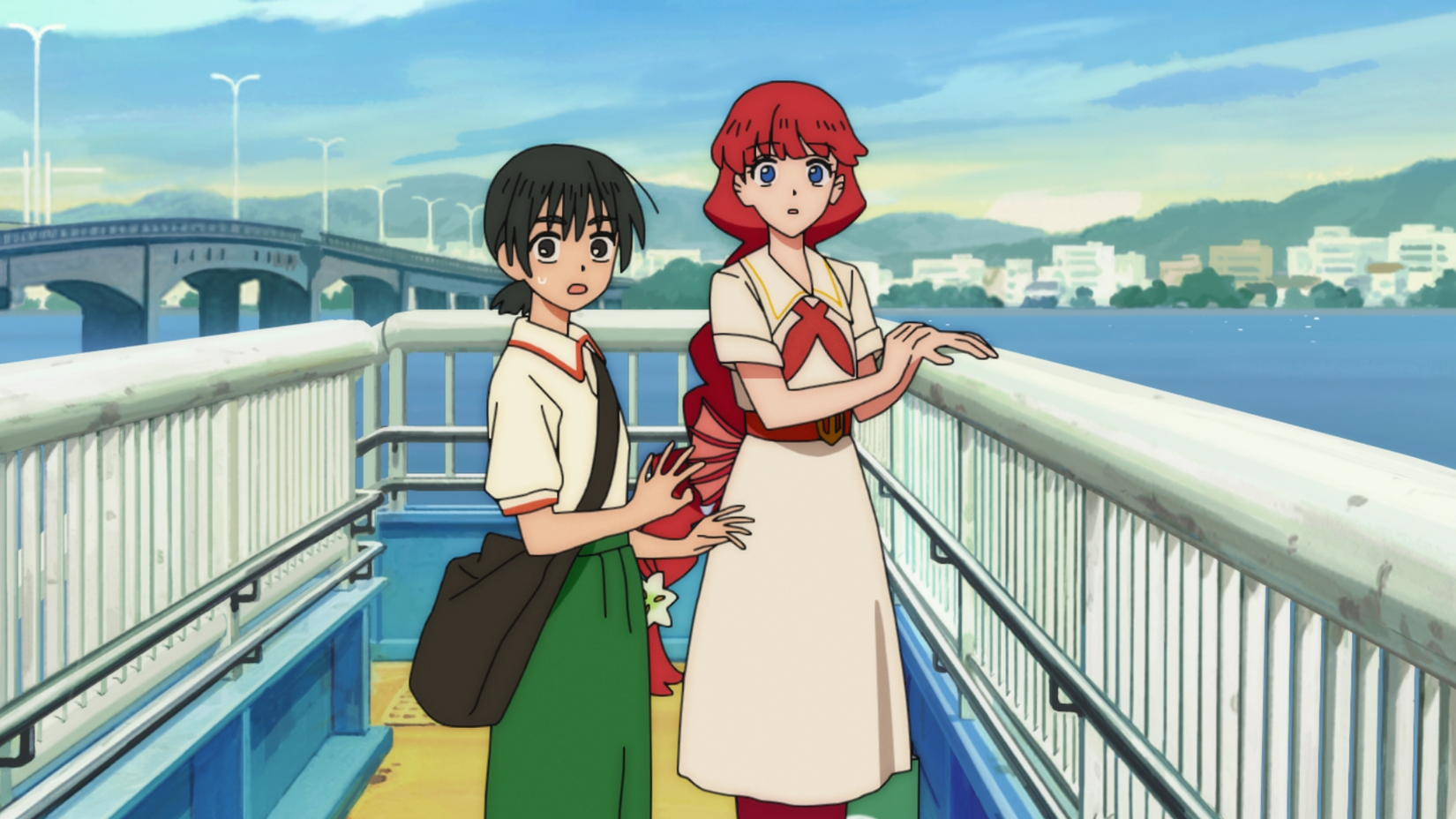
Director Takushi Koide explained in previous interviews that he wanted to take the globally recognizable framework of The Little Mermaid and place it into a localized setting in Shiga Prefecture and Lake Biwa, where he grew up. Koide trained under Kunihiko Ikuhara and worked on series like Yuri Kuma Arashi and Revue Starlight. That background prepared him well for the fairy-tale and folklore structuring that Goodbye, Lara demands, making him well-suited to dismantle and rebuild a classic story.
This philosophy guides the art of the series. Goodbye, Lara resembles older anime productions, yet most of the series is digitally drawn. Koide and the team at Kinema Citrus approach these images to create a tactile quality that many contemporary anime lack.
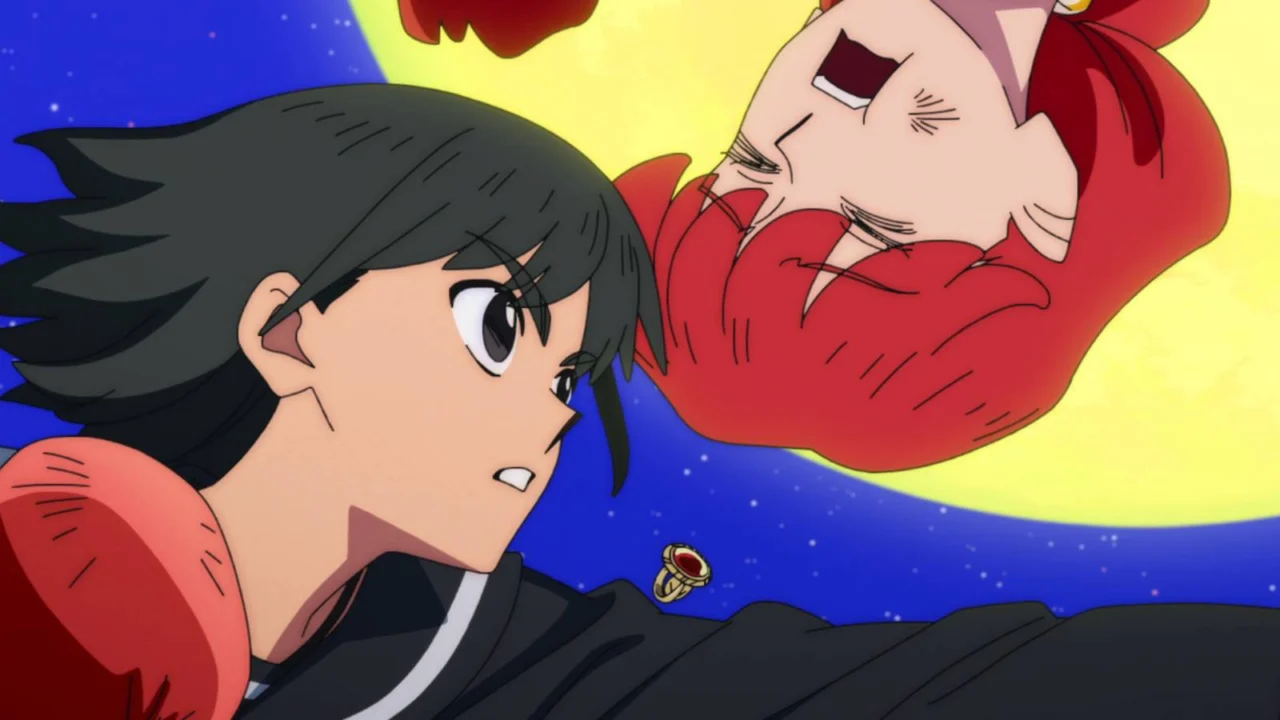
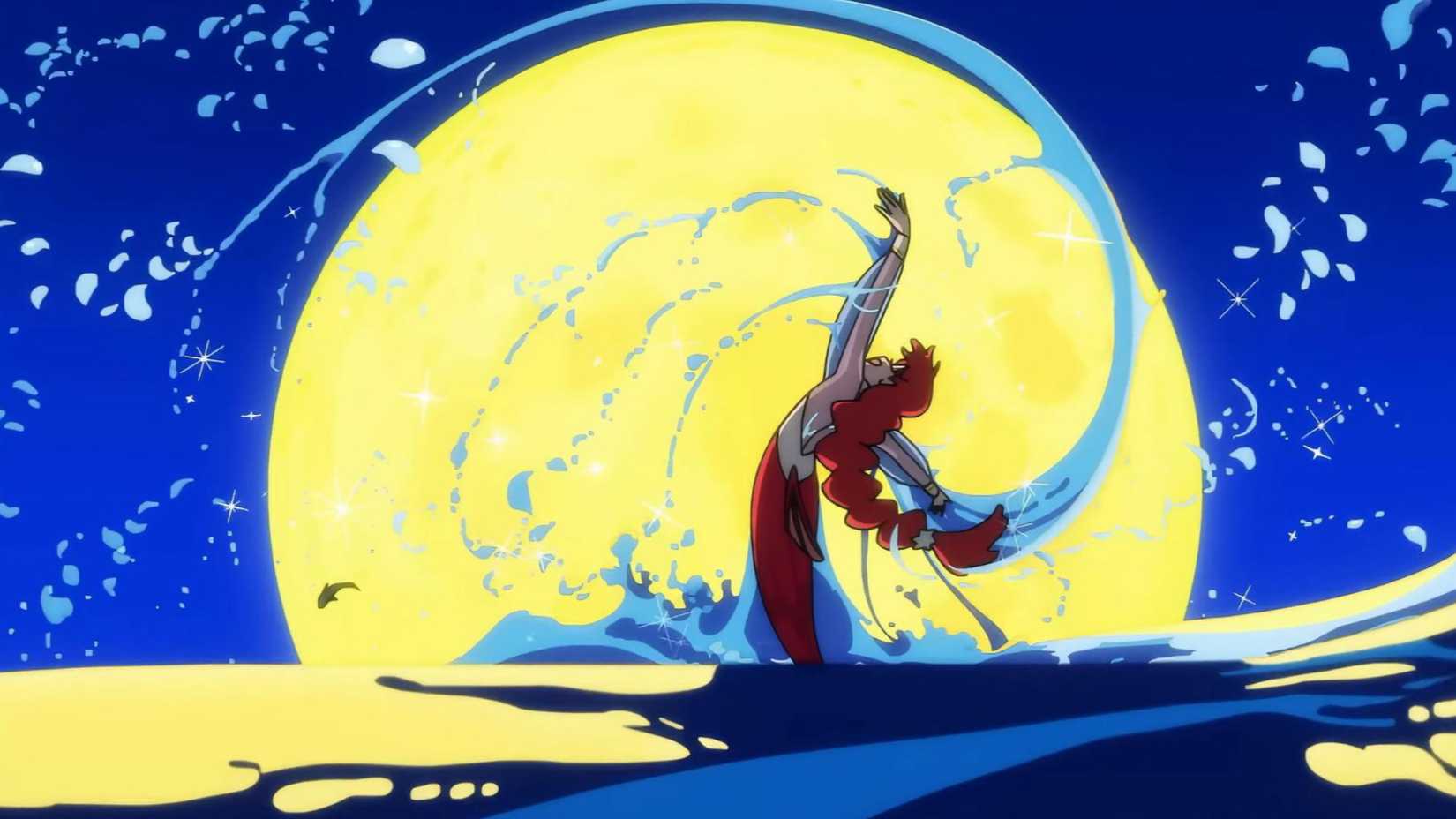
The series consistently looks and feels drawn. Thick outlines frame Lara, colors remain saturated, and characters stand out against massive expanses of water and sky. Lara’s bright red hair and clothing pop against the deep blues of her underwater world. When she emerges into the night above Lake Biwa, the yellow moon and dark water make the scene resemble a motion-enabled storybook illustration rather than a conventional television anime background.
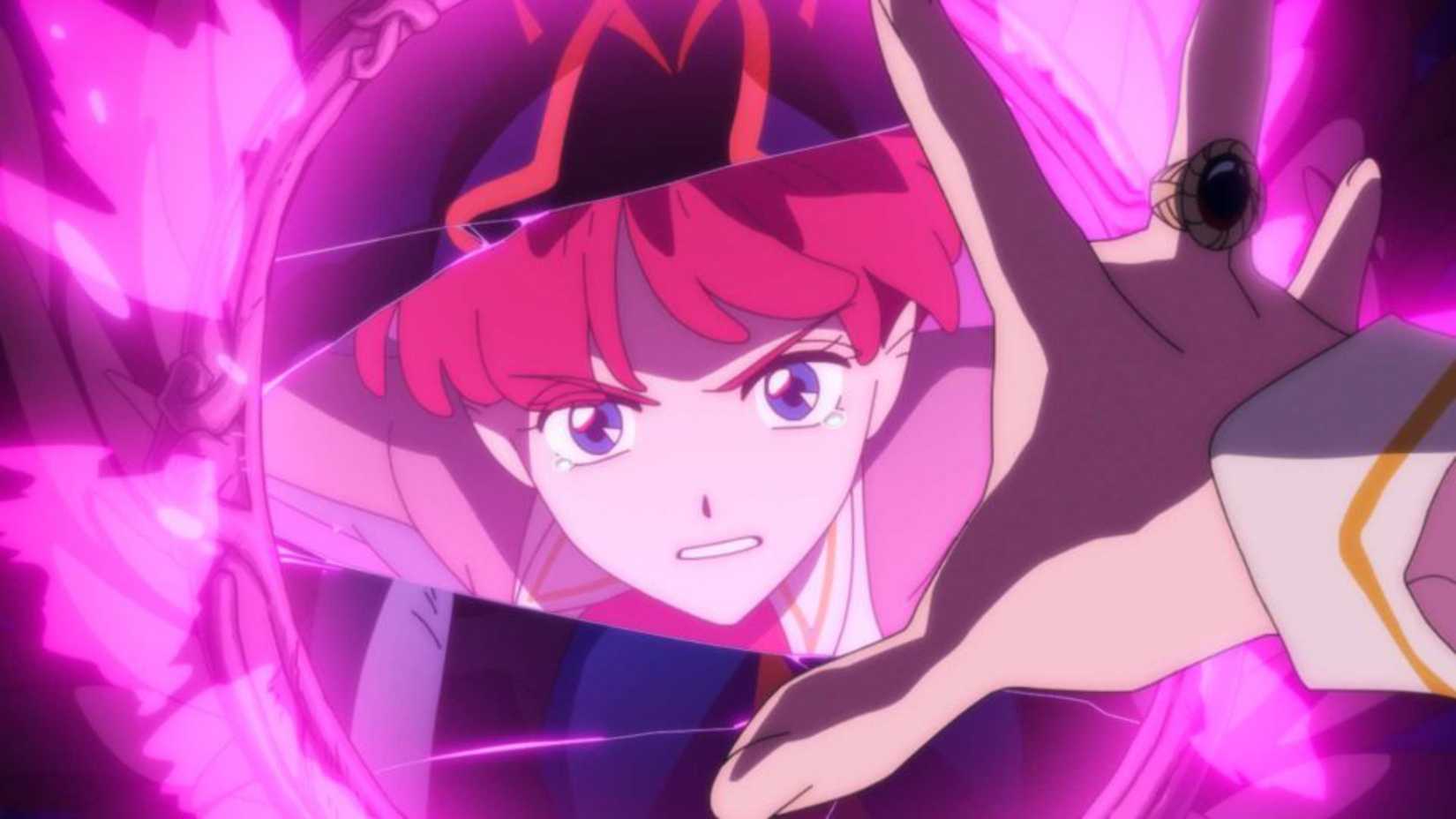
The animation relies on deliberate movement. Underwater, Lara’s hair and fins continuously react to currents while seaweed and other elements drift around her. Small details, such as floating shards from a broken mirror and Lara’s tears moving through the water, receive careful motion. The world moves alongside Lara rather than simply sitting behind her.
When the series showcases its technical skill, it does so through movement instead of spectacle. For a boxing sequence in Episode 3, Koide noted that animator Hidehiko Sawada handled nearly the entire scene by utilizing a high volume of drawings instead of depending on camera tricks or still frames. The resulting sequence feels raw and physical, allowing viewers to sense individual movements rather than just registering fast action.
Technical impressionism differs from animation that feels alive. This distinction makes it inaccurate to label Goodbye, Lara as strictly old-school or hand-drawn. Most of the series relies on digital animation while intentionally evoking the tactile quality of older anime. Setting aside the definitions of ink, paint, stylists, or tablets, the core truth is that the production cares about traditional animation qualities. The magic emerges from the visible presence of the human hand rather than the specific technology. Koide described the production as an effort to create something by hand while avoiding 3DCG and artificial intelligence.
The opening sequence highlights this approach. While digital drawing defines the rest of Goodbye, Lara, the opening incorporates actual analog cel animation. The entire series does not revert to decades-old production methods. Instead, those cel-animated moments sit beside digital work, shifting the feel of the image through a softer texture.
This choice reinforces the core message. Goodbye, Lara does not need to recreate the production process of Bloodlust or Witch Hunter Robin to evoke those earlier shows. Koide emphasizes the feeling that every moment is a work of art, transforming an old fairy tale into a story about modern Japan. Classic visual languages are rebuilt using contemporary tools, and traditional cel animation appears in the opening as another texture in the visual vocabulary.
During a recent interview with Yoshitaka Amano, the artist and his collaborators discussed how traditional hand-drawn animation might feel entirely new to younger audiences surrounded by digital imagery. Amano’s team shared a similar perspective regarding their upcoming project ZAN, noting that digital tools are not inherently problematic as long as the image starts with a human hand instead of technological generation.
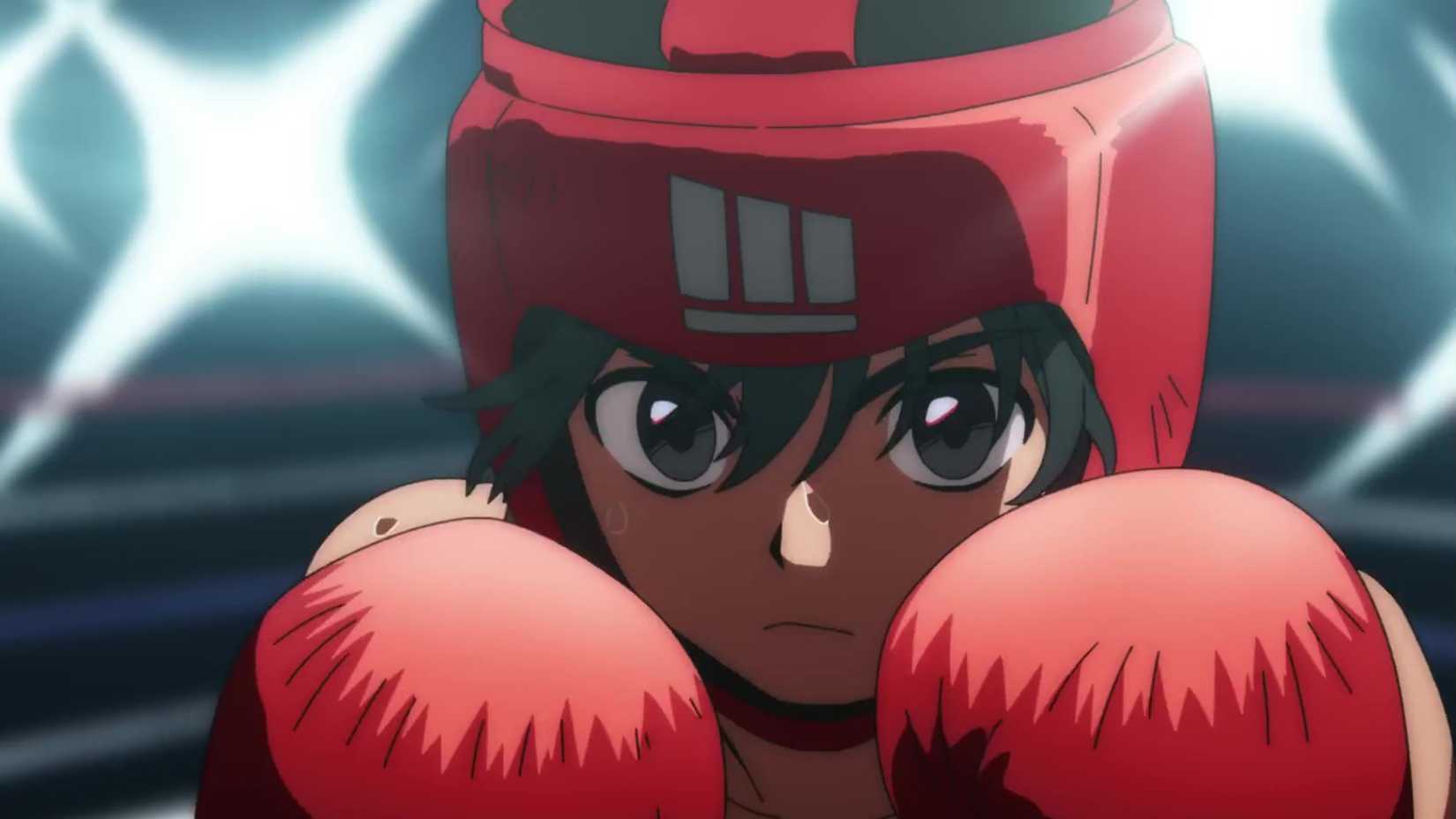
Goodbye, Lara demonstrates this same principle. Audiences are asking for animation that reflects genuine care behind every frame. The series does not recreate childhood anime, but it successfully reminds viewers why those older shows left lasting impressions. Freezing any single moment reveals the artist’s hand directly on the screen.
Goodbye, Lara takes an old myth, draws it with a contemporary hand, and makes it feel as refreshing and memorable as the all-time greats.
Goodbye, Lara is streaming on Crunchyroll
Source: Polygon
Related articles
 Crimson Desert Patch 2.00.01 Fixes Frame Rate Drops and Launch Issues
 Owlcat Reveals Voice Cast for Warhammer 40,000: Dark Heresy Alongside Gameplay Trailer
 Euro Truck Simulator 2 and ATS to Receive Graphics Upgrades in Patch 1.61
 Gintama: Yoshiwara in Flames Anime Film Premieres on Netflix with New Scenes and Characters
 PCS Opens Pre-Orders for Darth Maul Bust
 Resonance: The Post-Credits Scene of A Plague Tale Legacy, Explained
 Chinese Action RPG Where Winds Meet Surpasses 100 Million Players
 Gamescom Organizers Prevented Theft Victims from Calling Police to Protect Event and Cologne Reputation