Few gameplay moments linger in memory like the bullet-time sequences of Max Payne. That mechanic translated the slow-motion spectacle of 1999’s The Matrix into interactive form, letting players stretch firefights into balletic, gravity-defying set pieces. When Remedy released Max Payne in 2001 it became an immediate touchstone — one that many later games tried to emulate, from stylish action shooters to lesser-known experiments. Even so, most fans would argue that nothing has quite matched Max Payne’s distinct take on slow motion.
I would have said the same — until a few weeks ago, when I decided to revisit Enter the Matrix on my PlayStation 2. I first played it at launch on GameCube and remember thinking it was a messy licensed project. Returning to it in 2025 changed my mind: beneath the well-documented glitches is a combat design that, in many ways, feels remarkably forward-looking — largely because of how it leverages slo‑mo.
Released when movie tie-ins often carried low expectations, Enter the Matrix aimed higher. The Wachowskis contributed substantial original footage featuring film cast members, and Shiny Entertainment set out to capture the franchise’s distinctive action. Achieving that meant translating the films’ kinetic, physics-bending fights into a playable system — no small feat for a licensed title at the time.
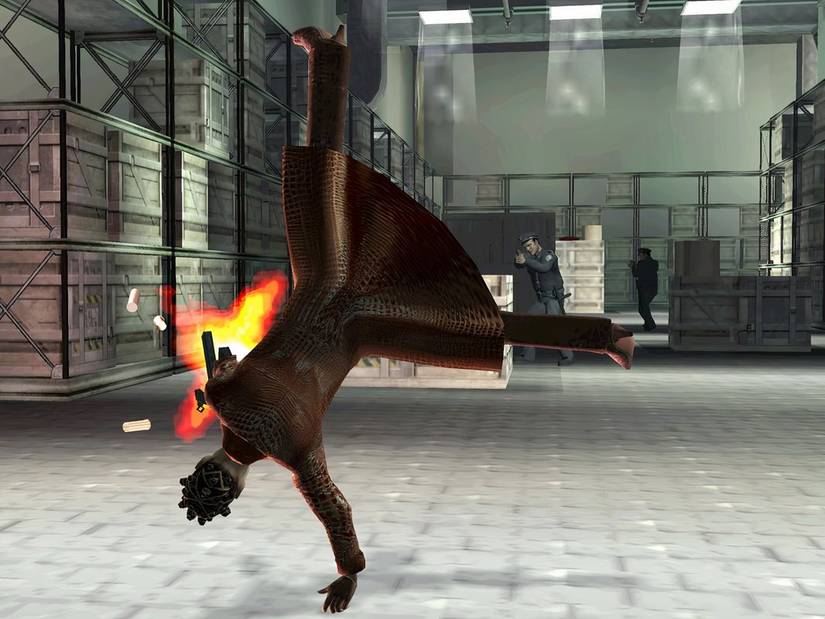
Mechanically, Enter the Matrix often resembles Max Payne: it’s a third-person shooter enriched with fluid melee, and it grants you a slow‑motion state that bends combat rhythm. Bullet time lets you rain bullets from midair, evade incoming fire, or simply orchestrate a cinematic takedown. On paper that sounds derivative, and at launch Max Payne’s shadow inevitably dulled Enter the Matrix’s initial impact.
But revisiting the game free from contemporary expectations revealed a deeper design. Bullet time in Enter the Matrix isn’t merely a temporal dial — it unlocks an alternate repertoire of moves. Hand‑to‑hand combos gain extra potency, allowing a character to palm an opponent clear across a room. Aerial maneuvers become more elaborate: you don’t just leap, you twist and chain moves in ways that feel intentionally acrobatic. The game consistently rewards improvisation, making you feel like you’re bending the rules of its world.
That clarity arrived in an ordinary, unexpected moment. I was navigating a mailroom and cornered the elevator — guarded by two shooters. I hit bullet time to shrug off the incoming fire and sprinted toward them with dual uzis. Running along a wall, my character vaulted off it, executed a double spin midair while firing, and landed to find both enemies neutralized. The sequence wasn’t scripted; it was emergent, and it underscored how naturally the system supports stylish, unplanned victories.
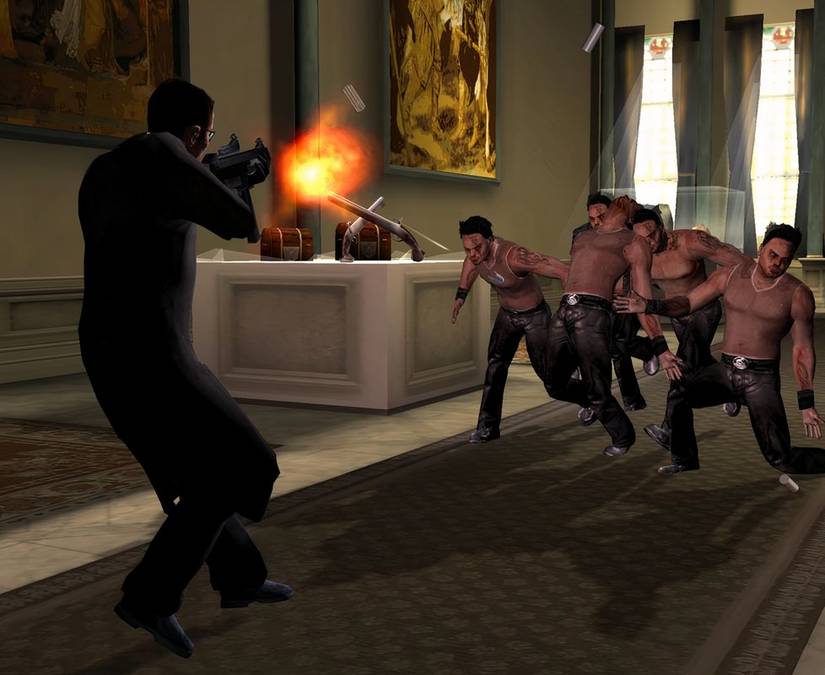
Even with its persistent bugs, Enter the Matrix now reads as prescient. It grasps that the allure of the films’ slow motion isn’t solely an aesthetic slowdown; it’s a superpower that lets characters break physical rules. The best game systems mirror that idea — think Bayonetta’s Witch Time or the instant-clearing abilities in many hack-and-slash titles — by turning a brief mechanical advantage into an ecstatic power fantasy. Enter the Matrix dispenses those moments generously, and they land with a satisfying weight.
With a contemporary Max Payne remake reportedly in development, I’m intrigued to see whether Remedy borrows anything from its peers. It would be poetic if a new Max Payne learned a few tricks from a licensed game that itself took cues from a film: inspiration looping back on inspiration. Either way, revisiting Enter the Matrix reminded me that sometimes overlooked design choices deserve a second look.
Source: Polygon