Four episodes into Dispatch — the narrative game from former Telltale writers now at AdHoc Studio — the superhero plot is finally sharpening into focus. The player-driven choices still haven’t felt especially decisive, but the arc is bending toward a turning point: a heated romance has escalated, alliances are fraying, and a broader supervillain storyline looks poised to surface. The weekly cliffhangers keep me coming back, yet it’s the underlying promise that player decisions will meaningfully alter the tale that remains the title’s strongest lure.
Still, I’m not yet convinced my choices carry real consequence. It’s not that I doubt the dialogue options will matter eventually—I’ve already made several decisions that feel like they’ll reverberate later. The problem is the recurring management-sim minigame that punctuates each episode hasn’t demonstrated that it matters to the larger narrative.
Dispatch centers on Robert, a retired hero who takes a desk job at the Superhero Dispatch Network. From his post he assigns members of the Z-Team to incidents each day, matching heroes’ stats to incoming threats. Those segments are a neat way to both flesh out SDN’s roster and add a bite-sized RPG layer to an otherwise traditional narrative adventure. In the first two episodes those 15-minute shifts were among the more enjoyable parts of my playthrough, but I wasn’t sure how they would feed into the story’s broader machinery.
 Image: AdHoc Studio
After the most recent episodes I feel even more ambivalent. Episode 3 positions itself as the moment when the management sim should bite: Blonde Blazer, SDN’s director, announces that the worst-performing hero will be dismissed. It’s a compelling setup. During that chapter I found myself unusually meticulous—tracking who I’d neglected to deploy, fretting over failed missions, and worrying that characters I hadn’t yet learned would be removed before they had a chance to develop.
By the end I faced a gut punch: choose between Sonar or Coupé. How had I mismanaged two of my favorite heroes so quickly?
But the reveal was deflating: the chapter only ever offers Sonar and Coupé as the two possible firings. Community discussion, achievement logs, and in-game postmortems confirmed there aren’t alternate outcomes — other teammates like Prism, even after repeated failures, never became selectable. In short, the apparent choice was narrower than it felt in the moment.
 Image: AdHoc Studio
That design choice is understandable—building fully branching consequences for every dispatch outcome would quickly balloon into an unmanageable number of narrative permutations. Still, if the sim can’t meaningfully alter who’s available or how the story unfolds, what incentive remains to treat it as anything more than window dressing?
So far the minigame feels like an engine for emphasis rather than a driver of plot. After being forced to let Sonar go, I suffered the immediate, narratively effective consequences: understaffing, missed calls, and a renewed sense that each teammate matters. It’s a neat storytelling trick. Yet my hands-on performance in those missions barely influenced which characters were at risk, so the gameplay can feel more like a placebo—an activity that gives the illusion of agency without substantial downstream payoff.
I’m open to being proven wrong. This is, after all, a Telltale-style episodic story; late-game turning points often hinge on earlier stats and relationships. Dispatch may reserve the payoff for later chapters. But Episode 3 undermines that trust by signaling the management sim and the scripted scenes operate on separate tracks. There’s never a “Blonde Blazer will remember that” cue to suggest my dispatch choices will reverberate—just another workday I clock through.
Maybe that separation is intentional.
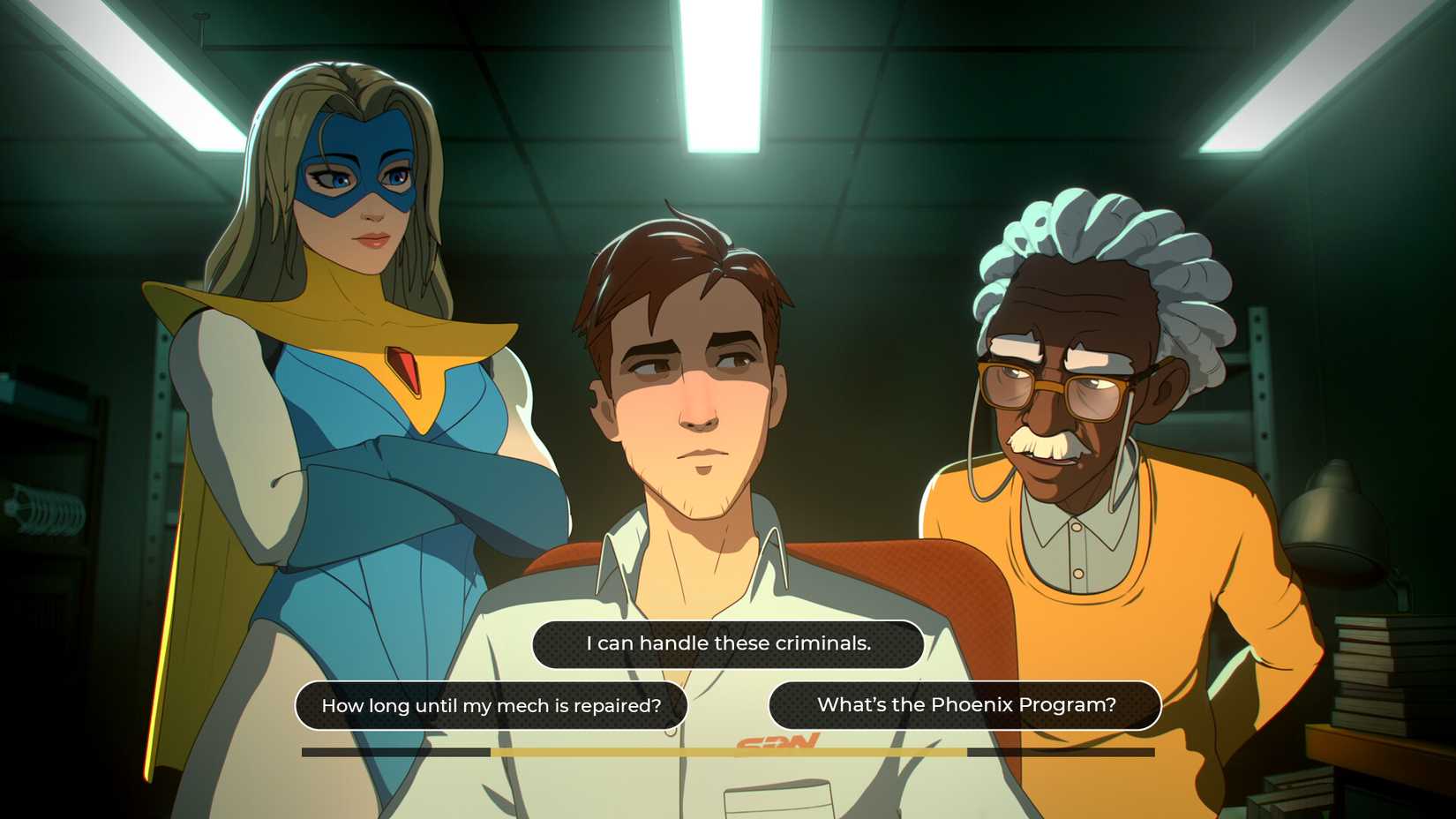 Image: AdHoc Studio
There are still four episodes left in Dispatch’s run, and I might be judging the system prematurely. That’s the trade-off with episodic releases: they foster suspense but also test your patience when mechanical threads haven’t yet knitted together.
Even if a major reveal awaits, Dispatch hasn’t yet persuaded me to care as much about Robert’s new desk role as he apparently does. I want to share his investment, but the game needs to introduce tangible stakes soon if I’m going to commit to playing like every dispatch matters.
Source: Polygon