
Critical Role Teases Paladin Choice for Ashley Johnson
Player actions carry real weight in Dungeons & Dragons, whether a group focuses on combat or role-playing. The cast of Critical Role Campaign 4 recently saw those consequences unfold after decisions made during the Convergence storyline caused major shifts for the party.
Editor’s note: This article contains spoilers for Critical Role Campaign 4, episode 32, “Road of Dreams.”
Ashley Johnson’s character, Vaelus, first appeared at the conclusion of Thjazi Fang’s funeral in episode 1. Initially, the elf held deep hostility toward the orc who gathered the 13-player group. Her anger stemmed from the theft of the Stone of Nightsong, a holy relic the Sisters of Sylandri ordered her to retrieve. Over time, growing bonds with companions like Thaisha Lloy (Aabria Iyengar) and Occtis Tachonis (Alexander Ward) pulled Vaelus away from her original objective.
Her devotion met its hardest trial during Convergence. To stabilize the bridge carrying orc souls to the Dying Fields afterlife, Vaelus had to destroy the Stone of Nightsong. Preserving the artifact meant risking the bridge collapsing. She chose to shatter the stone, destroying a sacred relic tied to the deity she had served for centuries.
The fallout arrived swiftly in “Road of Dreams.” Experiencing a dream for the first time in years, Vaelus confronted Kyra, the Matriarch of the Sisters of Sylandri. Kyra vowed to hunt down and kill Vaelus for her betrayal. When Vaelus woke up, her divine connection was gone, leaving her completely unable to cast magic.
Is Vaelus still a Paladin?
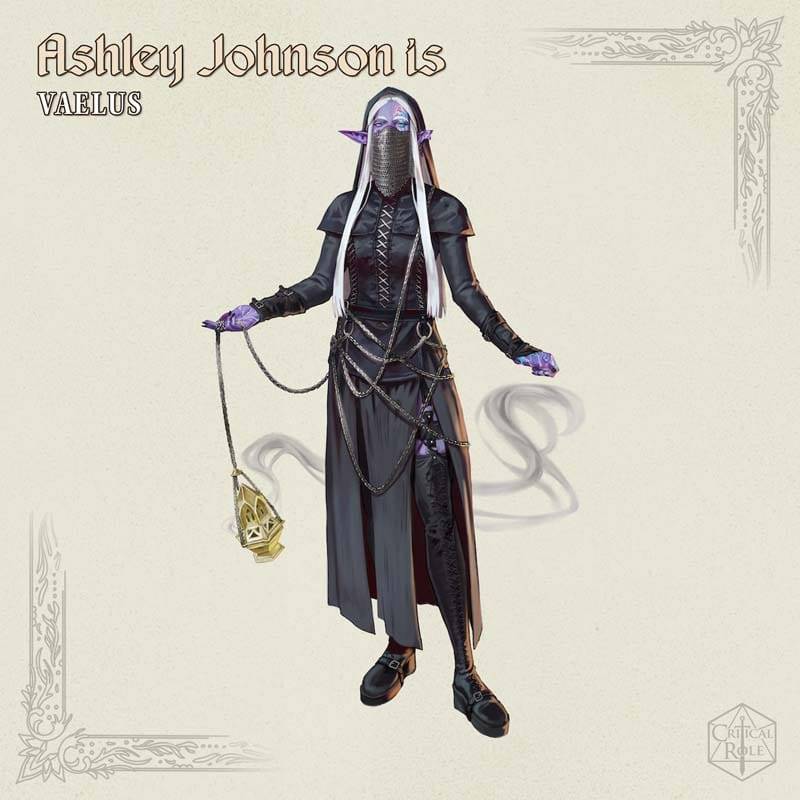
Despite the loss of magical abilities, the core character sheet for Vaelus remains largely untouched, outside of a permanent +2 Wisdom bonus gained inside the dream world. Mechanically, she still counts as a paladin, yet she cannot use standard class features such as Lay on Hands or Vow of Enmity.
Magic functions differently across character classes in D&D. Warlocks draw power from a patron entity, wizards study the arcane weave, and paladins draw strength from swearing an oath. A paladin keeps those powers only while upholding their tenets.
The episode UI also kept Vaelus listed as a paladin. While overlay graphics are not definitive, the production team previously updated the UI right away when revealing that Wicander Halovar (Sam Riegel) was a sorcerer rather than a cleric.
Is Vaelus an Oathbreaker Paladin now?

Vaelus violated her vows to Sylandri and the order, but that breach does not automatically make her an Oathbreaker. In the core rules, Oathbreaker paladins break their oaths to pursue dark ambitions or selfish desires, which does not match the selfless choice Vaelus made.
The Oathbreaker subclass also relies heavily on necromantic magic, including raising undead minions and casting curses. House Tachonis stands as a primary antagonist faction tied to the undead in Campaign 4, making a necromantic shift feel out of place for the character.
A different path forward could involve swearing loyalty to a new power or multiclassing. Conversations with Thaisha and Hannan showed that Vaelus holds genuine interest in druidic sects and the spiritual crossing to the afterlife. A transition toward druidic magic remains a distinct possibility.
Paladins in Fifth Edition and the 5.5 rules rely on their Oaths rather than the strict Lawful Good alignment mandates of older editions. Dungeon Masters have freedom in how they penalize broken vows, and the Oathbreaker subclass represents only one possible outcome. For now, Vaelus faces the threat of being hunted by the Sisters of Sylandri without the divine power she relied on for centuries.
Source: Polygon
Related articles
 Square Enix Hints at Drakengard Return, Prompting Remake Speculation From Fans
 Lost Fortnite Footage Surfaces 14 Years Later
 Blizzard Cancels Future Diablo IV Expansions to Focus on Diablo V
 First Details of New StarCraft Game and One Target Platform Revealed
 Diablo IV Adds Moofisto Boss for New Event
 Heroes of the Storm Fans Urge Donations Ahead of New Hero and Blizzard Evaluation
 Release Date Announced for Minecraft Wilderness Bound Update Featuring New Biome and Features
 Genshin Impact Developers Sue AI Company Over Voice Copying