Anno 117’s Newest DLC Is Surprisingly Fun
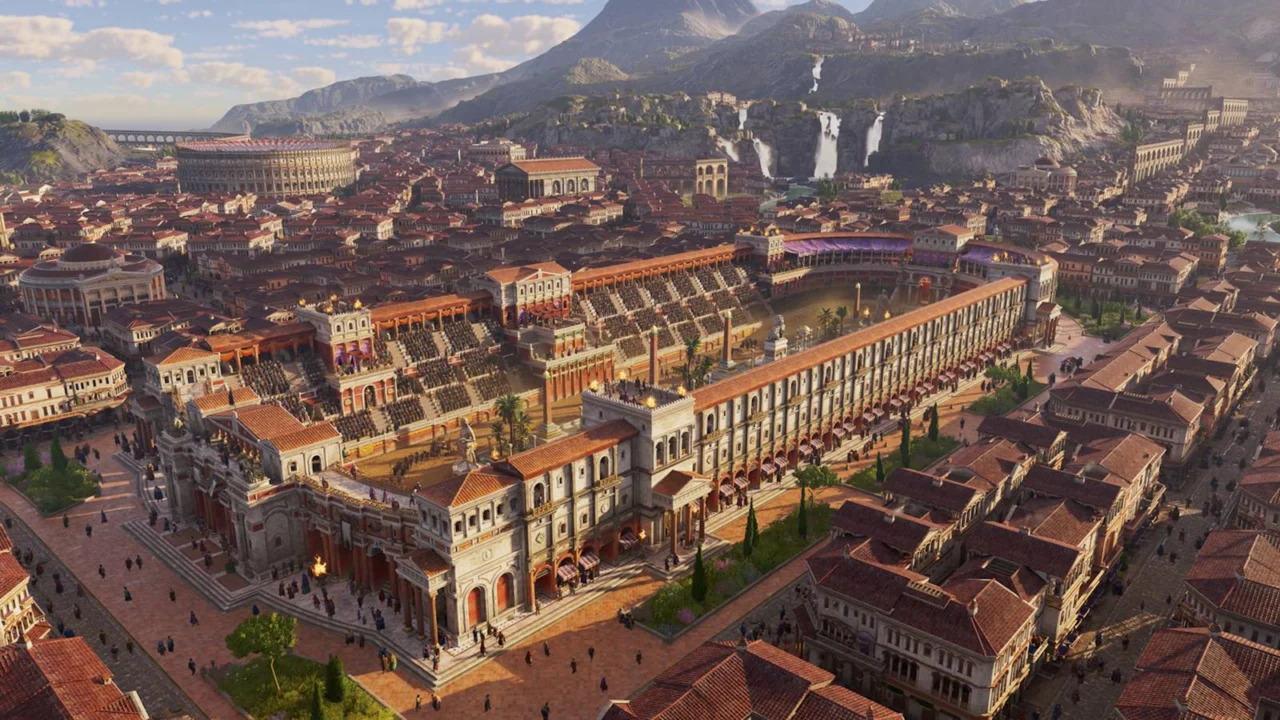
Historically speaking, mid-season downloadable content in the Anno franchise tends to feel underwhelming compared to major launch expansions or grand finales. They often act merely as foundational stepping stones rather than compelling additions in their own right. Consequently, my expectations for the Hippodrome DLC in Anno 117: Pax Romana were quite modest—and, as it turns out, unnecessarily pessimistic. While it essentially introduces a single monument-class structure, it is a magnificent piece of engineering.
At its core, the expansion unlocks an innovative research path leading directly to the construction of the Hippodrome. In both Roman and Byzantine antiquity, these colossal arenas carried profound political weight. They served as rare egalitarian spaces where aristocracy and ordinary citizens gathered side by side to witness chariot races, while emperors utilized the grounds for coronations, public spectacles, and sweeping state ceremonies. While Anno 117 omits the public executions, focusing purely on high-speed chariot racing and athletic prestige, the surrounding pomp and cultural gravity feel brilliantly authentic.
For those unfamiliar with the grueling reality of constructing colossal marvels, the undertaking is delightfully chaotic. Progress occurs in distinct milestones, each demanding staggering quantities of supplies. Basic necessities like timber and concrete are relatively straightforward to secure, but you will quickly find yourself burning through massive stockpiles of marble and intricate mosaics. Depending on your chosen difficulty settings and the procedural quirks of world generation—which dictates island resource distribution—acquiring sufficient marble or the vital pigments for mosaics can become a genuine logistical bottleneck.
The Hippodrome follows this demanding philosophy, introducing even steeper requirements, including specialized textiles—meaning you might need to repurpose flax fields previously reserved for togas—alongside sturdy granite imported from Albion. This latter requirement caught me entirely off guard. In my ongoing playthrough, I had largely ignored Albion’s marshy, eel-infested expanses, visiting only to gather basic commodities for the Roman elite. Consequently, I had to rapidly establish a rudimentary industrial base there to quarry granite, claim neighboring islands capable of supporting heavy extraction, and organize a complex maritime supply route back to the capital.
Navigating these supply chain disruptions is all part of the grand architectural challenge. Because the project demands hundreds of specialized laborers, my own short-sighted island zoning severely limited where I could safely anchor the Hippodrome. Fortunately, the massive mainland territory of Cinis, introduced in the Prophecies of Ash expansion, came to the rescue. When reviewing that previous update, I noted how Anno 117 occasionally struggles with structured direction during the mid-game phase. Erecting a monument on the scale of the Hippodrome—and cultivating the robust civilization required to sustain it—provides precisely the kind of satisfying structural progression the game needs.
Once the dust settled and all four grueling construction phases reached completion, the Hippodrome finally opened its gates to the public, transforming from a logistical headache into a genuine gameplay centerpiece. The structure features a dedicated splendor metric that bestows powerful production buffs across the entire island, scaling dynamically as your splendor rating increases. This level of systemic interconnectedness is uncharacteristic of Anno 117‘s usual loop; while a standard bakery might provide local income bonuses or elevate fire risks, it rarely interacts meaningfully with distant infrastructure. Even the amphitheater, the game’s other current monument, primarily yielded prestige rather than tangible functional integration. I eagerly hope upcoming content drops, such as the upcoming Delta expansion, lean even further into these intricate building synergies to make urban planning decisions deeply consequential.
Speaking of prestige, it remains a mechanic that Anno 117 has historically underutilized. While it primarily serves as a magnet for rare specialists, the free 2.0 update released alongside the Hippodrome DLC elevates its overall importance. This update introduces a brand-new “Heroic” tier of specialists who are far more inclined to join your empire when attracted by high levels of splendor and prestige, and their capabilities are genuinely extraordinary.
One such specialist entirely eradicates the need for pigment supply chains, freeing up precious mountain terrain for alternative industries. Another permits the direct conversion of bronze into gold, a third supercharges marble and mosaic output when positioned near quarries, and yet another allows timber to substitute for chassis production entirely. Admittedly, if you aren’t manufacturing racing chariots, that final perk loses its luster, but the sheer viability of bypassing an entire industrial pipeline is remarkably satisfying. Admittedly, these are distinctly late-game advantages, but they finally incentivize me to nurture a single world over a prolonged period, expanding its prosperity rather than abandoning the save file the moment a fresh session beckons.
So far, this system feels considerably more measured than the sometimes heavy-handed production bypasses seen in Anno 1800. Certain additions in that title, such as agricultural silos, rendered entire production methods almost trivial. While undeniably convenient when sustaining gargantuan metropolises in the deep late-game, they lacked nuance beforehand. Anno 117’s more granular, modular implementation resonates much better with my playstyle.
There is no doubt that Anno 117 still has plenty of room to evolve and expand. However, following the groundwork laid by Prophecies of Ash and now refined by the brilliant additions of the Hippodrome DLC, I am more enthusiastic than ever to witness what Ubisoft Mainz dreams up next.
From the new studio behind Cities: Skylines 2
Source: Polygon
Related articles
 First Details on Diablo V Emerge With Reports of New Classes and Mechanics
 Paradox Releases New DLC and Makes Surviving Mars: Relaunched Temporarily Free
 Caribbean Legend: Age of Pirates Update 1.2 Adds Story DLC and Improvements
 Zenless Zone Zero 3.3 Introduces Phoenix and Severian in First Look
 New Open-World StarCraft Shooter Announced Along with First Trailer
 Vermilion Mask Director Explains Why the New Anime Adopts an Old-School Style
 First Diablo V Teaser Suggests Diablo Won and Prepares Players for a New Era
 Heroes of the Storm to Add Playable Xal’atath Content