
Altered Carbon Creator Returns to Detective Noir with a Dark World War I Twist
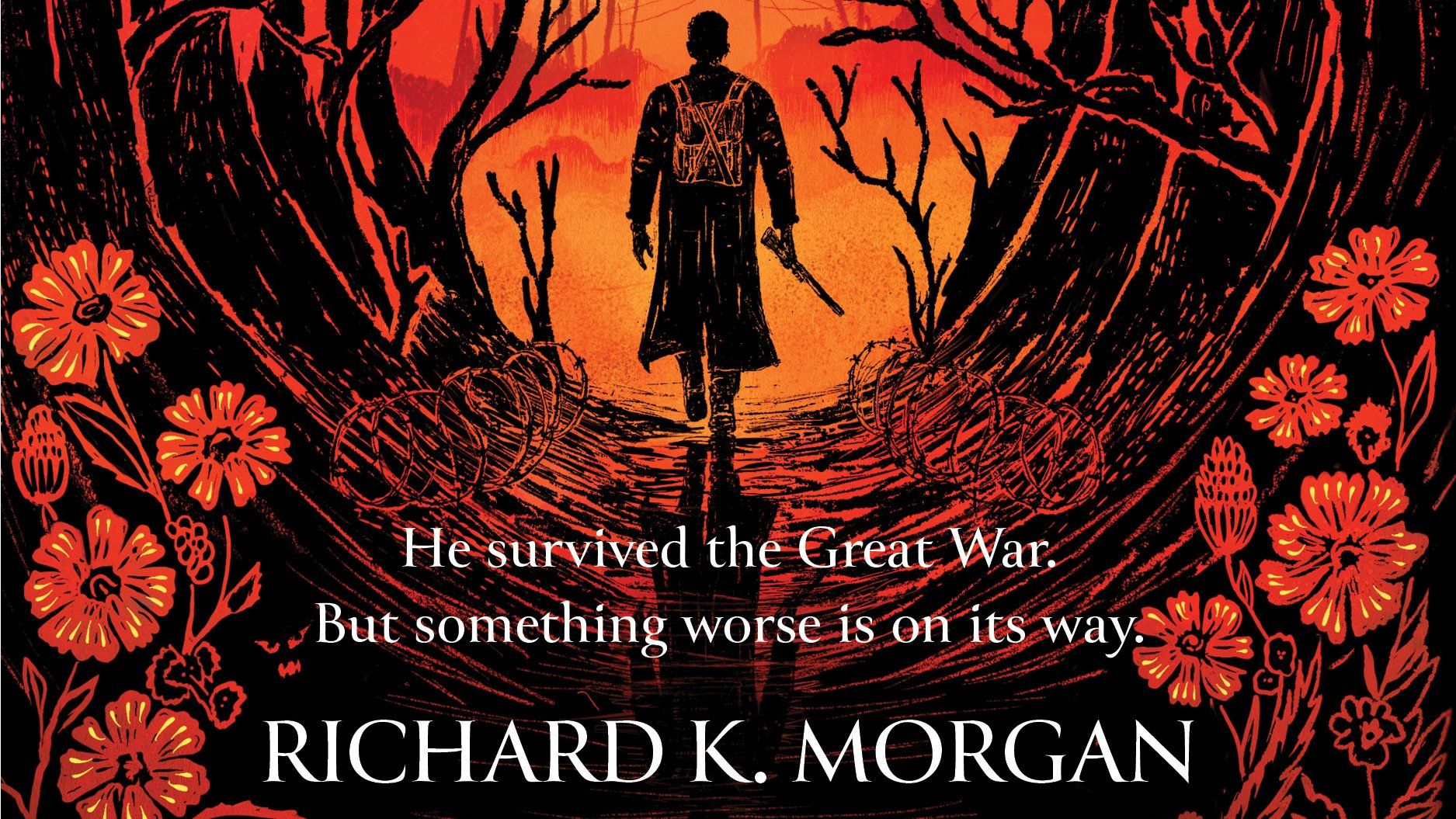
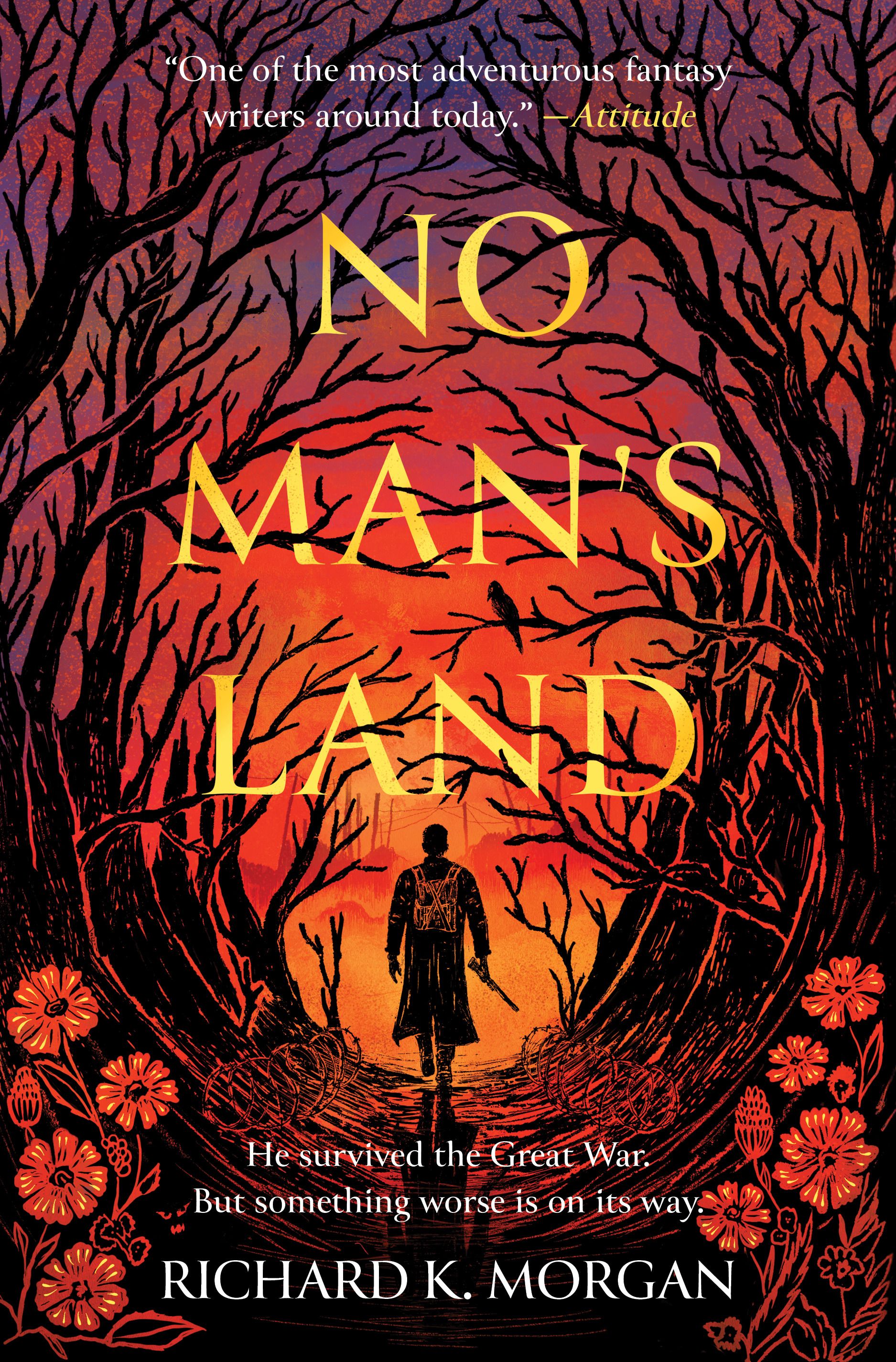
Richard K. Morgan, the visionary author behind the Philip K. Dick Award-winning cyberpunk classic Altered Carbon, has spent decades defining the intersection of gritty noir and speculative fiction. While his debut famously inspired a stylistic Netflix adaptation, Morgan’s creative reach extends into the Marvel Universe with Black Widow comics and the gaming world through titles like Crysis 2 and Syndicate. Now, Morgan returns to his hardboiled roots with No Man’s Land, a standalone novel that follows a haunted World War I veteran on a desperate hunt for a child abducted by the fae.
In this alternate history, the Great War reached a chilling conclusion when the Huldu—monstrous, ancient entities—swallowed much of Britain within a supernatural forest. Duncan Silver, a man forged in the trenches, earns his living recovering human infants stolen by these creatures and replaced with hollow changelings. His newest case pits him against a thousand-year-old Huldu, dragging him into a lethal power struggle that forces him to confront his own internal demons. Evoking the atmospheric dread of Carnival Row combined with the grit of Perry Mason, it’s a story primed for the screen.
Scheduled for release on March 24, Del Rey has provided an exclusive look at the haunting world of No Man’s Land:
Garner placed a call to Irene Rush’s former landlord from a public payphone at the White Mare. A bit of bribery proved effective.
“One hour,” he informed Duncan. “He’s sending a proxy to grant us access. It’s a short walk from here.”
“Did you disclose our intentions?” Duncan asked.
Garner shot him a look. “Don’t be ridiculous.”
An hour later, as the sun dipped below the horizon leaving a lingering amber glow, they stood before Number 17 Tegg’s Road. The Victorian terrace house, built of weathered red brick, sat behind a low iron gate. While neighboring homes flickered with the cozy light of evening fires and domestic life, Number 17 remained starkly dark, its windows sealed by white-painted shutters.
“Surprising it hasn’t been let yet,” Duncan remarked.
“Not necessarily,” Garner countered. “Employment is scarce. People are bracing for harder times.”
“Perhaps,” Duncan muttered, unconvinced. “Here’s our man.”
A taxi rattled to a stop, depositing a small, whiskered man named Simon Wilkins. The agent, looking like a character plucked from a Dickensian caricature, fumbled with a heavy ring of keys. He grumbled about the lack of references until Garner silently handed over a ten-shilling note. Wilkins snatched the legal tender, his hesitation vanishing instantly.
Inside, the house was a standard layout—a narrow hall and a steep staircase. Wilkins attempted a sales pitch about the “electrified” and “furnished” amenities, but Duncan bypassed him, drawn toward the upper floor by a sudden, icy sensation creeping up his arms. An unquiet presence waited in the shadows.
Garner stepped in to block the agent’s path, using a forced, polite tone to keep the man downstairs while Duncan investigated the landing.
Duncan flicked a switch, illuminating the dusty air with a dim yellow light. He felt the trace—a lingering residue of something unnatural. He pushed open the door to a darkened bedroom.
Furniture sat draped in ghost-like dust sheets. In the corner, by the shuttered window, sat an uncovered wicker rocking chair. As Duncan looked, the air curdled. A vision of skeletal fingers and ancient wood appeared—a nightmare of Death and the Forest intertwined. A grinning skull, wreathed in ivy and thorns, seemed to welcome him with a mocking, silent invitation.
A Huldu claim spell—a territorial marker, primal and foul. It was a vortex where chaos bled into reality, a proclamation of ownership left for anyone brave enough to witness it.
High-pitched, ethereal voices hissed his name from the void: Duncan, Duncan…
A hand touched his shoulder. Duncan spun around, fists tight, ready to strike.
“Duncan! Easy, lad!” Garner barked, backing away with his hands raised. “Pull yourself together.”
Duncan exhaled sharply, gesturing toward the chair. “Can you see it?”
“Not the sight, no,” Garner admitted, his face grim. “But I can feel the chill of it.”
The apparition seemed to ripple and fade, collapsing back into a mundane piece of furniture as the psychic pressure dissipated, leaving only the scent of damp earth and a faint, shimmering dust.
It’s just a chair.
But Duncan knew better. Months ago, a high-ranking Huldu had occupied that seat, watching Irene Rush and her child with immortal, predatory patience. It had waited for the perfect moment to cast its glamour and steal the babe, vanishing into the treeline with its prize.
With that realization came a familiar, murderous heat. It was the same cold rage he had carried through the mud of Flanders, a fury he intended to unleash upon the Forest.
“Are you certain about this?” Garner asked, watching Duncan unwrap a McCulloch trench gun on the bed of his inn room. The weapon’s barrel glinted in the low light.
“A trace that potent, four months later?” Duncan replied, feeding grape cartridges into the loading port. “That requires immense power. This isn’t a petty spirit; it’s a high-caste entity, at least a millennium old.”
“A dangerous trophy to hunt,” Garner observed.
“I’m not hunting trophies,” Duncan said coldly. “I’m being paid to bring children back. To do that, I need a trail. A creature that powerful leaves a wake that the local Fae, the Haunts, and even the trees won’t be able to stop talking about.”
“And you think they’ll share those secrets with you?”
Duncan finished loading the seventh shell and looked Garner in the eye. “The Fae won’t have a choice. Do you know what iron filings do to a Huldu’s eyes?”
Garner looked away, unsettled by Duncan’s intensity. “I’ve killed my share of them, Duncan. But there’s no joy in it.”
“You think I do this for pleasure?” Duncan sighed, laying out a row of Fae-fucker bombs. “Let me tell you something. In the summer of ’16, at Delville Wood, I was pinned down in a trench. Ammo was gone. It was bayonets and desperation. I found a signal pistol. When a German soldier came over the top, I shot him point-blank in the gut with a flare.”
Garner remained silent as Duncan continued, the memory vivid and ugly. “A grown man, a total stranger, screaming as his insides burned away in the rain. I can still smell it. Seven years later, I still hear him.”
Duncan stood up, his gaze iron-hard. “If I can do that to a man who meant me no personal ill, don’t think for a second I’ll hesitate to tear the truth out of these Fae. If you want to sit this out, stay here. I’m going into the Forest tonight.”
“The moon is high,” Duncan added, heading for the door. “Perfect woodsman’s weather.”
Garner stood for a moment, then nodded. “I’ve got a short-barrel Woodward in the cart,” he said gruffly. “I’ll get it.”
Purchases made through links on this page may result in a commission for Valnet Inc. Review our ethics statement here.
Source: Polygon
Related articles
 Antonio Banderas Joins Nicolas Cage in 'True Detective' Season 5
 Fans Flood Cyberpunk: Edgerunners Showrunner With Requests to Bring Back David
 Mike Flanagan Explains How New Dark Tower Adaptation Will Avoid Mistakes of Idris Elba Film
 The Sims 2 Modding Community Bans Vibe-Coded Mods to Protect Players
 PS5 Exclusive Marvel’s Spider-Man Shown Running on Xbox Series X in Gameplay Footage
 Former Dying Light Franchise Head Looks for a “New Kojima” to Help Release an Unusual Game
 PlayStation Reportedly Moving Away From Discs While Xbox Prepares to Revive Physical Releases, Insider Claims
 FromSoftware’s Forgotten PS1 Horror Game Echo Night Explored Empathy Before Dark Souls