5 Most Skippable First Games in Major Franchises, Ranked
When diving into a video game franchise, the instinctual starting point is almost always the very first installment. This inaugural outing allows enthusiasts to witness the genesis of an iconic cultural phenomenon. By examining a series at its foundation, players discover the origins of beloved characters and trace how overarching narrative arcs first took shape. They also get to experience the earliest iteration of the gameplay mechanics that would eventually capture millions of hearts. Yet, some historical milestones are arguably better left untouched.
For certain celebrated franchises, players are far better off completely bypassing the original release. The core issue is that these pioneering titles are often plagued by rough edges, suffering from unappealing aesthetics, clumsy writing, and deeply cumbersome mechanics. Frequently, these shortcomings stem from ambitious developers attempting projects beyond their immediate capabilities. While purists might argue that experiencing these archaic flaws provides valuable context for how game design evolved, that historical appreciation rarely makes the actual playthrough any less frustrating. To preserve your fondness for these worlds, you are usually better off simply reading a comprehensive plot summary or watching a cinematic cutscene compilation.
5
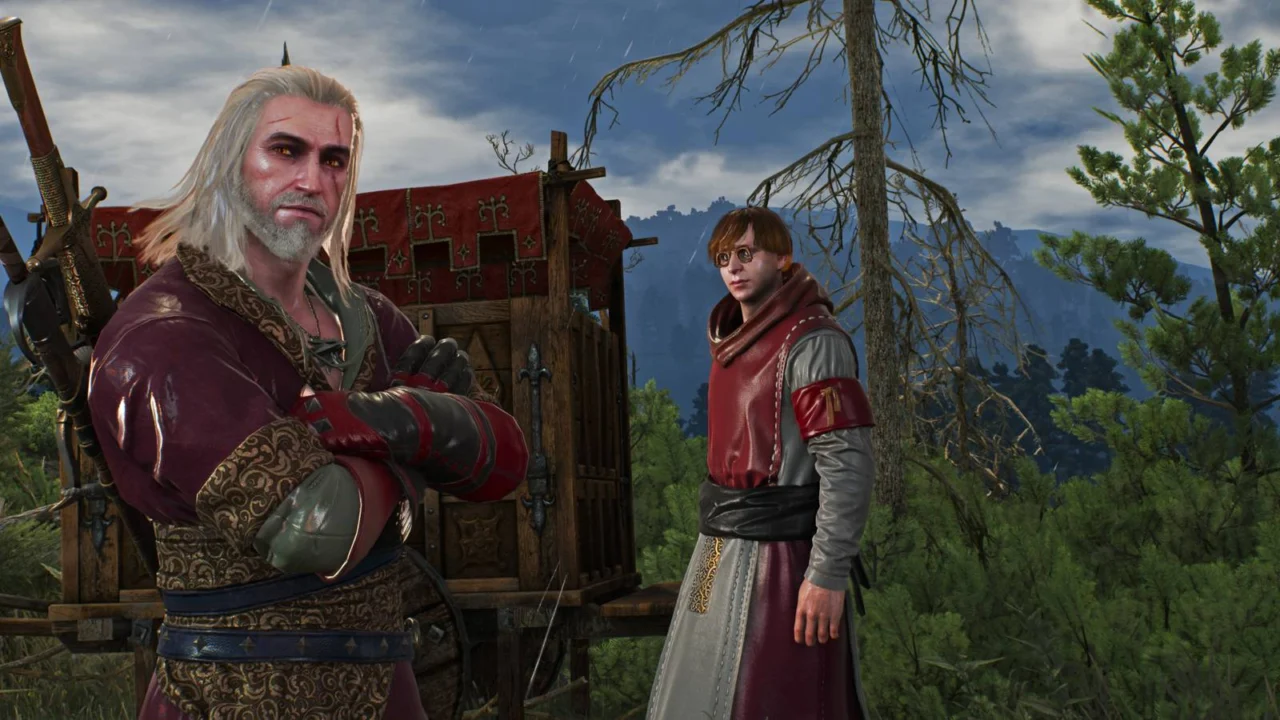
The Witcher
The famed monster slayer is meant to look weathered, but hardly this unsightly. Inspired by Andrzej Sapkowski’s celebrated Polish fantasy novels, the Witcher series centers on a wandering mutant warrior named Geralt of Rivia. Subjected to dangerous mutagens during his youth, his strength, reflexes, and senses were heightened to superhuman extremes. He channels these formidable talents toward eradicating the monstrous threats terrorizing the countryside, typically for a modest fee. Although he continually tries to remain neutral amidst continental conflicts, this grim, war-torn setting constantly forces his hand. Judging by his interactive debut, however, he should have trusted his instincts and stayed far away.
Released in 2007, the original The Witcher serves as CD Projekt Red’s maiden voyage into game development, and the growing pains are glaring. The experience strands players in a drab, visually unappealing world populated by stiff, grotesque character models. Geralt spends an agonizing amount of time backtracking across repetitive zones, often just waiting for specific NPCs to spawn on a strict schedule. A truly compelling narrative might have forgiven these tedious pacing issues, but sadly, that is not the case here.
The overarching plot is merely functional on its own merits and simplistic by the franchise’s eventual standards. While it leans heavily on the source material for thematic weight, the script lacks the nuanced political intrigue and heavy moral dilemmas that later elevated the IP into greatness. To its credit, the game attempts some fascinating mechanical adaptations of the books, but the execution results in a clumsy hybrid of action-adventure and traditional BioWare-style role-playing. Much like Geralt himself, modern fans would prefer to avoid choosing between those two lesser evils.
4
Assassin’s Creed
It feels entirely poetic that a franchise deeply obsessed with historical excavation should land on this list. Assassin’s Creed follows a clandestine brotherhood of hooded operatives who lurk in the shadows across centuries, hunting down powerful artifacts and guiding humanity’s destiny toward free will. Their eternal adversaries, the Templars, strive to forge a rigid, highly controlled global order. This secret war spans countless eras and dozens of spin-offs. While veteran players often argue that the series has long since peaked, it also took a agonizingly slow amount of time to find its footing.
Launched in 2007, the inaugural Assassin’s Creed is remarkably bare-bones in scope. Its forgettable cast and wafer-thin narrative exist solely to herd players toward designated assassination targets; reaching those milestones demands repeating identical, tedious chores like pickpocketing, tailing, and eavesdropping. This gameplay loop wears out its welcome almost immediately, yet the adventure forces you to repeat it a staggering nine separate times. To be fair, purists might praise its minimalist structure for emphasizing pure stealth over flashy gimmicks. Unfortunately, those very stealth systems feel astonishingly underdeveloped. One needs look no further than the overpowered counterattack mechanic, which allows players to carve effortlessly through entire platoons of brainless guards without taking a single hit. Armed with such rudimentary design elements, the original Assassin’s Creed feels infinitely more antiquated than the historical relics it tracks.
3
Metroid
Intergalactic bounty hunter Samus Aran is no stranger to grueling hardship. Routinely stranded on hostile, alien-infested planets swarming with space pirates and parasitic organisms, she must systematically scavenge complex, labyrinthine maps to recover her lost arsenal, armor upgrades, and traversal gear. Only through careful exploration can she overcome impossible odds and annihilate her pursuers. That precise gameplay loop defines the enduring allure of the franchise: it is a brilliant fusion of atmospheric sci-fi dread and rewarding exploration that single-handedly helped cement the beloved “Metroidvania” subgenre. The original 1986 NES classic contains the DNA of these hallmarks, but it actively sabotages the player’s enjoyment at nearly every turn.
The original Metroid boasts the intricate, interconnected layout that would later define the series, but it omits one vital feature: an in-game map. Players are forced to wander blindly through identical corridors, relying on pure guesswork and trial-and-error to figure out where to go next. Progress might require walking through an obvious door, or it might demand performing an utterly arbitrary action like bombing a random wall section or plunging into a pit of lava. These frustrations are compounded by deeply punishing enemy design; Samus cannot crouch down, yet a multitude of hostile creatures crawl at heights below her standard line of fire. When these encounters inevitably result in death, you respawn with a paltry fraction of your maximum health. This expedition is so relentlessly punishing that most players will never endure long enough to witness the title’s groundbreaking twist ending.
2
Grand Theft Auto
Few interactive entertainment franchises have reshaped the industry quite like Grand Theft Auto. These sprawling crime epics present living, breathing open worlds inspired by major American metropolitan hubs. As players cruise through these bustling simulated cities, they undertake illicit contracts for ruthless gangsters, corrupt politicians, and eccentric underworld figures. The assignments span everything from grand theft auto to heists and frantic shootout sprees, effectively turning each map into a chaotic sandbox. Of course, 2001’s revolutionary Grand Theft Auto III successfully popularized this formula in a fully realized 3D space, leaving its 2D predecessors largely forgotten by the mainstream. In retrospect, that collective amnesia is probably for the best.
The original 1997 release invites players to climb the criminal ladder across three distinct urban environments from a bird’s-eye perspective. While the foundational concept of committing crimes for cash is present, it entirely lacks the memorable personalities, razor-sharp cultural satire, and cinematic flair that later entries became famous for. Instead of a narrative-driven campaign, the primary objective is simply accumulating a target score to advance to the next zone, behaving much more like an arcade cabinet than a sandbox epic. Regrettably, the sluggish vehicle handling, primitive graphics, and disorientating top-down perspective make hitting those milestones vastly more aggravating than entertaining. Strip away the iconic name, and the original Grand Theft Auto feels like little more than a generic top-down driving gimmick from a bygone era.
1
Street Fighter
Competitive fighting games wouldn’t exist in their current form without Capcom’s legendary Street Fighter. At its heart, the franchise revolves around a grand, worldwide martial arts tournament drawing diverse combatants from every corner of the globe, each boasting distinct fighting styles and vibrant visual designs. As competitors punch and kick their way to the top, they face off against formidable grandmasters in epic showdowns. The premise is a textbook example of simplicity breeding enduring success. Unfortunately, the series’ inaugural release takes that simplicity a bit too far.
Debuting in 1987, the original Street Fighter establishes the familiar premise, but completely fumbles the execution. Assuming the role of wandering martial artist Ryu, players must battle their way across multiple countries against the world’s most dangerous pugilists. As intimidating as facing international champions sounds, the true adversary is the game’s agonizingly stiff control scheme. Executing a basic punch feels like a chore, while successfully inputting special techniques like the iconic Hadouken is an exercise in pure frustration. With combat this stiff and unresponsive, the original Street Fighter was remarkably fortunate to survive past its first round.
Source: Polygon
Related articles
 Details Emerge for Ghost Rider Project Starring Ryan Gosling
 Prequel Series ‘It: Welcome to Derry’ Premieres Hundreds of Years Before Original Story
 New Details Emerge About Characters and Plot in Star Wars Episode X
 Mobile Version of Hearth and Hamlet Announced
 James Gunn Discusses Release Timeline for Season 2 of Creature Commandos
 New Leak Suggests Persona 1 Remake Is In Development
 Dark Metroidvania Well Dweller Delayed for Android
 Dark Roguelike ‘He is Coming’ Scheduled for Smartphone Release in 2027