
What lies at the end of the Backrooms? We asked director Kane Parsons

The finale of A24’s psychological horror feature, Backrooms, is engineered to provoke deep debate. Deciphering the film’s climactic sequence requires peeling back layers of complex symbolism. To understand why this pivotal scene unfolds with such visceral intensity, we sat down with director Kane Parsons to gain his perspective.
“I’m usually reluctant to provide definitive breakdowns of my work,” Parsons explains. “It’s not meant to be evasive; it’s just that audiences tend to prioritize my interpretation over their own creative engagement. I have to be measured—anything I say is likely to be scrutinized.”
Nevertheless, Parsons offered some conceptual guidance on how to navigate the conclusion of Backrooms, specifically regarding the harrowing fate of the protagonist, Clark (Chiwetel Ejiofor). Proceed with caution—heavy spoilers for Backrooms lie ahead.
[Editor’s Note: The following contains major spoilers for the conclusion of Backrooms.]How does Backrooms end? A breakdown of survival and sacrifice.
In the film, Clark—an architect whose life and business have crumbled—stumbles upon a gateway to an expansive, liminal dimension. This realm is a haunting landscape of infinite, surreal corridors and warped neighborhoods. As he navigates this terrain, he encounters evidence of a predatory entity; the creature’s violent roars and destruction lead to the demise of Bobby (Finn Bennett), the videographer Clark brought along to document the anomaly.
When Clark himself vanishes, his therapist, Mary (Renate Reinsve), ventures into the void to track him down. She eventually discovers him holding court in a subterranean chamber. It is revealed that the monster is a grotesque, elongated manifestation of Clark himself, clad in the absurd pirate attire he once wore for his furniture commercials. Clark, identifying the beast as “Pirate Clark,” insists he has achieved a twisted sense of tranquility through his assimilation into this hellscape—an environment that validates his destructive instincts.
Mary rejects this delusion, condemning his narcissism and refusal to accept responsibility for his past failures. When Clark attempts to embrace his monstrous doppelgänger, the creature retaliates, tearing into him. Mary manages to escape as the chaos ensues, eventually returning to reality, where clandestine authorities detain her and capture the entity known as Pirate Clark.
The Ending Explained: Why does Pirate Clark turn on his creator?
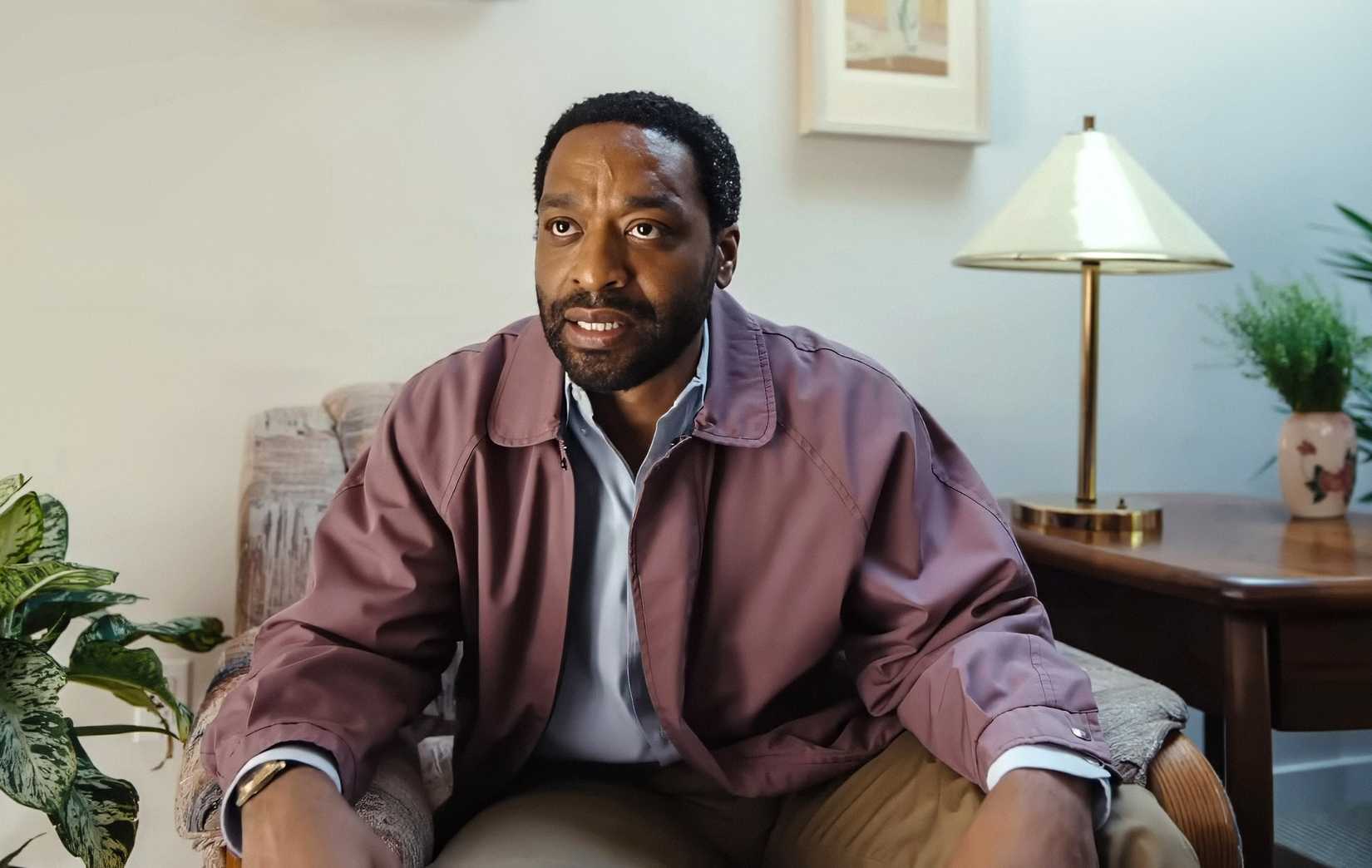
Parsons posits that this fatal encounter serves as the narrative engine of the film, illuminating the true nature of Clark’s relationship with his newfound reality.
“Clark is essentially trapped in an echo chamber,” Parsons notes. “The space functions as a feedback loop for his own psyche. It projects his inner voids onto the walls, offering a superficial sense of fulfillment. However, this isn’t a genuine path to peace; it’s an intensification of the isolation and decay he experienced before he ever found the Backrooms.”
Parsons characterizes Pirate Clark as a literal manifestation of the logic governing this dimension—a distorted mirror reflecting Clark’s own volatile state.
Who exerts influence over the Backrooms?
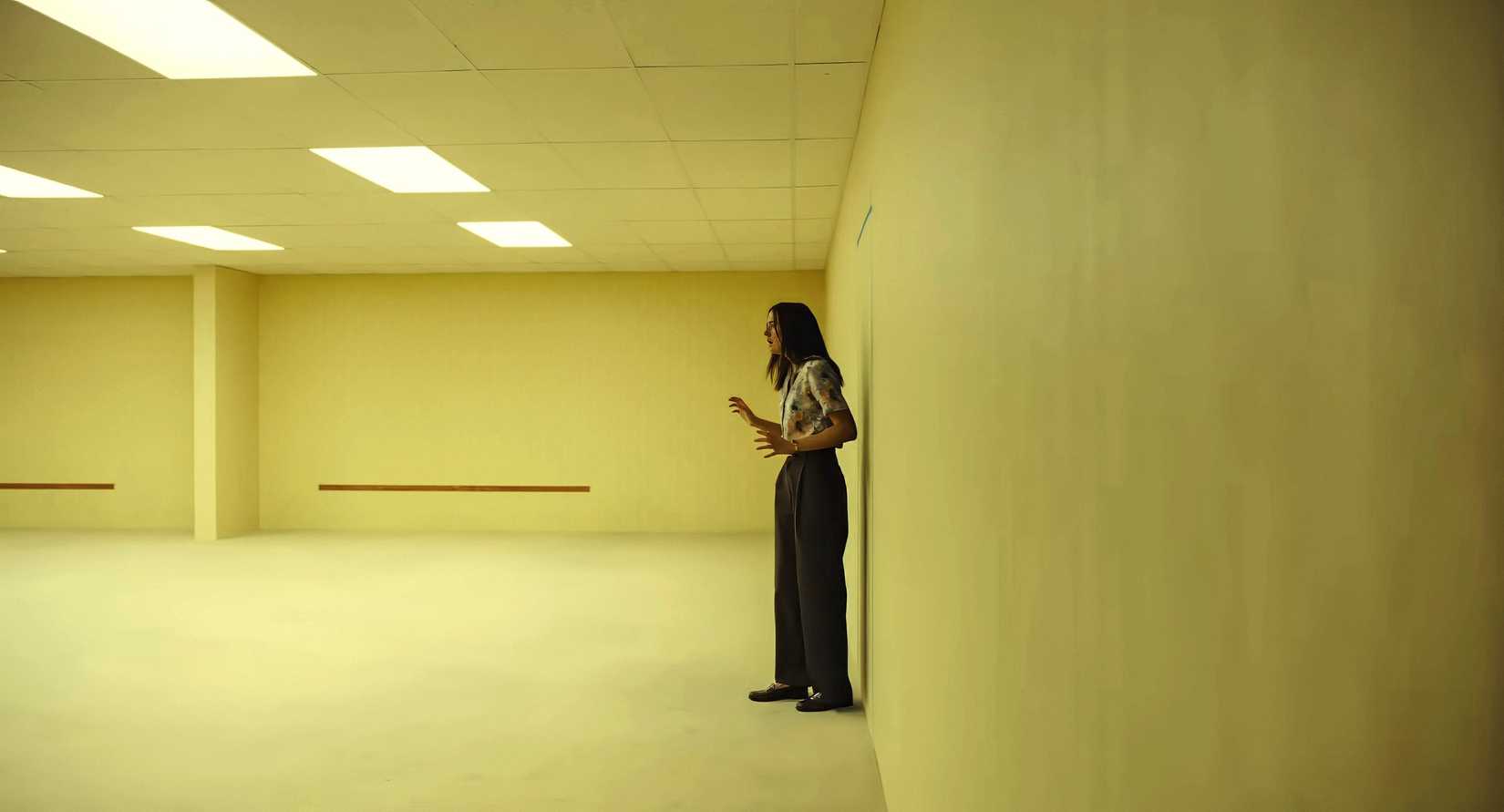
Crucially, Parsons highlights that the Backrooms are not a static entity; they are molded by Clark’s personal biases, making his interpretation of the space inherently subjective and potentially flawed. When his facade is punctured by Mary’s grounded perspective, the precarious stability of his fantasy world shatters.
As for the sudden attack, Parsons offers a wry alternative: “It’s possible the creature was simply reacting on impulse, or perhaps Clark was just hungry. We lack the narrative clarity of a monologue from the monster, which leaves the definitive ‘why’ open to the audience’s intuition.”
Whether the entity is a shifting mirror or a literal predator, its future remains shrouded in mystery. With plans for a broader, techno-thriller franchise, Parsons is keeping his cards close to his chest. “I have to protect the lore for the chapters to come,” he teases.
Backrooms is currently playing in theaters.
Source: Polygon
Related articles
 New Trailer Released for GROTESQQQUE Anime Anthology Directed by Atsushi Nishigori
 Mike Flanagan Discusses His Involvement in Clayface Film
 Robert Downey Jr. Returns to Marvel to Reinvent Superhero Film Genre
 CDPR Promises Official Fixes for The Witcher 3 Remastered on PS5
 Halloween: The Game’s DLC Is Only for True Michael Myers Fanatics
 Prey Star Amber Midthunder Expresses Desire to Return as Naru in New Predator Movie
 Indie Navarrette Promises to Portray Rogue Well in New X-Men Film
 Fifth Season of Ascendance of a Bookworm Announced