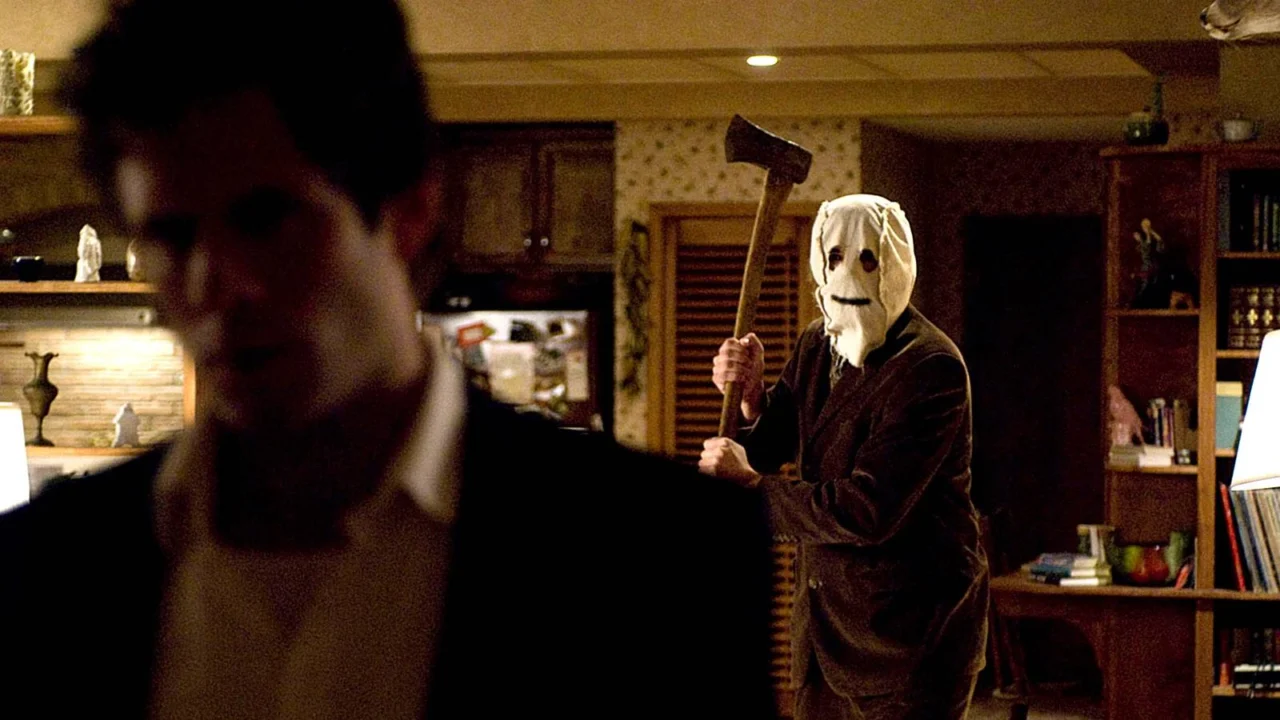
Vicious director Bryan Bertino says his career has been an uphill fight since The Strangers

When Bryan Bertino burst onto the scene in 2008 with his debut feature, The Strangers, he delivered a stark, unnerving home-invasion thriller that drew loose inspiration from real-life crimes. The low-budget film has since achieved cult status, spawning a sequel (which Bertino co-wrote and produced) and a studio-led reboot/relaunch that moved forward without his involvement. Bertino, however, continued to pursue his own singular voice in independent cinema with films such as Mockingbird (2014), The Monster (2016), The Dark and the Wicked (2020), and the recent Vicious — a dark, psychological tale starring Dakota Fanning as Polly and Kathryn Hunter (Andor) as the stranger who delivers a mysterious, malevolent box that upends both their lives.
Speaking after Vicious’s world premiere at the 2025 Fantastic Fest, Bertino told Polygon that The Strangers taught him a durable lesson: filmmaking for him would always be a fight to protect his creative vision.
He explained that maintaining a distinct voice has never been effortless. Rather than claim superiority over other filmmakers, he described an ongoing struggle to ensure his work reaches audiences in the form he intends. The Strangers gave him an early taste of that struggle — an experience he remains grateful for, even as it signaled the many battles ahead to keep his films intact from script to screen.

Vicious, Bertino says, grew out of personal experience: the film’s portrait of Polly’s battle with an intrusive, corrosive force — one that pressures her toward humiliation and self-harm — mirrors his own encounters with anxiety and panic attacks. That inner turmoil informed the story’s emotional core.
Music is a recurring frame of reference for Bertino when he describes his approach to film. He wanted Vicious to hit like “a wall of sound” — an immersive sonic onslaught — and he likens the raw immediacy of found-footage cinema to a punk-rock record that breaks formal rules but brims with feeling. He compares narrative kinship between works to songs that share a title but diverge in content (citing, for example, the Twilight Zone episode “Button, Button”), and often explains his cinematic choices by pointing to songwriters who distill whole lives into a few lines.
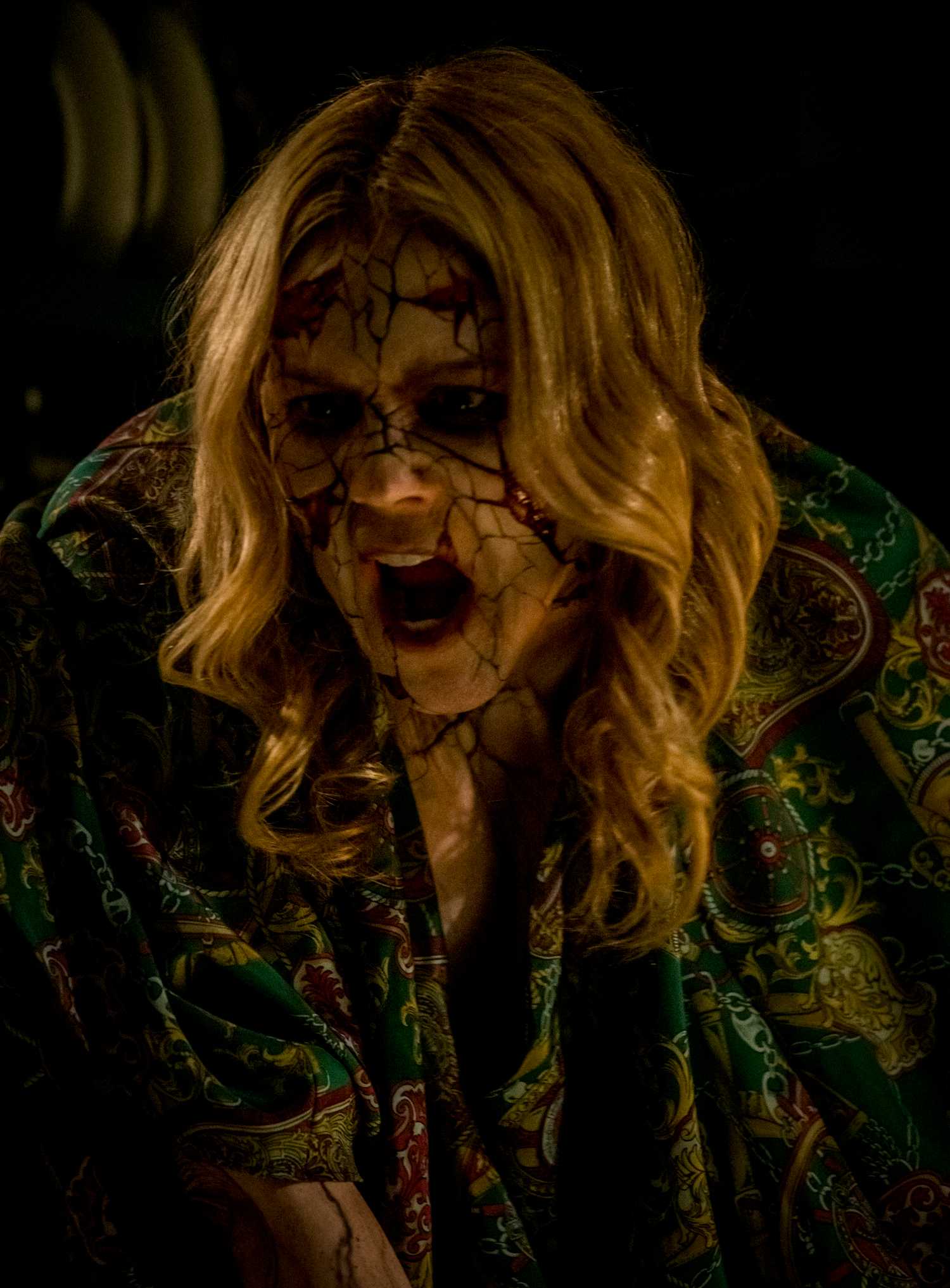
“I’ve always been drawn to character-driven stories,” he says, invoking singer-songwriters — Bob Dylan, Townes Van Zandt, John Prine, Gillian Welch, Bruce Springsteen — who compress whole lives into a handful of lines. For Bertino, fear is often the connective tissue between two people; The Strangers, he notes, was as much about the couple at its center as it was about the invasion itself.
That philosophy informs Vicious’s structure: Bertino intentionally anchors the supernatural elements in intimate family relationships — Polly’s ties to her mother, sister, and niece — because realism helps the audience accept the unexplainable. “You don’t have to believe in ghosts or cursed boxes,” he says. “If I can make you spend an hour and forty minutes asking yourself, ‘What would I do if this happened?’ then you’re inside the movie’s world.”
Yet those instincts don’t always align with studio priorities, which is why Bertino has repeatedly chosen the independent route to safeguard his vision. He argues that studios often operate from assumptions about target audiences that don’t necessarily reflect what viewers actually want, and that the messy, inventive energy of indie horror is where the genre keeps evolving.
“Horror is uniquely propelled by independent filmmakers,” he adds. “Right now, someone making a $50,000 horror picture could alter the industry’s trajectory for years. That unpredictability is what keeps me passionate about this work.”
Vicious is currently streaming on Paramount+ and is available to purchase on major digital platforms.
Source: Polygon
Related articles
 Robert Pattinson calls ‘The Batman’ sequel ‘radical’
 A24 to release documentary on Elizabeth Holmes
 Nolan’s “Oppenheimer” Surpasses “Spider-Man” at the Box Office
 Natalie Portman Becomes a Mother for the Third Time
 Zach Cregger Will Not Direct Franchises After “Resident Evil”
 The Rolling Stones to Receive a Biopic
 “Spider-Man: Brand New Day” breaks all-time US record
 “Prime Time” starring Robert Pattinson receives critical reviews