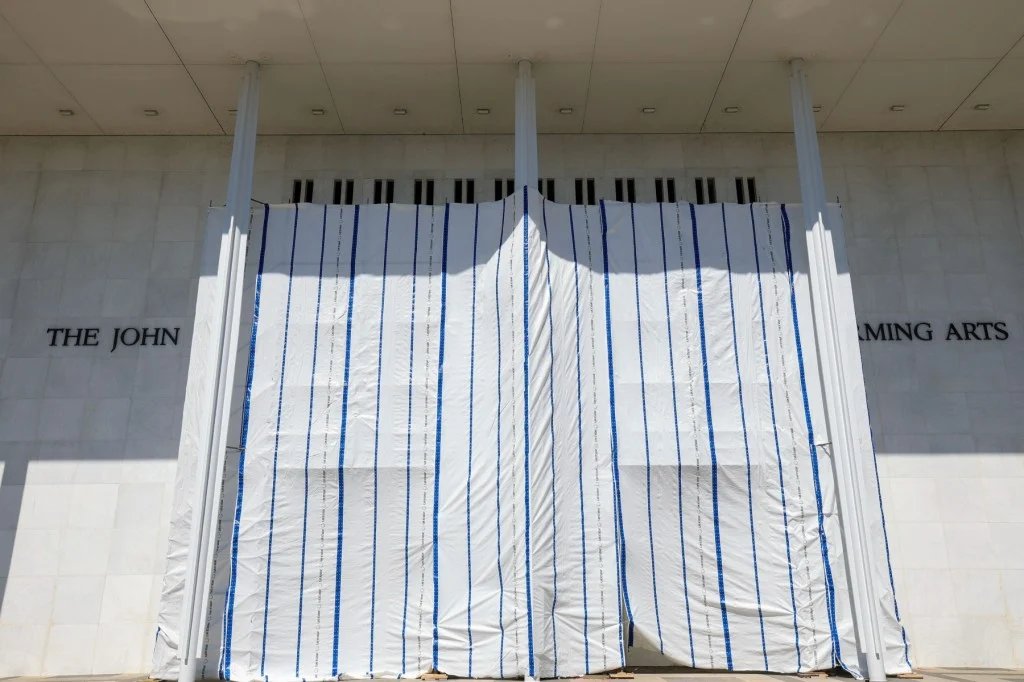

While the formal tenure of President Donald Trump at the Kennedy Center may have reached its conclusion, a protective tarp remains draped over the building’s exterior, obscuring the view for curious observers.
Matt Floca, the institution’s executive director and COO, confirmed in a Saturday court filing that the center has successfully adhered to a judicial mandate. According to the document, the board of trustees has dismantled all physical signage on the premises that sought to rebrand the venue in the president’s honor.
Despite the legal victory, those gathering on the plaza to witness the symbolic erasure were met with a sea of construction fabric. The original lettering—”The John F. Kennedy Memorial Center for the Performing Arts”—remains hidden behind the scaffolding, leaving the building’s permanent signage out of public sight for the time being.
However, a closer look behind the barrier confirmed that the Trump-branded letters have been stripped from the facade. The removal follows a tense legal standoff in which the institution failed to secure a last-minute stay, despite citing the recent severe thunderstorms as a reason to delay the transition.
For supporters of the removal, the event marks a significant milestone. Rep. Joyce Beatty, who spearheaded the legal challenge, celebrated the development as a restoration of the center to the American public, telling the media that the adherence to the rule of law was a triumph worth honoring.
The incident reflects a turbulent period for the historic venue, which serves as a memorial to the late President John F. Kennedy. Since Trump’s reappointment of the board in 2025, the facility has experienced profound administrative shifts. While the president’s influence over the physical landscape of the capital continues to expand—with ongoing projects ranging from a reconstructed White House East Wing to a new commemorative arch—this particular administrative branding effort has been decisively halted by the courts.
Uncertainty now looms over the Kennedy Center’s future. Beyond a handful of upcoming performances, including the Mark Twain Prize ceremony honoring Bill Maher, the institution’s programming remains sparse. With the court having blocked a proposed two-year closure for structural renovations, the path forward remains complex, as the leadership navigates both public safety concerns and the fallout of the recent judicial intervention.
 Rihanna shares new photos and videos of daughter Rocki after first birthday
 Ed Sheeran Featured on ‘SNL UK’ With ‘Chicken Shop Date’ Host Amelia Dimoldenberg
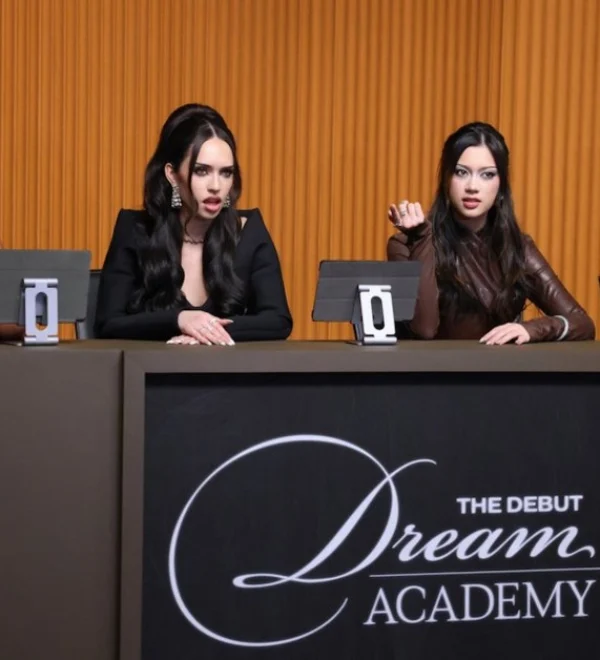 KATSEYE Featured in Saturday Night Live Sketch Parodying Dream Academy Season 2
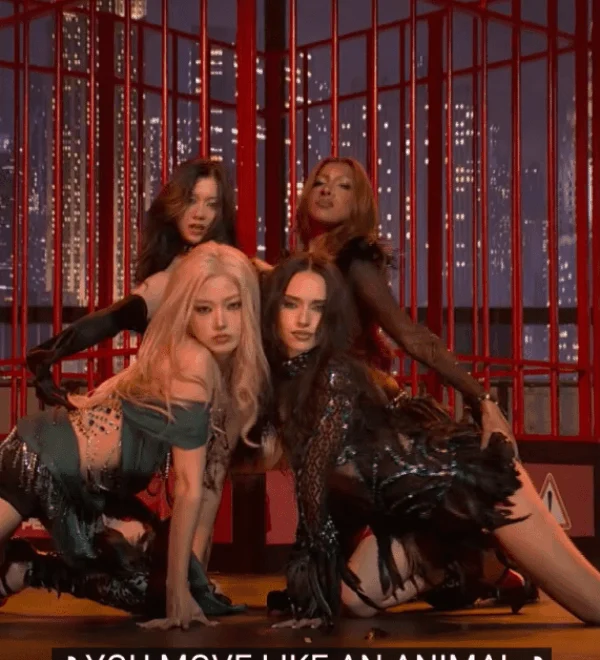 KATSEYE Perform Animal and Hootie Frutti in SNL Debut
 Ella Langley Responds After Fan Asks Her Out
 Soft Cell Discusses Release of Danceteria Song the Same Year as Madonna
 Taylor Swift, Madonna, and Charli xcx Featured in New Music Release Weekly Fan Poll
 All Things Go and Global Citizen Cancel 2026 Festivals Due to Severe Weather Conditions in New York
Share Your Thoughts