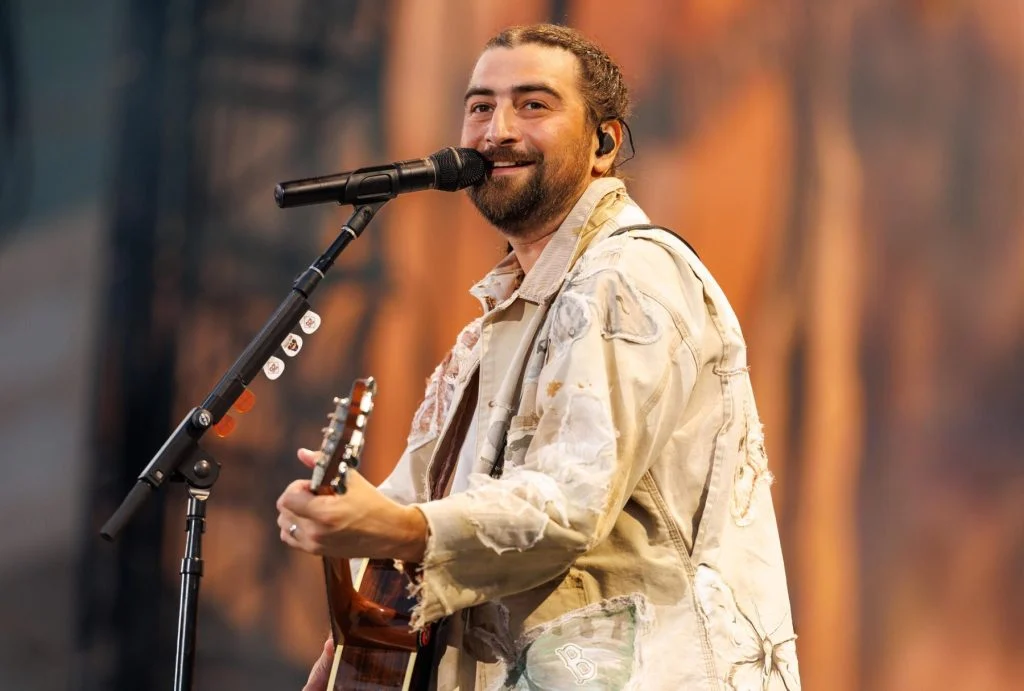
‘Symptoms of TDS’: White House Snaps at Noah Kahan For Criticizing Unauthorized Use Of His Music
White House Fires Back After Noah Kahan Condemns Unauthorized Use of His Music

The White House has launched a sharp counteroffensive following outspoken criticism from singer-songwriter Noah Kahan, who publicly rebuked the administration for utilizing his music in promotional social media content.
The controversy ignited when official administration accounts on TikTok and Instagram featured “American Cars”—a standout track from Kahan’s chart-topping, Billboard 200 No. 1 album, The Great Divide—as the soundtrack for videos commemorating President Trump’s visit to a Michigan automotive facility to champion domestic manufacturing.
The 27-year-old Vermont native made his disapproval explicitly clear. In the comments section of an Instagram post where the audio has since been muted, the GRAMMY-nominated artist declared, “Would never approve of my music being used in support of you or this administration.” His remarks quickly garnered tens of thousands of approvals and widespread public engagement.
Guitarist Noah Levine, Kahan’s frequent collaborator and co-writer on the track, also voiced his frustration online before his comment was ultimately removed, an action swiftly noted by observant social media users.
Despite the backlash, the contested audio remains attached to the official White House TikTok publication, which captures President Trump autographing a pristine white Corvette at General Motors’ Milford Proving Grounds.
The administration’s communication team offered a swift and pointed response. Kaelan Dorr, serving in multiple capacities including principal deputy communications director for the Trump administration, took to X (formerly Twitter) to address the situation, writing, “Symptoms of TDS [Trump Derangement Syndrome] apparently include having a northern attitude.”
Legal experts note that Kahan’s catalog is accessible for platform use under the expansive licensing framework established via agreements between Universal Music Group and Meta platforms.
With this dispute, Kahan joins an extensive and steadily expanding roster of prominent musicians—including Beyoncé, Adele, Bruce Springsteen, Foo Fighters, Celine Dion, Neil Young, and Olivia Rodrigo—who have formally objected to political campaigns and governmental offices incorporating their artistic works into promotional messaging.
Related articles
 Bunnie Xo Defends Dating Man 22 Years Younger Following Split From Jelly Roll
 Taylor Swift Updates Website With New Countdown After Dropping Cryptic Clues
 Lionel Richie Undergoes Heart Procedure and Cancels Three Upcoming Shows
 Travis Kelce Calls Taylor Swift Wearing a Gun on Her Waist in Law & Order Emmys Skit Kinda Hot
 Hayden Panettiere’s Cause of Death Revealed
 Madonna and Charli xcx Set Danceteria Afterhours Release Date
 Taylor Swift Shows Off Wedding Ring as Travis Kelce Scores First Touchdown of the Season
 Celine Dion, Keith Urban, and Chris Martin Lead All-Star John Farnham Tribute Concert
Leave a Reply